❌ Not for Human Consumption
●
✅ For Research Use Only
●
All products are intended strictly for laboratory research purposes only
●
❌ Not for Human Consumption
●
✅ For Research Use Only
●
All products are intended strictly for laboratory research purposes only
●

Stability, Lyophilization, And Reconstitution Protocols For Epithalon In The Lab

Written By: Gary Hite, Research Content Writer
Reviewed By: Natalie Kunsman, M.D., Board-Certified Physician
Last Reviewed: August 28, 2026
Research Use Only. Epithalon (also written Epitalon) is offered and discussed here strictly for laboratory research and educational purposes. It is not a drug, dietary supplement, cosmetic, or food. It is not intended for human consumption, animal consumption, or any clinical, diagnostic, or therapeutic application. Nothing in this article constitutes medical advice or a claim regarding any biological effect in living systems. Handling is restricted to qualified researchers and academic professionals operating in an appropriate laboratory setting.
Reproducible research starts long before the first data point. For a synthetic peptide like Epithalon, the way the material is stored, shipped, and prepared at the bench has a direct effect on purity, solubility, and experimental consistency. This guide gives research personnel a practical, working reference for three of the most important handling stages: keeping the compound stable, understanding why it arrives lyophilized, and reconstituting it correctly for laboratory study.
The focus throughout is on materials handling and good laboratory practice. No part of this article addresses use in or on living organisms.
Epithalon at a Glance (Materials Perspective)
Epithalon is a synthetic tetrapeptide composed of four amino acid residues in the sequence alanine, glutamic acid, aspartic acid, and glycine (Ala-Glu-Asp-Gly, often abbreviated AEDG).
Key physical and chemical reference points that matter for handling include:
- Molecular formula: C14H22N4O9
- Molar mass: approximately 390.35 g/mol
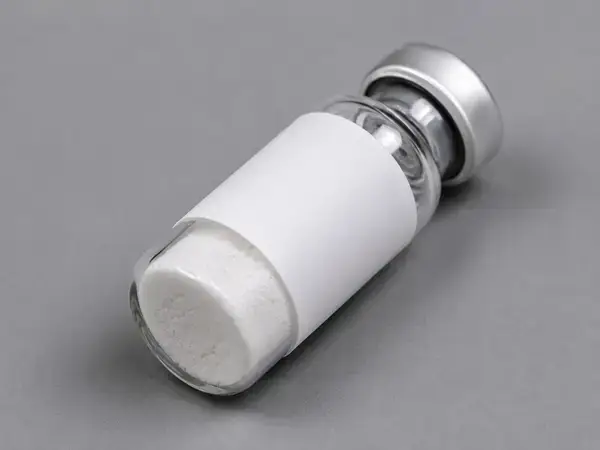
- Physical form: typically supplied as a white to off-white lyophilized powder
- Solubility: generally water soluble, which simplifies preparation of aqueous stock solutions
Because the sequence contains glutamate and aspartate residues, researchers should be aware that the relevant degradation pathways for this class of short peptide tend to involve hydrolysis and possible deamidation or isomerization at acidic residues rather than the oxidation pathways seen in peptides that contain methionine, cysteine, or tryptophan. Understanding the chemistry helps explain why the storage and preparation steps below are structured the way they are.
Why Epithalon Is Supplied Lyophilized
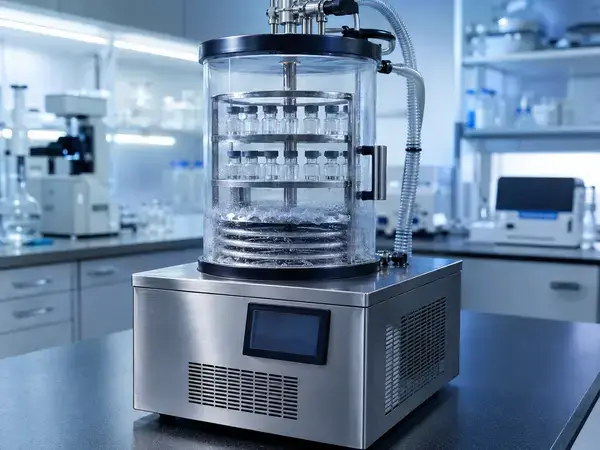
Lyophilization, commonly called freeze-drying, is the process of removing water from a frozen sample by sublimation under reduced pressure. The material is first frozen, then placed under vacuum so that ice transitions directly from solid to vapor without passing through a liquid phase. What remains is a dry, porous cake or powder.
For peptides, lyophilization is the standard approach because it addresses the single biggest threat to long-term integrity: water. Removing water accomplishes several things at once:
- It slows hydrolytic degradation, since water is a direct participant in peptide bond breakdown.
- It limits the conditions that support microbial growth.
- It produces a defined, stable mass per vial that ships well and stores for extended periods.
In practical terms, the lyophilized form is the most stable state in which a researcher will encounter the compound. Every handling decision after that point is about preserving as much of that stability as possible until the material is needed for an experiment.
Stability Considerations for Epithalon
Several environmental factors influence how well lyophilized peptide material holds up over time. Research personnel should account for each of them when planning storage and bench work.
- Temperature. Heat accelerates virtually all degradation reactions. Cold storage is the most effective single safeguard.
- Moisture and humidity. Reintroducing water to a lyophilized powder reopens hydrolytic pathways. Keeping vials sealed and desiccated is essential.
- Light. Prolonged light exposure can contribute to photodegradation. Storing material in the dark or in amber or opaque containers reduces this risk.
- pH in solution. Once dissolved, the surrounding pH influences degradation rate. Neutral, well buffered conditions are generally gentler than strongly acidic or basic ones.
- Freeze and thaw cycling. Each freeze and thaw stresses peptide material in solution. Repeated cycles are a common and avoidable cause of lost integrity.
A useful rule for the bench: the lyophilized powder is robust, while any solution made from it is comparatively fragile. Plan experiments so that solutions are prepared close to the time they are needed and stored appropriately in between.
Recommended Storage Conditions
Storage recommendations differ depending on whether the material is in its dry lyophilized form or has been reconstituted into solution.
Lyophilized powder (long term):
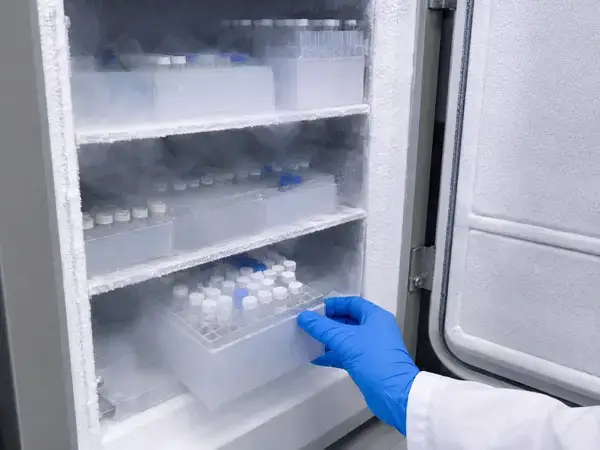
- Store at minus 20°C for extended storage. Many labs use minus 80°C for archival material.
- Keep the vial sealed and protected from moisture, ideally with desiccant.
- Protect from light.
- Brief exposure to higher temperatures during shipping is generally tolerated by lyophilized peptides, which is why cold chain shipping for the dry form is often less demanding than for solutions. Return material to cold storage promptly on arrival.
Reconstituted solution (short term and working stock):
- For short-term use over a few days, refrigeration at 4°C is common.
- For longer storage, freeze at minus 20°C or minus 80°C in single-use aliquots.
- Avoid repeated freeze and thaw cycles by aliquoting before freezing.
- Label every aliquot with the contents, concentration, solvent, and preparation date.
Consistent documentation here is not just good housekeeping. It is what allows results to be traced and reproduced later.
Reconstitution Protocols for Research Preparation
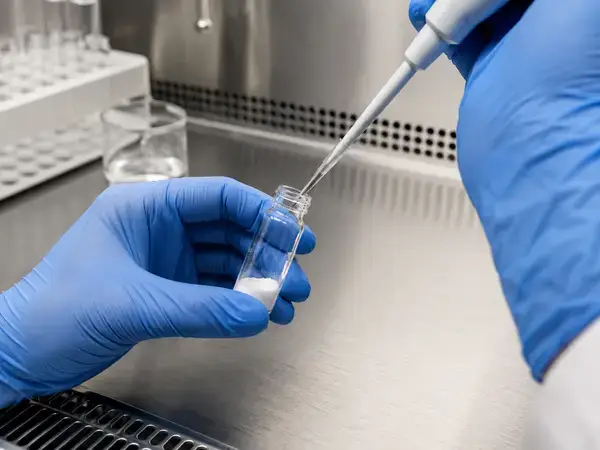
Reconstitution is the laboratory step of dissolving the lyophilized powder into a liquid to create a stock solution for in vitro and other bench experiments. The goal is a clear, accurately concentrated, contamination-free solution prepared with minimal stress to the peptide.
Choosing a Solvent
For a water soluble peptide such as Epithalon, sterile water is the most common reconstitution solvent for general laboratory preparation. Bacteriostatic water is also used where a multi-use stock with a preservative suits the laboratory workflow. For peptides that resist dissolving, a small volume of a dilute acid such as acetic acid, or a mild buffer, can assist solubilization before diluting to the final volume; this is less commonly required for readily soluble sequences. Always match the solvent to the requirements of the downstream assay, since some applications, particularly cell culture, have specific compatibility needs.
Equipment and Environment
- A laminar flow hood or comparable clean environment for any work where sterility matters
- Sterile pipette tips and clean, sterile vials
- An analytical balance if weighing material directly
- Appropriate personal protective equipment and a clean bench surface
Step by Step Bench Procedure
- Equilibrate the vial. Allow the sealed vial to reach room temperature before opening. Opening a cold vial invites condensation, which reintroduces moisture.
- Calculate the target concentration. Decide on the stock concentration the experiment requires before adding any solvent.
- Add solvent gently. Introduce the solvent slowly, letting it run down the inside wall of the vial rather than spraying directly onto the powder.
- Dissolve without agitation. Swirl gently to dissolve. Avoid vigorous shaking or aggressive vortexing, which can cause foaming and mechanical stress to peptide material.
- Inspect the solution. Confirm the solution is clear and that no undissolved particles remain.
- Aliquot for single use. Divide the stock into single-use portions so that frozen material is thawed only once.
A Worked Concentration Example
Concentration math is simpler when the molar mass is on hand. Using the approximate molar mass of 390.35 g/mol:
- Adding 1 mL of solvent to 1 mg of material yields a 1 mg/mL stock.
- A 1 mg/mL solution corresponds to roughly 2.56 mM, since 1 mg divided by 390.35 g/mol equals about 0.00256 mmol dissolved in 1 mL.
From a known stock concentration, researchers can dilute to whatever working concentration an experimental protocol specifies.
Best Practices for Reproducibility
Small habits at the bench compound into reliable data over the course of a project.
- Aliquot solutions before freezing to eliminate freeze and thaw damage.
- Keep solvent choice and final concentration consistent across runs within a study.
- Record lot numbers so results can be tied back to specific material.
- Prepare solutions within the stability window and discard any that fall outside it.
- Standardize labeling so any team member can identify a vial at a glance.
Quality Control and Material Verification
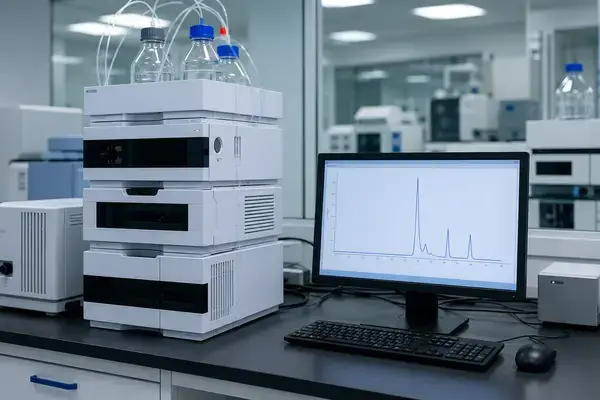
The integrity of any dataset depends on the integrity of the input material, which makes verification a core part of responsible research handling. Reputable suppliers of research compounds provide a Certificate of Analysis (COA) with each lot, and independent analytical testing adds a further layer of confidence.
Two standard analytical methods underpin this verification:
- High performance liquid chromatography (HPLC) is used to assess purity.
- Mass spectrometry is used to confirm identity and molecular mass.
Reviewing a current COA, and where available third-party analytical results, before beginning experimental work helps ensure that observations reflect the compound itself rather than impurities or mislabeled material.
Common Handling Mistakes to Avoid
- Reconstituting with a solvent that is incompatible with the planned assay.
- Vortexing aggressively and introducing foam and mechanical stress.
- Leaving solutions at room temperature longer than necessary.
- Subjecting the same aliquot to repeated freeze and thaw cycles.
- Skipping documentation of concentration, solvent, and date.
Conclusion
Sound data depends on sound material handling, and Epithalon is no exception. Treat the lyophilized powder as your most stable asset: keep it sealed, dry, dark, and cold, and return it to the freezer promptly after every use. When an experiment calls for solution, reconstitute gently with a solvent matched to your assay, calculate concentrations against the 390.35 g/mol molar mass, and aliquot before freezing so no portion endures repeated freeze and thaw cycles. Document every lot, solvent, and date, and verify each batch against a current Certificate of Analysis supported by HPLC and mass spectrometry. Build these steps into a standard operating procedure, and your results will stay reproducible across runs and across team members. Above all, remember that Epithalon is supplied strictly for laboratory research and educational use, not for human or animal consumption, and that careful, compliant handling remains the foundation of credible, repeatable science.
FAQs
How should lyophilized Epithalon be stored in the lab?
Keep it sealed, desiccated, protected from light, and cold. Store at minus 20°C for routine long-term holding and minus 80°C for archival material. Lyophilized peptides tolerate brief temperature excursions during shipping, so return every vial to cold storage as soon as it arrives.
Which solvent should I use to reconstitute Epithalon for research?
Start with sterile water, since the peptide is generally water soluble and this suits most laboratory preparations. Use bacteriostatic water when a preserved multi-use stock fits your workflow. Confirm the solvent is compatible with your downstream assay before committing material, as cell culture and other applications can carry specific requirements.
How long does reconstituted Epithalon stay stable, and how should solutions be handled?
Treat any solution as far less stable than the dry powder. Refrigerate at 4°C for near-term use over a few days, and freeze single-use aliquots at minus 20°C or minus 80°C for longer storage. Prepare solutions close to the time you need them and discard anything that falls outside your stability window.
Do freeze and thaw cycles affect Epithalon solutions?
Yes, and they rank among the most avoidable causes of degradation. Each cycle places mechanical and chemical stress on peptide material in solution, so repeated cycling steadily erodes integrity. Aliquot the stock into single-use volumes before freezing so each portion is thawed only once.
How do I calculate the concentration of an Epithalon stock solution?
Work from the molar mass of approximately 390.35 g/mol. Adding 1 mL of solvent to 1 mg of material gives a 1 mg/mL stock, which equals roughly 2.56 mM. From that known concentration, dilute to the working concentration your experimental protocol specifies.