❌ Not for Human Consumption
●
✅ For Research Use Only
●
All products are intended strictly for laboratory research purposes only
●
❌ Not for Human Consumption
●
✅ For Research Use Only
●
All products are intended strictly for laboratory research purposes only
●

Solid-Phase Vs. Liquid-Phase Synthesis For GLP-1 T

Written By: Gary Hite, Research Content Writer
Reviewed By: Natalie Kunsman, M.D., Board-Certified Physician
Last Reviewed: August 3, 2026
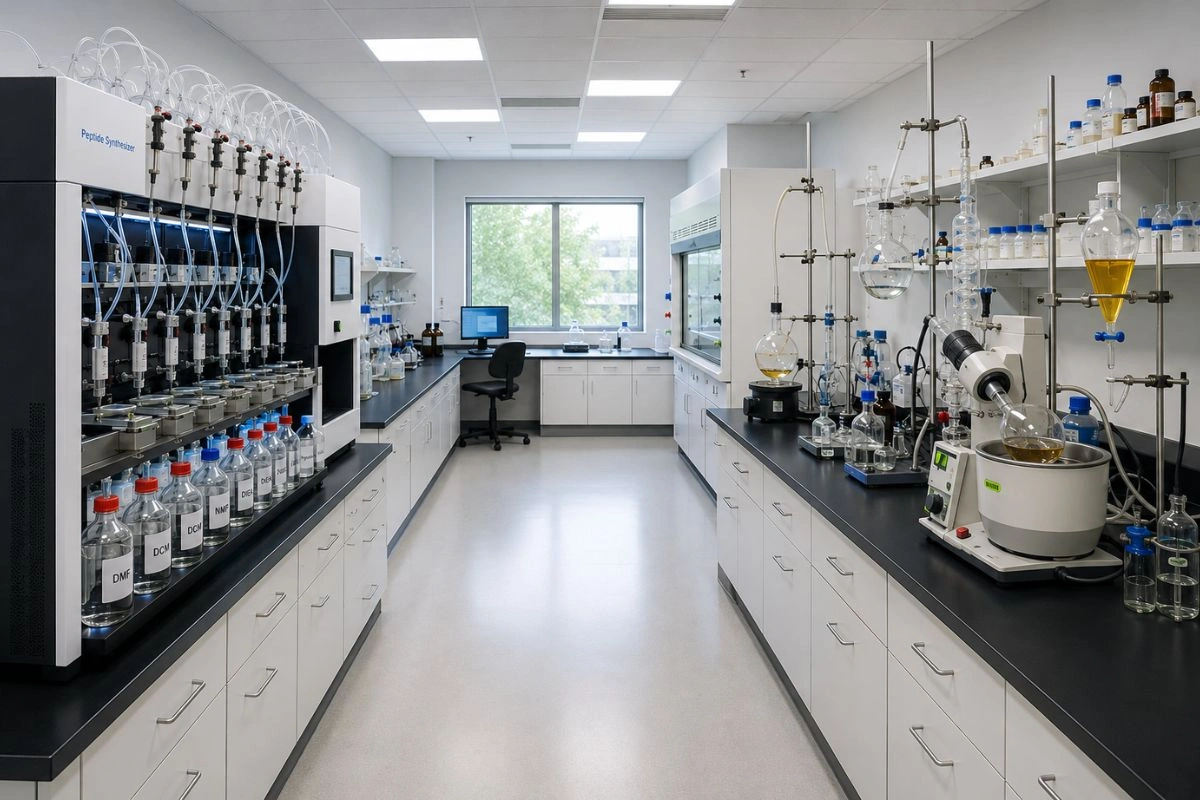
The method used to synthesize a research peptide determines far more than just whether the target molecule can be assembled. Synthesis strategy directly influences final yield, achievable purity, scalability potential, cost per milligram, and the reproducibility of batch-to-batch quality. For researchers working with complex incretin-related peptides such as GLP-1 T, selecting the right synthesis route is a critical decision that shapes every downstream experiment.
Two principal approaches dominate the peptide synthesis landscape: solid-phase peptide synthesis (SPPS) and liquid-phase (solution-phase) peptide synthesis (LPPS). Each method has been refined over decades of use in academic and industrial laboratories, and each carries distinct advantages and limitations that researchers must weigh carefully.
This article examines the core differences between SPPS and LPPS as they apply to GLP-1 T synthesis, with a focus on yield, purity, and scalability considerations relevant to professional research laboratories.
Disclaimer: GLP-1 T is sold strictly for research purposes only. This compound is not intended for human consumption, therapeutic application, or diagnostic use. The following content is provided solely for educational and informational purposes directed at professional researchers and academic investigators. Nothing in this article constitutes medical advice or a claim of therapeutic benefit.
Solid-Phase Peptide Synthesis For GLP-1 T: Principles and Characteristics
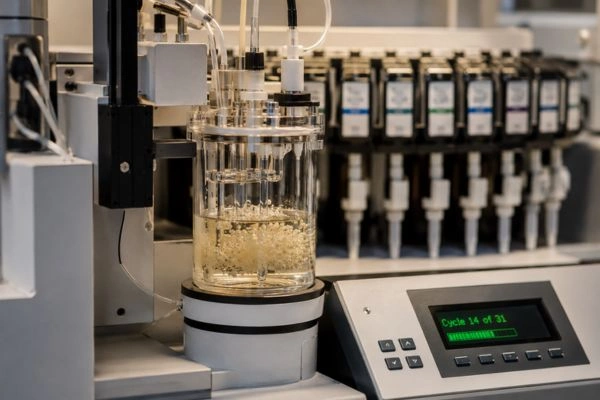
Solid-phase peptide synthesis, pioneered by Robert Bruce Merrifield in the 1960s, anchors the growing peptide chain to an insoluble resin support. Amino acids are added sequentially from the C-terminus to the N-terminus, with each coupling cycle followed by a deprotection step that exposes the terminal amine for the next residue. After the full sequence is assembled, the peptide is cleaved from the resin and subjected to purification.
Yield Considerations
SPPS enables the use of excess reagents at each coupling step, driving reactions toward completion and minimizing the accumulation of deletion sequences. For a peptide of the length and complexity characteristic of GLP-1 T, per-step coupling efficiencies of 99% or higher are achievable with optimized protocols and high-quality reagents. However, cumulative yield losses become more significant as peptide length increases. A peptide requiring 30 or more coupling steps will see meaningful aggregate yield reduction even at very high per-step efficiency. Researchers should calculate expected crude yields based on their specific coupling efficiency data and plan resin loading quantities accordingly.
Purity Considerations
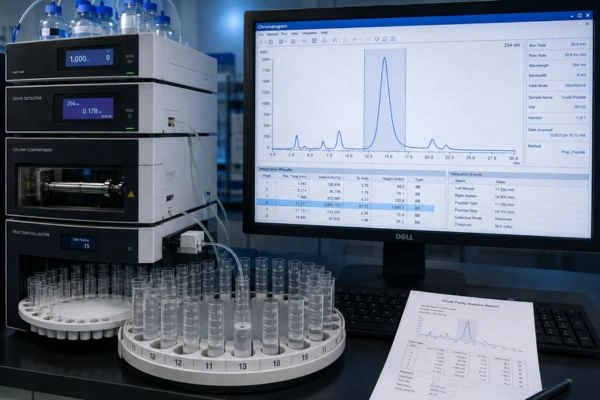
Crude peptide obtained from SPPS typically contains truncated sequences, deletion peptides, and side-chain modification byproducts. Purification by preparative reverse-phase HPLC is standard practice and can achieve final purities of 95% to 99% for well-optimized syntheses. For complex peptides like GLP-1 T, researchers should anticipate that purification may require multiple chromatographic passes and that recovery losses during purification will reduce the final usable yield.
Analytical characterization of the purified product using methods such as LC-MS, amino acid analysis, and peptide content determination is essential to confirm that the synthesis has produced the intended target at the required quality level.
Scalability Considerations
One of the recognized strengths of SPPS is its compatibility with automation. Modern peptide synthesizers can execute complex synthesis protocols with minimal manual intervention, improving reproducibility and reducing human error. For research laboratories that need milligram to low-gram quantities of GLP-1 T, automated SPPS is often the most practical route. However, scaling SPPS to multi-gram or kilogram quantities introduces challenges related to resin swelling, heat dissipation during coupling reactions, solvent consumption, and the cost of protected amino acid building blocks at larger scales.
Liquid-Phase Peptide Synthesis For GLP-1 T: Principles and Characteristics
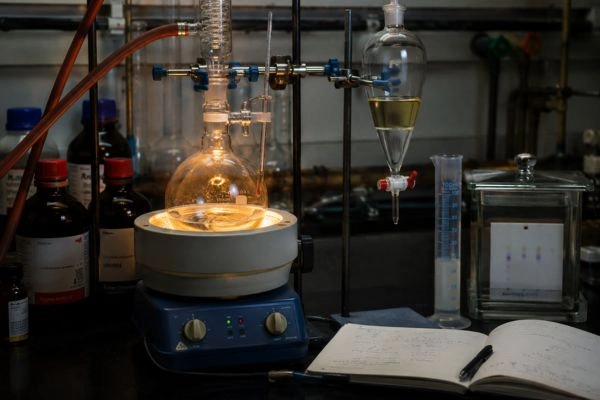
Liquid-phase peptide synthesis, also known as solution-phase synthesis, carries out all reactions in homogeneous solution rather than on a solid support. The peptide chain is built through sequential or convergent fragment coupling strategies. After each reaction step, the product must be isolated and purified before the next coupling, typically through extraction, crystallization, or chromatographic methods.
Yield Considerations
LPPS can achieve high coupling yields for individual fragment condensation reactions, particularly when using activated esters or coupling reagents optimized for solution-phase conditions. The convergent approach, in which shorter peptide fragments are synthesized independently and then joined, can improve overall yield by reducing the number of sequential steps and allowing independent optimization of each fragment synthesis.
For a peptide with the structural complexity of GLP-1 T, a convergent LPPS strategy may offer yield advantages at certain scales by allowing researchers to separately optimize the synthesis and purification of each fragment before final assembly. However, fragment solubility, aggregation behavior, and racemization risk at fragment coupling sites are variables that require careful management.
Purity Considerations
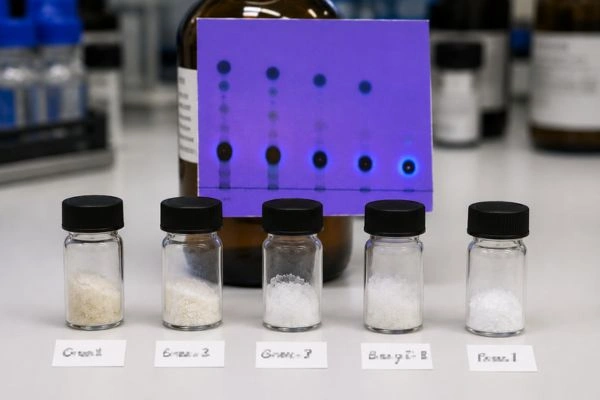
A notable advantage of LPPS is the ability to purify intermediates at each stage of the synthesis. This stepwise purification means that errors and byproducts can be removed progressively rather than accumulating through the entire chain assembly. The result is often a cleaner crude product at the final stage, which can simplify the terminal purification step.
However, each intermediate purification also introduces yield losses and adds time to the overall synthesis timeline. Researchers must balance the purity advantage of intermediate purification against the practical cost of additional processing steps. For GLP-1 T, the decision to purify at every stage or only at selected checkpoints should be guided by the specific impurity profile observed during method development.
Scalability Considerations
LPPS has historically been favored for larger-scale peptide production in industrial settings because it avoids the cost and volume constraints of resin-based chemistry. Solution-phase reactions can be conducted in standard chemical reactors at scales ranging from grams to kilograms without the specialized equipment required for large-scale SPPS. Solvent and reagent costs per gram of product can decrease at scale, and crystallization-based purification of intermediates can reduce dependence on preparative HPLC.
For research laboratories that anticipate needing larger quantities of GLP-1 T for extended study programs, LPPS or hybrid approaches that combine SPPS fragment synthesis with solution-phase fragment condensation may offer a practical scaling pathway.
Hybrid Approaches For GLP-1 T: Combining the Best of Both Methods
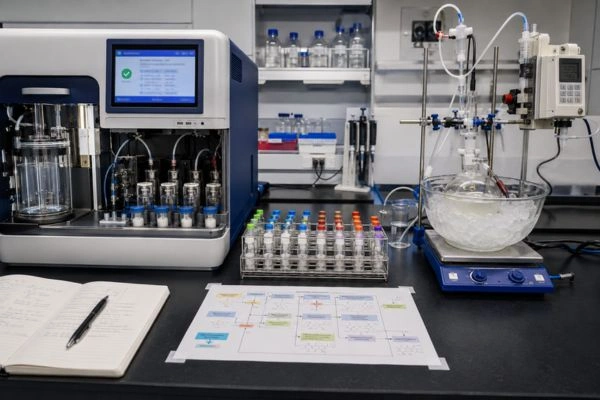
An increasing number of research groups and peptide chemistry laboratories employ hybrid strategies that leverage the strengths of both SPPS and LPPS. In a typical hybrid workflow, individual peptide fragments are synthesized on solid phase using automated SPPS, cleaved from the resin, purified, and then joined through solution-phase fragment condensation reactions.
This approach allows researchers to take advantage of SPPS automation and efficiency for fragment production while using LPPS for the critical final assembly steps where fragment coupling in solution may offer better control over stereochemistry and aggregate purity. For a multi-domain peptide like GLP-1 T, hybrid strategies represent a flexible option that can be tailored to the specific challenges of the target sequence.

Selecting the Right Route for Your Research Program
The choice between SPPS, LPPS, or a hybrid approach for GLP-1 T synthesis should be driven by the specific needs of the research program. Consider the quantity required, the purity threshold necessary for your planned assays, the equipment and expertise available in your laboratory, and the timeline for compound delivery. Document your synthesis and purification protocols thoroughly, verify final product identity and purity through orthogonal analytical methods, and maintain batch records that support reproducibility across your research program.
Every milligram of research-grade peptide reflects the quality of the chemistry behind it. Invest the time in selecting and optimizing the right synthesis route, and your experimental data will reflect that rigor.
Conclusion
The synthesis route you select for GLP-1 T sets the ceiling for every experiment that follows. Choose SPPS when your program requires milligram to low-gram quantities with automated reproducibility and rapid turnaround. Choose LPPS when intermediate purification, convergent fragment assembly, or larger production scales align with your research objectives. Evaluate hybrid strategies when neither method alone addresses the full scope of your requirements, particularly for complex sequences where fragment optimization and solution-phase final assembly offer combined advantages. Before committing to a route, calculate expected crude yields from your coupling efficiency data, define the purity threshold your downstream assays demand, and assess whether your laboratory has the equipment, expertise, and timeline to execute the chosen method effectively. Verify final product identity through orthogonal analytical methods including LC-MS and amino acid analysis. Maintain batch records detailed enough for full replication. The chemistry behind your peptide defines the data ahead of it. Make that chemistry count.
Final Disclaimer: GLP-1 T is sold exclusively for laboratory research purposes. It is not a drug, supplement, food product, or therapeutic agent. This compound is not intended for human consumption and has not been evaluated or approved by the FDA for any clinical use. All handling, storage, use, and disposal must comply with applicable institutional, local, state, and federal regulations. This content is directed solely at licensed researchers and academic professionals.
Frequently Asked Questions
What makes SPPS the more common choice for research-scale GLP-1 T synthesis?
SPPS offers automation compatibility, high per-step coupling efficiencies (99% or above with optimized protocols), and a streamlined workflow that minimizes manual intervention. For research laboratories requiring milligram to low-gram quantities, automated SPPS delivers faster turnaround and stronger batch-to-batch reproducibility than manual solution-phase methods. However, researchers should calculate cumulative yield losses for longer sequences and plan resin loading quantities based on their own coupling efficiency data rather than relying on theoretical projections.
When does liquid-phase synthesis offer advantages over SPPS for GLP-1 T?
LPPS provides the ability to purify intermediates at each stage, removing byproducts progressively rather than allowing them to accumulate through the full chain assembly. This stepwise purification often produces a cleaner crude product at the final stage. LPPS also scales more readily into multi-gram or kilogram quantities using standard chemical reactors, avoiding the resin cost and volume constraints that limit large-scale SPPS. Consider LPPS when your program demands larger quantities or when intermediate purity control is critical to your target quality specifications.
What is a hybrid synthesis approach, and when should I consider it for GLP-1 T?
A hybrid approach uses automated SPPS to produce individual peptide fragments, which are then cleaved, purified, and joined through solution-phase fragment condensation. This strategy combines the efficiency and reproducibility of SPPS fragment production with the stereochemical control and scalability of LPPS for final assembly. Consider a hybrid route when the full-length GLP-1 T sequence presents challenges that neither SPPS nor LPPS addresses completely on its own, such as aggregation-prone regions, difficult couplings, or racemization-sensitive junction sites.
How should I verify the purity and identity of synthesized GLP-1 T before using it in experiments?
Use orthogonal analytical methods to confirm your product from multiple angles. LC-MS provides both molecular weight confirmation and purity assessment in a single run. Amino acid analysis verifies composition and peptide content. Preparative reverse-phase HPLC serves as the standard purification method, with final purities of 95% to 99% achievable for well-optimized syntheses. Run these analyses on every batch, document the results alongside your synthesis and purification protocols, and establish a minimum purity threshold (typically 98% or higher for research-grade material) before releasing any batch for experimental use.
What factors should drive my decision between SPPS, LPPS, and hybrid strategies?
Base your decision on four variables: the quantity your research program requires, the purity threshold your planned assays demand, the equipment and expertise available in your laboratory, and your timeline for compound delivery. SPPS fits most research-scale needs with speed and automation. LPPS suits larger-scale production and programs that benefit from intermediate purification checkpoints. Hybrid strategies offer flexibility for complex sequences where fragment-level optimization improves overall outcomes. Document your rationale alongside your synthesis protocol so that future team members or collaborators can evaluate and reproduce your approach.