❌ Not for Human Consumption
●
✅ For Research Use Only
●
All products are intended strictly for laboratory research purposes only
●
❌ Not for Human Consumption
●
✅ For Research Use Only
●
All products are intended strictly for laboratory research purposes only
●

NAD+ Precursors Vs Direct NAD+ In Research Models

Written By: Gary Hite, Research Content Writer
Reviewed By: Natalie Kunsman, M.D., Board-Certified Physician
Last Reviewed: July 31, 2026
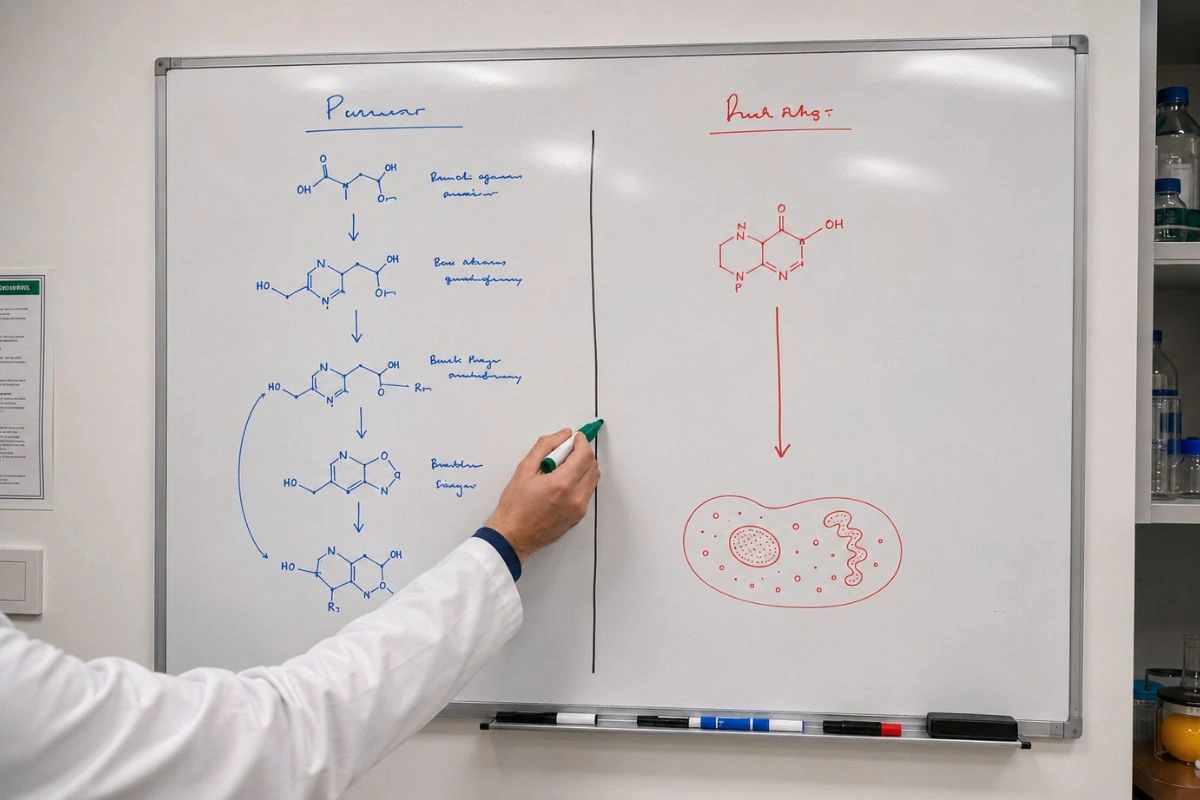
Nicotinamide adenine dinucleotide (NAD+) occupies a central position in cellular metabolism, serving as a coenzyme in redox reactions and as a substrate for enzymes including sirtuins, PARPs, and CD38. As research into NAD+ biology has expanded, investigators have adopted two fundamentally different experimental approaches: administering NAD+ precursors that cells convert into NAD+ through biosynthetic pathways, or applying NAD+ directly to the experimental system.
Each approach generates different data, tests different hypotheses, and introduces different variables. For professional researchers designing studies around NAD+ biology, understanding the distinctions between these two strategies is essential to producing interpretable, reproducible results.
This article compares precursor-based and direct NAD+ research approaches across key dimensions that matter in the laboratory, including mechanistic insight, experimental control, bioavailability considerations, and analytical requirements.
Disclaimer: NAD+ is sold strictly for research purposes only. This compound is not intended for human consumption, therapeutic application, or diagnostic use. The following content is provided solely for educational and informational purposes directed at professional researchers and academic investigators. Nothing in this article constitutes medical advice or a claim of therapeutic benefit.
Understanding the Precursor Approach
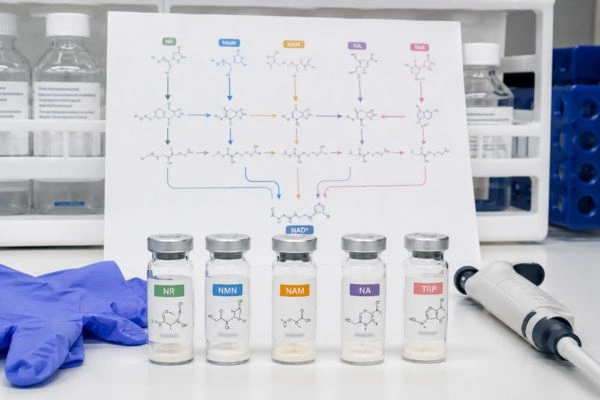
NAD+ precursors are compounds that cells take up and convert into NAD+ through one or more enzymatic steps within established biosynthetic pathways. The most commonly studied precursors in research literature include nicotinamide riboside (NR), nicotinamide mononucleotide (NMN), nicotinamide (NAM), nicotinic acid (NA), and tryptophan. Each precursor enters the NAD+ biosynthetic network at a different point, engages different rate-limiting enzymes, and produces different intermediate metabolite profiles on its way to NAD+.
Mechanistic Insight
One of the primary reasons researchers choose a precursor-based approach is the ability to probe specific biosynthetic pathway segments. By selecting a precursor that enters the salvage pathway versus the de novo pathway, for example, investigators can generate data about pathway-specific enzyme activity, flux rates, and regulatory checkpoints. This level of pathway resolution is not available when NAD+ is supplied directly, because direct supplementation bypasses biosynthetic machinery entirely.
Researchers studying rate-limiting enzymes such as NAMPT (nicotinamide phosphoribosyltransferase) in the salvage pathway or QPRT (quinolinate phosphoribosyltransferase) in the de novo pathway benefit from precursor-based designs because the experimental output reflects the activity and regulation of these specific enzymes.
Variables and Limitations
The precursor approach introduces variables that researchers must carefully control. Cellular uptake rates differ across precursor types and cell lines. Conversion efficiency depends on the expression level and activity of the relevant biosynthetic enzymes in the specific model system being used. Competing metabolic fates for certain precursors can divert substrate away from NAD+ synthesis, complicating dose-response interpretation.
Researchers should verify that their chosen cell line or model system expresses the enzymes required to convert the selected precursor into NAD+. Without this verification, negative or ambiguous results may reflect an enzymatic bottleneck rather than a true biological finding.
Understanding the Direct NAD+ Approach
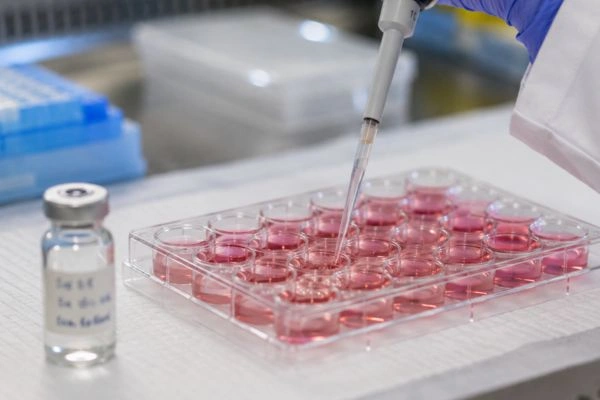
Direct NAD+ supplementation involves applying exogenous NAD+ to the experimental system, bypassing all biosynthetic conversion steps. In cell-based research, this typically means adding NAD+ to the culture medium at defined concentrations and measuring downstream effects on cellular processes.
Mechanistic Insight
The direct approach is particularly useful when the research question focuses on NAD+-dependent enzyme activity rather than biosynthetic pathway function. By providing NAD+ at controlled concentrations, researchers can study how sirtuin activity, PARP-mediated DNA repair signaling, or CD38 enzymatic cycling respond to defined changes in NAD+ availability without confounding variables introduced by precursor conversion kinetics.
Direct supplementation also allows researchers to establish clear dose-response relationships between extracellular NAD+ concentration and specific cellular readouts. This pharmacological-style experimental design can produce clean, interpretable data when the question centers on how much NAD+ is needed to drive a particular cellular response.
Variables and Limitations
The direct approach carries its own set of experimental challenges. A key consideration is whether exogenous NAD+ can efficiently cross the cell membrane in the model system being studied. NAD+ is a large, charged molecule, and its membrane permeability varies across cell types. Some research has identified potential transporter-mediated uptake mechanisms, but these remain an active area of investigation rather than an established certainty across all model systems.
Researchers using direct NAD+ supplementation should measure intracellular NAD+ levels after treatment to confirm that the exogenous compound is actually reaching the intracellular compartment where NAD+-dependent enzymes reside. Without this confirmation, observed effects could be mediated by extracellular NAD+ signaling through cell-surface receptors or by NAD+ degradation products generated in the culture medium.
Stability of NAD+ in the experimental medium is another consideration. NAD+ can undergo hydrolysis and enzymatic degradation in aqueous solutions and in the presence of serum-containing media. Time-course stability studies should be performed under the specific culture conditions used in each experiment.

Head-to-Head Comparison: Key Decision Factors
When deciding between precursor and direct NAD+ approaches, researchers should evaluate their experimental goals against several practical and scientific criteria.
If the research question involves NAD+ biosynthetic pathway activity, enzyme regulation, or metabolic flux through specific pathway segments, precursor-based approaches are the stronger fit. They provide pathway-level resolution that direct supplementation cannot offer.
If the research question focuses on the downstream effects of NAD+ availability on specific enzymes or cellular processes, and the goal is to control NAD+ exposure with minimal confounding variables, direct supplementation offers a cleaner experimental design.
For studies that aim to compare the two approaches within the same model system, parallel experimental arms using matched concentrations of precursor and direct NAD+ can reveal how much of the observed effect depends on biosynthetic processing versus NAD+ availability itself. This comparative design requires rigorous analytical support but can produce highly informative data.
Research Use Notice: NAD+ referenced in this article is intended for laboratory research purposes only and is not approved for human consumption by the FDA or any regulatory authority.
Analytical Requirements Across Both Approaches
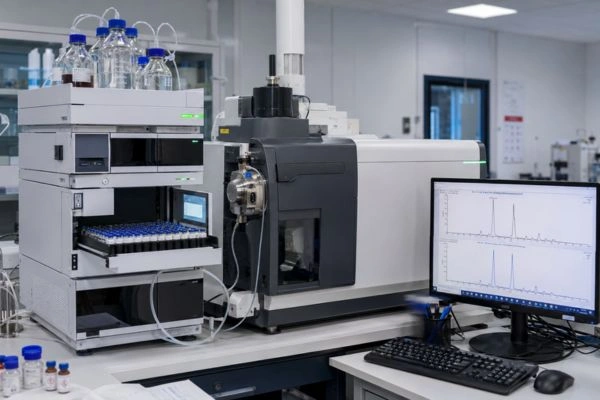
Regardless of which approach is selected, robust analytical methods are essential for generating credible data. Researchers should plan for quantification of total intracellular NAD+ levels using validated assays (enzymatic cycling or LC-MS, as discussed in related research literature), measurement of the NAD+/NADH ratio to capture redox state changes alongside total pool size, profiling of NAD+ metabolites (NMN, NR, NAM, ADPR) to track precursor conversion and NAD+ consumption, and time-course sampling to capture the kinetic profile of NAD+ changes rather than relying on single-timepoint snapshots.
For precursor studies specifically, measuring the precursor compound itself in addition to NAD+ and its metabolites provides valuable data on uptake efficiency and conversion rate. For direct supplementation studies, measuring extracellular NAD+ concentration over time confirms the actual exposure profile that cells experience throughout the experiment.

Building Robust NAD+ Research Protocols
The choice between NAD+ precursors and direct NAD+ is not a matter of one approach being inherently superior. It is a matter of alignment between the research question and the experimental tool. Define your question precisely, select the approach that best isolates the variable you intend to study, validate your analytical pipeline, and document every parameter of your protocol. When both approaches are scientifically justified, running them in parallel within the same study strengthens the interpretive power of your data and positions your findings for the scrutiny of peer review.
Conclusion
The decision between NAD+ precursors and direct NAD+ supplementation is not a preference. It is a methodological commitment that defines what your data can and cannot answer. Use precursors when your research targets biosynthetic pathway activity, enzyme regulation, or metabolic flux through specific conversion steps. Use direct NAD+ when your question centers on how defined NAD+ concentrations influence downstream enzyme function or cellular processes without conversion-related confounders. When both approaches address your hypothesis, run them in parallel within the same model system to separate biosynthetic processing effects from NAD+ availability effects. Whichever route you select, confirm intracellular NAD+ levels after treatment, measure the NAD+/NADH ratio alongside total pool size, and profile key metabolites across multiple time points rather than relying on single snapshots. Validate your analytical pipeline before generating experimental data, and document every protocol variable with enough detail to allow full independent replication. Let your research question dictate the method. Let the method deliver the answer.
Final Disclaimer: NAD+ is sold exclusively for laboratory research purposes. It is not a drug, supplement, food product, or therapeutic agent. This compound is not intended for human consumption and has not been evaluated or approved by the FDA for any clinical use. All handling, storage, use, and disposal must comply with applicable institutional, local, state, and federal regulations. This content is directed solely at licensed researchers and academic professionals.
Frequently Asked Questions
When should I use NAD+ precursors instead of direct NAD+ in my study?
Use precursors when your research question involves biosynthetic pathway function, rate-limiting enzyme activity, or metabolic flux through specific segments of NAD+ synthesis. Precursors like NR, NMN, or NAM each enter the biosynthetic network at different points, giving you pathway-level resolution that direct supplementation bypasses entirely.
What is the main advantage of direct NAD+ supplementation in research?
Direct supplementation lets you control extracellular NAD+ concentration precisely and study downstream enzyme responses without confounding variables from precursor uptake rates or conversion efficiency. This produces cleaner dose-response data when your question focuses on how NAD+ availability affects specific cellular processes.
Can exogenous NAD+ cross the cell membrane effectively?
Membrane permeability of NAD+ varies across cell types, and transporter-mediated uptake remains an active area of investigation. Always measure intracellular NAD+ levels after treatment to confirm that exogenous NAD+ is reaching the intracellular compartment. Without this step, observed effects may reflect extracellular signaling or degradation products rather than true intracellular NAD+ activity.
How do I verify that my cell line can convert a chosen NAD+ precursor?
Confirm that your model system expresses the enzymes required for precursor conversion before running full experiments. For salvage pathway precursors, verify NAMPT expression. For de novo pathway substrates, verify QPRT expression. Without this verification, negative results may reflect an enzymatic bottleneck rather than a genuine biological finding.
What analytical methods should I use regardless of which approach I select?
At minimum, quantify total intracellular NAD+ using validated enzymatic cycling assays or LC-MS, measure the NAD+/NADH ratio, and profile key NAD+ metabolites including NMN, NR, NAM, and ADPR. Collect data at multiple time points to capture kinetic profiles. For precursor studies, also measure the precursor compound itself to track uptake and conversion rates.