❌ Not for Human Consumption
●
✅ For Research Use Only
●
All products are intended strictly for laboratory research purposes only
●
❌ Not for Human Consumption
●
✅ For Research Use Only
●
All products are intended strictly for laboratory research purposes only
●

Solid-Phase Synthesis Of Epithalon Research Peptides

Written By: Gary Hite, Research Content Writer
Reviewed By: Natalie Kunsman, M.D., Board-Certified Physician
Last Reviewed: August 17, 2026
Epithalon is a synthetic tetrapeptide built from the amino acid sequence alanine, glutamic acid, aspartic acid, and glycine, often referenced in the literature by its sequence designation AEDG. For laboratories that source this compound, understanding how it is assembled and purified is practical knowledge. It informs decisions about purity thresholds, analytical verification, and documentation. This article walks through the solid-phase synthesis and purification workflow used to produce a research-grade Epithalon peptide, and it explains what to look for when reviewing a certificate of analysis.
Before going further, one point needs to be stated plainly. Everything described here applies to in vitro and preclinical laboratory work performed by qualified professionals. Epithalon is supplied strictly for research and educational use. It is not for human or veterinary use and is not for human consumption.
The Epithalon Peptide at a Glance
Epithalon is a short, linear tetrapeptide with a molecular formula of C14H22N4O9 and a molecular weight of approximately 390.4 g/mol, as listed in public compound reference data. The molecule terminates in a free carboxylic acid at the glycine residue and carries a free primary amine at the alanine residue. None of its four residues require unusual chemistry, which makes it a relatively straightforward target for modern peptide assembly.
Because it is a short sequence with standard residues, Epithalon is well suited to solid-phase methods. Short peptides assemble efficiently on resin, generate manageable crude profiles, and resolve cleanly during chromatographic purification.
Why Solid-Phase Peptide Synthesis
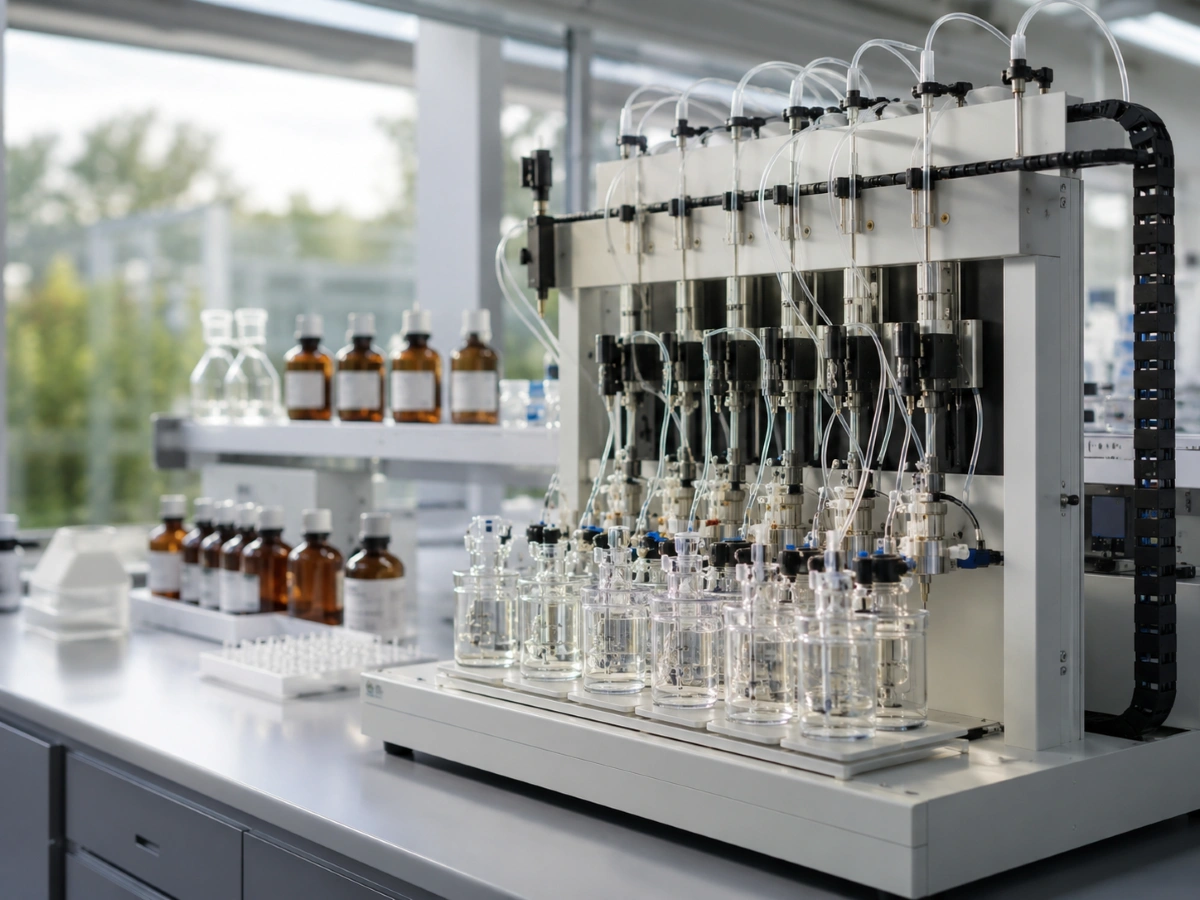
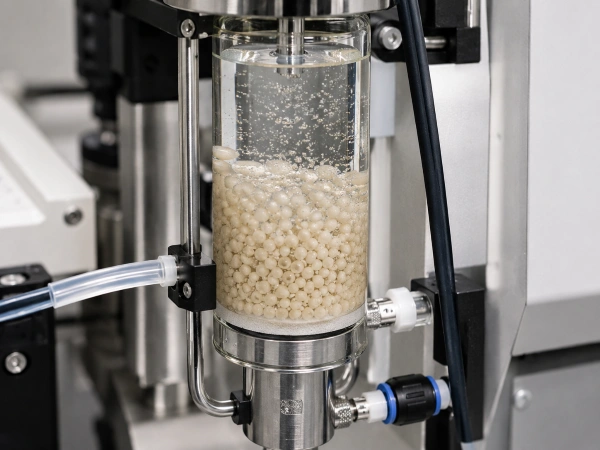
Solid-phase peptide synthesis, commonly abbreviated SPPS and covered in any general peptide synthesis overview, anchors the growing peptide chain to an insoluble polymer support. Each amino acid is added one at a time while the chain stays bound to the resin. After every coupling and deprotection step, excess reagents and soluble byproducts are simply washed away by filtration. This iterative cycle removes the need for intermediate isolation and makes the process fast, repeatable, and well suited to automation.
Two protection strategies dominate the field. The Fmoc/tBu approach uses base-labile alpha-amine protection and acid-labile side-chain protection, and it has become the default choice for most contemporary laboratories because it avoids strong acid at each cycle. The older Boc/Bzl approach relies on repetitive acid treatment and hydrogen fluoride cleavage. For a target like Epithalon, the Fmoc/tBu route is the practical and widely adopted option.
Selecting the Resin and Protecting Groups
Because Epithalon ends in a free carboxylic acid, the resin should release a free acid on cleavage. Wang resin and 2-chlorotrityl chloride resin both deliver this outcome and are common selections for acid-terminated peptides.
Side-chain protection is minimal for this sequence. The glutamic acid and aspartic acid carboxyl side chains are typically protected as tert-butyl esters, written as Glu(OtBu) and Asp(OtBu). Alanine and glycine carry no reactive side chains and need no protection. The alpha-amine of each incoming residue is protected with the Fmoc group, which is removed at the start of every coupling cycle.
The Stepwise Synthesis Cycle
Peptides are assembled from the C-terminus toward the N-terminus, so the first residue loaded onto the resin is the C-terminal glycine. From there, the chain grows through a repeating cycle.
First, the Fmoc group is removed with a base such as twenty percent piperidine in dimethylformamide, exposing a free amine. The resin is then washed thoroughly. Next, the following protected amino acid is activated with a coupling reagent and a base in dimethylformamide and is allowed to react with the resin-bound amine to form the new peptide bond. The resin is washed again, and the cycle repeats. For Epithalon, the build order on resin is glycine, then aspartic acid, then glutamic acid, then alanine.
One technical caution applies to the aspartic acid residue. Aspartyl positions can be prone to aspartimide formation under repeated base exposure, which lowers yield and complicates the crude profile. Careful selection of coupling and deprotection conditions, along with appropriate additives, helps keep this side reaction in check. Attention to this detail at the bench supports a cleaner product and easier purification downstream.
Cleavage and Global Deprotection
Once assembly is complete and the final Fmoc group is removed, the peptide is cleaved from the resin. A trifluoroacetic acid cocktail accomplishes two tasks at once. It releases the peptide from the support and simultaneously removes the tert-butyl side-chain protecting groups. A common formulation pairs trifluoroacetic acid with small amounts of water and triisopropylsilane as scavengers, which trap reactive species generated during cleavage.
After the cleavage reaction, the crude peptide is usually precipitated by adding the mixture to cold diethyl ether. The solid is collected, washed, and dried, yielding crude Epithalon ready for purification.
Purification by Reversed-Phase HPLC
The crude material contains the target peptide alongside deletion sequences, truncated chains, and other byproducts. Reversed-phase high performance liquid chromatography, or RP-HPLC, is the standard method for separating these components, and its underlying HPLC method fundamentals are well established across analytical chemistry.
A typical setup uses a C18 stationary phase with a gradient of water and acetonitrile, each containing a small percentage of trifluoroacetic acid as an ion-pairing modifier. As the gradient runs, components elute according to hydrophobicity. Fractions containing the target are collected, analyzed for purity, pooled, and then concentrated. The pooled material is lyophilized to produce a dry powder. Research-grade Epithalon is commonly purified to ninety-eight percent or higher, with the exact specification matched to the demands of the intended experiments.
Analytical Characterization and Quality Control
Purity on its own is not enough. Identity and composition need confirmation through complementary analytical methods.
Established techniques for verifying peptide purity center on analytical RP-HPLC, which quantifies purity and provides a retention profile for the finished lot. Mass spectrometry, whether by electrospray ionization or MALDI-TOF, confirms identity by matching the observed mass to the expected value near 390.4 g/mol. Amino acid analysis can verify residue composition, and additional testing may report net peptide content, the counterion form such as trifluoroacetate or acetate salt, and residual solvent levels. A complete certificate of analysis should accompany each batch and document these results.
Handling, Storage, and Stability in the Laboratory
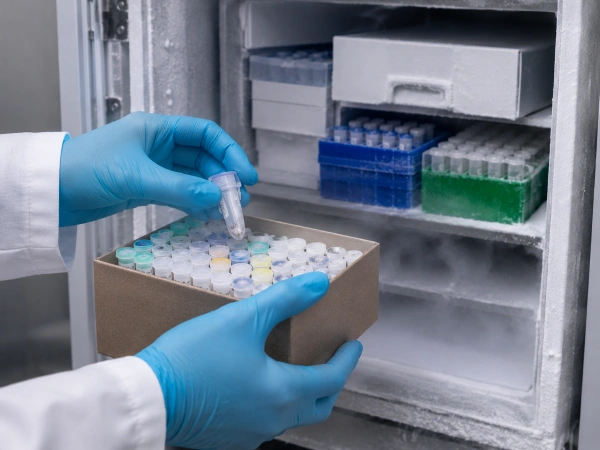
For laboratory handling, lyophilized Epithalon is typically stored at minus twenty degrees Celsius, kept desiccated, and protected from light to preserve stability over time. Sound lyophilized peptide storage practices help maintain integrity across the working period.
When a working solution is needed for an assay, the powder is reconstituted in an appropriate aqueous solvent or buffer. Guidance on selecting a solvent helps match that choice to the experimental design.
Dividing reconstituted material into single-use aliquots is good practice because it limits repeated freeze-thaw cycles that can degrade peptide quality. All preparation and storage steps should follow standard laboratory safety procedures and the receiving institution’s protocols. These handling notes are intended for research environments only.
Quality Considerations When Sourcing Research Peptides
When evaluating a research peptide for purchase, request the supporting documentation up front. A certificate of analysis with RP-HPLC purity data and mass spectrometry confirmation gives you an objective basis for assessing the material. Confirm that the stated purity specification aligns with the sensitivity and requirements of your planned work, and check that batch and lot information is provided. Thorough documentation supports reproducibility and makes results easier to interpret and report.
Conclusion
Producing research-grade Epithalon rewards discipline at every single step. Solid-phase assembly on a suitable resin, careful Fmoc deprotection and coupling, controlled cleavage, and rigorous reversed-phase purification all shape the quality of the final peptide. Analytical confirmation by HPLC and mass spectrometry then verifies that what reaches the bench matches what the experiment requires. Treat each of these stages as a checkpoint rather than a formality.
Before you commit material to a study, review the certificate of analysis, confirm the purity specification fits your assay sensitivity, and verify identity against the expected mass. Document where each batch came from and how it was stored so your results stay reproducible and defensible. When you source from a reputable research peptide supplier, insist on transparent analytical data with every lot. Strong inputs and careful records give your research a dependable foundation, and they make your findings easier to trust, repeat, and build upon.
FAQs
What is Epithalon, and what is its chemical structure?
Epithalon is a synthetic tetrapeptide with the sequence alanine, glutamic acid, aspartic acid, and glycine, abbreviated AEDG. It carries the molecular formula C14H22N4O9 and a molecular weight of roughly 390.4 g/mol, with a free carboxylic acid at the C-terminus. When a batch arrives, confirm these values against the certificate of analysis before you begin any work.
Why is solid-phase synthesis used to produce Epithalon?
The peptide is short and built entirely from standard residues, which makes it an efficient target for solid-phase assembly. Anchoring the chain to a resin lets you wash away excess reagents after each coupling, so the process stays clean and repeatable. For this sequence, plan on the Fmoc/tBu strategy using a Wang or 2-chlorotrityl chloride resin.
How is Epithalon purified, and what purity should I expect?
Crude peptide is typically purified by reversed-phase HPLC on a C18 column with a water and acetonitrile gradient, after which the target fractions are pooled and lyophilized. Research-grade material is commonly supplied at ninety-eight percent or higher. Match the stated purity specification to the sensitivity of your assay, and request the HPLC trace if it is not already included.
How do I verify the identity and purity of a received batch?
Review the certificate of analysis for analytical HPLC purity data and mass spectrometry confirmation, where the observed mass should sit near 390.4 g/mol. Check the reported counterion form, net peptide content, and residual solvent levels as well. If any of these data points are missing, ask the supplier to provide them before you proceed.
How should Epithalon be stored, and is it intended for any use beyond research?
Store the lyophilized powder cold, desiccated, and protected from light, and divide reconstituted solution into single-use aliquots to limit freeze-thaw cycles. Always follow your laboratory safety procedures and institutional protocols. Epithalon is supplied strictly for in vitro and preclinical research and educational purposes only. It is not for human or veterinary use and is not for human consumption.
Important Disclaimer: Epithalon is sold and supplied strictly for laboratory research and educational purposes only. It is not a drug, food, dietary supplement, or cosmetic, and it is not intended to diagnose, treat, cure, or prevent any disease or condition. This material is not for human or veterinary use and is not for human consumption. It has not been evaluated or approved by the U.S. Food and Drug Administration for any therapeutic application. Handling should be performed only by qualified professionals trained in laboratory safety, in full compliance with all applicable local, state, and federal regulations. Nothing in this article constitutes medical advice or a recommendation for use in humans.