❌ Not for Human Consumption
●
✅ For Research Use Only
●
All products are intended strictly for laboratory research purposes only
●
❌ Not for Human Consumption
●
✅ For Research Use Only
●
All products are intended strictly for laboratory research purposes only
●

Cobalamin Stability And Light Sensitivity In Research Storage Conditions

Written By: Gary Hite, Research Content Writer
Reviewed By: Natalie Kunsman, M.D., Board-Certified Physician
Last Reviewed: July 7, 2026
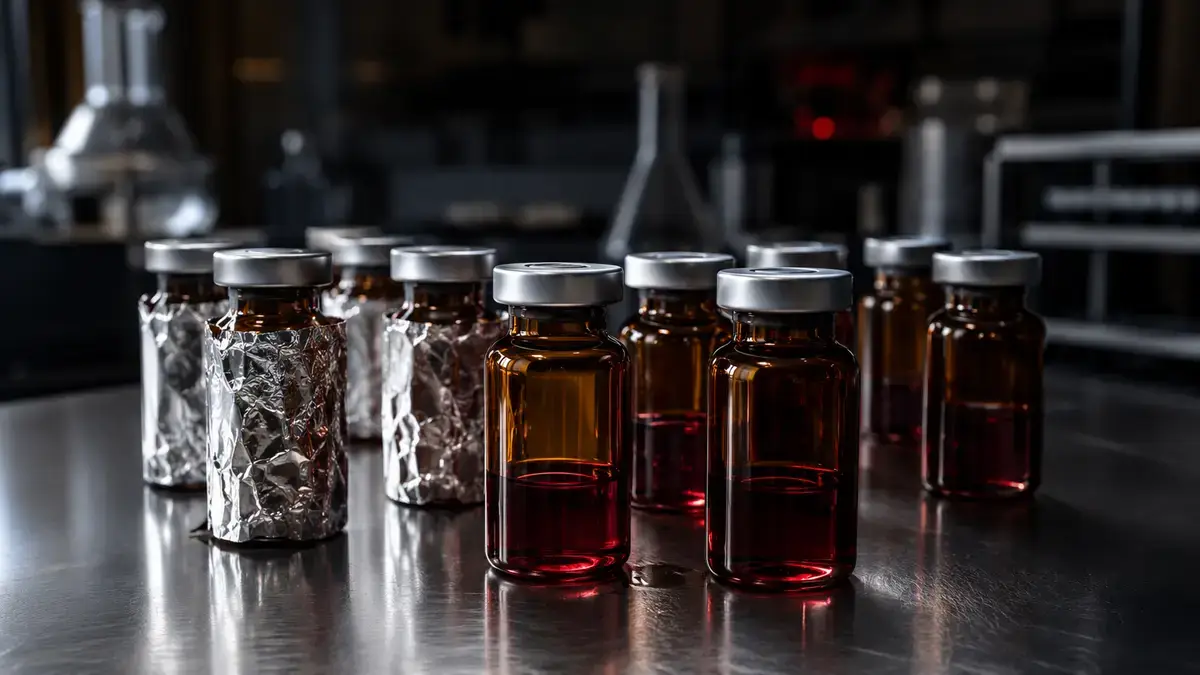
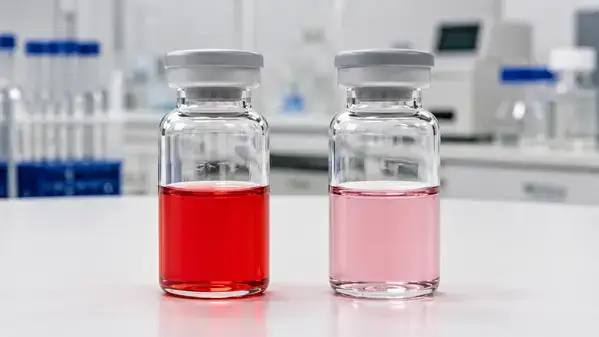
Cobalamin is one of the most photochemically reactive water soluble compounds a researcher will ever pull off the shelf. Anyone who has run a stability assay, a formulation experiment, or an analytical method development project with B12 has watched a brilliant red solution fade to pink, then to nearly colorless, in a matter of hours under standard fluorescent lighting. That visible color change tracks a chemical change. And that chemical change has measurable consequences for any downstream research data.
This guide is written for laboratory researchers, graduate students, principal investigators, and analytical chemists who need to understand the storage variables that govern cobalamin integrity in a controlled research environment. Everything that follows is intended exclusively for research use and educational reference. Cobalamin sold for laboratory research is not for human consumption, not for diagnostic use, and not approved for any therapeutic application.
Disclaimer: Cobalamin (B12) reference compounds and research grade materials discussed in this article are for in vitro research, analytical chemistry, and educational purposes only. They are not intended for human or veterinary consumption, not intended for diagnostic procedures, and not intended to diagnose, treat, cure, or prevent any disease or condition. No medical, therapeutic, nutritional, or weight related claims are made or implied. This content is provided to qualified researchers and academic institutions for laboratory reference use.
What Cobalamin Is From a Research Chemistry Standpoint
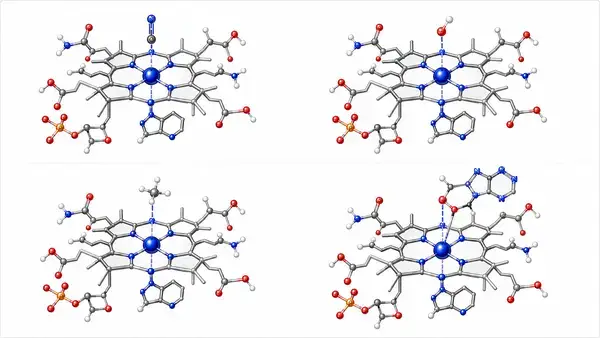
Cobalamin refers to a family of cobalt containing corrinoid molecules with a central cobalt ion coordinated inside a corrin ring. The most commonly studied research forms include cyanocobalamin, hydroxocobalamin, methylcobalamin, and adenosylcobalamin. Each variant differs by the upper axial ligand attached to the cobalt center, and that single structural difference drives the dramatically different stability profiles researchers observe at the bench.
For analytical work, cyanocobalamin is the most chemically robust of the four. Methylcobalamin and adenosylcobalamin are the most photolabile. Hydroxocobalamin sits between the two and has its own pH dependent behaviors that complicate buffer selection.
Researchers studying corrinoid biochemistry, vitamin pathway enzymology, methylation cycles, or fortification analytics need to account for these structural differences before designing any storage protocol. Treating all four forms as a single compound class is one of the fastest ways to introduce uncontrolled variance into a study.
Why Light Sensitivity Matters for Research Reproducibility
Photodegradation of cobalamin is not a theoretical concern. Published photochemistry data from analytical chemistry journals consistently shows substantial losses of intact cobalamin within hours of ambient light exposure, particularly for the alkylcobalamins. The cobalt to carbon bond in methylcobalamin and adenosylcobalamin is one of the most photosensitive bonds in biological chemistry, and homolysis can occur even under mild visible light.
When a research sample degrades, the consequences cascade. HPLC peak areas drift. Spectrophotometric absorbance values shift. Biological assays using degraded standards return unreliable activity measurements. Stability studies that fail to control for light exposure introduce confounding variables that can invalidate weeks of laboratory work and complicate any attempt at peer review or publication.
For any research program that treats cobalamin as a primary analyte, a reference standard, or a substrate for enzymatic studies, light control is not optional. It is a baseline requirement.
Mechanisms of Photodegradation in Cobalamin
The photochemistry of cobalamin has been studied for decades, and several degradation pathways are well documented in the peer reviewed literature.
Photolysis of methylcobalamin and adenosylcobalamin proceeds primarily through cleavage of the cobalt to carbon bond. Under aerobic conditions, this cleavage produces hydroxocobalamin and a carbon centered radical that goes on to react with available oxygen species. Under anaerobic conditions, the products are different but the cobalt to carbon bond cleavage still dominates the reaction profile.
Cyanocobalamin is more stable but is not immune. Extended UV exposure can promote loss of the cyanide ligand and conversion to hydroxocobalamin or further degradation products that complicate analytical interpretation.
The wavelengths that drive cobalamin photodegradation fall mostly in the UV and visible range, with notable absorbance bands around 361 nanometers and 550 nanometers for the cyano form. Standard laboratory fluorescent fixtures and incidental sunlight both deliver enough photon flux in these regions to drive measurable degradation across a typical working day.
Temperature as a Co Variable With Light
Temperature and light operate together. A sample held at room temperature under ambient light degrades faster than one held cold in the dark, but temperature alone does not stop photolysis. Researchers sometimes assume that refrigerated storage solves the problem. It does not.
The Arrhenius relationship still applies for thermal degradation pathways, but photolytic degradation has its own rate equations driven by photon flux, not by ambient temperature. A clear glass vial of methylcobalamin sitting in a refrigerator with an interior light that cycles on each time the door opens can still accumulate photodamage over weeks of storage.
Best practice for long term research storage involves both low temperature and complete light exclusion. Many laboratories store cobalamin stock solutions in amber vials, wrapped in aluminum foil, inside a refrigerator or freezer that is itself located in a low light area.
Container Material Selection
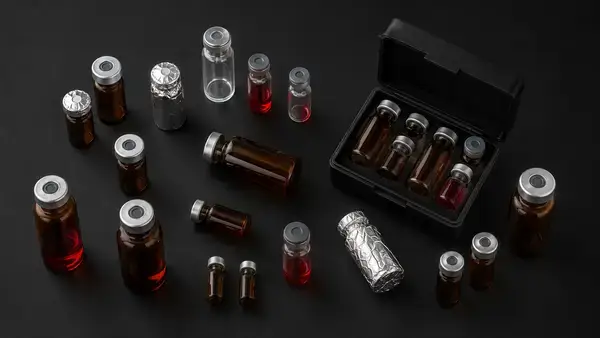
Glass selection meaningfully affects cobalamin stability during research storage. Clear borosilicate glass offers no protection against visible or UV light. Amber glass filters out a substantial portion of UV and short wavelength visible light, but it does not block all photoactive wavelengths relevant to cobalamin photolysis.
For maximum protection, researchers often combine amber glass with an opaque secondary barrier. Aluminum foil wrapping is inexpensive, repositionable, and reliable. Light blocking laboratory storage boxes serve the same purpose for batch storage of multiple vials.
Plastic containers introduce a different set of variables. Some polymers leach plasticizers that can interfere with cobalamin analytics, and others have permeability profiles that change shelf life behavior. For research grade work, glass remains the default choice unless a specific protocol requires otherwise.
pH and Buffer Effects
Cobalamin stability is pH dependent. Cyanocobalamin shows maximum stability in the neutral to slightly acidic range, typically pH 4 to 7. At strongly acidic or strongly alkaline pH values, hydrolysis and rearrangement reactions accelerate. Hydroxocobalamin is particularly sensitive to alkaline conditions where it can dimerize or undergo further structural changes that alter its analytical profile.
Buffer selection matters as well. Phosphate buffers are common for cobalamin work because they have minimal interaction with the corrin ring under neutral conditions. Tris buffers can interact with certain cobalamin forms and are usually avoided for stability critical applications. Citrate and ascorbate buffers introduce reducing conditions that change the redox state of the cobalt center, which may be desirable for certain reduction studies and undesirable for others.
Researchers designing a stability protocol should document buffer composition, ionic strength, and pH at the start and end of each storage interval. Drift in any of these parameters can confound the interpretation of stability data and create reproducibility issues across laboratory groups.
Oxygen and Headspace Considerations
Dissolved oxygen accelerates several cobalamin degradation pathways, particularly those involving radical intermediates from photolysis. For long term research storage of sensitive cobalamin forms, sparging stock solutions with nitrogen or argon before sealing reduces dissolved oxygen and slows oxidative degradation.
Headspace gas composition matters for the same reason. A vial filled to the shoulder with solution and topped with an inert gas blanket performs better than a half full vial with an air headspace. For freezer storage of stock aliquots, smaller volume aliquots reduce the air to liquid ratio and minimize freeze thaw exposure across the study period.
Reconstitution and Working Solution Handling
Lyophilized cobalamin standards remain stable for extended periods when stored cold and protected from light. Once reconstituted, the clock starts on solution phase degradation. Working solutions should be prepared fresh on the day of use whenever feasible, particularly for sensitive analytical methods or enzyme kinetics work.
Reconstitution solvents affect stability. Water and dilute phosphate buffer at neutral pH are reasonable choices for most analytical applications. Methanol and acetonitrile, which are common in HPLC sample preparation, are acceptable for short term handling but should not be used for long term storage of cobalamin stocks because of differential degradation kinetics observed in organic solvent systems.
When transferring solutions between containers, minimize exposure to laboratory lighting. Many researchers perform reconstitution and dilution steps under reduced light, or with a foil shield around the work area, to protect the sample during the most vulnerable phase of handling.
Stability Testing Protocols Worth Considering
For research programs that depend on cobalamin integrity, a documented stability testing protocol pays dividends. A typical bench protocol might include the following design elements without prescribing any therapeutic outcome.
Initial characterization establishes baseline purity by HPLC with UV detection at 361 nanometers, which is a commonly used wavelength for cobalamin quantification. Mass spectrometric confirmation of identity adds rigor for any publication grade work and helps differentiate intact cobalamin from early degradation products.
Time course sampling across several intervals captures degradation kinetics. Triplicate samples at each time point reduce the impact of analytical noise. Light exposed and light protected arms running in parallel quantify the light contribution to total degradation observed.
Temperature arms held at refrigerated, frozen, and room temperature conditions generate the data needed to model real research storage scenarios. The combination of factors produces a stability matrix that informs future storage decisions for the same compound batch or lot.
Documentation Practices for Reproducibility
Storage condition documentation is one of the most undervalued practices in cobalamin research. A lot number on a vial communicates very little if the storage history is not captured alongside it. Best practice involves recording the date of receipt, date of opening, storage temperature, storage container, light exposure conditions, and any thermal excursions during the storage period.
Many research laboratories use electronic laboratory notebook systems to track these variables. Manual logs in a bound notebook work just as well for smaller programs. The key is consistency. Stability claims made in research publications carry weight only when the underlying storage data supports them transparently.
Common Mistakes Observed in Cobalamin Research Storage
Several patterns recur across laboratories that experience unexpected cobalamin degradation. First, researchers often underestimate the photon flux from ambient laboratory lighting. The same light intensity that feels modest to a human eye delivers more than enough energy to drive cobalt to carbon bond homolysis over a working day.
Second, freeze thaw cycles cause cumulative damage that is sometimes attributed to other variables. Each cycle exposes the solution to a brief temperature transition zone where degradation rates are elevated, and repeated cycles compound the loss across the lifetime of a stock solution.
Third, transparent glassware is sometimes used for short term experiments without recognizing that even a few hours of exposure can shift assay results. For any work where cobalamin concentration is a critical parameter, amber glass or opaque coverage should be the default rather than the exception.
Fourth, mixed batches of differently aged stock solutions can introduce variance into experimental data. Maintaining a fresh single source of reference material for any research campaign improves run to run consistency and reduces the kind of unexplained drift that delays publication.
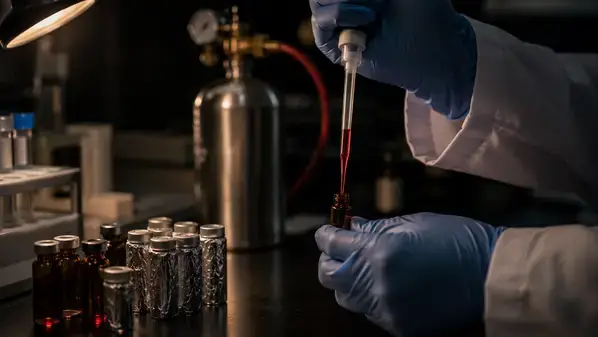
Action Steps for Research Storage of Cobalamin
Researchers setting up a cobalamin storage workflow can take several concrete steps right now. Choose amber glass as the default vial format and add foil wrapping for any compound that will be stored beyond a few days. Sparge stock solutions with inert gas before long term storage to remove dissolved oxygen. Aliquot stocks into single use volumes to eliminate repeated freeze thaw exposure. Document every step of the storage history alongside the vial label so the lot remains traceable.
Confirm the wavelength sensitivity profile of the specific cobalamin form being used before designing a study. Methylcobalamin and adenosylcobalamin require stricter light control than cyanocobalamin. The protocol that works for one form may underprotect another.
Finally, build stability checkpoints into long running studies. Periodic HPLC reads of the working stock catch silent degradation before it contaminates an entire dataset.
Conclusion
Cobalamin research demands the same rigor as any analytical program working with photolabile compounds. The variables matter. Amber glass over clear glass. Foil wrapping over bare vials. Inert gas headspace over ambient air. Single use aliquots over repeated freeze thaw cycles. Documented storage history over assumed stability. Each decision compounds into the integrity of the final dataset, and shortcuts in storage protocols routinely surface as confounding variables during peer review.
Researchers who treat cobalamin storage as a first class experimental variable, rather than an afterthought, generate cleaner stability data, more reproducible enzyme kinetics, and analytical results that hold up across replication attempts. The photochemistry will not bend to convenience. Build the protocol around the chemistry, document every step, and the cobalamin will return reliable data across the full duration of the study. Cobalamin reference materials discussed here remain for laboratory research and educational use only, not for human consumption.
FAQs
Why does cobalamin degrade so quickly under standard laboratory lighting?
The cobalt to carbon bond in methylcobalamin and adenosylcobalamin is one of the most photosensitive bonds in biological chemistry. Standard fluorescent and LED fixtures deliver enough photon flux in the UV and visible range, particularly near 361 and 550 nanometers, to drive measurable bond homolysis within hours of exposure. Even cyanocobalamin, which is more robust, loses its cyanide ligand under sustained UV exposure. Working under reduced light and using amber glass with foil wrapping prevents most of this loss during routine handling.
Which cobalamin form is most stable for long term research storage?
Cyanocobalamin is the most chemically robust of the four common research forms and tolerates extended storage better than methylcobalamin, adenosylcobalamin, or hydroxocobalamin. For projects studying biological activity that depends on a specific cobalamin form, freeze stable aliquots of the alkylcobalamins in amber glass under inert gas headspace, and accept that working stocks of those forms should be replaced more frequently than cyanocobalamin equivalents to preserve assay integrity.
What buffer system works best for cobalamin stability studies?
Phosphate buffer at neutral to slightly acidic pH, typically between pH 4 and 7, provides the most stable baseline for cyanocobalamin and most analytical work. Avoid Tris buffers for stability critical applications because of interactions with the corrin ring under certain conditions. Citrate and ascorbate buffers introduce reducing conditions that change cobalt redox state, which may serve specific research designs but is not appropriate as a default storage buffer for stability testing.
How should reconstituted cobalamin solutions be stored between experiments?
Prepare working solutions fresh on the day of use whenever the experimental design allows. For storage between sessions, transfer to amber glass, sparge headspace with nitrogen or argon, wrap the vial in foil, and refrigerate or freeze depending on the storage duration required. Aliquot into single use volumes to avoid repeated freeze thaw cycles, which compound degradation across the lifetime of the stock and introduce silent variance into downstream assays.
What documentation should accompany cobalamin samples for research reproducibility?
Record lot number, date of receipt, date of opening, storage temperature, storage container type, light exposure conditions, and any thermal excursions across the storage period. Electronic laboratory notebooks and bound paper logs both work for this purpose. Reproducible stability claims in peer reviewed publications depend on a documented storage chain, and missing data in this area is one of the most common reasons referee comments request additional confirmatory experiments before acceptance.