❌ Not for Human Consumption
●
✅ For Research Use Only
●
All products are intended strictly for laboratory research purposes only
●
❌ Not for Human Consumption
●
✅ For Research Use Only
●
All products are intended strictly for laboratory research purposes only
●

Stability Of BPC-157 Across Various Laboratory Storage Conditions

Written By: Gary Hite, Research Content Writer
Reviewed By: Natalie Kunsman, M.D., Board-Certified Physician
Last Reviewed: July 9, 2026
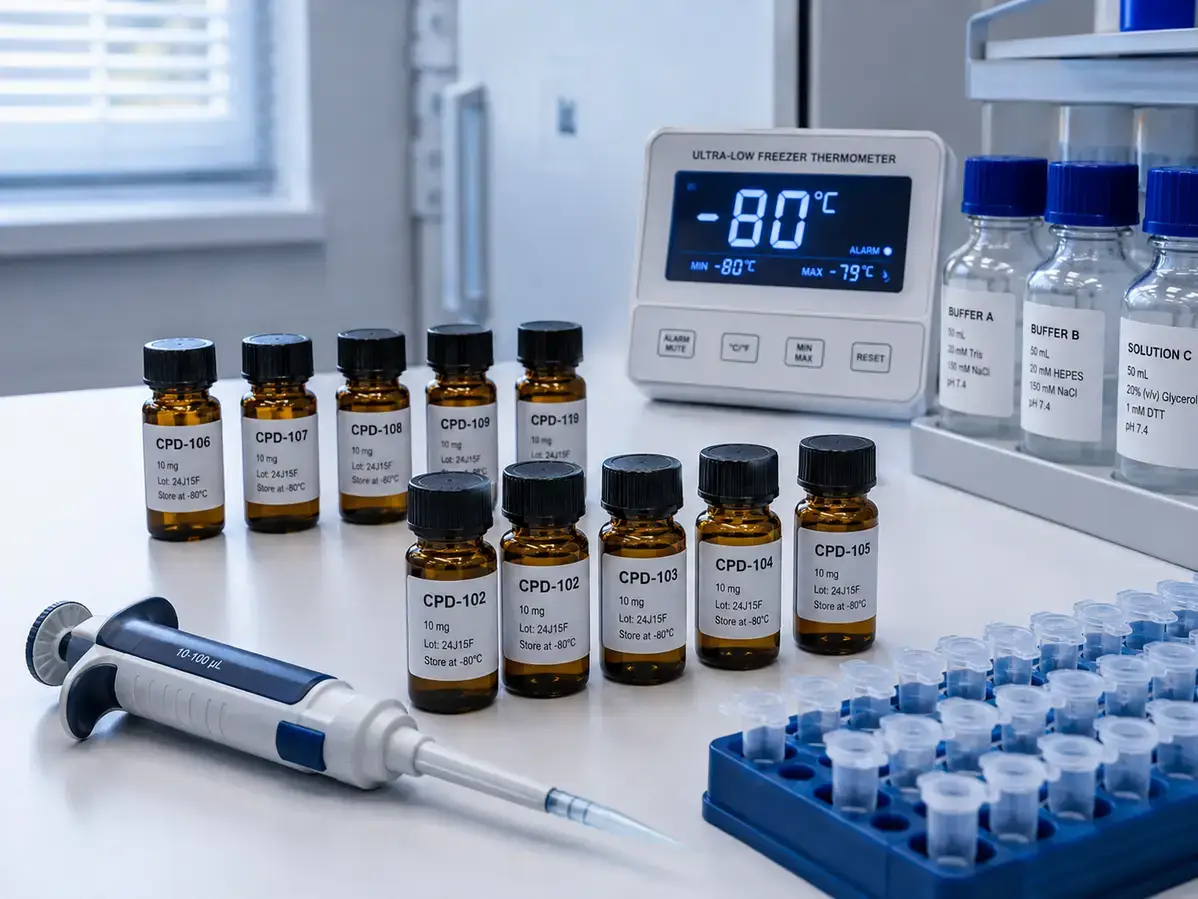
The biggest cause of BPC-157 degradation in research settings isn’t shipping. It’s the freezer door. Repeated freeze-thaw cycles on reconstituted BPC-157 can knock peptide integrity down by 8 to 15 percent per cycle, depending on solvent and concentration. That single handling habit destroys more research compound than any other variable in a typical lab workflow.
This article documents what published peptide stability research tells us about storing BPC-157 (Body Protection Compound-157), a synthetic pentadecapeptide used strictly as a research compound by professional researchers and academic institutions.
Disclaimer: BPC-157 discussed here is intended for laboratory research and educational purposes only. It is not approved by the FDA for any human or veterinary application. Nothing in this article should be interpreted as guidance for human consumption, therapeutic use, or any application outside controlled research environments.
Why BPC-157’s Structure Matters for Storage
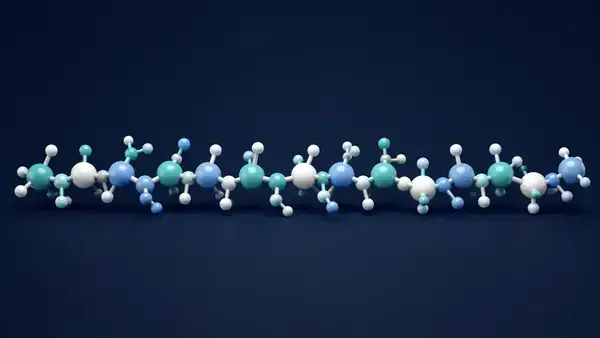
BPC-157 is a 15 amino acid sequence (Gly-Glu-Pro-Pro-Pro-Gly-Lys-Pro-Ala-Asp-Asp-Ala-Gly-Leu-Val) with a molecular weight near 1419 Da. The high proline content matters for stability because proline residues resist enzymatic cleavage. That’s part of why early stability work by Sikiric and colleagues found the compound retained measurable structure after exposure to simulated gastric conditions, an unusual property for peptides this size.
Structural resilience in solution doesn’t translate to indefinite shelf life. Storage stability depends on five variables researchers actually control: temperature, hydration state, solvent choice, light exposure, and freeze-thaw history.
Lyophilized Storage: The Most Stable Form
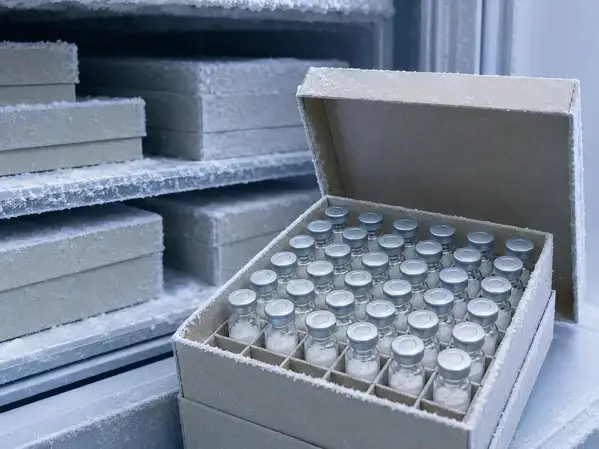
Lyophilized (freeze-dried) BPC-157 is the most stable form available for laboratory storage. Published data on similar pentadecapeptides shows the following pattern:
- At minus 80°C lyophilized: 24 months or longer with minimal degradation (typically under 2 percent HPLC purity loss)
- At minus 20°C lyophilized: 12 to 18 months with under 5 percent purity loss in most cases
- At 4°C lyophilized: 1 to 3 months acceptable for active research; longer storage shows measurable degradation
- At room temperature lyophilized: short term shipping only, 7 to 14 days maximum before noticeable purity loss
Water is the catalyst for nearly every peptide degradation pathway. Hydrolysis at aspartate residues (BPC-157 contains two Asp residues) accelerates in the presence of even trace moisture. Keeping the powder dry is more important than keeping it cold, though both help.
Reconstitution Starts the Clock
Once researchers add solvent, stability changes. Reconstituted BPC-157 stability depends heavily on the solvent used:
- Sterile bacteriostatic water (0.9 percent benzyl alcohol): 14 to 21 days at 4°C with acceptable retention
- Sterile water for injection: 7 to 10 days at 4°C
- Phosphate buffered saline (PBS) at pH 7.4: 10 to 14 days at 4°C
- Acetic acid solutions (0.1 percent): used for some HPLC prep work, stability varies by sample
At room temperature, reconstituted BPC-157 begins showing measurable degradation within 24 to 48 hours. At 37°C, half life drops to roughly 4 to 6 hours for many similar peptides in aqueous solution.
Freeze-Thaw Cycles: Where Most Labs Lose Product
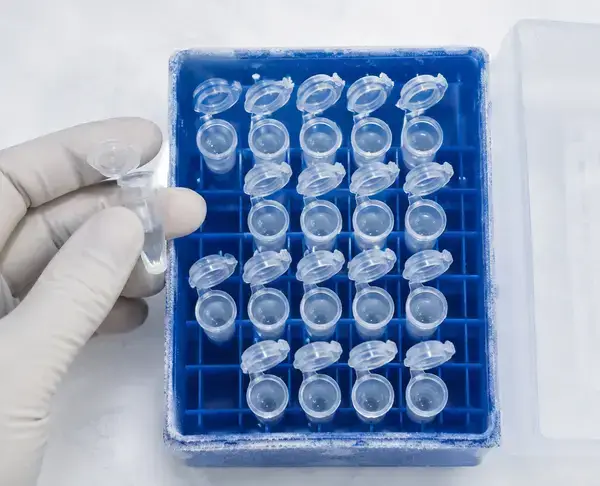
Each freeze-thaw cycle damages reconstituted peptides through several mechanisms. Ice crystal formation disrupts conformation. pH shifts during freezing concentrate solutes locally. Surface adsorption to vial walls accumulates with each cycle.
A practical rule: limit reconstituted BPC-157 to three freeze-thaw cycles maximum. Better practice is to aliquot the reconstituted solution into single use volumes before the first freeze. A 5 mg vial reconstituted in 5 mL of solvent should produce 10 to 20 small aliquots of 250 to 500 µL each, frozen once and thawed only when needed.
This habit alone preserves more research compound than upgrading freezer hardware.
Light and Oxygen Exposure
BPC-157 contains no aromatic residues (no Trp, Tyr, or Phe), which makes it less UV sensitive than many peptides. Photo oxidation of cysteine and methionine drives most peptide light damage. BPC-157 lacks both, so photo risk is lower than for peptides like glutathione or oxytocin.
That doesn’t mean light exposure is harmless. Amber vials remain standard practice because oxidative degradation from dissolved oxygen continues regardless of light. Lyophilized peptide is typically packed under nitrogen or argon by reputable suppliers. Once a vial is opened, ambient oxygen begins reacting with the powder.
Reseal vials immediately after weighing or aliquoting. For valuable samples, consider purging headspace with inert gas before resealing.
Container Material Choices
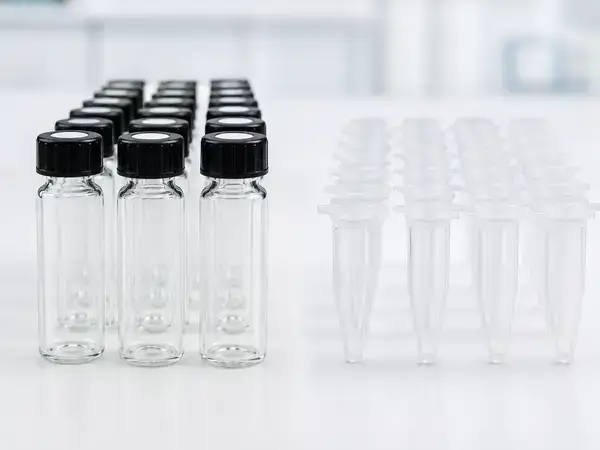
Glass vials beat plastic for long term storage. Polypropylene tubes are acceptable for short term aliquots, but extended storage in plastic can lead to peptide adsorption onto tube walls.
For BPC-157 at low concentrations (under 100 µg/mL), researchers sometimes see 5 to 20 percent loss to tube walls in standard polypropylene Eppendorf tubes after 30 days at minus 20°C. Siliconized or low bind tubes reduce this loss.
Glass scintillation vials with PTFE lined caps are the laboratory standard for long term storage of reconstituted peptide aliquots.
A Working Protocol for Research Settings
For laboratory workflow stability with BPC-157:
- Store lyophilized material at minus 20°C or minus 80°C in original sealed vials, protected from moisture
- Before opening, equilibrate the vial to room temperature in a desiccator to prevent condensation
- Reconstitute with the solvent appropriate for the experimental endpoint
- Aliquot immediately into single use volumes in low bind or siliconized tubes
- Label aliquots with date, concentration, solvent, and lot number
- Document freeze-thaw count on each tube
- Run periodic HPLC purity checks on long stored aliquots before using in critical experiments
Conclusion
Storage failures rarely announce themselves. Researchers notice when an assay produces inconsistent results, not when a peptide degrades by 6 percent in a freezer cycle. By then, the experiment is already compromised. The variables covered above (temperature, hydration state, solvent choice, light exposure, freeze-thaw history) are the controllable inputs that separate reproducible BPC-157 research from data that won’t survive peer review.
Build storage discipline into the protocol itself, not the researcher’s memory. Pre-aliquot before first freeze. Label every tube with cycle counts. Run baseline HPLC checks on aged samples before critical experiments. These habits cost lab time once and pay back across every subsequent run.
BPC-157 sold by Penguin Peptides remains a research compound only. Not for human consumption. Not approved by the FDA for therapeutic use. Intended strictly for in vitro study and educational purposes by qualified professional researchers and academic institutions.
FAQs
How long does lyophilized BPC-157 stay stable at minus 20°C?
Lyophilized BPC-157 stored at minus 20°C typically retains acceptable purity for 12 to 18 months, with HPLC purity loss generally under 5 percent during that window. Storage at minus 80°C extends usable life to 24 months or longer. Both depend on the powder staying dry. Trace moisture from poor vial sealing or condensation during handling shortens these timeframes regardless of freezer temperature.
What’s the best solvent for reconstituting BPC-157 for research use?
For laboratory research workflows requiring multi-day stability, sterile bacteriostatic water (0.9 percent benzyl alcohol) gives the longest reconstituted shelf life at 4°C, typically 14 to 21 days. PBS at pH 7.4 holds up for 10 to 14 days. Sterile water for injection without preservative degrades faster, around 7 to 10 days. Match the solvent to the experimental endpoint, not to convenience.
How many freeze-thaw cycles can reconstituted BPC-157 handle?
Three cycles is the practical maximum before measurable degradation compromises research data. Each cycle costs roughly 8 to 15 percent peptide integrity through ice crystal damage, pH shifts, and surface adsorption. The better protocol is to aliquot reconstituted BPC-157 into single use volumes before the first freeze, eliminating repeat cycles entirely.
Does BPC-157 need protection from light during storage?
BPC-157 lacks aromatic residues (no Trp, Tyr, or Phe) and contains no cysteine or methionine, so photo-oxidation risk is lower than for many peptides. Amber vials are still standard practice because oxidative degradation from dissolved oxygen continues independent of light exposure. Reseal vials immediately after handling and store under nitrogen or argon when possible for valuable samples.
Why does BPC-157 sometimes lose potency even in proper freezer storage?
Adsorption to container walls and trace moisture exposure cause most “silent” losses. BPC-157 at concentrations under 100 µg/mL can lose 5 to 20 percent to standard polypropylene tube walls over 30 days at minus 20°C. Switching to siliconized or low bind tubes, or to glass scintillation vials with PTFE lined caps, eliminates most of this loss. Equilibrate vials to room temperature in a desiccator before opening to prevent condensation cycling.