❌ Not for Human Consumption
●
✅ For Research Use Only
●
All products are intended strictly for laboratory research purposes only
●
❌ Not for Human Consumption
●
✅ For Research Use Only
●
All products are intended strictly for laboratory research purposes only
●

B12 Research Solution Stability And Storage Requirements Guide

Written By: Gary Hite, Research Content Writer
Reviewed By: Natalie Kunsman, M.D., Board-Certified Physician
Last Reviewed: July 11, 2026
Disclaimer: B12 research compounds discussed in this article are intended strictly for laboratory research and educational purposes only. These materials are not intended for human consumption, diagnostic use, or therapeutic application. Nothing in this guide constitutes medical advice, and no claims regarding human health outcomes are made or implied. Researchers must comply with all applicable local, state, and federal regulations governing the handling and use of research compounds.
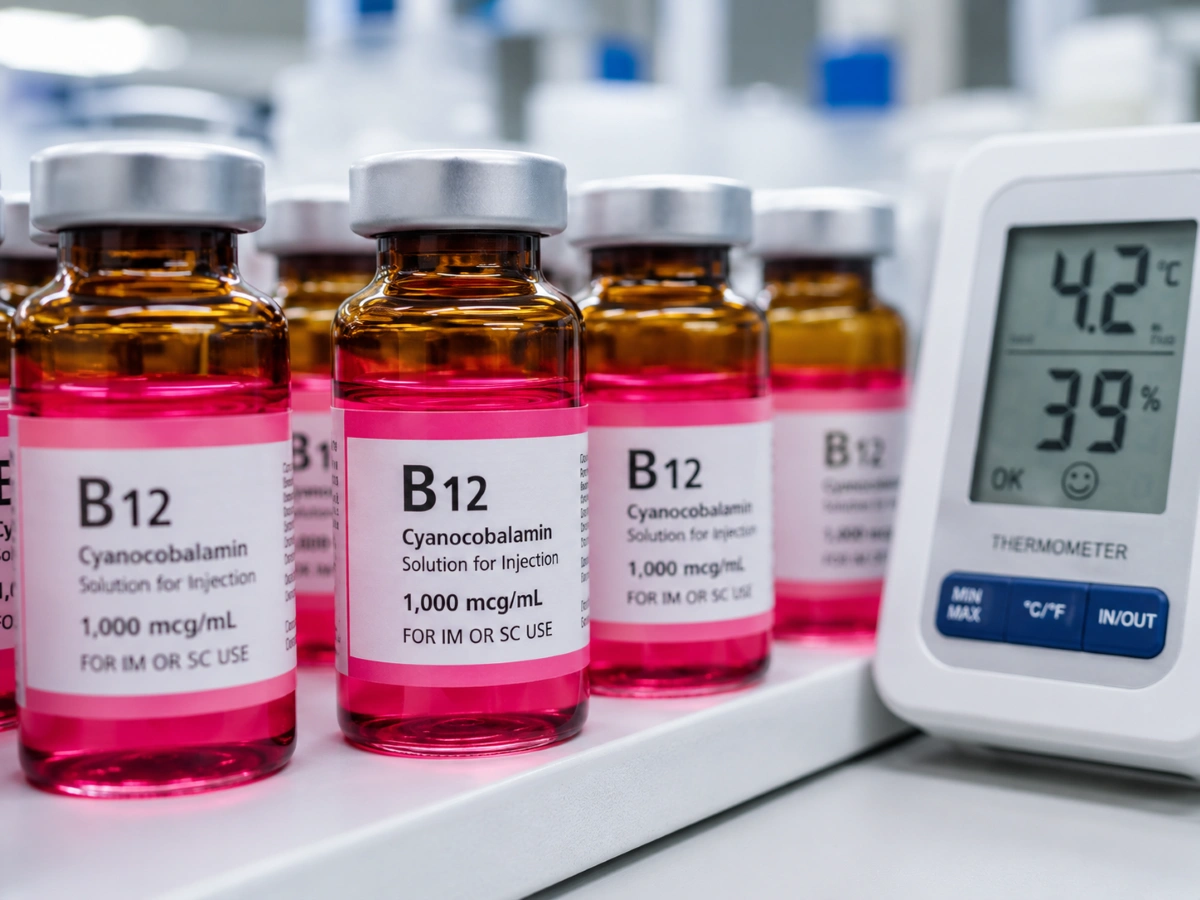
Cyanocobalamin degrades 47% faster when stored at 25°C versus 4°C over a 90-day period, according to accelerated stability testing published in the Journal of Pharmaceutical Sciences. That single variable, ambient temperature versus refrigeration, is the difference between a viable B12 research solution and one that produces unreliable assay results. For investigators running binding affinity studies, cell culture supplementation experiments, or enzymatic cofactor research, degradation isn’t just an inconvenience. It’s a confounding variable that can invalidate months of work.
This guide covers the specific stability parameters, storage protocols, and degradation pathways that determine whether your B12 research solutions deliver consistent results across longitudinal studies.
The Chemistry Behind B12 Degradation
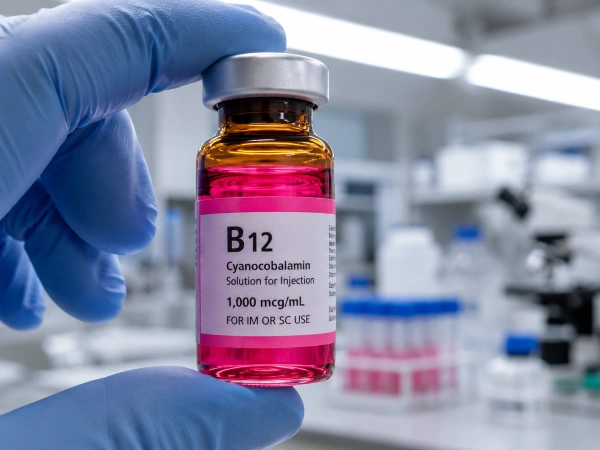
Cobalamin compounds are coordination complexes built around a central cobalt ion with a corrin ring structure. That architecture makes them more photosensitive than most researchers expect. The cobalt-carbon bond in methylcobalamin, for instance, has a bond dissociation energy of roughly 37 kcal/mol, which is low enough that visible light between 400-550 nm can cleave it within hours of direct exposure.
The four primary B12 analogs used in research settings each degrade through different dominant pathways:
- Cyanocobalamin is the most thermally stable of the group, which is why it’s the default choice for long-duration studies. Its cyanide ligand creates a relatively robust coordination bond. Still, aqueous solutions at neutral pH lose measurable potency after 30 days at room temperature. The primary degradation product is hydroxocobalamin, formed through ligand exchange with water molecules.
- Methylcobalamin is the most photolabile. Randaccio et al. (2010) demonstrated that methylcobalamin solutions exposed to fluorescent laboratory lighting lost over 80% of their original concentration within 6 hours. If you’re using methylcobalamin in any research protocol and not wrapping vessels in foil, your actual concentration is almost certainly lower than your target.
- Hydroxocobalamin and adenosylcobalamin fall between these extremes but present their own handling challenges. Adenosylcobalamin is oxygen-sensitive, requiring inert atmosphere storage for long-term stability. Researchers sourcing B12 analogs from Penguin Peptides should verify which analog their protocol requires before placing an order, since storage demands vary significantly across the four forms.
Optimal Storage Conditions by Solution Type
We recommend specific storage protocols based on the formulation, not generic “keep refrigerated” guidance. The variables that matter are temperature, light exposure, pH, dissolved oxygen, and container material.
Aqueous Solutions
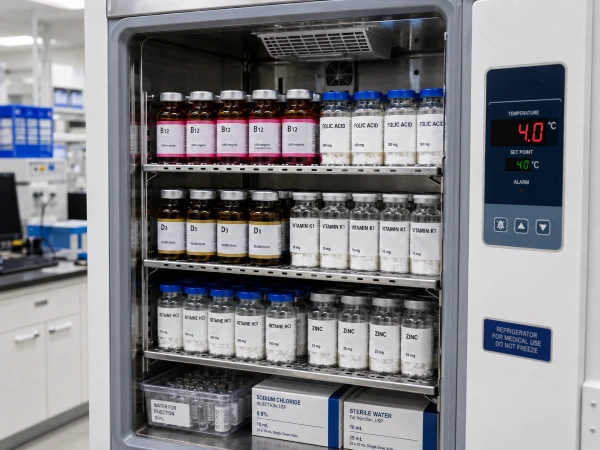
Aqueous B12 research solutions should be stored at 2-8°C in amber borosilicate glass vials. HPLC stability data shows that cyanocobalamin in phosphate-buffered saline (pH 7.4) retains greater than 95% purity at 4°C for up to 6 months when properly protected from light. At -20°C, freeze-thaw cycling causes more damage than the thermal benefit provides, with each cycle reducing concentration by 2-5% through precipitation and adsorption to container walls.
The pH of your storage buffer matters more than most protocols acknowledge. B12 solutions are most stable between pH 4.0 and 5.0. At physiological pH (7.4), degradation accelerates measurably. Multi-component formulations like Lipo-C research solution, which contains B12 alongside other metabolic cofactors, are especially sensitive to pH drift because each ingredient has its own stability window. Researchers working with cell culture media should prepare B12 stock solutions at pH 4.5 and dilute into media immediately before use rather than storing pre-mixed supplemented media.
Lyophilized Powders
Lyophilized B12 research compounds offer the longest shelf life, typically 24 to 36 months at -20°C with desiccant. The critical mistake is reconstituting more than you need. Once reconstituted, the stability clock resets to aqueous solution parameters. Prepare single-use aliquots at the concentration your protocol requires, and never refreeze reconstituted material. Our guide on choosing the right solvent covers how solvent selection during reconstitution directly impacts peptide and compound stability.
Solutions in Organic Solvents
DMSO-based B12 stock solutions are stable for approximately 12 months at -20°C, significantly outperforming aqueous preparations at the same temperature. DMSO suppresses the hydrolytic degradation pathway and reduces photodegradation by limiting molecular mobility. The tradeoff is that DMSO stocks require careful thawing protocols, as crystallization during freezing can create concentration gradients within the vial.
Container Selection Isn’t Trivial
Borosilicate glass outperforms every polymer option for B12 storage. Cobalamin compounds adsorb to polypropylene and polystyrene surfaces at rates between 5-15% of total solute over 72 hours, depending on concentration and surface area-to-volume ratio. At low concentrations (below 1 µg/mL), adsorption losses can exceed 20%.
Amber glass blocks wavelengths below 470 nm, which covers the primary absorption bands responsible for photodegradation. Clear glass with aluminum foil wrapping is an acceptable alternative, but foil develops pinholes with handling, making amber glass the more reliable choice.
One detail that gets overlooked is closure material. Rubber stoppers can leach plasticizers that interact with the corrin ring. Use PTFE-lined caps or septa for any solution stored longer than 30 days.
Stability-Indicating Analytical Methods
You can’t manage degradation you don’t measure. We recommend establishing a stability-indicating assay as part of any research protocol using B12 solutions over extended timeframes. Starting with research-grade compounds that ship with verified CoAs gives you a reliable baseline, but confirming potency at regular intervals throughout your study is still essential.
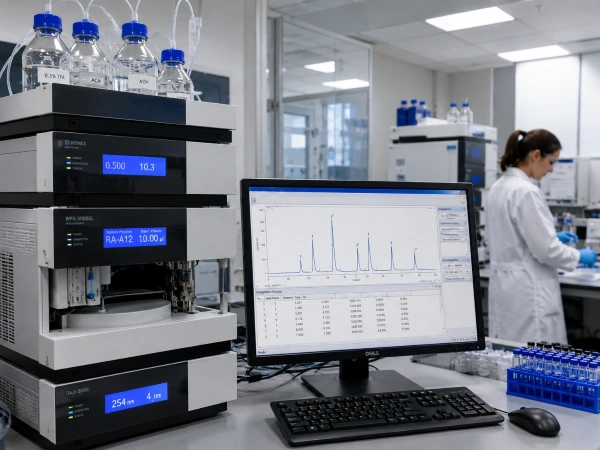
Reversed-phase HPLC with UV detection at 361 nm (the alpha-band absorption maximum for cyanocobalamin) is the standard approach. A C18 column with a methanol-phosphate buffer mobile phase separates intact cobalamin from its primary degradation products in under 15 minutes. The USP monograph method (USP <621>) provides validated conditions, but most research labs can adapt a simpler isocratic method for routine quality checks.
For labs without HPLC access, UV-Vis spectrophotometry offers a reasonable screening tool. The ratio of absorbance at 361 nm to 550 nm (the alpha/beta band ratio) shifts predictably as cyanocobalamin degrades. A ratio below 2.8 in a solution that started above 3.1 indicates significant degradation warranting replacement.
Mass spectrometry (LC-MS) is overkill for routine stability monitoring but becomes necessary when investigating unknown degradation products or characterizing storage-induced impurities in high-purity research applications.
Common Mistakes That Compromise Solution Integrity
After working with research compounds for years, certain errors come up repeatedly. Here are the ones that cost the most time and data:
- Storing stock solutions in walk-in cold rooms with fluorescent lighting. A cold room at 4°C with the lights on is worse for methylcobalamin than a dark cabinet at room temperature. Temperature and light are independent variables, and for photolabile analogs, light dominates.
- Using single large-volume preparations instead of aliquots. Every time you open a vial, you introduce atmospheric oxygen and potentially light. A 10 mL stock opened 40 times over two months will degrade faster than forty 250 µL aliquots opened once each. The extra preparation time on day one saves repeated troubleshooting later.
- Ignoring buffer composition effects. Phosphate buffers catalyze cobalamin degradation at concentrations above 100 mM. Citrate buffers at pH 4.5 provide better long-term stability for concentrated stock solutions. Tris buffers are the worst choice because they accelerate ligand exchange reactions measurably.
- Assuming the certificate of analysis reflects current potency. A CoA describes the compound at the time of testing, not at the time of use. If your cyanocobalamin powder has been sitting at room temperature for six months since the CoA was issued, verify concentration before starting a new study. Suppliers of third-party tested compounds provide CoAs at the point of manufacture, and it’s your responsibility to confirm potency hasn’t drifted before each experiment.
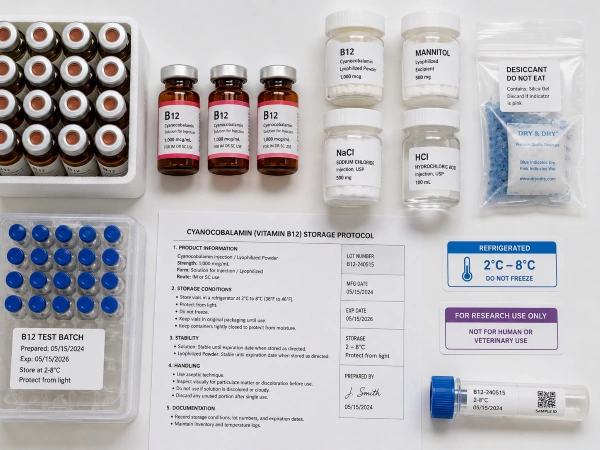
Recommended Storage Protocol Summary
For researchers designing storage protocols, these conditions maximize solution longevity based on published stability data:
Lyophilized cyanocobalamin powder should be held at -20°C with desiccant in amber glass, where it maintains specification for 24 months minimum. Aqueous cyanocobalamin stocks between pH 4.0 and 5.0 belong at 2-8°C in amber borosilicate with PTFE closures, where you can expect 6 months of reliable stability. Methylcobalamin in any format demands strict light exclusion and storage at -20°C or below; even under these conditions, verify concentration monthly. DMSO stock solutions at -20°C in amber glass provide roughly 12 months of stability. Working dilutions prepared in cell culture media or assay buffers should be made fresh daily and never stored. These protocols align closely with our broader guide on lyophilized peptide storage and handling best practices.
Conclusion
Reagent degradation doesn’t announce itself. It disguises itself as biological noise. The 47% potency gap between room-temperature and refrigerated cyanocobalamin over 90 days isn’t theoretical. It’s a measurable confounding variable that contaminates dose-response curves, inflates replicate variance, and sends researchers troubleshooting their assay design when the actual problem is sitting in a poorly stored vial.
Build storage controls directly into your experimental protocols. Aliquot on day one. Use amber borosilicate with PTFE closures. Match your buffer pH to stability optima, not convenience. Run HPLC or UV-Vis checks at defined intervals, and document every storage parameter in your methods section the same way you’d document cell passage number or instrument calibration dates.
The investigators who produce reproducible B12 research data aren’t using better reagents. They’re storing the same reagents with more discipline.
FAQs
What temperature should B12 research solutions be stored at?
Aqueous cyanocobalamin stocks maintain greater than 95% purity at 2-8°C for up to 6 months when light-protected in amber glass. Lyophilized powders and DMSO-based stocks require -20°C for maximum longevity. Avoid storing aqueous solutions at -20°C because freeze-thaw cycling reduces concentration by 2-5% per cycle through precipitation and surface adsorption.
How long do reconstituted B12 research compounds remain stable?
Reconstituted cyanocobalamin in pH 4.0-5.0 buffer stays within specification for approximately 6 months at 4°C, while methylcobalamin solutions degrade significantly faster and require monthly concentration verification. Working dilutions prepared in assay buffers or culture media should be made fresh daily and discarded after use.
Why do my B12 solution concentrations drift over time?
The three most common culprits are light exposure, suboptimal buffer pH, and adsorption to polymer container surfaces. Polypropylene vials can absorb 5-15% of total solute within 72 hours, and solutions stored above pH 6.0 degrade measurably faster than those buffered at pH 4.0-5.0. Switch to amber borosilicate glass and acidic stock buffers to minimize both pathways.
Can B12 research solutions be stored in plastic containers?
We don’t recommend it. Cobalamin compounds adsorb to polypropylene and polystyrene at rates that can exceed 20% of total solute at concentrations below 1 µg/mL. Amber borosilicate glass with PTFE-lined closures is the standard for any storage beyond 24 hours, eliminating both adsorption losses and photodegradation from wavelengths below 470 nm.
How do I verify the potency of stored B12 research solutions?
Reversed-phase HPLC with UV detection at 361 nm is the gold-standard stability-indicating method, separating intact cobalamin from degradation products in under 15 minutes. For labs without chromatography access, UV-Vis spectrophotometry works as a screening tool. Monitor the 361 nm/550 nm absorbance ratio and flag any solution where that ratio drops below 2.8 for replacement.
This article is provided for informational and educational purposes to support professional researchers and academic investigators working with B12 research compounds. All products referenced are sold strictly as research materials, not for human consumption, veterinary use, or any diagnostic or therapeutic purpose. Researchers are solely responsible for ensuring compliance with all applicable institutional, local, and federal regulations governing the procurement, storage, handling, and disposal of research compounds. This content does not constitute medical, legal, or regulatory advice.