❌ Not for Human Consumption
●
✅ For Research Use Only
●
All products are intended strictly for laboratory research purposes only
●
❌ Not for Human Consumption
●
✅ For Research Use Only
●
All products are intended strictly for laboratory research purposes only
●

Reconstitution, Handling, And Stability Of ARA-290 For Laboratory Use

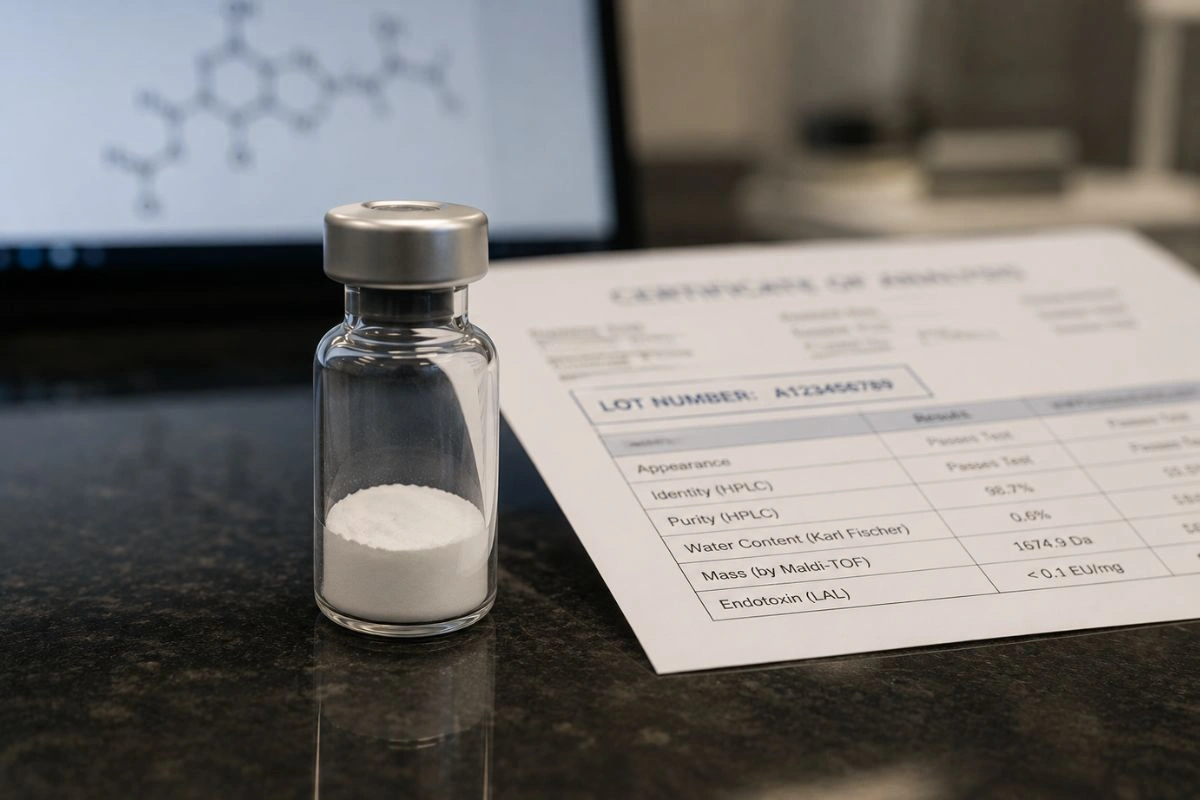
Written By: Gary Hite, Research Content Writer
Reviewed By: Natalie Kunsman, M.D., Board-Certified Physician
Last Reviewed: July 17, 2026
ARA-290 is an 11-amino-acid synthetic peptide that has generated substantial interest within the research community for its role in studying innate repair receptor (IRR) signaling pathways. Unlike full-length erythropoietin (EPO), ARA-290 does not interact with the classical EPO receptor responsible for erythropoiesis, which makes it a uniquely valuable tool for investigators examining tissue-protective signaling mechanisms in isolation.
Researchers across cellular biology, neuroscience, and molecular pharmacology have incorporated ARA-290 into their experimental workflows to study receptor binding kinetics, downstream signaling cascades, and structure-activity relationships. However, the utility of ARA-290 in any research application depends entirely on how well the peptide is reconstituted, handled, and stored. Compromised peptide integrity leads to unreliable data, wasted resources, and experiments that cannot be reproduced.
This guide provides professional researchers with a clear, actionable framework for working with ARA-290 in the laboratory.
Disclaimer: ARA-290 is sold strictly for research purposes only. It is not intended for human consumption, therapeutic application, or diagnostic use. The following content is provided exclusively for educational and informational purposes to support qualified researchers and academic professionals. No statements in this article should be interpreted as medical advice or as an endorsement for any use outside of approved laboratory research.
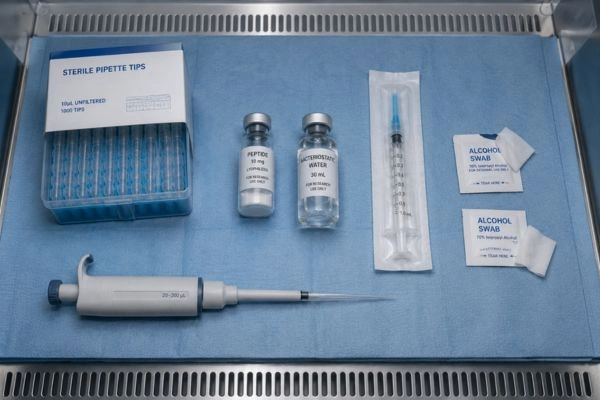
Reconstitution Protocol for ARA-290
Proper reconstitution is the foundation of every successful peptide experiment. ARA-290 is typically supplied as a lyophilized powder, a form chosen to maximize chemical stability during shipping and long-term storage. Converting this powder into a usable solution requires careful technique.
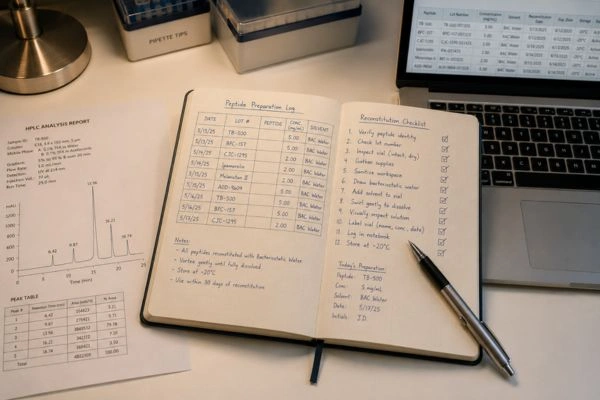
Start by removing the ARA-290 vial from cold storage and allowing it to equilibrate to room temperature for 15 to 20 minutes. Rapid temperature changes can introduce condensation inside the vial, which may affect the accuracy of your final concentration calculations.
Once the vial has reached ambient temperature, sterilize the rubber septum with a fresh alcohol swab and allow the alcohol to dry completely. Draw your chosen solvent into a sterile syringe. For most in vitro research protocols, bacteriostatic water (containing 0.9% benzyl alcohol) is the preferred solvent. Sterile water is appropriate for single-use preparations or protocols where preservatives could interfere with downstream assays.
Direct the solvent stream against the inner wall of the vial rather than onto the lyophilized pellet. This prevents localized high concentrations and reduces the risk of foaming or aggregation. Allow the solvent to flow down the glass and contact the powder gradually. Gently swirl the vial between your fingers until the powder dissolves completely. Do not shake or vortex the vial, as mechanical agitation can disrupt peptide structure and introduce air bubbles that complicate accurate volume measurements.
A properly reconstituted ARA-290 solution should appear clear and colorless. If you observe cloudiness, visible particles, or persistent foam, do not use the preparation for critical experiments. Document the observation and prepare a fresh vial.
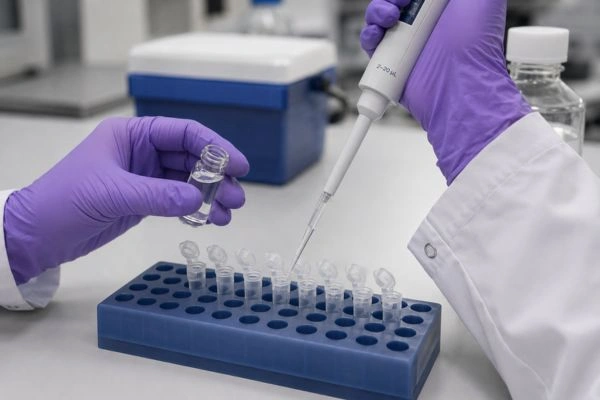
Handling Best Practices in the Laboratory
How you handle reconstituted ARA-290 between preparation and use has a direct impact on data quality. Even a well-reconstituted peptide can degrade rapidly if handling protocols are not followed.
Always wear clean nitrile gloves when working with ARA-290 solutions. Skin oils, perspiration, and environmental contaminants can introduce proteolytic enzymes or microbial agents that degrade the peptide over time. Conduct all preparation and aliquoting steps in a laminar flow hood or biosafety cabinet to minimize airborne contamination.
Use calibrated micropipettes for transferring precise volumes. Syringes are appropriate during the reconstitution step, but micropipettes offer superior accuracy for preparing dilutions and dispensing working concentrations into assay plates or experimental tubes.
When preparing serial dilutions, use fresh pipette tips at each step to prevent carryover contamination. Record every dilution factor, solvent type, and volume in your laboratory notebook immediately. Delayed documentation is one of the most common sources of error in peptide research workflows.
Minimize the total time that reconstituted ARA-290 remains at room temperature. Prolonged exposure to ambient conditions accelerates hydrolysis and oxidation, both of which reduce peptide activity. Return the stock vial to cold storage as soon as you have withdrawn the volume needed for your experiment.
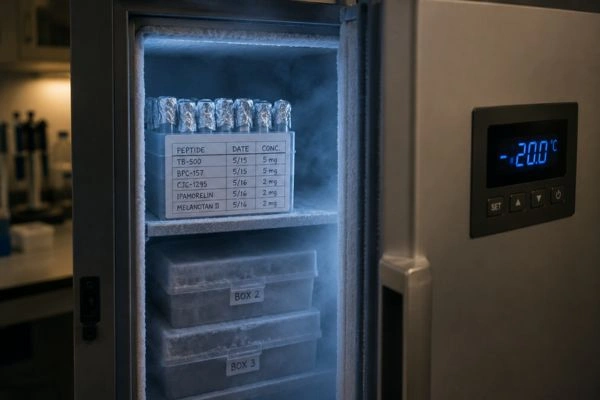
Stability Considerations for Reconstituted ARA-290
Peptide stability is not a fixed property. It varies based on solvent composition, storage temperature, pH, exposure to light, and the number of freeze-thaw cycles the solution undergoes. Understanding these variables allows researchers to design storage protocols that preserve ARA-290 integrity throughout an experimental timeline.
In its lyophilized form, ARA-290 is relatively stable when stored at minus 20 degrees Celsius or lower in a sealed vial protected from moisture and light. Under these conditions, the peptide can maintain its integrity for extended periods,
though researchers should always verify purity against the certificate of analysis (COA) before use.
Once reconstituted, stability decreases significantly. For short-term use (up to 7 to 14 days), store the solution at 2 to 8 degrees Celsius. For any timeframe beyond two weeks, prepare single-use aliquots in sterile microcentrifuge tubes and store them at minus 20 degrees Celsius or below. This approach eliminates repeated freeze-thaw cycles, which are among the most damaging events for peptide integrity.
Each freeze-thaw cycle introduces ice crystal formation that can physically fragment the peptide chain and promote aggregation upon re-thawing. Peptides subjected to multiple freeze-thaw cycles often exhibit reduced binding activity and altered chromatographic profiles compared to freshly prepared or single-thaw samples.
Light exposure is another critical factor. Certain amino acid residues are susceptible to photodegradation, particularly when the solution is stored in clear glass vials under fluorescent laboratory lighting. Wrapping vials in aluminum foil or transferring aliquots into amber microcentrifuge tubes provides effective protection.
Integrating ARA-290 Into Your Research Workflow
With proper reconstitution, handling, and storage protocols in place, ARA-290 can be reliably integrated into a range of laboratory applications. Researchers have utilized this peptide in receptor binding assays, cell-based signaling studies, structural characterization experiments, and comparative analyses with related peptide sequences.
Regardless of the specific application, always include appropriate controls in your experimental design. Vehicle controls (solvent without peptide) account for any effects introduced by the reconstitution medium. Positive and negative controls validate assay performance and provide context for interpreting ARA-290-related observations.
Before reconstitution, review the COA supplied with each lot. Confirm the reported purity (typically assessed by reverse-phase HPLC), molecular weight (verified by mass spectrometry), and peptide content. For long-duration studies spanning several weeks, run periodic stability checks on stored aliquots. A noticeable shift in retention time, the appearance of new peaks, or a reduction in the primary peak area all indicate degradation that could compromise experimental validity.
Plan your experimental timeline around the stability data for your storage conditions. If your protocol spans multiple days or weeks, schedule aliquot thawing to align with experimental timepoints so that each data point reflects peptides of consistent quality.
Maintain detailed records of every lot number, reconstitution date, storage condition, and freeze-thaw event associated with each aliquot used in your experiments. This level of documentation supports reproducibility and provides a clear audit trail for publication and peer review.
Conclusion
Every reliable dataset begins with a properly handled peptide. By applying the reconstitution, storage, and quality control practices outlined above, researchers position their ARA-290 experiments for consistent, defensible results from the first assay to the last. Direct your solvent against the vial wall, swirl instead of shaking, and aliquot into single-use volumes immediately after dissolution, these small actions prevent the aggregation and degradation that silently erode data quality. Store reconstituted solutions at 2–8°C for short-term use and at −20°C or below for anything beyond two weeks, always shielding vials from light and temperature excursions. Document every reconstitution event with full detail, and run periodic HPLC or mass spectrometry checks when validating new lots or troubleshooting anomalies. Treat your handling protocol with the same rigor you apply to your experimental design, and your data will reflect that discipline.
Disclaimer: ARA-290 is sold strictly for research purposes only. It is not intended for human consumption, therapeutic application, or diagnostic use. The following content is provided exclusively for educational and informational purposes to support qualified researchers and academic professionals. No statements in this article should be interpreted as medical advice or as an endorsement for any use outside of approved laboratory research.
Frequently Asked Questions
What solvent should I use to reconstitute ARA-290?
Match your solvent to your workflow. Use bacteriostatic water (0.9% benzyl alcohol) when you need to draw from the same vial over multiple days, as the preservative prevents microbial growth between access points. Choose sterile water for single-use preparations or when benzyl alcohol may interfere with sensitive detection methods. Use PBS when your downstream assay requires physiological pH and ionic strength, and confirm that buffer components will not affect your readout.
How do I prevent ARA-290 from degrading after reconstitution?
Take three immediate steps: aliquot the solution into single-use volumes in sterile, low-binding microcentrifuge tubes; store those aliquots at −20°C or −80°C; and protect every container from direct light using amber vials or aluminum foil wrapping. During active bench work, keep the working vial on ice rather than at room temperature. These measures collectively guard against freeze-thaw damage, photodegradation, and thermal breakdown.
How many freeze-thaw cycles can ARA-290 withstand?
Treat every freeze-thaw cycle as damaging and aim for zero repeats on any given aliquot. Each cycle exposes the peptide to ice crystal formation, localized concentration spikes, and pH shifts, all of which can fragment or aggregate the molecule. Prepare single-use aliquots at the time of reconstitution so you thaw only what you need for each experiment and discard any unused portion.
How can I verify that my reconstituted ARA-290 is still intact?
Start with a visual inspection: the solution must be completely clear with no particles, cloudiness, or foam. For quantitative confirmation, run reverse-phase HPLC to compare the purity profile against the certificate of analysis, or use mass spectrometry to check for truncation products and oxidation byproducts. Perform these analytical checks whenever you open a new lot, troubleshoot unexpected results, or use stock that has been stored for an extended period.
Why should I avoid injecting solvent directly onto the lyophilized pellet?
Directing the solvent stream onto the dry powder creates localized areas of extremely high concentration at the point of contact, which can trigger peptide aggregation and foaming. Instead, angle the needle so the solvent flows down the inner glass wall of the vial and contacts the pellet gradually from below. This technique promotes even, gentle dissolution and preserves the peptide’s structural integrity from the very first step of your workflow.