❌ Not for Human Consumption
●
✅ For Research Use Only
●
All products are intended strictly for laboratory research purposes only
●
❌ Not for Human Consumption
●
✅ For Research Use Only
●
All products are intended strictly for laboratory research purposes only
●

Reconstitution Best Practices For AOD-9604 In Research Workflows

Written By: Gary Hite, Research Content Writer
Reviewed By: Natalie Kunsman, M.D., Board-Certified Physician
Last Reviewed: July 15, 2026
AOD-9604, also referred to as the modified fragment of human growth hormone (hGH fragment 177-191), has drawn significant attention in academic and laboratory research settings. Investigators studying peptide behavior, receptor interactions, and cellular signaling pathways frequently incorporate AOD-9604 into their experimental protocols.
Proper reconstitution is one of the most critical steps in any peptide-based research workflow. Errors during this phase can compromise peptide integrity, introduce confounding variables, and ultimately invalidate results. This guide walks professional researchers and academics through a thorough, reproducible reconstitution protocol for AOD-9604.
Disclaimer: AOD-9604 is sold strictly for research purposes only and is not intended for human consumption. The information provided in this article is for educational and research use only. Nothing in this content should be interpreted as medical advice, a therapeutic recommendation, or an endorsement for any use outside of controlled laboratory research. Researchers must comply with all applicable local, state, and federal regulations when handling research peptides.
Why Reconstitution Protocol Matters in Peptide Research
Lyophilized peptides like AOD-9604 arrive as a freeze-dried powder. This form maximizes shelf stability, but the peptide must be reconstituted (returned to a liquid solution) before it can be used in assays, cell culture studies, or analytical testing.
A poorly executed reconstitution can lead to peptide aggregation, degradation, or inconsistent concentrations across experimental replicates. Following a standardized protocol helps ensure the following outcomes in your research:
- Consistent molar concentrations across experiments
- Preservation of the peptide’s structural integrity
- Reliable, reproducible data suitable for publication
- Reduced waste of valuable research materials
Step-by-Step Reconstitution Protocol for AOD-9604
Step 1: Gather Your Materials
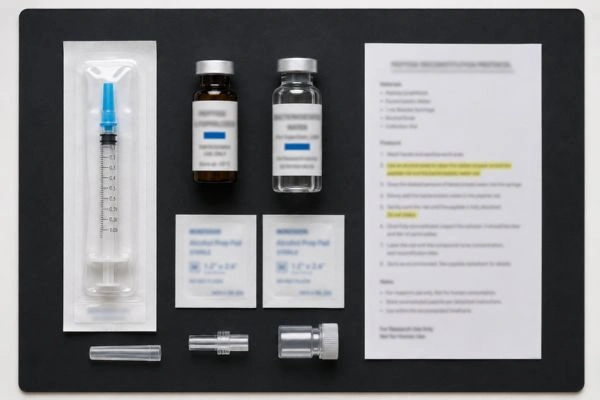
Before beginning, confirm you have the following items prepared in a clean laboratory environment:
- Lyophilized AOD-9604 vial (for research use only)
- Bacteriostatic water (0.9% benzyl alcohol) or sterile water, depending on your protocol requirements
- Sterile syringes with appropriate gauge needles
- Alcohol swabs for vial septum sterilization
- A calibrated micropipette for precise volume measurement
- Personal protective equipment (PPE), including gloves and eye protection
Step 2: Allow the Vial to Reach Ambient Temperature
Remove the AOD-9604 vial from cold storage and allow it to equilibrate to room temperature (approximately 20 to 25 degrees Celsius) for 15 to 20 minutes. Avoid heating the vial directly, as thermal stress can degrade peptide bonds. Sudden temperature shifts may also cause condensation inside the vial, introducing unwanted moisture to the lyophilized powder.
Step 3: Sterilize the Vial Septum
Using a fresh alcohol swab, thoroughly clean the rubber septum on the top of the vial. Allow the alcohol to evaporate completely before proceeding. This step prevents microbial contamination from entering your reconstituted solution.
Step 4: Add the Reconstitution Solvent
Draw your chosen solvent into a sterile syringe. The most commonly used solvents in peptide research include:
- Bacteriostatic water: Preferred when multiple aliquots will be drawn over several days, as the benzyl alcohol content inhibits microbial growth.
- Sterile water: Suitable for single-use preparations or when benzyl alcohol could interfere with a specific assay.
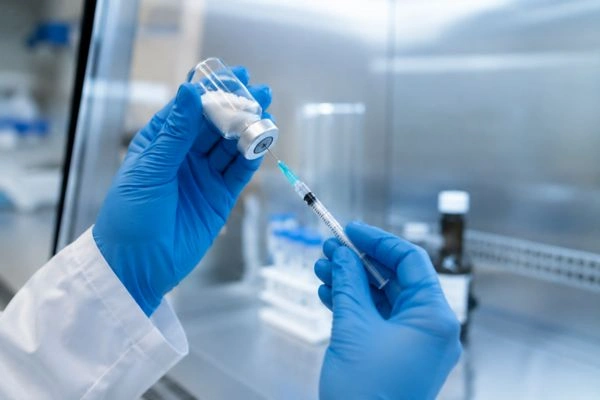
Insert the needle into the vial at a slight angle and direct the solvent stream against the inner glass wall, not directly onto the lyophilized pellet. This technique minimizes physical disruption to the peptide structure.
Step 5: Allow Gentle Dissolution
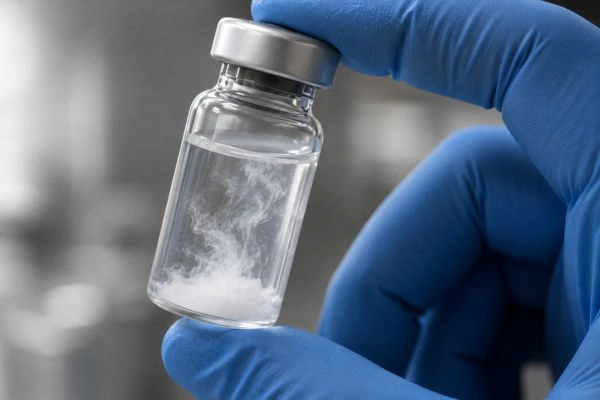
Do not shake, vortex aggressively, or physically agitate the vial. Instead, let the solvent flow gently down the side of the vial and contact the powder gradually. You may rotate the vial slowly between your fingers using a gentle swirling motion to encourage dissolution. Most AOD-9604 preparations will dissolve within two to five minutes without vigorous mixing.
If the peptide does not fully dissolve after five minutes of gentle swirling, place the vial in a refrigerator (2 to 8 degrees Celsius) for 15 to 30 minutes. Avoid repeated freeze-thaw cycles, as these can degrade the peptide.
Step 6: Verify Complete Dissolution
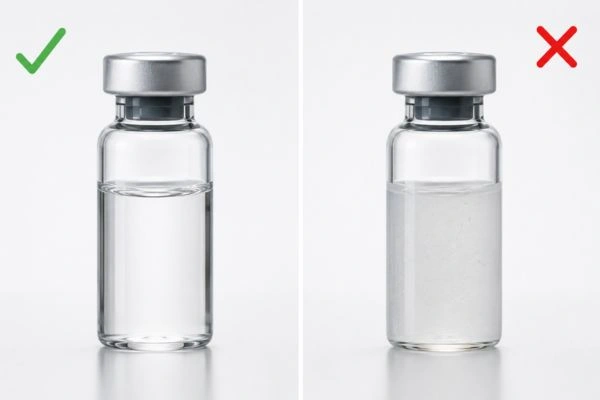
Visually inspect the solution against a light source. A properly reconstituted AOD-9604 solution should appear clear and free of visible particulate matter. If you observe cloudiness, undissolved particles, or aggregation, do not use the solution for critical experiments. Document the observation in your lab notebook and consider preparing a fresh vial.
Step 7: Calculate and Record Final Concentration
Record the total volume of solvent added and calculate the resulting concentration based on the mass of AOD-9604 listed on the certificate of analysis (COA). For example:
- If the vial contains 2 mg of AOD-9604 and you add 1 mL of solvent, the resulting concentration is 2 mg/mL.
- If your assay requires a working concentration of 200 micrograms/mL, you will need to perform a 1:10 dilution from the stock.
Always label reconstituted vials with the peptide name, concentration, date of reconstitution, solvent used, and the initials of the researcher who prepared the solution.
Storage Guidelines After Reconstitution
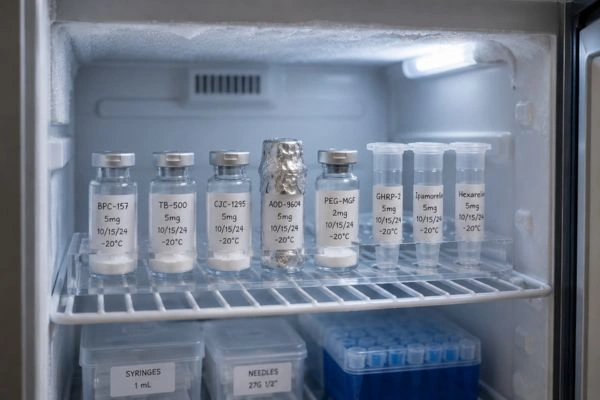
Proper storage of reconstituted AOD-9604 directly impacts data quality and experimental reproducibility. Follow these guidelines in your laboratory:
Short-term storage (up to 14 days): Store the reconstituted solution at 2 to 8 degrees Celsius in a dedicated peptide storage refrigerator. Minimize the number of times the septum is punctured to reduce contamination risk.
Long-term storage (beyond 14 days): If you do not plan to use the entire reconstituted volume within two weeks, prepare single-use aliquots in sterile microcentrifuge tubes and store them at minus 20 degrees Celsius or lower. Aliquoting prevents repeated freeze-thaw cycles, which are a primary cause of peptide degradation in research settings.
Light protection: AOD-9604 solutions should be stored away from direct light. Wrapping vials in aluminum foil or using amber-tinted storage containers can help protect against photodegradation.
Common Reconstitution Errors to Avoid
Even experienced researchers can encounter issues during peptide reconstitution. Be aware of these frequent mistakes:
Injecting solvent directly onto the lyophilized pellet. This can cause localized high concentrations and may lead to aggregation or foaming. Always direct the solvent stream against the vial wall.
Aggressive shaking or vortexing. Mechanical agitation introduces air bubbles and can disrupt peptide secondary structure. Gentle swirling is always the preferred approach.
Using the wrong solvent. Some experimental protocols require specific solvents. For instance, DMSO may be necessary for peptides with low aqueous solubility, though AOD-9604 is generally soluble in aqueous solutions. Always verify solvent compatibility with your specific assay before reconstitution.
Failing to record reconstitution details. Accurate documentation is fundamental to reproducible research. Record every variable, including solvent type, volume, date, time, storage temperature, and any observations about the dissolution process.
Repeated freeze-thaw cycles. Each freeze-thaw cycle introduces stress that can fragment or denature peptides. Preparing aliquots at the time of reconstitution is the most effective way to avoid this problem.
Quality Control Considerations
Researchers working with AOD-9604 should implement quality control measures at multiple points in the workflow:
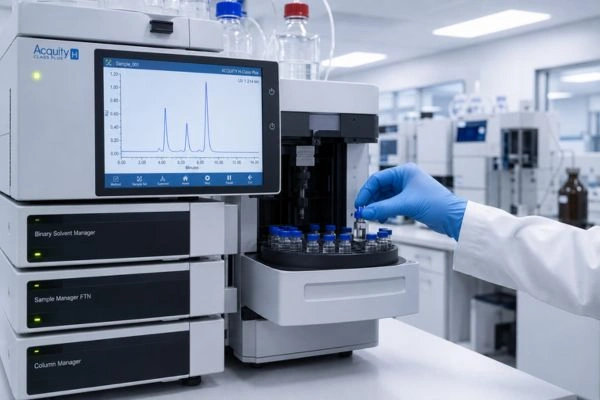
Verify the Certificate of Analysis (COA). Before reconstitution, review the COA provided with the peptide. Confirm the purity (typically determined by HPLC), molecular weight, and lot number. These details are essential for accurate concentration calculations and for troubleshooting inconsistent results across experiments.
Use analytical methods to confirm integrity post-reconstitution. Techniques such as mass spectrometry, circular dichroism, or reverse-phase HPLC can confirm that the reconstituted peptide retains its expected structural characteristics. While not required for every experiment, periodic quality checks strengthen the reliability of your data.
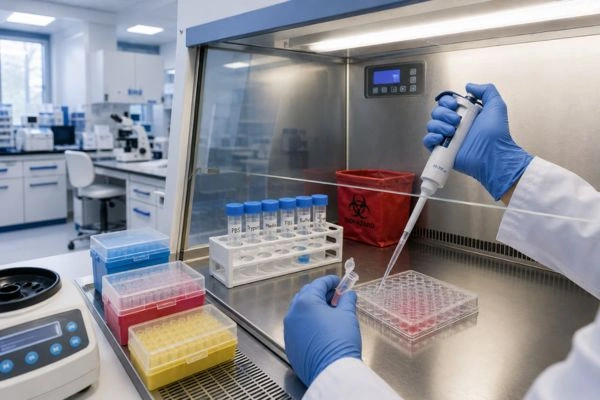
Maintain aseptic technique throughout. Contamination from environmental microbes, skin oils, or cross-contamination from other reagents can interfere with sensitive assays. Conduct all reconstitution steps in a clean bench or laminar flow hood when possible.
Selecting the Right Solvent for Your Research Protocol
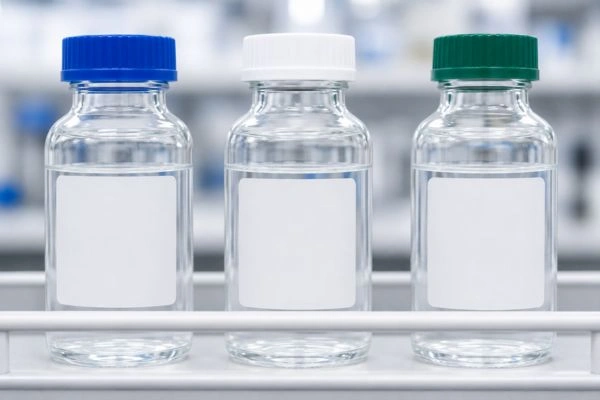
Solvent selection is not a one-size-fits-all decision. The choice depends on the downstream application:
Bacteriostatic water is the standard choice for most in vitro research protocols involving AOD-9604. The 0.9% benzyl alcohol content helps maintain solution sterility over multiple access points.
Sterile water for injection (WFI) is appropriate for single-use preparations where preservative-free conditions are required by the experimental protocol.
Phosphate-buffered saline (PBS) may be used when the assay requires a physiological pH and ionic strength. Confirm that the buffer components do not interfere with your detection method.
DMSO is sometimes used as a co-solvent for peptides with poor aqueous solubility. AOD-9604 typically does not require DMSO, but if your protocol demands it, use the minimum concentration necessary and account for any solvent effects in your controls.
Integrating Reconstituted AOD-9604 into Research Workflows
Once reconstituted, AOD-9604 can be incorporated into a variety of research applications, including but not limited to:
- Receptor binding assays to characterize interaction kinetics
- Cell culture studies examining peptide effects on specific cell lines
- Stability studies evaluating degradation profiles under various conditions
- Analytical method development and validation
- Comparative structural studies with related peptide fragments
Regardless of the application, always include appropriate controls in your experimental design. Vehicle controls (solvent without peptide) are essential for distinguishing peptide-related effects from solvent-related artifacts.
Conclusion
Reconstituting AOD-9604 correctly is not optional, it is the foundation of every reliable result that follows. By controlling each variable, from solvent selection and injection technique to storage conditions and documentation, researchers eliminate a major source of experimental error before the first assay even begins. Prioritize gentle dissolution over speed, label every vial without exception, and prepare single-use aliquots at the point of reconstitution to protect peptide integrity across your entire study timeline. Implement routine quality control checks using HPLC or mass spectrometry to verify that your reconstituted peptide meets the specifications on the certificate of analysis. Standardizing this protocol across your lab ensures that data generated today can be confidently compared with data generated months from now. Apply these practices consistently, and let your results reflect the quality of your preparation.
Disclaimer: AOD-9604 is sold strictly for research purposes only and is not intended for human consumption. The information provided in this article is for educational and research use only. Nothing in this content should be interpreted as medical advice, a therapeutic recommendation, or an endorsement for any use outside of controlled laboratory research. Researchers must comply with all applicable local, state, and federal regulations when handling research peptides.
Frequently Asked Questions
What is the best solvent to use when reconstituting AOD-9604?
Use bacteriostatic water (0.9% benzyl alcohol) when you plan to draw multiple aliquots over several days, as it inhibits microbial growth between uses. Choose sterile water for single-use preparations or when your assay requires preservative-free conditions. Always confirm solvent compatibility with your specific downstream application before reconstituting.
How long can reconstituted AOD-9604 be stored before it degrades?
Store reconstituted AOD-9604 at 2–8°C for up to 14 days for active use. For anything beyond that window, divide the solution into single-use aliquots and store them at −20°C or lower immediately after reconstitution. This approach eliminates repeated freeze-thaw cycles, which are the leading cause of peptide degradation in research settings.
Why should I avoid shaking or vortexing the vial during reconstitution?
Aggressive mechanical agitation introduces air bubbles into the solution and can disrupt the peptide’s secondary structure, leading to aggregation or denaturation. Instead, rotate the vial slowly between your fingers using a gentle swirling motion. Most AOD-9604 preparations dissolve fully within two to five minutes using this technique alone.
How do I know if my reconstituted solution is usable?
Hold the vial against a light source and inspect it carefully. A properly reconstituted solution appears completely clear with no visible particles, cloudiness, or foam. If you observe any of these, do not use that vial for critical experiments, document the issue in your lab notebook and prepare a fresh solution from a new vial.
What information should I record on each reconstituted vial?
Label every vial with the peptide name, final concentration, reconstitution date, solvent type, total volume added, and the preparing researcher’s initials. Record these same details in your lab notebook along with any observations about dissolution time or appearance. This documentation is essential for troubleshooting inconsistent results and maintaining reproducibility across experiments.