❌ Not for Human Consumption
●
✅ For Research Use Only
●
All products are intended strictly for laboratory research purposes only
●
❌ Not for Human Consumption
●
✅ For Research Use Only
●
All products are intended strictly for laboratory research purposes only
●

Laboratory Handling Protocols For Long-Acting GLP-1 Analog Peptides Like GLP-IS

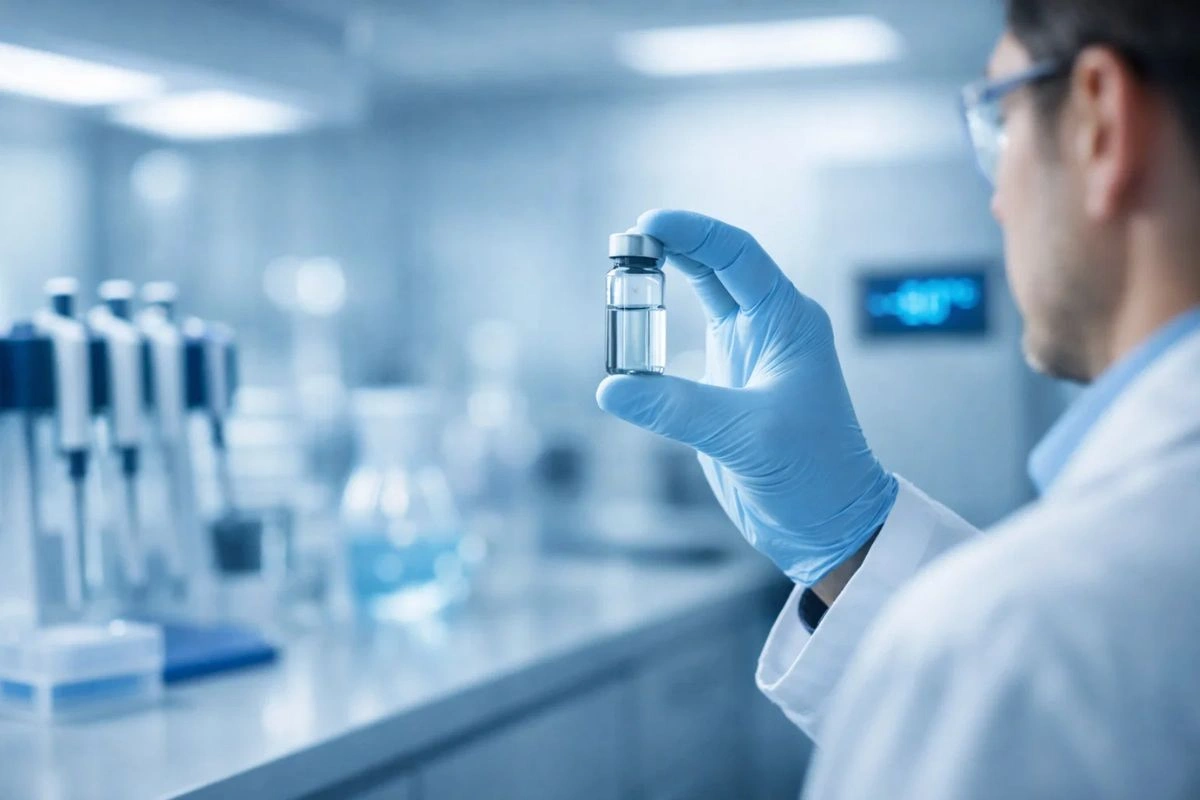
The study of glucagon-like peptide-1 (GLP-1) receptor agonist analogs continues to generate significant interest among biochemists, pharmacologists, and academic researchers worldwide. Long-acting GLP-1 analog peptides, including novel research compounds like GLP-IS, represent a growing category of synthetic peptides that demand strict laboratory handling protocols to preserve molecular integrity and ensure reproducible experimental outcomes.
At Tia, we supply research-grade GLP-1 analog peptides, including GLP-IS, exclusively for use by qualified researchers, licensed laboratories, and accredited academic institutions. Every product we distribute is designated for research use only (RUO) and is not intended for human or animal consumption outside of properly approved and supervised study protocols.
This article provides a comprehensive, action-oriented guide to receiving, storing, reconstituting, and handling long-acting GLP-1 analog peptides like GLP-IS in a professional research setting. Whether you are an experienced peptide researcher or a graduate student beginning work with incretin-class analogs, this guide will help you maintain sample quality and uphold the highest standards of laboratory safety.
Disclaimer: GLP-1 and GLP-IS peptides referenced in this article are intended strictly for laboratory research and educational purposes only. These compounds are not approved for human consumption, and nothing in this article constitutes medical advice, a therapeutic recommendation, or an endorsement of any off-label use. All researchers must comply with applicable federal, state, and institutional regulations when handling research-grade peptides.
Section 1: Understanding GLP-1 Analog Peptides in a Research Context
1.1 What Are GLP-1 Analog Peptides?
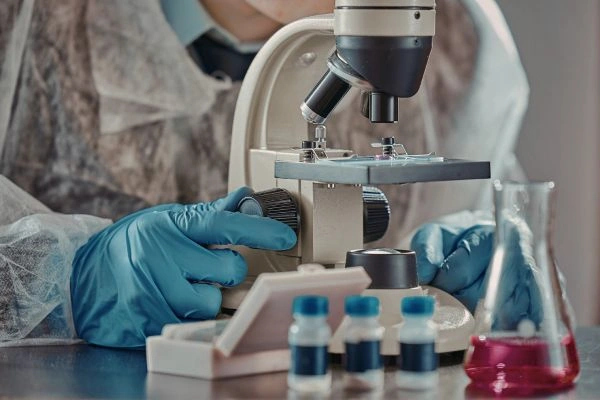
GLP-1 analogs are synthetic peptide sequences modeled after endogenous glucagon-like peptide-1, a naturally occurring incretin hormone. In a research context, these analogs are studied for their receptor binding affinity, pharmacokinetic profiles, structural stability, and downstream signaling behavior in cell-based and biochemical assay systems.
Long-acting analogs, such as GLP-1S, are engineered with structural modifications that extend their half-life under experimental conditions. These modifications may include fatty acid acylation, amino acid substitution, or PEGylation, all of which present unique considerations for laboratory handling and storage.
Important Notice: GLP-IS and all GLP-1 analog peptides sold by Tia are designated for in vitro and approved in vivo research applications only. They are not drugs, dietary supplements, or products intended for human ingestion, injection, or self-administration of any kind.
1.2 Why Researchers Study GLP-1 Analogs
Academic and institutional researchers investigate GLP-1 receptor agonist analogs to better understand:
- Receptor binding kinetics and structure-activity relationships (SAR)
- Intracellular signaling cascades triggered by GLP-1 receptor activation
- Peptide stability under various pH, temperature, and solvent conditions
- Novel formulation approaches for sustained-release delivery systems in preclinical models
- Comparative analysis of analog potency in standardized bioassay platforms
This research contributes to the broader scientific understanding of incretin biology and peptide chemistry. The information generated through these studies is published in peer-reviewed journals and shared at scientific conferences, advancing the collective knowledge base of the research community.
Section 2: Receiving and Inspecting GLP-1 Analog Peptides
2.1 Shipment Arrival Protocol
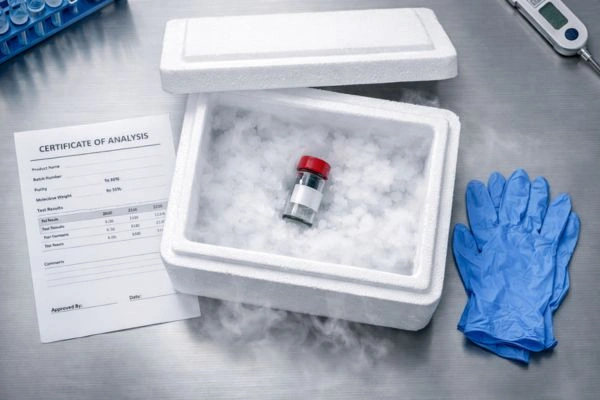
When your order of GLP-IS or any GLP-1 analog peptide arrives at your facility, prompt and careful inspection is critical. Follow these steps immediately upon receipt:
- Verify packaging integrity. Examine the outer shipping container for any signs of damage, puncture, or exposure to excessive moisture. Document any anomalies with photographs before opening.
- Check cold chain compliance. GLP-IS and similar long-acting analogs are typically shipped with dry ice or gel ice packs to maintain a controlled temperature range. Confirm that cooling agents are still present and have not fully sublimated or thawed. If cold chain integrity appears compromised, contact Tia immediately to discuss potential replacement.
- Inspect the product vial. Confirm that the vial is sealed, labeled correctly, and free from cracks. Verify the lot number, peptide identity, and quantity against your purchase order.
- Review the Certificate of Analysis (COA). Every batch of GLP-IS shipped by Tia includes a COA detailing purity (typically assessed via HPLC), molecular weight confirmation (via mass spectrometry), and peptide content. File this document with your laboratory records for traceability.
2.2 Documentation and Chain of Custody
Maintaining a clear chain of custody is a best practice for any research laboratory handling synthetic peptides. Record the following in your laboratory inventory management system:
- Date and time of receipt
- Condition of packaging upon arrival
- Name of the individual who received and inspected the shipment
- Storage location assigned to the product
- COA reference number
This documentation supports Good Laboratory Practice (GLP) standards and protects the integrity of your downstream experimental data.
Section 3: Storage Requirements for Long-Acting GLP-1 Analogs
3.1 Lyophilized (Powder) Form Storage
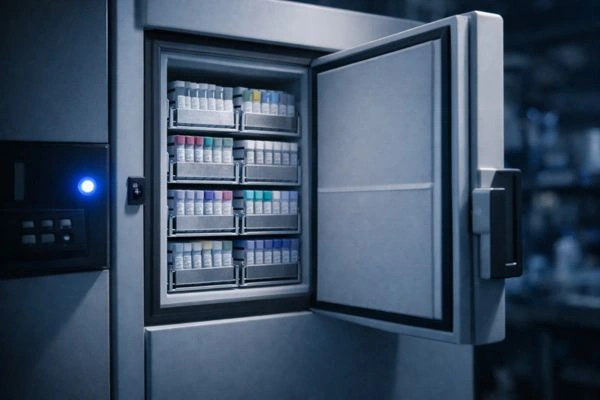
Most research-grade GLP-1 analog peptides, including GLP-IS, are supplied in lyophilized (freeze-dried) powder form. This format offers superior long-term stability compared to reconstituted solutions.
Recommended storage conditions for lyophilized GLP-IS:
- Temperature: Store at -20°C or colder. For extended storage beyond six months, -80°C is preferred.
- Light exposure: Keep vials in opaque containers or wrapped in aluminum foil. Prolonged UV or visible light exposure can degrade peptide bonds and reduce experimental potency.
- Humidity: Store in a desiccated environment. Silica gel packets in the storage container can help control ambient moisture.
- Handling frequency: Minimize freeze-thaw cycling of unopened vials. Repeated temperature fluctuations compromise peptide stability.
3.2 Reconstituted Solution Storage
Once GLP-IS is reconstituted into solution (see Section 4), the storage requirements become more stringent:
- Temperature: Store reconstituted peptide solutions at 2°C to 8°C (standard laboratory refrigerator) for short-term use (up to 14 days, depending on solvent and concentration). For longer storage, aliquot and freeze at -20°C.
- Aliquoting: Divide the reconstituted solution into single-use aliquots immediately after preparation. This eliminates the need for repeated freeze-thaw cycles, which are the single most common cause of peptide degradation in research laboratories.
- Container selection: Use low-binding microcentrifuge tubes (polypropylene) to minimize peptide adsorption to container walls. Avoid standard glass vials for dilute solutions, as GLP-1 analogs can adsorb to glass surfaces at low concentrations.
- Labeling: Clearly label every aliquot with the peptide identity, concentration, reconstitution date, solvent used, and the initials of the researcher who prepared it.
3.3 Stability Monitoring
Researchers conducting longitudinal studies or maintaining peptide stock over extended periods should consider periodic quality checks. HPLC analysis of stored aliquots can confirm that the peptide remains within acceptable purity thresholds for your experimental requirements.
Section 4: Reconstitution Protocols for GLP-IS
4.1 Selecting an Appropriate Solvent
The choice of reconstitution solvent depends on the intended assay system and the physicochemical properties of the specific GLP-1 analog. For GLP-IS, the following solvents are commonly used in research settings:
- Sterile water (bacteriostatic or distilled): Suitable for most standard bioassays. This is the default recommendation for initial reconstitution.
- Phosphate-buffered saline (PBS), pH 7.4: Appropriate when physiological ionic strength is required for receptor binding assays.
- Dilute acetic acid (0.1% to 0.5%): May be used if the peptide shows limited solubility in neutral aqueous solutions. Always verify compatibility with your downstream assay before using acidic solvents.
- Dimethyl sulfoxide (DMSO): Useful as an initial solubilization step for peptides with hydrophobic modifications. If DMSO is used, dilute into an aqueous buffer promptly to achieve the desired working concentration. Keep final DMSO concentrations below 1% in cell-based assays to avoid cytotoxic effects.
4.2 Step-by-Step Reconstitution Procedure
Follow this protocol to reconstitute lyophilized GLP-IS:
- Allow the vial to reach room temperature. Remove the vial from cold storage and let it equilibrate at ambient temperature for approximately 10 to 15 minutes. Opening a cold vial can introduce condensation, which alters the effective peptide mass.
- Briefly centrifuge the vial. A short spin (5 to 10 seconds at low speed) will consolidate any powder that may have dispersed during shipping or handling.
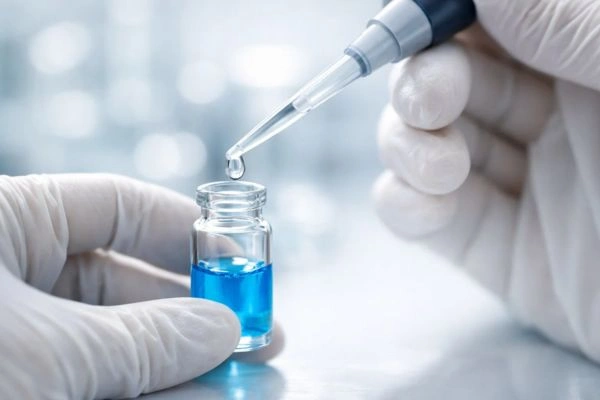
- Add solvent slowly. Using a calibrated micropipette, introduce the calculated volume of solvent by directing the stream against the inside wall of the vial. Avoid injecting liquid directly onto the lyophilized pellet, as this can cause foaming and reduce recovery.
- Allow dissolution. Let the vial sit undisturbed for 30 to 60 seconds after adding solvent.
- Mix gently. Swirl the vial carefully or pipette up and down slowly to ensure complete dissolution. Do not vortex aggressively, as excessive shear force can damage peptide structure, particularly for larger or acylated analogs like GLP-IS.
- Verify clarity. A properly reconstituted GLP-IS solution should appear clear and free of visible particulates. If the solution appears cloudy or contains undissolved material, allow additional time for dissolution or consider a small addition of an appropriate co-solvent.
- Aliquot immediately. Transfer the reconstituted solution into pre-labeled, low-binding microcentrifuge tubes and store as described in Section 3.2.
4.3 Calculating Reconstitution Volumes
To prepare a stock solution at your desired concentration, use the following formula:
Volume of solvent (mL) = Mass of peptide (mg) / Desired concentration (mg/mL)
For example, to prepare a 1 mg/mL stock solution from a 5 mg vial of GLP-IS:
Volume = 5 mg / 1 mg/mL = 5 mL of solvent
Always confirm the actual peptide content listed on the COA, as the net peptide content may differ from the gross powder weight due to the presence of counter-ions, residual moisture, or acetate/TFA salts.
Section 5: Laboratory Safety and Personal Protective Equipment (PPE)
5.1 General Safety Guidelines
While research-grade peptides like GLP-IS are not classified as acutely hazardous materials under most regulatory frameworks, standard laboratory safety practices must still be observed:
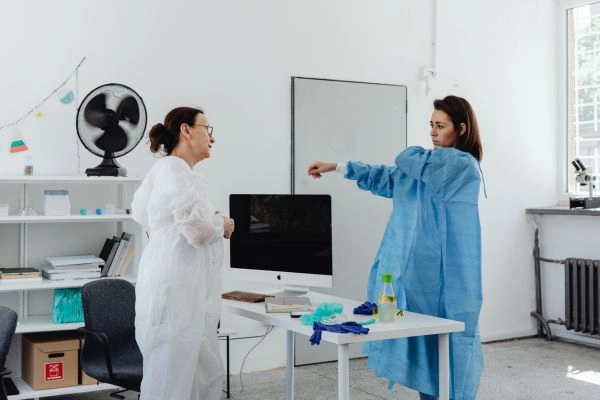
- Wear appropriate PPE at all times. This includes nitrile gloves, safety glasses or goggles, and a laboratory coat. If handling large quantities of lyophilized powder, consider working in a fume hood to avoid inhalation of fine particulates.
- Avoid skin contact. Although GLP-IS is a research reagent and not a pharmaceutical product, minimizing dermal exposure to any synthetic peptide is a standard best practice.
- Practice good laboratory hygiene. Do not eat, drink, smoke, or apply cosmetics in areas where peptides are being handled. Wash your hands thoroughly after completing work.
- Dispose of waste properly. Unused peptide solutions, contaminated consumables, and empty vials should be disposed of in accordance with your institution’s chemical waste protocols. Consult your Environmental Health and Safety (EHS) office for guidance specific to your facility.
5.2 Spill Response
In the event of a spill involving reconstituted GLP-IS solution:
- Alert nearby personnel.
- Don appropriate PPE if not already wearing it.
- Contain the spill with absorbent material (paper towels, spill pads).
- Wipe the affected area with a suitable disinfectant or cleaning solution.
- Dispose of all contaminated materials as chemical waste.
- Document the incident in your laboratory safety log.

Section 6: Best Practices for Experimental Use of GLP-IS
6.1 Assay Compatibility Considerations
Before incorporating GLP-IS into a new assay system, consider the following:
- Buffer compatibility: Confirm that your assay buffer does not contain components that may interfere with peptide stability or receptor binding (e.g., high concentrations of reducing agents, proteases, or metal chelators).
- Concentration range: Perform preliminary dose-response experiments to identify the optimal working concentration range of GLP-IS for your specific assay. Published literature on structurally related GLP-1 analogs can provide useful starting points.
- Positive and negative controls: Always include appropriate controls in your experiments. A well-characterized GLP-1 receptor agonist can serve as a positive control, while the assay buffer alone or a scrambled peptide sequence can serve as a negative control.
6.2 Record Keeping for Reproducibility
Thorough documentation is essential for experimental reproducibility. For every experiment involving GLP-IS, record:
- Lot number and COA reference
- Reconstitution date, solvent, and final concentration
- Storage conditions and duration since reconstitution
- Number of freeze-thaw cycles the aliquot has undergone
- Complete assay protocol, including all reagent concentrations, incubation times, temperatures, and equipment used
This level of detail supports the publication of high-quality, reproducible research and protects against questions about data integrity during peer review.

Section 7: Regulatory Compliance and Responsible Use
7.1 For Research Use Only
GLP-IS and all GLP-1 analog peptides supplied by Tia are sold exclusively for research purposes. They are not manufactured, marketed, or intended for use as drugs, food additives, cosmetics, or any product intended for human or animal consumption.
Researchers are solely responsible for ensuring that their use of these materials complies with all applicable regulations, including but not limited to:
- FDA regulations governing research-use-only materials
- Institutional Review Board (IRB) or Institutional Animal Care and Use Committee (IACUC) requirements, where applicable
- DEA scheduling and controlled substance regulations, if relevant to analog classification
- State and local laws governing the purchase, possession, and use of research chemicals
7.2 Responsible Research Practices
Tia is committed to supporting the scientific community by providing high-purity, well-characterized research peptides. We expect all purchasers to use our products responsibly and in accordance with the intended research-only designation.
Misuse of research-grade peptides, including any form of self-administration, unauthorized distribution, or representation as a finished pharmaceutical product, is strictly prohibited and may violate federal and state law.
Conclusion
Proper handling of long-acting GLP-1 analog peptides like GLP-1S is not optional; it is the foundation of reliable, publishable research. Every step in the workflow, from inspecting your shipment and maintaining cold chain integrity to selecting the right reconstitution solvent and aliquoting for single use, directly impacts the quality of your experimental outcomes. Cutting corners on storage, skipping documentation, or neglecting PPE introduces variables that compromise both your data and your safety. Make it standard practice to review your Certificate of Analysis, label every aliquot with full preparation details, and monitor peptide stability over time. By building these protocols into your daily laboratory routine, you protect your investment in high-purity research materials and position your work to meet the rigorous standards demanded by peer review. Handle with precision, document with discipline, and let your results speak for themselves.
Disclaimer: GLP-1 and GLP-IS peptides referenced in this article are intended strictly for laboratory research and educational purposes only. These compounds are not approved for human consumption, and nothing in this article constitutes medical advice, a therapeutic recommendation, or an endorsement of any off-label use. All researchers must comply with applicable federal, state, and institutional regulations when handling research-grade peptides.
Frequently Asked Questions
How should I store GLP-1S after it arrives at my laboratory?
Store lyophilized GLP-1S at -20°C for routine use or at -80°C for long-term storage beyond six months. Keep the vial protected from light by using opaque containers or aluminum foil wrapping, and store it in a desiccated environment to prevent moisture exposure. Once you reconstitute the peptide, immediately divide it into single-use aliquots in low-binding polypropylene tubes and refrigerate at 2°C to 8°C for short-term use (up to 14 days) or freeze aliquots at -20°C for longer storage.
What is the best solvent to use when reconstituting GLP-1S?
Start with sterile water (bacteriostatic or distilled) as your default reconstitution solvent, it is compatible with most standard bioassays. If your experiment requires physiological ionic strength, use phosphate-buffered saline (PBS) at pH 7.4. For peptides showing limited solubility in neutral solutions, dilute acetic acid (0.1%–0.5%) or an initial DMSO solubilization step may be necessary. Always verify that your chosen solvent is compatible with your downstream assay before proceeding.
Why is it important to aliquot GLP-1S immediately after reconstitution?
Repeated freeze-thaw cycles are the single most common cause of peptide degradation in research laboratories. Each cycle exposes the peptide to temperature fluctuations and ice crystal formation that can disrupt its structural integrity, reduce receptor binding activity, and introduce inconsistencies across experiments. By dividing your reconstituted solution into single-use aliquots right away, you ensure that each portion is thawed only once, preserving potency and supporting reproducible results.
What personal protective equipment (PPE) do I need when handling GLP-1S?
At a minimum, wear nitrile gloves, safety glasses or goggles, and a laboratory coat whenever you handle GLP-1S. If you are working with the lyophilized powder form in open containers, use a fume hood to avoid inhaling fine particulates. Avoid direct skin contact, and always wash your hands thoroughly after completing your work. Follow your institution’s Environmental Health and Safety (EHS) guidelines for disposal of unused peptide solutions, contaminated materials, and empty vials.
How can I verify that my stored GLP-1S is still suitable for experiments?
Run periodic HPLC (high-performance liquid chromatography) analysis on stored aliquots to confirm that the peptide purity remains within acceptable thresholds for your assay requirements. Additionally, visually inspect reconstituted solutions before each use, they should appear clear and free of particulates. Track storage duration, the number of freeze-thaw cycles each aliquot has undergone, and any deviations from recommended conditions. If purity has dropped or the solution appears cloudy, discard the aliquot and prepare a fresh one from your lyophilized stock.