❌ Not for Human Consumption
●
✅ For Research Use Only
●
All products are intended strictly for laboratory research purposes only
●
❌ Not for Human Consumption
●
✅ For Research Use Only
●
All products are intended strictly for laboratory research purposes only
●

Arginate Vs. Acetate Salt Forms: Why Formulation Matters For BPC 157 Research Consistency

Research Use Only Disclaimer: This article is intended exclusively for licensed professional researchers, academic institutions, and qualified laboratory personnel. BPC 157 Peptide is sold and discussed here strictly as a research chemical for in vitro and preclinical investigational purposes. It is not a drug, supplement, or medical device. It is not for human consumption, veterinary use, food, or cosmetic application. No statements in this article are intended to diagnose, treat, cure, or prevent any disease, and no therapeutic, performance, or weight-related claims are made or implied.
In peptide research, two vials labeled “BPC 157” are not necessarily equivalent. Beyond purity grade, lyophilization quality, and amino acid sequence verification, one of the most overlooked variables affecting reproducibility is the counterion salt form in which the peptide is supplied.
For laboratories standardizing assays, comparing dose-response curves across studies, or simply seeking experimental reproducibility, the difference between BPC 157 acetate and BPC 157 arginate is not cosmetic. It can influence net peptide content per milligram, solubility behavior in reconstitution buffers, hygroscopicity during weighing, and long-term stability in storage.
This article examines the chemistry of both salt forms, the practical implications for in vitro research workflows, and why formulation transparency from suppliers like Penguin Peptides should be considered a baseline expectation in modern peptide procurement.
A Quick Primer: What Is BPC 157 in a Research Context?
Body Protection Compound 157 (BPC 157) is a synthetic 15-amino acid sequence (Gly-Glu-Pro-Pro-Pro-Gly-Lys-Pro-Ala-Asp-Asp-Ala-Gly-Leu-Val) derived computationally from a protein fragment originally identified in gastric juice studies. As a research peptide, it has been a subject of preclinical in vitro and animal-model investigation in academic literature for several decades.
Researchers working with BPC 157 peptide in laboratory settings typically reconstitute the lyophilized powder in bacteriostatic-free sterile water, phosphate-buffered saline, or other research-grade diluents appropriate to the assay design. At no point in any compliant research workflow is BPC 157 administered to humans, marketed for human use, or sold for personal use.
With that framing established, the question becomes: when you procure this peptide for your assay, what form are you actually receiving?
Salt Forms 101: Why Counterions Exist
Synthetic peptides containing ionizable side chains (lysine, arginine, aspartate, glutamate, and others) carry a net charge after solid-phase peptide synthesis (SPPS) and HPLC purification. To stabilize the peptide as a dry, weighable, storable solid, the synthesis process pairs that net charge with a counterion. The most common options are trifluoroacetate (TFA), acetate, hydrochloride, or in less common cases, arginate.
The counterion does several things at once:
- It neutralizes the net peptide charge so the molecule can be lyophilized into a stable powder.
- It contributes mass to the final lyophilized product, meaning 10 mg of “peptide salt” is not 10 mg of pure peptide.
- It influences hygroscopicity, dissolution rate, and shelf stability.
- It can shift the apparent pH of reconstituted solutions.
Two of the salt forms most discussed in the BPC 157 research market are acetate and arginate. Each has distinct chemical behavior worth understanding before designing a study.
BPC 157 Acetate: The Industry Standard
Acetate (CH₃COO⁻) is the most widely used counterion for research peptides supplied for in vitro work, and the vast majority of BPC 157 referenced in published preclinical literature is the acetate form.
Key characteristics
- Counterion mass contribution: Acetate is a small ion (~59 g/mol). For a peptide the size of BPC 157 (~1419 Da for the free base), the acetate contribution to total mass is modest but non-trivial. Net peptide content typically ranges from roughly 80 to 90 percent of the total powder mass, depending on the number of acetate ions per peptide molecule and residual water.
- Solubility: Acetate salts of small peptides generally exhibit high aqueous solubility, dissolving readily in sterile water and most physiological buffers used in cell culture or biochemical assays. For a deeper look at choosing the right solvent, diluent selection is itself a meaningful experimental variable.
- Reconstitution pH: Solutions of peptide acetate salts tend to fall in a mildly acidic to near-neutral range upon reconstitution, which is well-tolerated by most in vitro systems without additional buffering.
- Literature alignment: Because acetate is the standard, comparing your experimental results to historical preclinical literature is more straightforward when you use the same counterion form. Reproducibility across labs depends on minimizing variables, and matching the salt form used in prior published work is one of the easier variables to control.
- Cost and availability: Acetate is the default output of standard SPPS workflows, making it widely available and generally less expensive than alternative salt forms.
Considerations for researchers
Acetate is hygroscopic, meaning the lyophilized powder will absorb atmospheric moisture if the vial is left open or improperly stored. This affects gravimetric accuracy. For precise concentration calculations, weigh in a low-humidity environment, return vials to refrigeration or freezer storage promptly after sampling, and consider using molar concentrations derived from UV absorbance or amino acid analysis rather than relying solely on the labeled mass.
BPC 157 Arginate: A Less Common Alternative
Arginate refers to a salt form in which the peptide is paired with the arginine amino acid as a counterion, or in some formulations, supplied as a co-lyophilized complex with free L-arginine. This format is considerably less common in peptide research catalogs than acetate, but it has been positioned by some suppliers as offering distinct handling properties.
Key characteristics
- Counterion mass contribution: Arginine (~174 g/mol) is substantially larger than acetate. As a result, the net peptide content per milligram of lyophilized arginate-form powder is lower than the equivalent acetate form. This is the single most important practical implication: dosing calculations based on total powder mass will yield a different molar quantity of BPC 157 than the same mass of the acetate form. Researchers switching between the two forms must recalculate.
- Solubility profile: Arginine-paired formulations may exhibit different dissolution kinetics in aqueous buffer compared to acetate forms. In some cases this is described qualitatively as “smoother” reconstitution. Rigorous quantitative comparison should be conducted in your own lab if this matters to the assay.
- Reconstitution pH: Arginine is a basic amino acid, so reconstituted solutions of arginate-form peptide tend to be less acidic than acetate-form solutions. For pH-sensitive cell culture work, this can be a relevant variable.
- Stability claims: Some suppliers suggest that the arginate form offers improved stability profiles, though peer-reviewed comparative stability and sterility data specific to BPC 157 remains limited. Researchers relying on stability claims should request certificates of analysis (CoA), accelerated stability data, and ideally conduct in-house verification.
- Literature alignment: This is the principal drawback. Most published preclinical work has used the acetate form. Direct comparison to historical data introduces an additional uncontrolled variable when arginate is substituted.
Considerations for researchers
If your study design requires direct numerical comparison to a body of existing literature, the acetate form is almost always the more defensible choice. If your study is methodological, for example characterizing salt-form-dependent behavior itself, then the arginate form is a legitimate variable to investigate, but should be reported transparently in your methods section.
Why Salt Form Matters for Research Consistency
Reproducibility is the currency of preclinical research. When a salt-form variable is undocumented, three categories of inconsistency can emerge across studies.
The first is mass-to-molar discrepancy. A 1 mg/mL “stock solution” of BPC 157 acetate and a 1 mg/mL “stock solution” of BPC 157 arginate contain different molar quantities of the active peptide sequence. Without explicit accounting, dose-response curves run on different lots, or worse, different formulations, will not align, and the resulting confounding looks like biological variability when it is actually a weighing error.
The second is buffer interaction inconsistency. Differences in reconstitution pH, residual counterion concentration, and dissolution kinetics can subtly shift the local microenvironment of an in vitro assay. In sensitive systems like primary cell cultures, pH-dependent enzymatic assays, or surface plasmon resonance, these effects can become statistically detectable.
The third is stability-related drift. A peptide that is stable for six months at -20 °C in one salt form may exhibit different aggregation or degradation behavior in another. If a multi-month longitudinal study switches lots mid-stream and inadvertently switches salt forms, the data become difficult to interpret.
The corrective practice is straightforward: record the salt form on every vial, reference it in your methods section, and, where possible, complete a study using a single lot of a single salt form.

Practical Procurement Checklist for Laboratories
When sourcing high-purity BPC 157 for research applications, the following items should be verifiable from the supplier before purchase, regardless of which salt form you select:
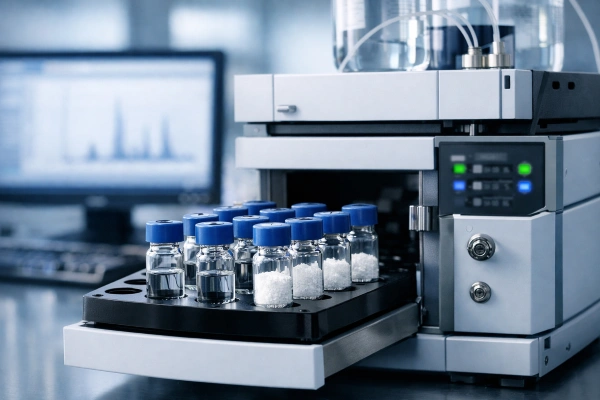
A current Certificate of Analysis (CoA) specific to the lot, identifying the salt form (e.g., “BPC 157 acetate” or “BPC 157 arginate”), HPLC purity (typically ≥98% for research-grade material), mass spectrometry confirmation of the expected molecular weight, water content (Karl Fischer titration is the standard), and net peptide content as a percentage of total mass. HPLC and MS chromatograms should be available on request for any reputable research supplier. Lot-to-lot consistency documentation is valuable for laboratories conducting longitudinal studies. And finally, storage and handling guidance appropriate to the specific salt form supplied.
If a supplier cannot or will not specify the salt form on the CoA, that is a meaningful red flag for any laboratory concerned with reproducibility.
Storage and Handling Notes
Regardless of salt form, lyophilized BPC 157 should generally be stored desiccated at -20 °C or colder for long-term storage, with short-term working aliquots maintained at 4 °C and protected from light. Reconstituted solutions are substantially less stable than the lyophilized powder, so aliquot reconstituted material into single-use volumes to avoid freeze-thaw cycles, which are a leading cause of peptide degradation in research settings. For teams working with reconstituted stock, reviewing established peptide storage practices can help minimize lot-to-lot variability over a multi-month study.
Acetate-form material’s hygroscopicity warrants particular attention to environmental humidity during weighing. Arginate-form material may exhibit different hygroscopic behavior, and supplier-specific guidance should be followed.
Conclusion
Formulation chemistry is not a footnote in peptide research; it is a foundational experimental variable that directly shapes data quality. Whether you standardize on BPC 157 acetate for literature alignment or investigate the arginate form for its distinct pH and mass profile, the decision must be deliberate, documented, and consistent across your study timeline. Verify the salt form on every Certificate of Analysis, record it in your methods section, and resist the temptation to switch lots or formulations mid-experiment.
Account for net peptide content when preparing stock solutions, and control for counterion differences when comparing your data to published literature. These are small procurement habits with outsized reproducibility dividends. For research laboratories, academic institutions, and qualified scientific personnel seeking transparent, CoA-backed research peptides, the path forward begins with asking the right questions before the vial is opened. Formulation is a variable you can control, so control it from day one.
FAQs
What is the difference between BPC 157 acetate and BPC 157 arginate?
The difference lies in the counterion paired with the peptide during lyophilization. Acetate uses a small acetate ion (~59 g/mol), while arginate uses the arginine amino acid (~174 g/mol). This affects net peptide content per milligram, reconstitution pH, and dissolution behavior, all of which are relevant variables in in vitro research workflows.
Which salt form is used in most published BPC 157 research?
The acetate form is the industry standard and is used in the overwhelming majority of published preclinical BPC 157 literature. For laboratories aiming to compare their experimental results to prior published work, the acetate form offers the strongest variable-control alignment.
Does the salt form affect how I calculate BPC 157 concentrations?
Yes. Because the counterion contributes mass to the lyophilized powder, 1 mg of arginate-form material contains fewer moles of active peptide than 1 mg of acetate-form material. Always refer to the net peptide content on the Certificate of Analysis when preparing stock solutions, rather than assuming total powder mass equals peptide mass.
How should I store lyophilized BPC 157 to preserve integrity across both salt forms?
Store desiccated at -20 °C or colder for long-term storage, with short-term working vials kept at 4 °C and protected from light. Reconstituted material should be aliquoted into single-use volumes to avoid freeze-thaw cycles. Acetate is notably hygroscopic, so minimize exposure to humid air during weighing.
Should I request salt form information on a Certificate of Analysis?
Absolutely. A reputable research supplier will explicitly state the salt form on every CoA, alongside HPLC purity, mass spectrometry confirmation, water content, and net peptide percentage. If a supplier cannot specify the salt form, treat it as a reproducibility risk and consider sourcing elsewhere.
Final Compliance Disclaimer
BPC 157 Peptide is sold strictly as a research chemical for laboratory and academic investigational use only. It is not a pharmaceutical product, dietary supplement, cosmetic, food, or medical device. It is not approved by the FDA for any human or veterinary use and is not intended for human consumption, injection, ingestion, topical application, or any in-vivo use in humans or companion animals.
Purchase and use of this material is restricted to qualified professional researchers, licensed laboratories, and accredited academic institutions operating in compliance with all applicable federal, state, and local laws and regulations governing the handling of research chemicals. Purchasers assume full responsibility for the lawful, safe, and ethical use of this material within their jurisdiction.
No statement in this article is intended to constitute medical advice, a therapeutic claim, a performance claim, or a recommendation for use in humans. This content is provided for educational and informational purposes for the professional research community only. References to chemistry, formulation, and in vitro behavior are descriptive of laboratory-scale handling and do not imply any biological activity, efficacy, or safety in any living human subject.