❌ Not for Human Consumption
●
✅ For Research Use Only
●
All products are intended strictly for laboratory research purposes only
●
❌ Not for Human Consumption
●
✅ For Research Use Only
●
All products are intended strictly for laboratory research purposes only
●

AI-Driven Peptide Discovery: How Machine Learning Is Shaping Next-Generation GLP-1 Research

For research use only. Not for human consumption. This content is intended for licensed researchers and academic professionals.
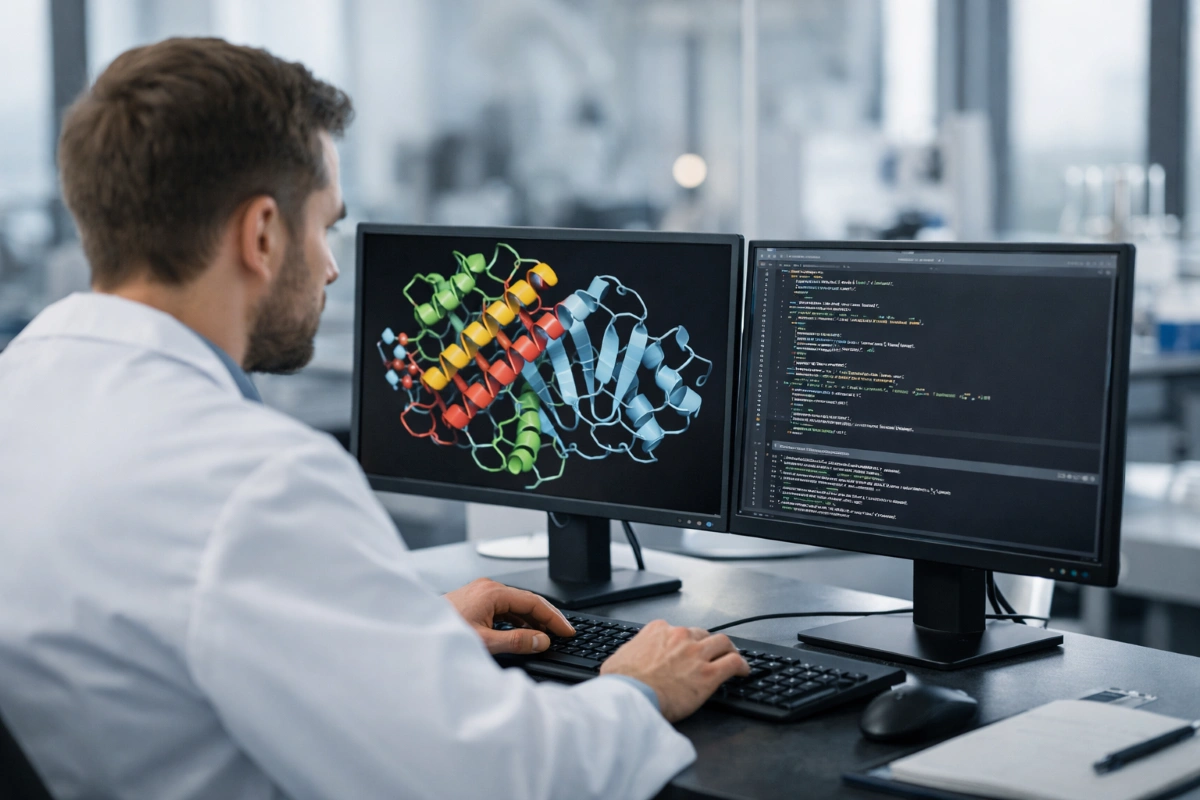
A peptide binder that once required two years of graduate-level structural work can now be generated computationally in under 48 hours using RFdiffusion paired with ProteinMPNN, then moved into wet-lab validation within weeks. That compression is what’s reshaping how academic groups approach GLP-1 receptor pharmacology, and it’s why research around GLP-1 analog peptides looks fundamentally different in 2026 than it did in 2020.
This post walks through the specific ML methods now standard in peptide discovery pipelines, how they apply to GLP-1 receptor research specifically, and where research-grade peptides fit in that workflow.
Why GLP-1R Is An Unusually Hard Target For Structure-Based Design
The GLP-1 receptor is a class B1 G protein-coupled receptor with a large extracellular domain and a conformationally flexible binding pocket. That flexibility is exactly the reason structure-based peptide design stalled on this target for most of the 2000s. Crystal structures captured static snapshots; the underlying biology demanded dynamics.
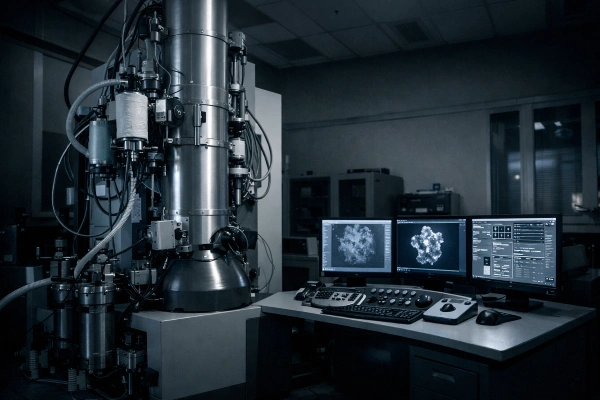
Two developments changed the research picture. Cryo-EM structures of active-state GLP-1R bound to Gs protein complexes, published by the Skiniotis group at Stanford and several others between 2017 and 2022, gave researchers atomic-resolution views of the agonist-bound conformation. AlphaFold2 and its successors then made it possible to model receptor-peptide interactions without waiting on experimental structures.
Combined, these let computational groups iterate on peptide design against realistic receptor conformations. That’s the baseline. What’s happened since is where the interesting work lives.
The Specific ML Stack Researchers Are Actually Using
A modern academic peptide discovery workflow for GLP-1R studies typically chains together four categories of tools.
- Structure prediction. AlphaFold3 (DeepMind, 2024) handles complex formation including peptide-receptor docking. ESMFold from Meta AI runs faster when screening thousands of candidate sequences. For tough cases involving heavily modified peptides or non-canonical residues, groups still fall back on Rosetta.
- De novo generation. RFdiffusion, developed by the Baker lab at the Institute for Protein Design, generates peptide backbones conditioned on a receptor surface. ProteinMPNN then fills in sequences that will fold to that backbone. The pairing is the current academic standard for binder design and has been used in published work targeting a range of GPCRs.
- Language models. ESM-2 and the newer ESM-3 encode evolutionary information in ways that let researchers filter generated sequences for plausibility before any synthesis work. A candidate with a poor ESM likelihood score usually isn’t worth ordering from a peptide supplier.
- Molecular dynamics confirmation. GROMACS or OpenMM runs the final triage. Binding-pose stability over 100-500 ns simulations separates interesting hits from artifacts.
The total iteration cycle, from target selection to testable peptide, has dropped from roughly 18 months in 2019 to 4-8 weeks in a well-resourced academic lab today.
Where Research Peptides Like BPC 157 Fit Into ML Pipelines
Every credible ML-assisted GLP-1R design pipeline leans on well-characterized reference compounds to calibrate its models. These serve three specific functions that pure computation can’t replace.
Native GLP-1(7-36) amide and exendin-4 are the standard positive controls. When a new scoring function or diffusion model is deployed, its first test is whether it correctly recovers binding to these known agonists. A model that misranks native GLP-1 against a panel of decoy peptides isn’t ready for novel design work, full stop.
Modified long-acting GLP-1 variants serve a second role. Their lipidation, stapling, or other backbone modifications provide real-world data points for force field parameterization. ML models trained only on canonical sequences often fail on these chemistries, and calibrating against documented variants exposes those gaps before they waste synthesis budgets.
Triple-agonist and dual-agonist research peptides, including newer glucagon/GIP/GLP-1 combination candidates, give ML pipelines multi-receptor benchmarks. Assay design for these compounds is non-trivial, which is why groups publishing in this space typically spend as much time on functional assays as on the computational front end. Getting the readout right is half the experiment.
None of this implies therapeutic activity in humans. Every peptide referenced here is a research chemical evaluated in preclinical and in vitro contexts, not a drug product.
The Practical Workflow Inside An Academic Lab
A realistic pipeline in 2026 looks roughly like this. A research group interested in GLP-1R allosteric modulation pulls a relevant cryo-EM structure from the PDB. They define the target site, typically the receptor’s extracellular domain or a specific interface with the stalk region. RFdiffusion generates 500-2000 backbone candidates biased toward that surface. ProteinMPNN sequences them. ESM-2 filters for evolutionary plausibility, cutting the pool to maybe 50-200. AlphaFold3 redocks these to confirm the predicted binding pose holds up. The top 20-50 get ordered as synthetic peptides.
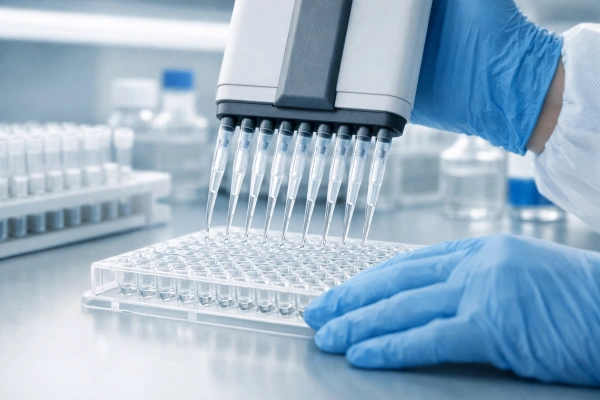
At the wet bench, surface plasmon resonance or biolayer interferometry measures binding. Functional cAMP accumulation assays in cells expressing GLP-1R rank hits by potency. The cycle then feeds back: hits get modeled again with MD, the ML models get fine-tuned on the new data, and the next round generates better candidates.
This is where reliable research-grade peptide supply matters. Academic labs running these pipelines need consistent access to reference compounds with documented certificates of analysis for benchmarking, controls, and structural studies. Proper peptide storage protocols directly affect ML model calibration, because degradation products shift binding data in ways that propagate through training. That supply chain sits strictly upstream of any human application.
An Honest Limitation That Most Writeups Skip
Something worth pushing back on in most ML-for-peptides coverage: the reported success rates from computational pipelines are selection-biased. Papers describing RFdiffusion binder generation for GPCRs often report 10-30% hit rates in wet-lab validation. Those numbers come from targets that teams chose specifically because they were tractable. Attempts on harder receptors, including some GLP-1R conformations, have much lower conversion, sometimes under 2%.
For academic researchers planning projects, this matters for budget and timeline estimation. ML-assisted discovery is a real multiplier, not the 100x productivity gain that conference talks sometimes imply. Plan your pipeline expecting 5-10% hit rates on moderately difficult GPCR targets and you won’t overpromise to your grants officer.
The Direction Things Are Heading
The near-term direction in GLP-1R peptide research isn’t incremental model improvement. It’s tighter integration with experimental data. Groups pairing active learning loops with automated synthesis platforms, where the ML model picks the next 96 peptides to synthesize based on the previous round’s results, are compressing discovery cycles further. Generate Biomedicines, Arzeda, and several academic consortia have demonstrated this closed loop for other protein targets; GLP-1R work is the natural next step.
For research suppliers and the academic groups they serve, the implication is concrete. The volume of peptide variants a single project consumes keeps rising, turnaround expectations keep shortening, and the demand for well-characterized GLP-1 reference compounds, triple-agonist research peptides, and long-acting analog variants all increase rather than decrease. Computational methods don’t replace wet lab work. They demand more of it.
Conclusion
Research groups not already running diffusion-based binder design against GLP-1R structures are working with a handicap that grows every quarter. The tooling is open, the tutorials exist, and the compute requirements fit within a mid-tier GPU budget. What separates productive labs from stalled ones in 2026 is less about model access and more about disciplined wet-bench follow-through: consistent peptide sources, documented COAs, and workflows that treat computational hits as hypotheses rather than conclusions.
For academic groups planning the next funding cycle, the honest recommendation is to pair one or two ML-literate postdocs with a standing supply of well-characterized GLP-1 research peptides, then iterate on three to five target conformations before scaling up. Reference compounds earn their place in these protocols as benchmarks, not endpoints. The productivity dividend from ML-assisted peptide design only compounds when the downstream experimental infrastructure keeps pace. The work still happens at the bench.
FAQs
Which ML tools are considered standard for academic peptide discovery targeting GLP-1R in 2026?
The current baseline stack is RFdiffusion for backbone generation, ProteinMPNN for sequence design, ESM-2 or ESM-3 for plausibility filtering, AlphaFold3 for complex prediction, and GROMACS or OpenMM for molecular dynamics confirmation. Rosetta remains useful for peptides with non-canonical residues. Most published binder-design papers since 2023 use some version of this chain.
What reference peptides should ML pipelines calibrate against for GLP-1R work?
Native GLP-1(7-36) amide and exendin-4 are the standard positive controls for any GLP-1 receptor binder design pipeline. Long-acting lipidated analogs provide additional calibration points for models handling modified backbones. Triple-agonist research peptides serve as multi-receptor benchmarks. All are used strictly as research compounds, not therapeutics.
How realistic are the 10-30% hit rates reported for ML-generated GPCR binders?
Those numbers reflect selection bias. Published results typically come from teams that chose tractable targets. Harder GPCR conformations, including some GLP-1R states, convert at 2-5% or lower in wet-lab validation. For grant planning, assume 5-10% hit rates on moderately difficult targets. Build experimental throughput around that expectation rather than the headline figures.
What compute infrastructure does a lab need to run RFdiffusion and ProteinMPNN?
A single modern GPU with 24GB VRAM (RTX 4090, A5000, or equivalent) handles routine binder design runs. Generating 500-2000 backbone candidates against a defined receptor surface completes in roughly 12-48 hours on this hardware. ESM-2 filtering and AlphaFold3 redocking push total compute to about one week per full design-to-selection cycle.
How should researchers source GLP-1 reference peptides for computational benchmarking?
Prioritize suppliers that provide full certificates of analysis, including HPLC purity data, mass spectrometry confirmation, and lot-specific sequence verification. Lyophilized format with documented storage conditions is standard. Confirm materials are sold strictly for research use. Consistent lot-to-lot quality matters more than unit price when the peptide serves as a control across multiple ML validation runs.
Research Use Disclaimer
The information in this article is provided for educational purposes for licensed researchers, academics, and professionals engaged in preclinical and in vitro investigation. All peptides referenced in the context of GLP-1 receptor research are sold strictly as research chemicals for in vitro and non-human laboratory use. These compounds are not approved by the FDA for human or animal use, are not drugs, are not dietary supplements, and are not intended to diagnose, treat, cure, or prevent any disease or condition. They are not intended for human or veterinary consumption. No claims are made regarding weight loss, metabolic effects, appetite regulation, glycemic control, or any therapeutic outcome in humans. Researchers are responsible for complying with all applicable local, state, and federal regulations regarding the handling, storage, and use of research peptides, including institutional review and biosafety requirements where applicable.