❌ Not for Human Consumption
●
✅ For Research Use Only
●
All products are intended strictly for laboratory research purposes only
●
❌ Not for Human Consumption
●
✅ For Research Use Only
●
All products are intended strictly for laboratory research purposes only
●

Quality Assurance For Liquid-Form Research Compounds: Evaluating Stability And Sterility

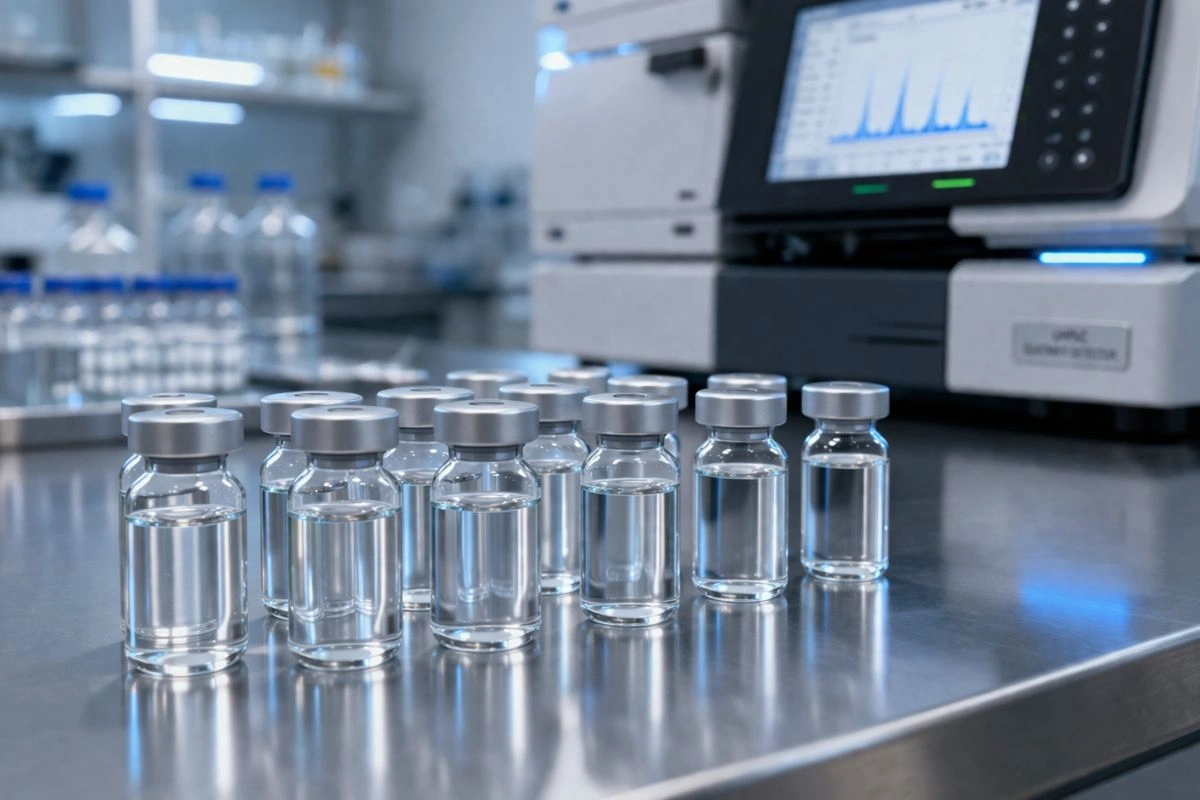
For professional researchers and academic scientists working with peptide-based Research compounds, the integrity of every experiment begins long before the first assay is run. It begins with the quality of the materials on the bench.
Liquid-form research compounds present a unique set of challenges that solid or lyophilized forms do not. Issues such as degradation kinetics, microbial contamination, pH drift, and improper storage can silently compromise an entire study. When researchers procure compounds like peptides for investigational purposes, they must have full confidence that the material meets verifiable standards for purity, stability, and sterility.
This article provides an action-oriented overview of the quality assurance (QA) protocols that professional researchers should understand, demand, and verify when sourcing liquid-form research peptides. Our goal is to equip laboratory professionals with the knowledge they need to evaluate suppliers and protect the validity of their research outcomes.
Disclaimer: The compounds discussed in this article, including research-grade peptides, are intended strictly for in vitro research and laboratory use only. They are not intended for human or animal consumption, and they are not drugs, supplements, or food products. This content is written exclusively for professional researchers and academic institutions. Nothing in this article constitutes medical advice, diagnosis, or treatment recommendations.

Understanding the Unique Stability Challenges of Liquid-Form Peptides
Degradation Pathways in Aqueous Solutions
Peptides in liquid form are inherently more susceptible to chemical degradation than their lyophilized counterparts. Researchers should be aware of the primary degradation mechanisms that can compromise compound integrity over time:
- Hydrolysis: Water molecules can cleave peptide bonds, particularly at asparagine and aspartate residues. The rate of hydrolysis is influenced by pH, temperature, and the presence of catalytic ions.
- Oxidation: Methionine, cysteine, and tryptophan residues are vulnerable to oxidative degradation, especially when exposed to light, dissolved oxygen, or trace metals in solution.
- Deamidation: Asparagine residues can undergo deamidation, converting to aspartate or isoaspartate. This is one of the most common degradation pathways in peptide solutions and can significantly alter the structural profile of the compound.
- Aggregation: Peptide molecules may form dimers, oligomers, or larger aggregates over time, particularly under thermal stress. Aggregation changes the functional characteristics of the compound and can produce misleading results in binding assays and receptor studies.
Understanding these pathways is critical for researchers evaluating the shelf life and usability of any liquid-form research peptide, including Peptide.
Key Environmental Factors That Affect Stability
Several controllable variables directly impact how well a liquid-form compound retains its intended structural profile:
- Temperature: Most peptide solutions require refrigerated storage (2 to 8 degrees Celsius). Repeated freeze-thaw cycles can accelerate aggregation and denaturation.
- pH: Each peptide has an optimal pH range for stability. Deviations, even minor ones, can accelerate hydrolysis or deamidation.
- Light Exposure: Ultraviolet and visible light can trigger photodegradation, especially in compounds containing aromatic amino acid residues.
- Container Compatibility: The choice of vial material (borosilicate glass vs. certain plastics) can influence leachable contamination and adsorption of the peptide onto container surfaces.
Researchers should request Certificate of Analysis (CoA) documentation that includes accelerated stability data when sourcing liquid-form Peptide or similar research compounds.
Peptide is provided for laboratory research applications only and is not approved, intended, or labeled for human consumption.

Sterility Standards for Liquid Research Compounds
Why Sterility Is Non-Negotiable in Research Settings
Microbial contamination in liquid-form peptides does not merely represent a safety concern. It represents a direct threat to data integrity. Bacterial or fungal contaminants can enzymatically degrade the peptide, alter pH, introduce endotoxins, and produce metabolic byproducts that interfere with assay readouts.
For cell culture studies, receptor binding assays, and other sensitive in vitro applications, even low-level contamination can invalidate results and waste months of work.
Sterility Testing Protocols Researchers Should Verify
When evaluating a supplier of liquid-form research compounds, researchers should confirm that the following sterility assurance measures are in place:
- Membrane Filtration (0.22 Micron): This is the industry-standard method for sterilizing liquid solutions that cannot be autoclaved without degradation. A 0.22 micron filter effectively removes bacteria and fungi from the solution.
- USP 71 Sterility Testing: United States Pharmacopeia Chapter 71 outlines the standard protocol for sterility testing of pharmaceutical-grade and research-grade solutions. This involves incubating filtered samples in both tryptic soy broth (TSB) and fluid thioglycollate medium (FTM) for a minimum of 14 days to detect aerobic, anaerobic, and facultative organisms.
- Endotoxin Testing (LAL Assay): The Limulus Amebocyte Lysate (LAL) test detects bacterial endotoxins. Even if a solution passes sterility testing, residual endotoxins from prior contamination can interfere with sensitive biological assays. Acceptable endotoxin levels for research-grade solutions are typically less than 5 EU/mL, though stricter thresholds may apply depending on the application.
- Environmental Monitoring of Manufacturing Areas: Reputable suppliers manufacture and fill liquid compounds in ISO-classified cleanroom environments (ISO 7 or better). Researchers should ask suppliers for documentation of their environmental monitoring programs, including viable and non-viable particulate counts.
Aseptic Processing vs. Terminal Sterilization
It is important for researchers to understand the distinction between aseptic processing and terminal sterilization:
- Aseptic processing involves manufacturing and filling the product under sterile conditions from start to finish. This is the preferred method for peptide solutions because it avoids exposing the compound to heat or radiation that could cause degradation.
- Terminal sterilization applies a sterilizing agent (such as autoclaving or gamma irradiation) to the final sealed product. This method is generally unsuitable for peptide solutions due to the risk of thermal or radiation-induced degradation.
Researchers should confirm that their supplier uses validated aseptic fill processes for liquid-form Peptide and similar peptide compounds.
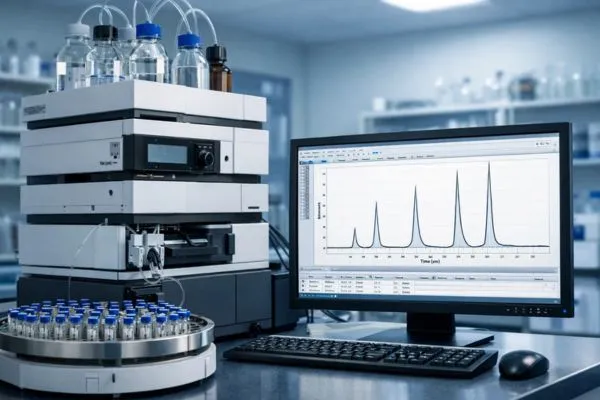
Analytical Methods for Verifying Compound Identity and Purity
A robust QA program goes beyond sterility. Researchers should also verify the chemical identity and purity of every lot they receive. The following analytical methods represent the gold standard for peptide characterization:
High-Performance Liquid Chromatography (HPLC)
HPLC, particularly reverse-phase HPLC (RP-HPLC), is the most widely used technique for assessing peptide purity. It separates the target compound from degradation products, synthetic impurities, and other contaminants based on hydrophobicity. A purity threshold of 98% or higher is a reasonable benchmark for research-grade liquid peptides.
Mass Spectrometry (MS)
Mass spectrometry confirms the molecular identity of the compound by measuring its mass-to-charge ratio. Liquid chromatography coupled with mass spectrometry (LC-MS) provides both purity and identity confirmation in a single analytical run. This is particularly valuable for confirming that the compound has the expected molecular weight and has not undergone unexpected modifications.
Peptide Sequencing
For added confidence, amino acid analysis or tandem mass spectrometry (MS/MS) sequencing can verify the primary structure of the peptide. This is especially important for longer or more complex peptides where synthetic errors are more likely.
pH and Osmolality Testing
For liquid-form compounds, verifying that the solution pH and osmolality fall within specified ranges is essential. Deviations can indicate buffer degradation, contamination, or formulation errors.
Visual and Particulate Inspection
Every lot of liquid-form research compounds should undergo visual inspection for particulates, color changes, and clarity. The presence of visible particles or turbidity may indicate aggregation, microbial growth, or container-closure integrity failure.
All analytical data should be documented on the Certificate of Analysis (CoA) provided with each lot. Researchers should review CoA documents carefully before using any compound in their studies.
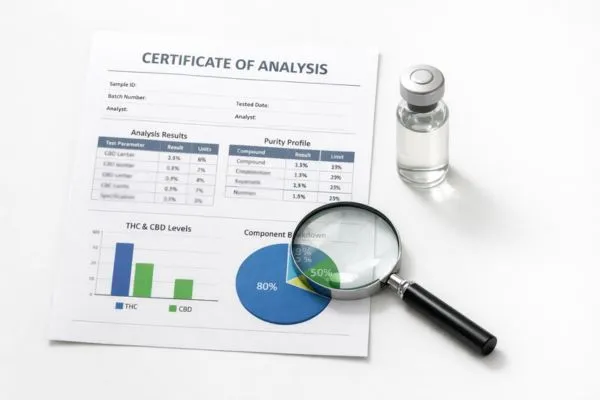
What to Look for in a Certificate of Analysis (CoA)
The CoA is the single most important document a researcher can review when evaluating a liquid-form research compound. A thorough CoA for a product like Peptide should include, at a minimum:
- Compound identity confirmation (molecular weight, sequence, or structural data)
- Purity percentage as determined by HPLC or equivalent method
- Sterility test results with method and incubation duration noted
- Endotoxin levels with the LAL test methodology cited
- pH measurement of the solution
- Concentration/potency as verified by UV spectrophotometry or HPLC
- Storage conditions recommended by the manufacturer
- Lot number and expiration or retest date
- Appearance description (color, clarity, visible particulates)
If a supplier cannot provide a comprehensive CoA, this should be treated as a significant red flag. Professional researchers should never assume compound quality. They should verify it.
A peptide is a research compound sold exclusively for in vitro and laboratory use. It is not intended for human consumption, clinical application, or any use outside of authorized research.
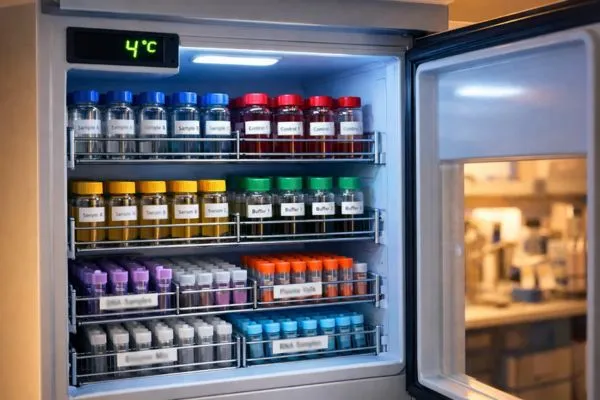
Best Practices for Handling and Storing Liquid-Form Research Peptides
Even the highest-quality compound can be rendered useless by improper handling. Researchers should adopt the following best practices:
Storage
- Store liquid-form peptides at the temperature specified on the CoA (typically 2 to 8 degrees Celsius for short-term storage, or at negative 20 degrees Celsius or below for long-term storage).
- Avoid repeated freeze-thaw cycles. Aliquot the compound into single-use volumes upon receipt whenever possible.
- Store vials in the dark or in amber containers to minimize photodegradation.
Handling
- Use aseptic technique when withdrawing material from sealed vials. Work in a laminar flow hood or biosafety cabinet when possible.
- Use only sterile, peptide-compatible consumables (syringes, pipette tips, microcentrifuge tubes) to avoid introducing contaminants or causing adsorption losses.
- Record the date of first opening and track cumulative exposure time at ambient temperature.
Documentation
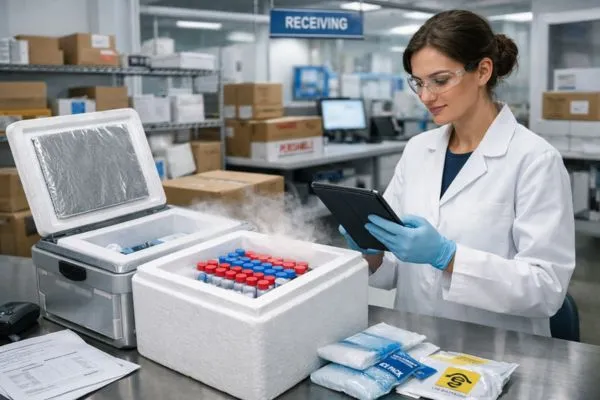
- Maintain a chain-of-custody log for each lot of compound received.
- Record storage conditions, any deviations, and the results of any in-house quality checks.
- Retain CoA documents and cross-reference them with experimental records for full traceability.
How to Evaluate a Research Compound Supplier
Not all suppliers are equal. Researchers should evaluate potential vendors using the following criteria:
- Transparency: Does the supplier provide complete, lot-specific CoA documents with verifiable analytical data?
- Manufacturing Standards: Does the supplier operate in a cGMP or ISO-certified facility? Are their processes validated?
- Third-Party Testing: Does the supplier use independent, accredited laboratories for any of their analytical or sterility testing?
- Technical Support: Can the supplier answer detailed questions about their formulation, stability data, and sterility assurance processes?
- Regulatory Awareness: Does the supplier clearly label products as being for research use only? Do they maintain proper documentation and disclaimers?
- Reputation: Does the supplier have a track record with established research institutions and published academic researchers?
Choosing a supplier that meets these criteria protects both the integrity of your research and the reputation of your institution.
Conclusion
Quality assurance is not a passive expectation, it is an active responsibility shared between suppliers and the researchers who depend on them. Every liquid-form research peptide that enters your laboratory carries the potential to either strengthen or undermine months of investigational work. By understanding degradation pathways, demanding rigorous sterility documentation, verifying analytical data through comprehensive Certificates of Analysis, and enforcing disciplined storage and handling protocols, researchers take direct control over the reliability of their outcomes. Do not leave compound integrity to assumption. Scrutinize every CoA, challenge every supplier claim, and build quality verification into every stage of your workflow. The credibility of your data, and the progress of your research depend on the standards you enforce today.
Disclaimer: The compounds discussed in this article, including research-grade peptides, are intended strictly for in vitro research and laboratory use only. They are not intended for human or animal consumption, and they are not drugs, supplements, or food products. This content is written exclusively for professional researchers and academic institutions. Nothing in this article constitutes medical advice, diagnosis, or treatment recommendations.
Frequently Asked Questions
What is the most reliable way to confirm the purity of a liquid-form research peptide?
Reverse-phase high-performance liquid chromatography (RP-HPLC) is the industry-standard method for assessing peptide purity. Request CoA documentation showing HPLC results with a purity threshold of 98% or higher. For additional confirmation of molecular identity, look for liquid chromatography–mass spectrometry (LC-MS) data, which verifies both purity and correct molecular weight in a single analytical run.
How should I store liquid-form peptides to prevent degradation?
Store compounds at 2–8°C for short-term use or at −20°C or below for long-term storage, as specified on the CoA. Aliquot the solution into single-use volumes immediately upon receipt to avoid repeated freeze-thaw cycles. Keep vials in the dark or use amber containers to protect against photodegradation, and always record storage conditions and any temperature deviations.
Why is sterility testing critical for research-grade liquid compounds?
Microbial contamination directly threatens data integrity. Bacteria and fungi can enzymatically degrade the peptide, shift the solution’s pH, introduce endotoxins, and generate metabolic byproducts that distort assay readouts. Verify that your supplier performs 0.22-micron membrane filtration, USP Chapter 71 sterility testing with a 14-day incubation period, and LAL endotoxin testing on every lot.
What red flags should I watch for when evaluating a research compound supplier?
Treat the absence of a lot-specific Certificate of Analysis as an immediate disqualifier. Other warning signs include missing sterility or endotoxin data, no indication of cleanroom classification, reluctance to share stability studies, and failure to clearly label products as intended for research use only. A credible supplier will provide transparent, verifiable documentation and operate under cGMP or ISO-certified manufacturing standards.
Can liquid-form peptides be terminally sterilized using autoclaving or irradiation?
No. Terminal sterilization methods such as autoclaving and gamma irradiation expose peptides to heat or radiation that can cause structural degradation, aggregation, and loss of functional integrity. The appropriate method for liquid peptide solutions is validated aseptic processing, where the compound is manufactured and filled under sterile conditions throughout the entire process. Always confirm that your supplier uses aseptic fill protocols rather than terminal sterilization.