❌ Not for Human Consumption
●
✅ For Research Use Only
●
All products are intended strictly for laboratory research purposes only
●
❌ Not for Human Consumption
●
✅ For Research Use Only
●
All products are intended strictly for laboratory research purposes only
●

What Should A KLOW Certificate Of Analysis Include For Researchers?

Written By: Gary Hite, Research Content Writer
Reviewed By: Natalie Kunsman, M.D., Board-Certified Physician
Last Reviewed: October 5, 2026
A KLOW certificate of analysis (COA) should document identity, purity, and safety data for each of the four peptide components in the blend: BPC-157, TB-500, GHK-Cu, and KPV. At minimum, that means HPLC purity results with chromatograms, mass spectrometry confirmation of molecular weight for each peptide, residual solvent levels, endotoxin testing results, and a batch or lot number tied to a third-party laboratory. Without all five, you’re working with incomplete data, and incomplete data compromises research reproducibility.
A KLOW certificate of analysis is a batch-specific analytical document that records the identity, purity, and contaminant profile of a four-component research peptide blend containing BPC-157, TB-500, GHK-Cu, and KPV, issued by an independent testing laboratory to verify that the material meets specifications for laboratory research use.
Disclaimer: KLOW and all products referenced in this article are for research use only. They are not intended for human consumption, medical use, or diagnostic purposes. Nothing in this article constitutes medical advice, diagnosis, or treatment recommendations.
What is a certificate of analysis for research peptides?
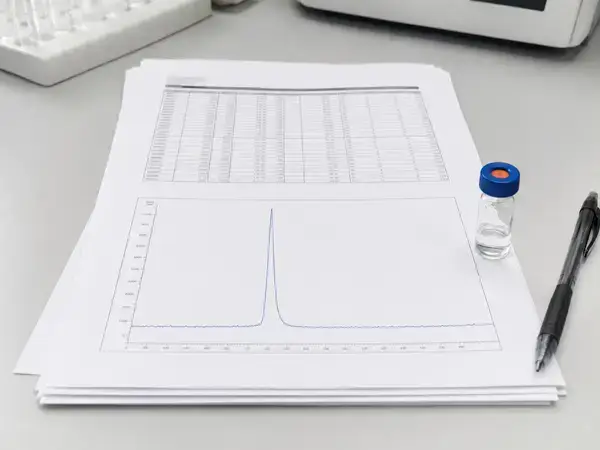
A COA is a document issued by a testing laboratory that reports the analytical results for a specific batch of material. For research peptides, it typically answers two questions: is this the correct compound, and how pure is it?
The answer to the first question comes from mass spectrometry. The answer to the second comes from high-performance liquid chromatography (HPLC). A COA that answers only one of those questions is incomplete.
Beyond identity and purity, a research-grade COA should also report contaminant data. Residual solvents from the synthesis process, counterion content (usually trifluoroacetic acid, or TFA), and endotoxin levels all affect how the material behaves in experimental settings. According to ICH Q3C guidelines, residual solvent limits exist specifically because these compounds can alter assay outcomes at concentrations researchers might otherwise dismiss.
For multi-component blends like KLOW, the COA should address each component individually. An aggregate purity number for the entire blend doesn’t tell you whether all four peptides are present or whether the ratio matches the label claim.
Why does a four-component blend raise the verification bar?
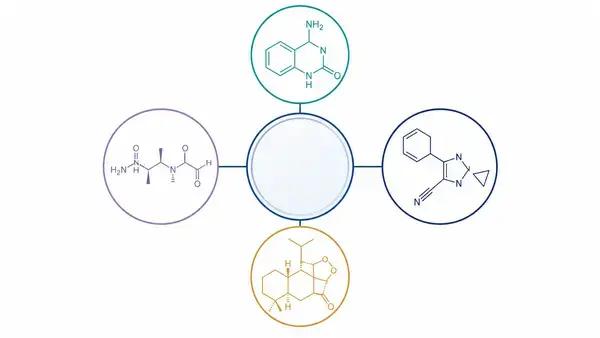
KLOW contains four distinct peptides in one vial: GHK-Cu (50 mg), KPV (10 mg), BPC-157 (10 mg), and TB-500 (10 mg). That 80 mg total creates a documentation challenge single-peptide COAs don’t face.
A single-peptide COA needs one HPLC chromatogram and one mass spec reading. A four-component blend needs four of each, plus confirmation that the blending ratios match the label claim. If a COA for KLOW shows only one aggregate purity number with no per-component breakdown, it hasn’t answered the question researchers need answered: is each peptide present, at the correct concentration, at the stated purity?
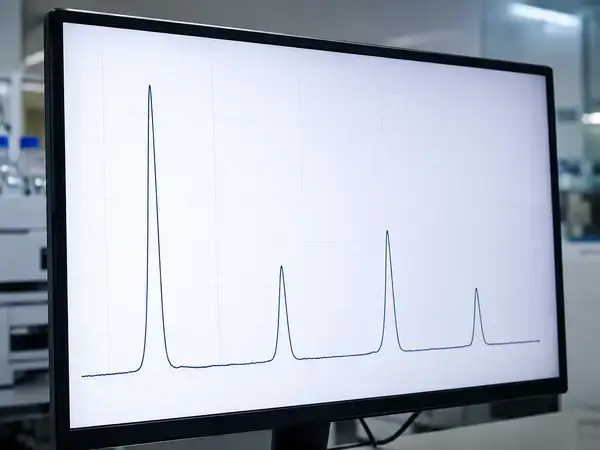
The HPLC chromatogram for a KLOW blend should show four distinct peaks, each corresponding to one peptide. If only three peaks appear, or if two peaks overlap without resolution, the blend either contains fewer components than claimed or the analytical method couldn’t separate them. Both outcomes matter for your research.
Mass spectrometry should independently confirm the molecular weight for each component.
| Peptide | Theoretical mass (Da) | Acceptable range |
| GHK-Cu | ~403.9 | +/-0.1% |
| KPV | ~342.4 | +/-0.1% |
| BPC-157 | ~1,419.5 | +/-0.1% |
| TB-500 | ~4,963.0 | +/-0.1% |
If any observed mass falls outside those ranges, the identity of that component hasn’t been verified.
What HPLC purity data should a KLOW COA include?
HPLC separates a sample into its individual components and measures the relative abundance of each. For peptides, reverse-phase HPLC is the standard method.
A complete HPLC section on a KLOW COA should include the purity percentage for each peptide component (not just one aggregate number), the chromatogram image showing peak separation, the method parameters (column type, mobile phase, gradient conditions, detection wavelength), and the retention time for each peak.
The purity threshold for research-grade peptides is 98% or higher per component. In 2026, accredited testing labs have moved toward 99%+ for single peptides, though blends introduce complexity that can make 98% per component more realistic.
One number to watch: if a COA reports a single “blend purity” of 99% without breaking out per-component values, it may be reporting total peptide content versus non-peptide contaminants rather than the purity of each individual peptide. Those are different measurements that answer different questions.
How does mass spectrometry confirm each peptide’s identity?
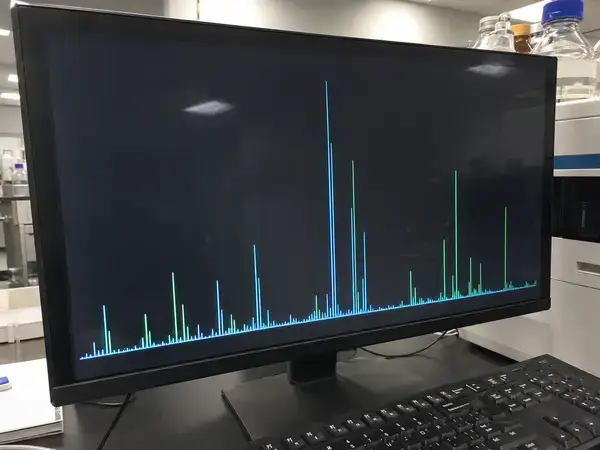
HPLC tells you how pure a sample is. It doesn’t tell you what the sample is. A vial could test at 99% purity by HPLC and still contain the wrong compound. That’s the contrarian position worth stating plainly: a high purity percentage without identity confirmation is a number without meaning.
Mass spectrometry measures the molecular weight of each component. For KLOW, the COA should report both the theoretical (expected) mass and the observed mass for each peptide. The match between those two values confirms identity.
LC-MS (liquid chromatography-mass spectrometry) combines both techniques in a single run. It’s the preferred method for multi-component blends because it links each HPLC peak directly to a mass spec reading. If a vendor provides HPLC and MS data from separate instruments and separate runs, the connection between “peak 3 on the chromatogram” and “the mass spec reading for BPC-157” is assumed, not proven.
For researchers running preclinical studies, identity confirmation isn’t optional. Misidentified compounds introduce variables that invalidate results and waste resources. All research peptides, including KLOW, are sold for laboratory investigation only and are not for human consumption.
What residual solvent and counterion data should appear?
Peptides produced through solid-phase synthesis go through cleavage, purification, and lyophilization steps that can leave residual solvents in the final product. The three most common are trifluoroacetic acid (TFA), acetonitrile, and dimethylformamide (DMF).
A COA should report levels for each against ICH Q3C guideline limits. TFA, which serves as both a cleavage reagent and a counterion, typically makes up the largest residual fraction in lyophilized peptides.
Why this matters for research: TFA content affects the actual peptide weight in the vial. A vial labeled “10 mg BPC-157” may contain 6 to 7 mg of actual peptide and 3 to 4 mg of TFA salt and moisture. Without counterion data, researchers can’t calculate accurate molar concentrations for their assays.
The COA should also report water content, typically measured by Karl Fischer titration. Together, peptide content, TFA fraction, and moisture content let you calculate the net peptide weight, which is the number that matters for dosing accuracy in research protocols.
How should endotoxin testing results appear on a KLOW COA?
Endotoxins are lipopolysaccharides from gram-negative bacteria that trigger immune responses in biological systems. For any research involving cell cultures or animal models, endotoxin contamination is a confounding variable that can skew results.
A COA should report endotoxin levels in Endotoxin Units per milligram (EU/mg). The Limulus Amebocyte Lysate (LAL) assay is the standard testing method, as described in USP Chapter 85 guidelines. For research-grade peptides used in in vivo models, a threshold below 5 EU/mg is a common benchmark, though specific study protocols may require lower levels.
Not every COA includes endotoxin data. For in vitro work with synthetic peptides, some labs consider it optional. But if your research involves animal models or any system sensitive to immune activation, endotoxin testing isn’t a bonus. It’s a requirement. Ask for it if it’s missing.
What batch-level documentation should every researcher check?
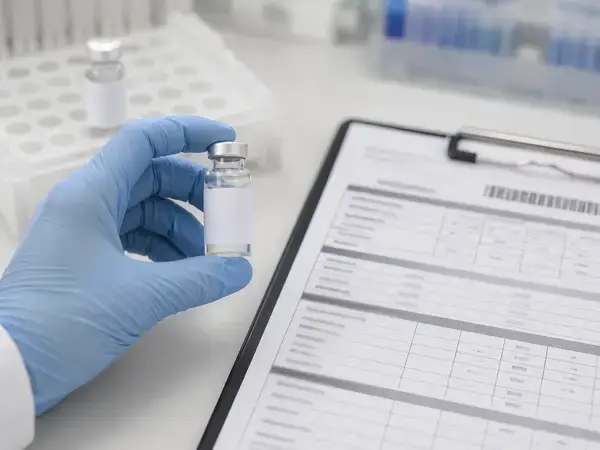
Beyond the analytical data itself, a COA should include administrative details that tie the document to a specific production batch. These fields seem mundane, but they’re what makes a COA traceable and auditable.
Every KLOW COA should include the batch or lot number (matching the label on the vial), the date of analysis, the name and credentials of the testing laboratory, the identity of the analyst or a verification key, and the product name with the full component list and concentrations.
Some suppliers now include QR codes or verification links that let researchers confirm a COA’s authenticity against the issuing lab’s records. A PDF that can’t be traced back to a real laboratory through an independent channel is just a document, not proof.
For institutional researchers, retaining COAs is standard practice for audit trails under FDA Good Laboratory Practice (GLP) regulations. If your institution requires GLP documentation, confirm that your supplier’s COAs meet those standards before procurement.

How do you spot a fabricated or incomplete COA?
The research peptide market includes vendors who publish COAs that don’t hold up to scrutiny. Knowing the red flags saves time and protects research integrity.
A COA that reports purity without a chromatogram image is incomplete. The chromatogram is the raw data behind the number. Without it, you’re trusting a claim with no evidence.
Watch for COAs where the batch number doesn’t match the vial label. If the lot number on the document doesn’t correspond to the product you received, the COA may have been recycled from a different batch or generated generically.
In-house testing without third-party verification is another concern. A vendor testing their own product and issuing their own COA has an obvious conflict of interest. Independent, accredited laboratories (look for ISO 17025 accreditation) provide a layer of objectivity that in-house testing can’t match.
Other red flags: a COA that lists purity for the blend but doesn’t break out per-component results, mass spec data missing for one or more components, no residual solvent panel, or testing dates that don’t align with the batch production timeline. Any of these should prompt a follow-up with the supplier before using the material.
How Penguin Peptides documents KLOW quality in 2026
Penguin Peptides sources KLOW from certified North American manufacturers who follow WHO/GMP and ISO 9001:2008 standards. Every batch of KLOW 80mg ships with a third-party COA that includes per-component HPLC purity data, LC-MS identity confirmation for all four peptides, residual solvent analysis, and a unique lot number.
Researchers can review published lab results before ordering. That page links each product to its current batch COA, so you can verify the documentation before committing to a purchase. Working with a research content partner that understands peptide compliance helps Penguin Peptides maintain accurate, up-to-date documentation across every product listing.
All Penguin Peptides products, including KLOW, are sold for research use only. They are not for human consumption, therapeutic use, or diagnostic purposes.
Hold every supplier to this standard
A KLOW certificate of analysis is only as good as what it documents. Four peptides in one vial means four identity confirmations, four purity readings, residual solvent data, endotoxin results, and a batch number that traces back to a real, independent lab. Anything less leaves gaps in your research data.
Before you run any assay with KLOW, pull the COA. Check the chromatogram for four resolved peaks. Confirm each molecular weight matches the expected value. Verify the lot number on the vial matches the document. If something’s missing, ask the supplier before you use the material. A vendor that can’t produce complete, batch-specific, third-party documentation shouldn’t be in your procurement pipeline.
Penguin Peptides publishes third-party COAs for every KLOW batch on their lab results page. Review them before purchasing. That’s the bar researchers should hold every supplier to in 2026.
FAQs
What does a KLOW certificate of analysis test for?
A KLOW COA tests for peptide identity via mass spectrometry, purity via HPLC, residual solvent levels (TFA, acetonitrile, DMF), water content, and endotoxin contamination. For a four-component blend, each peptide (BPC-157, TB-500, GHK-Cu, KPV) should be tested individually with separate results reported. KLOW is for research use only.
Should a KLOW COA include separate results for each peptide?
Yes. A single aggregate purity number for the entire blend doesn’t confirm that all four components are present or that the ratio matches the label claim. A complete KLOW COA reports individual HPLC purity and mass spec identity data for BPC-157, TB-500, GHK-Cu, and KPV separately.
What HPLC purity percentage is acceptable for research-grade KLOW?
Research-grade peptides should test at 98% or higher purity per component. The 2026 standard among accredited labs has moved toward 99%+ for single peptides, though the complexity of a four-component blend can make 98% per component a more realistic target. Always request the chromatogram alongside the percentage.
How do you verify that a peptide COA is authentic?
Check that the batch number on the COA matches the lot number on the vial label. Look for the testing laboratory’s name, ISO 17025 accreditation status, and analyst identification. Some suppliers include QR codes or web-based verification portals. If the COA can’t be traced to an independent lab, ask the supplier for clarification.
Does Penguin Peptides provide third-party COAs for KLOW?
Yes. Penguin Peptides provides batch-specific, third-party COAs for all KLOW orders. These include per-component HPLC and LC-MS data, residual solvent analysis, and unique lot numbers. Published lab results are available on their website for review before purchase. All products are for research purposes only.
What is the difference between in-house and third-party COA testing?
In-house testing means the vendor analyzed their own product. Third-party testing means an independent, accredited laboratory performed the analysis. Third-party COAs carry more weight because the testing lab has no financial interest in the results. For research reproducibility, third-party verification from an ISO 17025 accredited lab is the standard to look for.
Can KLOW be used for human consumption or medical purposes?
No. KLOW is sold for in vitro and preclinical laboratory research only. It is not intended for human consumption, medical use, therapeutic application, or diagnostic purposes. Penguin Peptides does not make any medical claims about KLOW or any other product. Researchers must comply with all applicable regulations in their jurisdiction.