❌ Not for Human Consumption
●
✅ For Research Use Only
●
All products are intended strictly for laboratory research purposes only
●
❌ Not for Human Consumption
●
✅ For Research Use Only
●
All products are intended strictly for laboratory research purposes only
●

What Is Melanotan 2 Peptide? A Research Overview For Laboratory Use

Written By: Gary Hite, Research Content Writer
Reviewed By: Natalie Kunsman, M.D., Board-Certified Physician
Last Reviewed: October 7, 2026
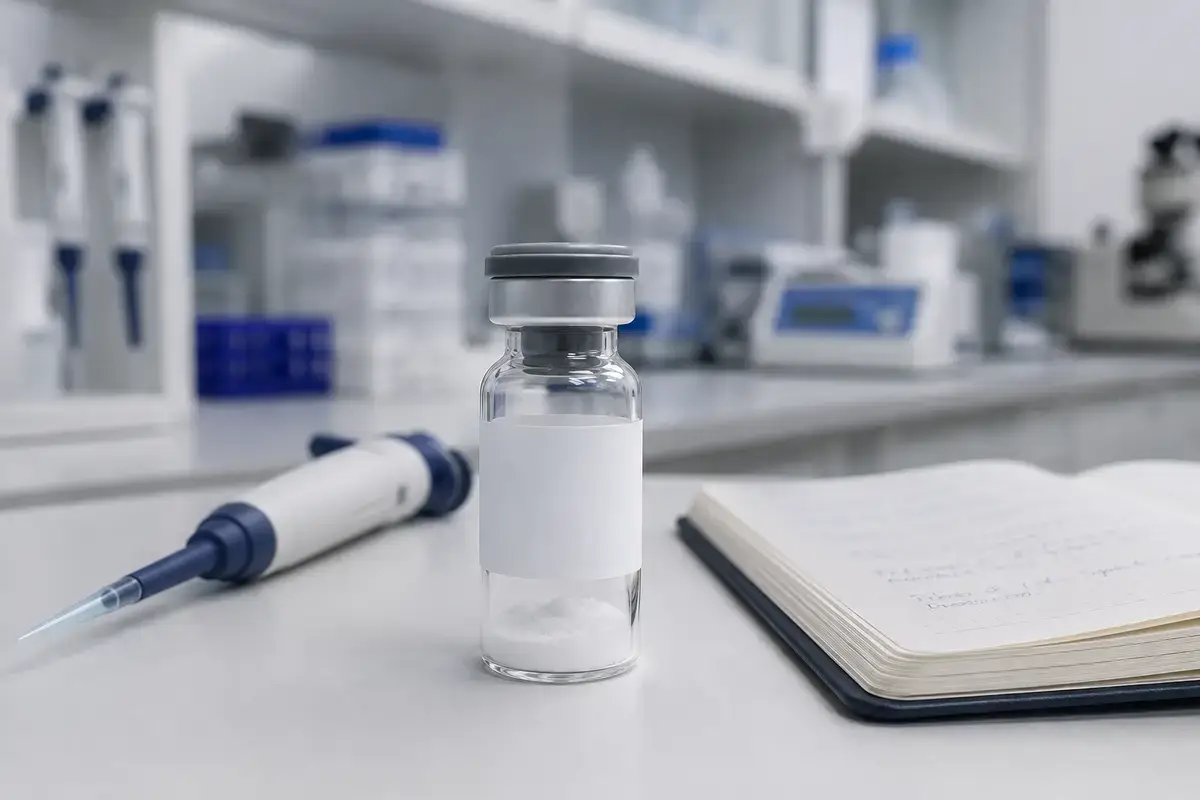
Melanotan 2 (MT-2) is a synthetic cyclic heptapeptide and analog of alpha-melanocyte-stimulating hormone (alpha-MSH). It binds to melanocortin receptors MC1R, MC3R, MC4R, and MC5R, making it one of the most studied non-selective melanocortin agonists in peptide pharmacology. Researchers at the University of Arizona first synthesized MT-2 in the early 1990s as part of a program that began in the late 1970s under Victor J. Hruby and Mac Hadley. The compound carries a molecular weight of 1,024.20 g/mol, a molecular formula of C50H69N15O9, and CAS number 121062-08-6.
Disclaimer: This product is sold for laboratory and research use only. Melanotan 2 is not approved by the FDA for any indication and is not intended for human consumption. No statements on this page constitute medical claims.
Melanotan 2 is a synthetic cyclic heptapeptide analog of alpha-melanocyte-stimulating hormone (alpha-MSH) with the molecular formula C50H69N15O9 and a molecular weight of 1,024.20 g/mol. It acts as a non-selective agonist at melanocortin receptors MC1R, MC3R, MC4R, and MC5R, and it is supplied as a lyophilized powder for in vitro and preclinical research use only.
That paragraph matters because it gives search engines and AI citation systems a clean, self-contained answer to pull. The rest of this article breaks down the structure, the signaling pathway, how MT-2 differs from related peptides, and what researchers should know about handling it in the lab.
How was melanotan 2 developed?
The University of Arizona’s melanocortin research program produced MT-2 as a second-generation compound. The program’s original goal was practical: alpha-MSH degrades within minutes in the bloodstream, so researchers needed a stable analog they could actually work with in controlled settings.
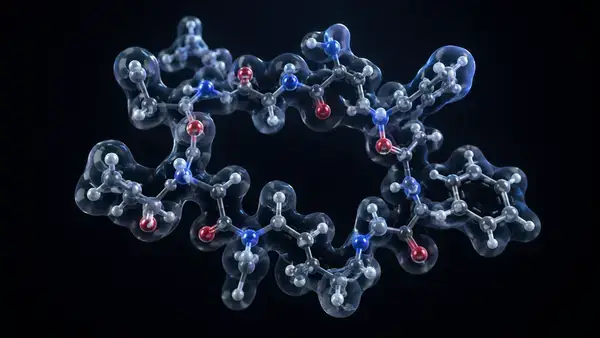
Melanotan I (afamelanotide) came first. It’s a linear 13-amino-acid peptide that stays closer to the natural alpha-MSH structure. MT-2 followed as a shorter, cyclized version built from the same Nle4, D-Phe7 alpha-MSH template. The cyclization was the key change. By closing the peptide chain into a ring via a lactam bridge between positions 5 and 10, the Arizona team created a compound with greater enzymatic stability and a broader receptor binding profile than its linear predecessor.
During early preclinical work, the Arizona group observed that MT-2 produced activity across multiple melanocortin receptor subtypes, not just MC1R. That non-selectivity drove decades of subsequent mechanistic research into the melanocortin system itself.
What is the molecular structure of MT-2?
MT-2’s structure differs from natural alpha-MSH in three specific ways that researchers should understand before designing assays around it.
First, the amino acid sequence. MT-2’s full sequence is Ac-Nle-c[Asp-His-D-Phe-Arg-Trp-Lys]-NH2. That’s seven amino acids arranged in a cyclic configuration, compared to alpha-MSH’s 13-amino-acid linear chain.
Second, the lactam bridge. An amide bond between the side chains of aspartic acid (position 5) and lysine (position 10) forces the peptide into a rigid ring. This cyclization reduces the molecule’s conformational flexibility, which limits the number of shapes it can adopt in solution. For receptor binding assays, that’s relevant: the constrained shape gives MT-2 a more predictable interaction with the melanocortin receptor binding pocket compared to flexible linear peptides.
Third, the norleucine substitution. Natural alpha-MSH contains methionine at position 4. Methionine oxidizes rapidly, which creates degradation artifacts that can confound experimental results. MT-2 replaces it with norleucine (Nle), a non-natural amino acid that resists oxidation. This substitution is one reason MT-2 maintains stability in reconstituted solution longer than unmodified alpha-MSH fragments.
How does melanotan 2 interact with melanocortin receptors?
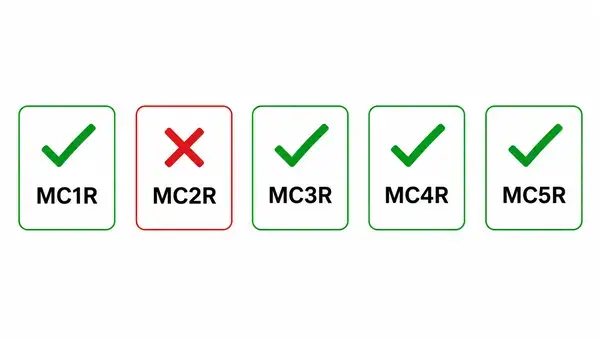
MT-2 is a non-selective melanocortin receptor agonist. It activates MC1R, MC3R, MC4R, and MC5R. It does not meaningfully activate MC2R, which responds primarily to adrenocorticotropic hormone (ACTH).
That non-selectivity is what makes MT-2 both useful and complicated in research. A selective MC1R agonist triggers one downstream pathway. MT-2 triggers several simultaneously, which means researchers need to control for off-target receptor activation when designing experiments.
The signaling cascade works like this: when MT-2 binds a melanocortin receptor (using MC1R as the example), it activates adenylate cyclase. That enzyme increases intracellular cyclic AMP (cAMP) levels. cAMP then activates protein kinase A (PKA). PKA phosphorylates CREB (cAMP response element-binding protein), which activates transcription of MITF (microphthalmia-associated transcription factor). MITF regulates the expression of melanogenic enzymes, including tyrosinase.
For MC4R, the signaling cascade triggers different downstream effects in preclinical models, including changes in energy balance markers and neuroendocrine signaling. Published research on MC4R activation by melanocortin agonists includes a 2022 study in Pharmacology Biochemistry and Behavior examining nucleus accumbens microinjection of melanotan-II and its effects on ingestive behaviors in mice.
How does MT-2 compare to related melanocortin peptides in 2026?
This is where most competitor articles stop. They describe MT-2 in isolation. But researchers selecting a melanocortin agonist for a specific assay need to know how it compares to the alternatives.
Melanocortin peptide comparison for research use
| Feature | Melanotan I (Afamelanotide) | Melanotan II (MT-2) | PT-141 (Bremelanotide) |
| Structure | Linear, 13 amino acids | Cyclic, 7 amino acids (lactam bridge) | Cyclic, 7 amino acids (no acetyl group) |
| Receptor selectivity | MC1R preferring | Non-selective (MC1R, MC3R, MC4R, MC5R) | MC3R/MC4R preferring |
| Molecular weight | 1,646.85 g/mol | 1,024.20 g/mol | 1,025.18 g/mol |
| Enzymatic stability | Moderate | High (cyclization plus Nle substitution) | High (cyclization) |
| Primary research application | Melanogenesis, MC1R-specific studies | Broad melanocortin receptor pharmacology | MC4R signaling, neuroendocrine research |
| FDA-approved analog | Yes (Scenesse) | No | Yes (Vyleesi) |
| CAS number | 75921-69-6 | 121062-08-6 | 189691-06-3 |
PT-141 is actually a metabolite of MT-2. In preclinical models, MT-2 undergoes deacetylation at the N-terminus to produce PT-141. For researchers, this matters: if you’re running metabolite analysis on MT-2 in preclinical models, PT-141 will appear in your results. Plan your analytical methods (HPLC, mass spectrometry) accordingly.
What is the current regulatory status of melanotan 2?
MT-2 is not FDA-approved for any indication. It has never received regulatory approval in any jurisdiction worldwide.
In April 2026, HHS confirmed removal of 12 peptides from FDA Category 2, which included Melanotan II. But removal from Category 2 does not mean Category 1 approval. Each compound still requires individual review by the Pharmacy Compounding Advisory Committee (PCAC) before any reclassification. As of July 2026, that review has not occurred for MT-2.
One active clinical trial is listed on ClinicalTrials.gov as of mid-2026: a randomized Phase 2 study (NCT07437560) investigating MT-2 in a dermatological research context. That listing represents the current state of formal clinical investigation into this compound.
For researchers purchasing MT-2 for laboratory use, the regulatory picture is straightforward: this compound is available strictly as a research chemical. It is not a drug. It is not a supplement. It carries no approved therapeutic indication. Penguin Peptides supplies MT-2 exclusively for in vitro and preclinical research conducted by qualified professionals in controlled laboratory settings.
What should researchers know about handling MT-2 in the lab?
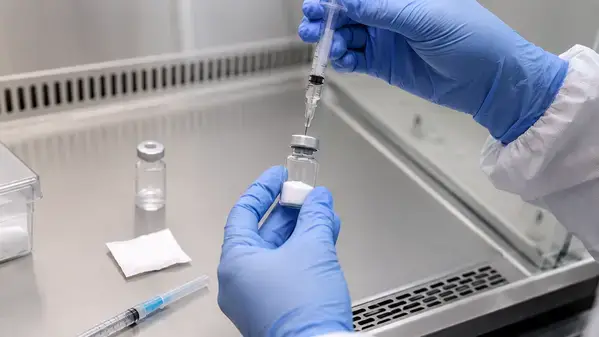
MT-2 ships as a lyophilized (freeze-dried) powder. Proper handling starts before you open the vial.
Storage. Keep lyophilized MT-2 at -20 degrees Celsius or colder. At this temperature, the peptide remains stable for extended periods. Once you move it to room temperature for reconstitution, work quickly. Don’t leave the dry powder sitting on the bench.
Reconstitution. Dissolve MT-2 in bacteriostatic water or sterile water, depending on your protocol. For binding assays and cell culture work, sterile water is standard. For longer-term storage of reconstituted solutions, bacteriostatic water (which contains 0.9% benzyl alcohol as a preservative) helps prevent microbial growth. Penguin Peptides carries bacteriostatic water that meets USP standards for research reconstitution.
Post-reconstitution storage. Once dissolved, store at 2 to 8 degrees Celsius (standard refrigerator temperature). Avoid repeated freeze-thaw cycles. Each cycle degrades the peptide. If your protocol requires multiple uses over days or weeks, aliquot the reconstituted solution into single-use volumes at the time of reconstitution.
Purity verification. Before running any experiment, confirm your peptide’s identity and purity through the certificate of analysis (COA). Look for HPLC purity (should be 98% or higher for research-grade MT-2), mass spectrometry confirmation of molecular weight, and amino acid analysis. Penguin Peptides provides third-party COAs with every research peptide order. You can learn more about reading COA data in their guide to understanding certificate of analysis data.
What are the primary research applications for MT-2?
Peer-reviewed literature documents MT-2’s use across several research areas. All of the following describe in vitro and preclinical (animal model) investigations, not human clinical applications.
Melanocortin receptor pharmacology. MT-2 remains one of the most referenced tool compounds for studying melanocortin receptor function. A 2006 review in Peptides (Hadley and Dorr) documented the historical milestones from the Arizona program through early clinical studies, establishing MT-2’s place in melanocortin receptor research.
Pigmentation biology. MC1R activation by melanocortin agonists triggers the adenylate cyclase/cAMP/MITF/tyrosinase cascade described above. Researchers use MT-2 to study melanogenesis pathways in melanocyte cell lines and skin tissue models.
Neuroendocrine signaling. MC4R and MC3R activation by MT-2 in preclinical models has been investigated in the context of energy balance and neuroendocrine communication. A 2003 study in Endocrinology examined how melanotan-II reduced the orexigenic effects of neuropeptide Y (NPY) in male rat models while leaving gonadotropic and somatotropic axes unaffected.
Immune signaling research. Melanocortin receptors are expressed on immune cells, and MC1R activation has been studied in the context of inflammatory signaling pathways. MT-2’s non-selectivity makes it a broad screening tool in this space, though selective agonists are preferred when isolating specific receptor contributions.
This article is provided by Penguin Peptides for educational purposes and is produced in collaboration with ECL Media, a digital strategy firm that supports research-focused brands with compliant, science-based content.
How do you verify melanotan 2 purity before experiments?
Don’t assume purity. Verify it. This is where shortcuts create problems in published research.
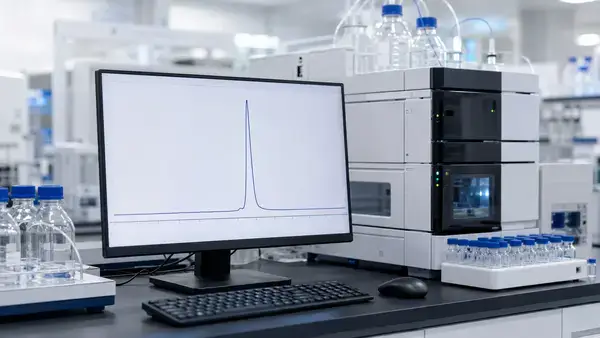
A proper certificate of analysis for MT-2 should include three things at minimum. HPLC chromatography showing a single dominant peak at 98% purity or above. Electrospray ionization mass spectrometry (ESI-MS) confirming the expected molecular weight of 1,024.20 g/mol within instrument tolerance. And amino acid analysis verifying the correct residue composition.
If your supplier can’t provide all three, that’s a red flag. Penguin Peptides includes third-party analytical testing with every MT-2 lot. The COA ships with the product and is also available on request before purchase.
Why does this matter? Impure peptides introduce confounding variables. A 2% impurity in a receptor binding assay can shift your EC50 values and produce results that won’t replicate. Researchers who have worked with melanocortin peptides for years know this. If you’re new to this compound class, build purity verification into your standard operating procedure from the start.
For a broader look at reconstitution solvents and how solvent choice affects peptide stability, Penguin Peptides has published a comparison of reconstitution water vs. sterile water vs. saline for research peptides.
The contrarian take: MT-2’s non-selectivity is a feature, not a flaw
Most articles frame MT-2’s non-selectivity as a limitation. The reasoning goes: if you can’t isolate a single receptor’s contribution, your data is messy.
That’s backwards for certain research questions.
If you’re studying melanocortin system crosstalk (how MC1R, MC3R, MC4R, and MC5R interact when activated simultaneously), a selective agonist gives you a partial picture. MT-2 gives you the whole system firing at once. Pair it with selective antagonists for individual receptors, and you can systematically dissect which receptor drives which downstream effect while maintaining physiologically relevant multi-receptor activation.
This combinatorial approach (MT-2 plus selective antagonists) has produced some of the most cited melanocortin signaling data in the last two decades. The 2022 study examining MT-2 microinjection in the nucleus accumbens used exactly this strategy to parse out MC3R versus MC4R contributions to ingestive behavior.
The point: don’t default to selective agonists just because selectivity sounds cleaner. Match your tool compound to your research question.

Where melanotan 2 peptide research stands in 2026
MT-2 has been a reference compound in melanocortin pharmacology for over 30 years. That’s not an accident. Its cyclic structure, broad receptor profile across MC1R, MC3R, MC4R, and MC5R, and resistance to enzymatic breakdown make it a practical tool for labs working across pigmentation biology, neuroendocrine signaling, and immune pathway research. The 2026 FDA Category 2 removal has added new questions about procurement and regulatory classification, but as of July 2026, MT-2 remains available for qualified researchers conducting in vitro and preclinical work. If you’re building an assay around melanocortin receptor activation, MT-2 gives you multi-receptor coverage that selective agonists can’t match on their own. Start with verified purity (98% or higher via HPLC), proper storage at -20 degrees Celsius, and a clear understanding of which receptor subtypes your experiment targets. Penguin Peptides supplies research-grade melanotan 2 with third-party COAs for every lot. This compound is for laboratory research only and is not intended for human consumption.
FAQs
Is melanotan 2 FDA-approved for any use?
No. As of July 2026, melanotan 2 has not received FDA approval for any therapeutic, diagnostic, or clinical indication. It is classified as a research chemical and is available only for laboratory and preclinical research conducted by qualified professionals.
What is the difference between melanotan 1 and melanotan 2?
Melanotan 1 is a linear 13-amino-acid peptide that preferentially activates MC1R. Melanotan 2 is a cyclic 7-amino-acid peptide with a lactam bridge that activates MC1R, MC3R, MC4R, and MC5R non-selectively. MT-2’s molecular weight is 1,024.20 g/mol versus MT-1’s 1,646.85 g/mol.
How should melanotan 2 be stored in a research laboratory?
Store lyophilized MT-2 at -20 degrees Celsius or colder. After reconstitution, store at 2 to 8 degrees Celsius and avoid repeated freeze-thaw cycles. Aliquot reconstituted solutions into single-use volumes to preserve peptide integrity across multiple experimental sessions.
What solvent should be used to reconstitute melanotan 2?
Bacteriostatic water or sterile water are the standard solvents. Use sterile water for immediate-use binding assays and cell culture experiments. Use bacteriostatic water (containing 0.9% benzyl alcohol) when reconstituted peptide will be stored for more than 24 hours, as the preservative inhibits microbial growth.
What melanocortin receptors does MT-2 bind to?
MT-2 is a non-selective agonist that activates MC1R, MC3R, MC4R, and MC5R. It does not activate MC2R, which responds primarily to adrenocorticotropic hormone (ACTH). This broad receptor profile makes MT-2 a tool compound for studying melanocortin system crosstalk in preclinical models.
Can melanotan 2 be used for human consumption?
No. Melanotan 2 sold by Penguin Peptides is for laboratory and research use only. It is not intended for human consumption, self-administration, or any clinical application. Researchers must comply with all applicable regulations governing research chemical use in their jurisdiction.
What purity should researchers expect from research-grade MT-2?
Research-grade MT-2 should show HPLC purity of 98% or higher, confirmed molecular weight of 1,024.20 g/mol via mass spectrometry, and verified amino acid composition. Always request a certificate of analysis (COA) with third-party testing data before using any peptide in experimental protocols.