❌ Not for Human Consumption
●
✅ For Research Use Only
●
All products are intended strictly for laboratory research purposes only
●
❌ Not for Human Consumption
●
✅ For Research Use Only
●
All products are intended strictly for laboratory research purposes only
●

Reconstitution And Stability Research For IGF-1 LR3

Written By: Gary Hite, Research Content Writer
Reviewed By: Natalie Kunsman, M.D., Board-Certified Physician
Last Reviewed: September 29, 2026
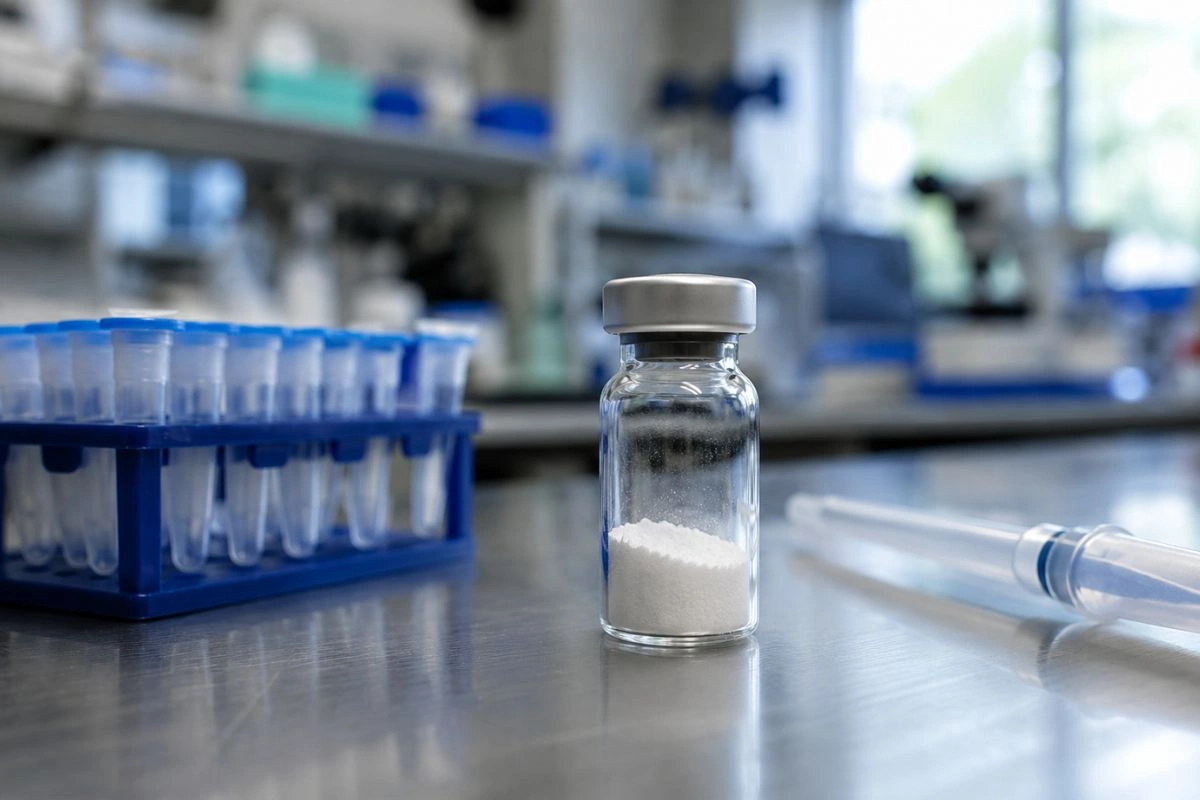
For research teams working with recombinant growth factor analogs, careful reconstitution and storage form the foundation of reproducible data. IGF-1 LR3, short for Long Arg3 Insulin-like Growth Factor-1, is a peptide analog used in controlled laboratory settings to study growth factor receptor signaling in vitro. Because it is distributed as a lyophilized (freeze-dried) powder, the steps a researcher follows during reconstitution, aliquoting, and storage have a direct effect on material integrity and on the validity of downstream experiments. This article outlines practical, evidence-informed approaches to reconstituting IGF-1 LR3 and to evaluating its stability under laboratory conditions.
Disclaimer: IGF-1 LR3 is supplied and intended strictly for in vitro laboratory research and educational purposes only. It is not a drug, food, dietary supplement, or cosmetic, and it is not intended for human or veterinary use, consumption, diagnostic application, or therapeutic application. This material is intended for handling exclusively by qualified researchers and academic professionals within a controlled laboratory setting. The information below is educational and addresses laboratory handling only. It does not constitute medical, clinical, or professional advice.
Understanding IGF-1 LR3 as a Research Material
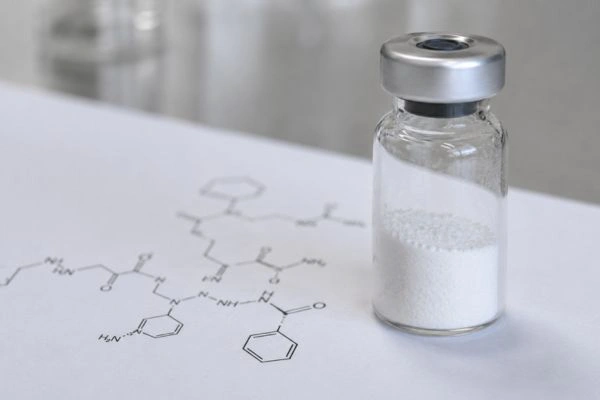
IGF-1 LR3 is an analog of insulin-like growth factor 1. Compared with native IGF-1, it carries an arginine substitution at the third position and a thirteen amino acid N-terminal extension, giving a sequence of roughly 83 amino acids and an approximate molecular weight near 9,111 Daltons. These structural modifications reduce its affinity for IGF binding proteins, which is the primary reason the analog is selected for certain in vitro models of receptor activation and cell signaling.
In the laboratory, the material is used to investigate questions tied to the IGF-1 receptor pathway, cell proliferation assays, and related growth factor research. Knowing the molecular weight and the structural characteristics is more than background detail. It informs the solvent choices, concentration calculations, and stability expectations described in the sections that follow.
Preparing for Reconstitution
Begin every reconstitution with preparation rather than the solvent itself. Assemble sterile pipettes or syringes, your chosen diluent, clean low-binding microcentrifuge tubes or vials for aliquots, and appropriate personal protective equipment. Work within a clean bench or laminar flow hood where available, and follow your institution’s standard laboratory practices for handling research reagents.
Allow the sealed vial of lyophilized IGF-1 LR3 to equilibrate to room temperature before opening. Introducing solvent into a vial that is still cold from frozen storage can promote condensation and uneven dissolution. A brief, gentle centrifugation of the vial before opening helps settle any powder that may have shifted to the cap or sidewalls during transit.
Selecting a Reconstitution Solvent
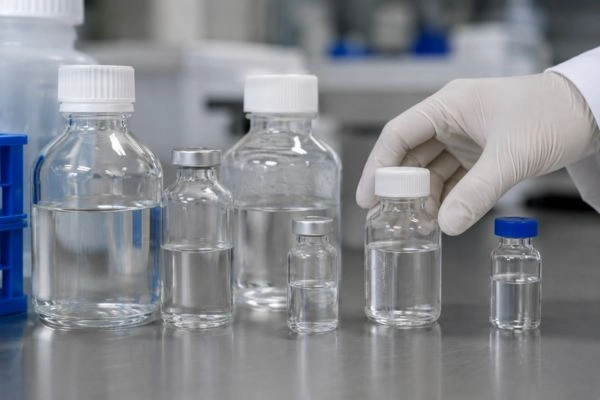
Solvent selection depends on the experimental protocol, the downstream assay, and the solubility characteristics of the material. Researchers working with IGF-1 family peptides commonly evaluate the following diluents:
- Sterile water. A frequent first choice for preparing a concentrated stock that will be diluted further in an assay-appropriate buffer.
- Bacteriostatic water. Sterile water containing a small percentage of benzyl alcohol, sometimes selected when a slightly longer working window is desired for a refrigerated stock.
- Dilute acetic acid. A mildly acidic vehicle that supports solubility for several growth factor peptides, after which the stock is typically buffered or diluted for use.
- Phosphate-buffered saline (PBS). Often used to bring a stock to a physiologically relevant pH for cell culture work, frequently as the dilution step rather than the initial reconstitution vehicle.
For very dilute working solutions, researchers often add a carrier protein such as 0.1 percent bovine serum albumin. Carrier protein reduces adsorption of the peptide to tube and pipette surfaces and can support stability in low-concentration preparations. Always confirm that any additive is compatible with your assay.
Step-by-Step Reconstitution Protocol
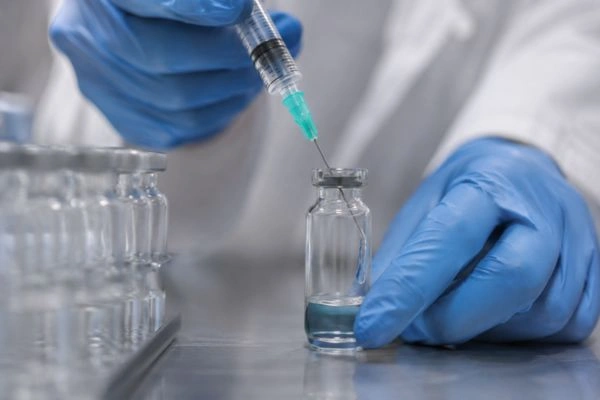
Follow a slow, gentle approach to preserve peptide integrity:
- Confirm the vial has reached room temperature and briefly centrifuge it to settle the contents.
- Calculate the solvent volume needed for your target stock concentration before you begin.
- Draw the calculated volume of your chosen solvent into a sterile pipette or syringe.
- Add the solvent slowly, directing it down the inner wall of the vial rather than spraying it directly onto the powder.
- Cap the vial and allow it to stand for several minutes so the material can begin dissolving.
- Dissolve fully by rolling or swirling the vial gently. Do not vortex or shake vigorously, since mechanical agitation and foaming can degrade or denature the peptide.
- Inspect the solution. A properly reconstituted preparation should appear clear and free of visible particulates.
- Aliquot the stock into single-use volumes to minimize repeated freeze-thaw exposure during later experiments.
Calculating Stock Concentration
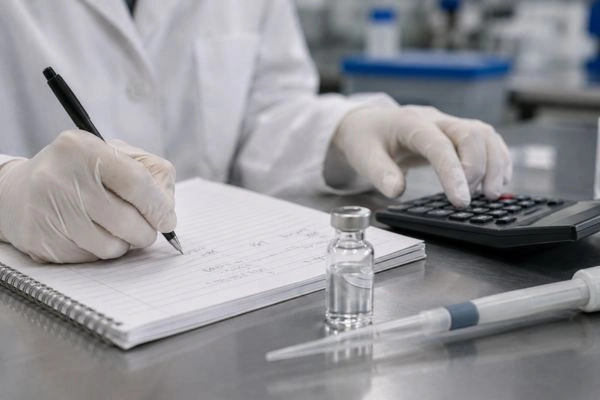
A reconstitution stock concentration is the mass of peptide divided by the volume of solvent added. As an illustrative laboratory example, reconstituting a vial containing 1 milligram of IGF-1 LR3 in 1 milliliter of solvent yields a stock of 1 milligram per milliliter, equivalent to 1,000 micrograms per milliliter. Researchers then dilute this stock to whatever working concentration their assay protocol specifies.
When an experiment calls for molar rather than mass concentration, the approximate molecular weight near 9,111 Daltons supports the conversion. A 1 milligram per milliliter stock corresponds to roughly 110 micromolar. Documenting both the mass concentration and the molar concentration on the aliquot label supports clean record-keeping and reproducibility across a research group.
Stability Research: Key Variables
Stability research examines how a peptide preparation maintains its integrity over time and across conditions. Several variables are commonly studied for IGF-1 family analogs:
- Temperature. The single most influential factor for both the lyophilized powder and the reconstituted solution. Lower, consistent temperatures generally support longer integrity.
- Freeze-thaw cycles. Repeated freezing and thawing is a well-documented source of peptide degradation. Aliquoting before freezing is the standard mitigation.
- pH. Many growth factor peptides display greater stability under mildly acidic conditions, which informs the common use of dilute acetic acid as a reconstitution vehicle.
- Oxidation and air exposure. Minimizing headspace and limiting repeated vial opening helps reduce oxidative degradation.
- Light exposure. Where indicated, storing preparations protected from light is a reasonable precaution.
- Surface adsorption. In dilute solutions, peptide can bind to container surfaces, which is why low-binding tubes and carrier protein are frequently used.
Storage Recommendations
Storage guidance differs between the lyophilized and the reconstituted states.
Lyophilized Powder
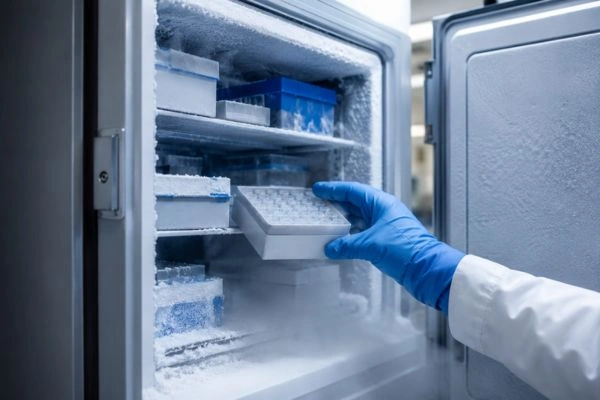
The freeze-dried form is the more stable state. It is generally stored frozen, often at minus 20 degrees Celsius, with colder conditions such as minus 80 degrees Celsius used for extended storage. Kept dry and frozen, the lyophilized material typically tolerates long storage periods, and brief ambient exposure during shipping is generally accepted. Confirm specifics against the documentation supplied with your material.
Reconstituted Solution
Once in solution, the preparation is less stable and benefits from prompt, careful handling. For short-term laboratory use, reconstituted IGF-1 LR3 is commonly refrigerated at 2 to 8 degrees Celsius. For longer storage, single-use aliquots are frozen to limit freeze-thaw exposure. Exact working windows depend on the solvent, concentration, and conditions, so researchers should validate stability empirically for their own workflow rather than assuming a fixed shelf life.
Assessing Stability in the Laboratory
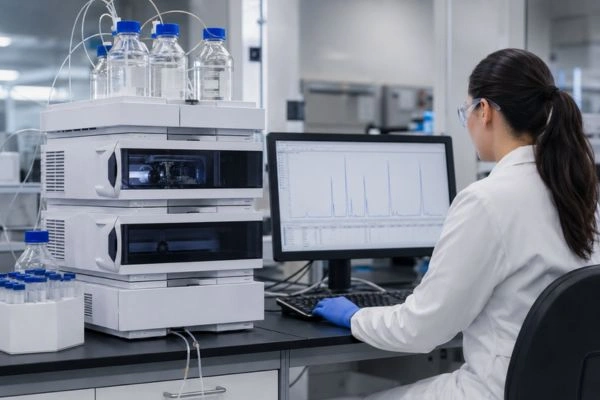
Researchers verify peptide integrity using stability-indicating analytical methods rather than relying on appearance alone. Reversed-phase high-performance liquid chromatography (HPLC) is widely used to monitor purity and detect degradation products over time. Mass spectrometry confirms molecular weight and structural integrity. Routine visual inspection for cloudiness, color change, or precipitation provides an immediate, low-cost first check before a preparation is used in an assay. Pairing visual inspection with periodic analytical confirmation gives a fuller picture of how a stock holds up under a given storage regimen.
Documentation and Reproducibility
Strong handling practices are only useful when they are recorded. Note the reconstitution date, solvent and additives used, stock and working concentrations, aliquot volumes, storage location, and storage temperature. Consistent labeling and a clear log allow a research group to trace any variability in results back to specific handling conditions, which is central to reproducible science.
Conclusion
Reconstitution and stability handling determine whether IGF-1 LR3 performs consistently across a research program. Equilibrate the vial, choose a solvent suited to your protocol, add it gently, calculate concentrations carefully, aliquot to limit freeze-thaw cycles, and store each state at appropriate temperatures. Pair disciplined storage with periodic analytical confirmation, and document every step. These practices protect material integrity and support the reproducible, well-controlled experiments that rigorous research depends on.
Disclaimer: This content is provided for educational and informational purposes regarding laboratory handling only. IGF-1 LR3 is intended strictly for in vitro research and educational use by qualified professionals. It is not for human consumption and is not intended for any diagnostic or therapeutic purpose. Nothing in this article should be interpreted as encouraging or endorsing any use outside of legitimate scientific research.
Frequently Asked Questions
What is IGF-1 LR3 used for in research?
In laboratory settings, IGF-1 LR3 is used as a research material to study insulin-like growth factor receptor signaling, cell proliferation, and related pathways in vitro. It is intended only for research and educational purposes and is not for human or animal use.
Which solvent is appropriate for reconstituting IGF-1 LR3?
Common laboratory diluents include sterile water, bacteriostatic water, dilute acetic acid, and phosphate-buffered saline. Selection depends on the experimental protocol and the solubility characteristics of the material, and a carrier protein is often added for very dilute working solutions.
How do I calculate the stock concentration after reconstitution?
Stock concentration is the mass of peptide divided by the volume of solvent added. For example, dissolving 1 milligram of IGF-1 LR3 in 1 milliliter of solvent yields a 1 milligram per milliliter stock, equivalent to 1,000 micrograms per milliliter. Using the approximate molecular weight near 9,111 Daltons, this corresponds to roughly 110 micromolar. Recording both the mass and molar concentration on each aliquot label supports reproducibility across a research group.
How should reconstituted IGF-1 LR3 be stored?
Reconstituted solutions are generally refrigerated at 2 to 8 degrees Celsius for short-term laboratory use and frozen in single-use aliquots for longer storage to limit freeze-thaw cycles. Always confirm conditions against the product documentation and validate stability for your own workflow.
How is stability assessed in the laboratory?
Researchers commonly use stability-indicating methods such as reversed-phase HPLC and mass spectrometry, supported by visual inspection for cloudiness or precipitation, to monitor peptide integrity over time.