❌ Not for Human Consumption
●
✅ For Research Use Only
●
All products are intended strictly for laboratory research purposes only
●
❌ Not for Human Consumption
●
✅ For Research Use Only
●
All products are intended strictly for laboratory research purposes only
●

Kisspeptin-10: Reconstitution, Handling, and Storage

Written By: Gary Hite, Research Content Writer
Reviewed By: Natalie Kunsman, M.D., Board-Certified Physician
Last Reviewed: October 1, 2026
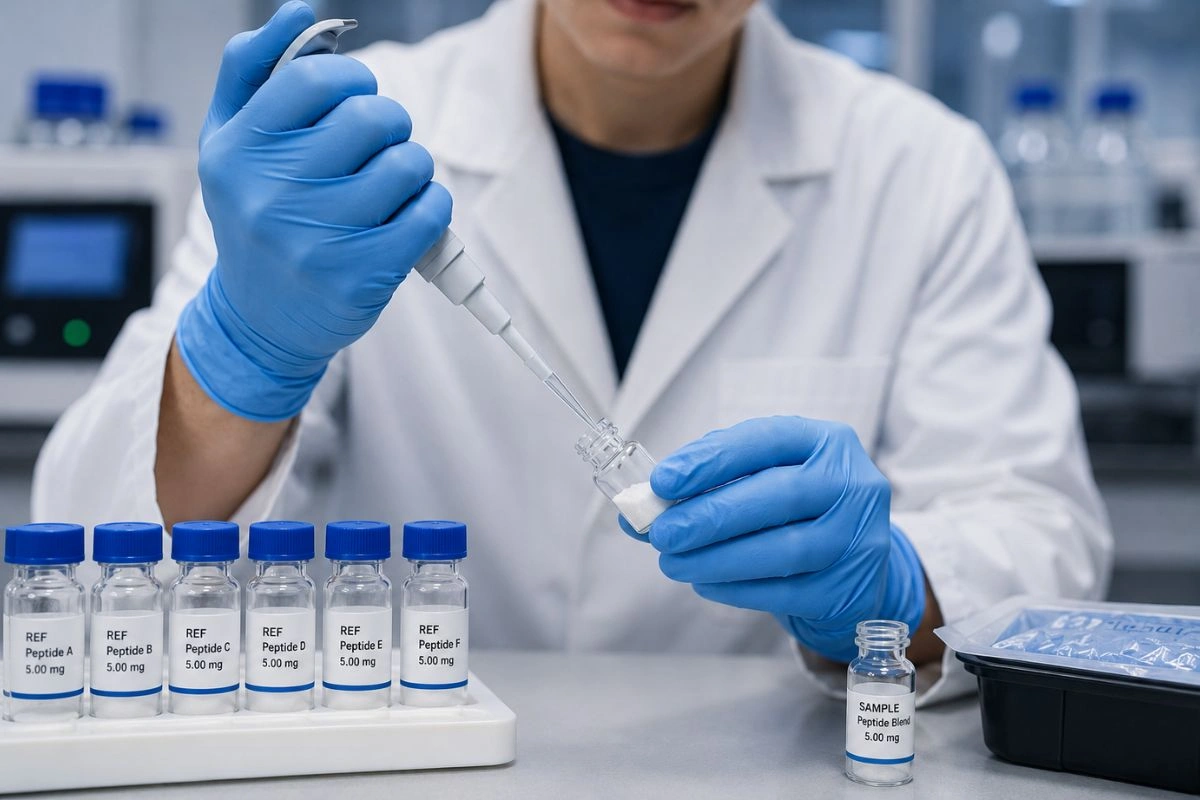
A research peptide is only as reliable as the way it is prepared and stored. Kisspeptin-10 arrives as a lyophilized powder, and how a laboratory reconstitutes, handles, and stores that material determines whether it stays intact through an experiment or degrades before it can be used. Getting these steps right protects both the peptide and the reproducibility of the research that depends on it. This article walks through the practical reconstitution, handling, and storage of Kisspeptin-10, written for analytical chemists, peptide scientists, and academic researchers.
Disclaimer: Kisspeptin-10 is intended strictly for laboratory research and educational use only. It is not for human consumption and not for any diagnostic or therapeutic application. The information below describes laboratory handling for qualified researchers and academic professionals.
Why Reconstitution, Handling, and Storage Matter
Peptides are sensitive molecules, and Kisspeptin-10 is no exception. Several degradation pathways can compromise a sample if it is handled poorly, including oxidation of susceptible residues, hydrolysis of peptide bonds, aggregation, and adsorption of peptide onto container surfaces. Each of these reduces the amount of intact peptide available and can introduce variability into experimental results.
Careful reconstitution, handling, and storage are therefore not optional refinements but the foundation of dependable research data. A peptide that has partially degraded will not behave consistently, and the resulting data may be impossible to reproduce. Treating preparation and storage as deliberate, documented steps is what keeps a research material trustworthy from the first experiment to the last.
Know Your Peptide: Kisspeptin-10 Properties
Effective handling begins with understanding the molecule. Kisspeptin-10 is a decapeptide, a chain of ten amino acid residues, with an amidated C-terminus and a molecular weight near 1.3 kilodaltons. Its sequence includes aromatic residues, among them a tryptophan residue, which carries practical consequences for handling.
Tryptophan is sensitive to light and to oxidation, so protecting the peptide from prolonged light exposure and from unnecessary contact with air helps preserve its integrity. The peptide is generally soluble in aqueous media, which simplifies reconstitution compared with highly hydrophobic sequences. Knowing these properties in advance lets researchers choose an appropriate solvent, set sensible handling precautions, and anticipate the conditions under which the peptide is most stable.
Choosing the Right Reconstitution Solvent
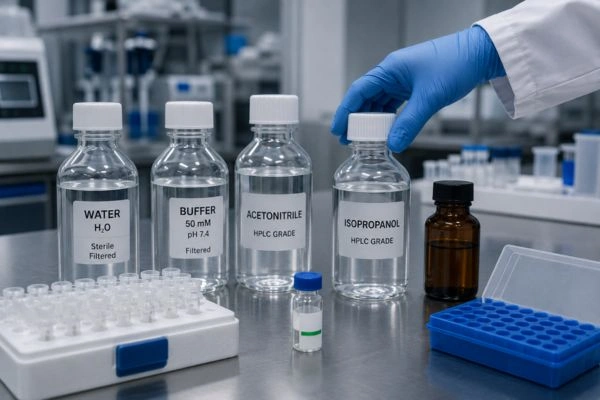
Solvent selection is the first decision in reconstitution, and it follows directly from the peptide’s chemistry. The general principle is to match the solvent to the peptide’s solubility: hydrophilic peptides dissolve readily in water or aqueous buffer, while hydrophobic peptides may require a small amount of an organic solvent such as dimethyl sulfoxide (DMSO) or a dilute acid or base to initiate dissolution before diluting into the working buffer.
Because Kisspeptin-10 is generally water-soluble, sterile water or a suitable aqueous buffer is usually an appropriate starting point. When a peptide resists dissolving, adding a minimal volume of a stronger solubilizing agent first and then bringing it to final volume with a buffer is preferable to forcing it with vigorous mixing. Researchers should also confirm that the chosen solvent is compatible with the downstream application, since the buffer that dissolves a peptide must also suit the experiment it will be used in.
Step-by-Step Reconstitution Best Practices
A careful reconstitution sequence preserves the peptide and produces an accurate concentration. Begin by allowing the sealed vial to warm to room temperature before opening it, which prevents atmospheric moisture from condensing onto the cold, often hygroscopic powder. Briefly centrifuge the vial so that any powder dispersed on the walls or cap settles to the bottom. Add the solvent slowly, directing it down the side of the vial rather than directly onto the powder, and dissolve the peptide with gentle swirling or inversion rather than vigorous vortexing or shaking, which can cause foaming and stress the molecule.
Calculate the target concentration using the net peptide content rather than the gross weight of the vial, since a lyophilized sample includes water and counterions in addition to the peptide itself. Where the research application requires it, such as work with cell cultures, the reconstituted solution can be sterilized by filtration through a 0.2 micron filter. Working efficiently and without unnecessary delay limits the time the peptide spends in conditions that promote degradation.
Handling Kisspeptin-10 to Preserve Integrity
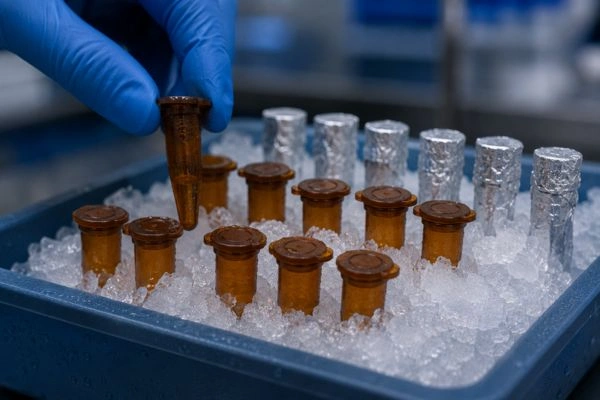
Once reconstituted, the peptide benefits from handling practices that minimize the stresses it encounters. Keep the solution cold and limit the time it spends at room temperature, returning it to appropriate storage promptly. Protect it from light, using amber tubes or foil-wrapped containers, to guard the light-sensitive tryptophan residue. Reduce exposure to air and oxidation by minimizing the time the container is open and, where stability is a concern, by using degassed solvent.
Adsorption of peptide onto plastic and glass surfaces is a subtle but real source of loss, particularly at low concentrations. Using low-binding tubes and pipette tips reduces this effect, and in research buffers a carrier protein such as bovine serum albumin is sometimes included to limit surface losses. Throughout, clean technique and uncontaminated consumables help prevent both microbial and enzymatic degradation of the sample.
Storing Lyophilized and Reconstituted Peptide
Storage strategy depends on the physical state of the peptide. As a lyophilized powder, Kisspeptin-10 is at its most stable and is best kept frozen, typically at minus 20 degrees Celsius or minus 80 degrees Celsius, in a desiccated, light-protected environment. In this form it can be stored for extended periods with minimal change.
Once reconstituted, the peptide is considerably less stable, and the appropriate storage depends on the intended timeframe. For short-term use over a few days, refrigeration at 2 to 8 degrees Celsius may be sufficient, while longer-term storage of a solution calls for freezing. In all cases, frost-free freezers are best avoided because their automatic defrost cycles subject samples to repeated temperature swings that accelerate degradation. Matching storage temperature and duration to the peptide’s physical state is one of the simplest ways to extend its usable life.
Aliquoting and Avoiding Freeze-Thaw Cycles
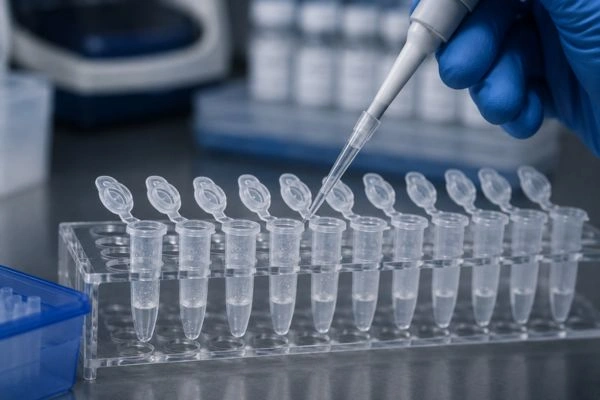
Repeated freezing and thawing is one of the most damaging things that can happen to a reconstituted peptide, since each cycle stresses the molecule and promotes aggregation and degradation. The remedy is straightforward: divide the reconstituted peptide into single-use aliquots before freezing, so that each experiment draws on a portion that is thawed only once. Choosing an aliquot size that matches typical experimental needs avoids both waste and the temptation to refreeze leftover material.
Clear labeling makes aliquots usable and traceable. Each should record the contents, the concentration, and the date of preparation, so that any researcher can identify what a tube contains and how long it has been stored. Thawing aliquots gently and keeping them cold once thawed completes the practice of protecting the peptide through to the point of use.
Documenting and Monitoring Peptide Stability
Good handling is reinforced by good record keeping. Documenting the solvent used, the concentration prepared, the storage conditions, and the preparation date creates a clear history for every batch of reconstituted peptide. This record allows researchers to interpret results in light of how the material was prepared and stored, and to identify when a sample may be approaching the limit of its usable life.
Where stability is critical to the research, the integrity of stored peptide can be verified directly. Analytical methods such as reversed-phase HPLC can confirm that a stored sample still consists predominantly of intact peptide, providing objective evidence rather than relying on assumptions about shelf life. Periodic monitoring of this kind is especially valuable for samples held over long periods or used across an extended study.
Building a Reliable Handling Workflow
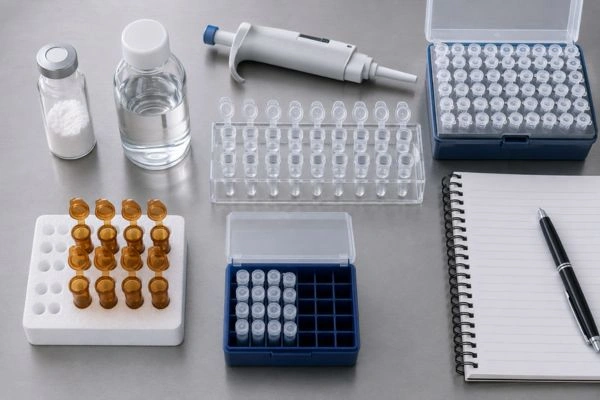
Bringing these practices together produces a dependable workflow for Kisspeptin-10. Start by reviewing the peptide’s properties and selecting a compatible, usually aqueous, solvent. Reconstitute carefully, warming the vial first, adding solvent gently, and calculating concentration from net peptide content. Handle the solution to minimize heat, light, oxidation, and surface losses, then divide it into single-use aliquots and store them at the appropriate temperature for the intended timeframe.
Document every step, and verify stability analytically when the research demands it. Followed consistently, this sequence preserves the peptide’s integrity and supports results that other researchers can reproduce. A workflow is most valuable when it is written down and applied the same way every time, removing avoidable variation from the research.
Conclusion
The reliability of Kisspeptin-10 in the laboratory rests on how it is reconstituted, handled, and stored. Understanding the peptide’s properties guides solvent choice and handling precautions, while careful reconstitution, protection from light and oxidation, appropriate storage, and single-use aliquoting preserve its integrity over time. By documenting each step and verifying stability when needed, analytical chemists and academic researchers can ensure that this research peptide performs consistently and that their data remains reproducible. Sound preparation and storage are, in the end, inseparable from sound research.
Disclaimer: All products and reference materials referenced are intended strictly for laboratory research and educational use only. Kisspeptin-10 is not for human consumption, is not for diagnostic or therapeutic use, and is not intended to treat, cure, or prevent any condition. Nothing in this article constitutes medical, clinical, or professional advice. This content is provided for informational and educational purposes for qualified researchers and academic professionals. Handling, storage, and use of research materials must comply with all applicable institutional guidelines, safety protocols, and local, state, and federal regulations.
Frequently Asked Questions
What solvent should I use to reconstitute Kisspeptin-10?
Choose your solvent from the peptide’s chemistry. Because Kisspeptin-10 is generally water-soluble, start with sterile water or a suitable aqueous buffer. Match the solvent to the peptide’s solubility, and confirm it is compatible with your downstream application, since the buffer that dissolves the peptide must also suit the experiment. If a peptide ever resists dissolving, add a minimal volume of a stronger solubilizing agent such as DMSO or a dilute acid or base first, then bring it to final volume with buffer, rather than forcing dissolution with vigorous mixing.
How do I reconstitute Kisspeptin-10 correctly?
Follow a careful sequence to preserve the peptide and produce an accurate concentration. Warm the sealed vial to room temperature before opening it, which prevents atmospheric moisture from condensing onto the cold, hygroscopic powder. Briefly centrifuge the vial so dispersed powder settles to the bottom. Add solvent slowly down the side of the vial rather than directly onto the powder, and dissolve with gentle swirling or inversion instead of vigorous vortexing, which causes foaming and stresses the molecule. Calculate your target concentration from net peptide content, not gross vial weight. Filter through a 0.2 micron filter when the application, such as cell culture, requires sterility.
How should I store Kisspeptin-10?
Match storage to the peptide’s physical state. Keep lyophilized powder frozen at minus 20 or minus 80 degrees Celsius in a desiccated, light-protected environment, where it stays stable for extended periods. Once reconstituted, store by timeframe: refrigerate at 2 to 8 degrees Celsius for short-term use over a few days, and freeze for longer-term storage. Avoid frost-free freezers in all cases, since their automatic defrost cycles subject samples to repeated temperature swings that accelerate degradation. Protect the solution from light throughout storage.
How do I prevent freeze-thaw damage to reconstituted Kisspeptin-10?
Divide the reconstituted peptide into single-use aliquots before freezing, so each experiment draws on a portion that is thawed only once. Choose an aliquot size that matches your typical experimental needs to avoid both waste and the temptation to refreeze leftover material. Label every aliquot with its contents, concentration, and preparation date so any researcher can identify what a tube holds and how long it has been stored. Thaw aliquots gently and keep them cold once thawed, since each freeze-thaw cycle stresses the molecule and promotes aggregation and degradation.
How do I protect Kisspeptin-10 from degradation during handling?
Minimize the stresses the peptide encounters once it is reconstituted. Keep the solution cold, limit time at room temperature, and return it to storage promptly. Protect the light-sensitive tryptophan residue using amber tubes or foil-wrapped containers, and reduce oxidation by limiting how long the container stays open and using degassed solvent where stability is a concern. Counter adsorption onto plastic and glass, which is significant at low concentrations, by using low-binding tubes and pipette tips, and consider including a carrier protein such as bovine serum albumin in research buffers. Maintain clean technique to prevent microbial and enzymatic degradation.