❌ Not for Human Consumption
●
✅ For Research Use Only
●
All products are intended strictly for laboratory research purposes only
●
❌ Not for Human Consumption
●
✅ For Research Use Only
●
All products are intended strictly for laboratory research purposes only
●

The Role Of Bacteriostatic Water In Peptide Reconstitution: Purity Standards And Laboratory Best Practices

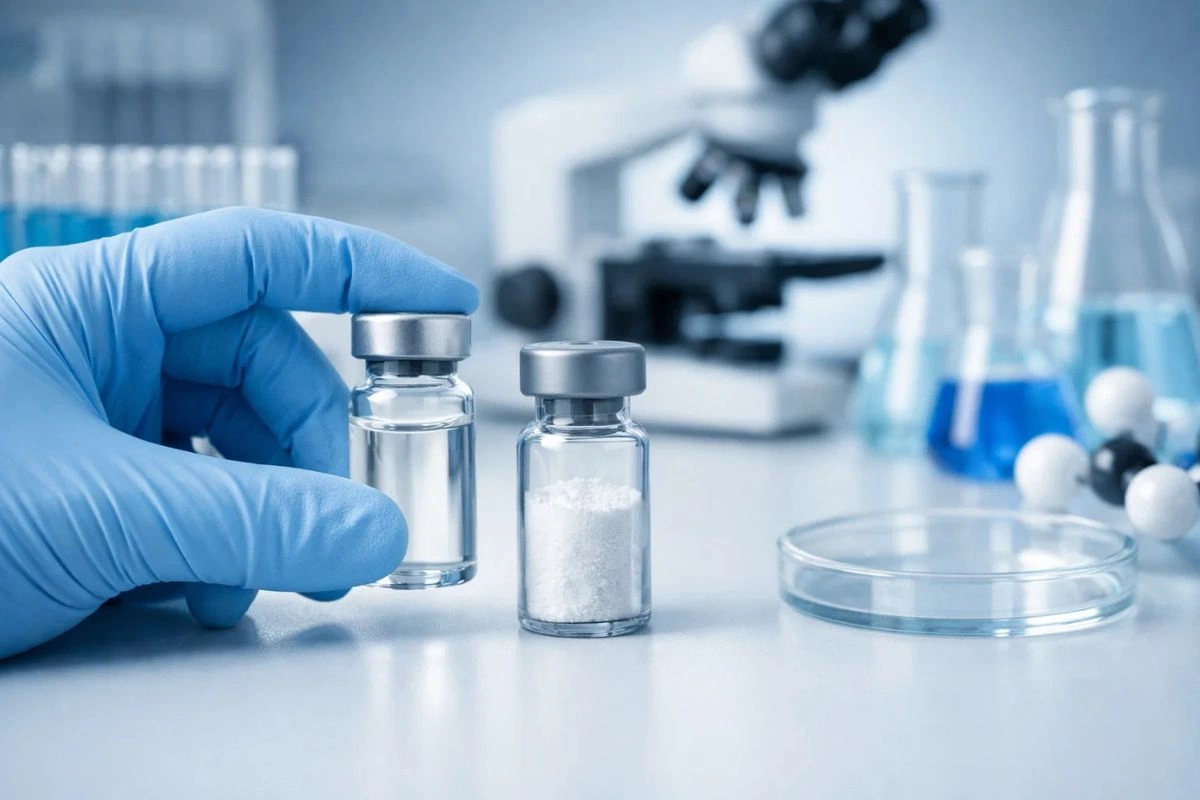
For professional researchers and academic scientists working with synthetic peptides, the reconstitution process represents one of the most critical steps in experimental preparation. A lyophilized (freeze-dried) peptide is inherently stable in its powdered form, but transforming it into a functional solution for in-vitro study requires a solvent that preserves both the structural integrity and the biological activity of the compound.
Bacteriostatic water (BW) has long served as a cornerstone solvent in this process. Its role in peptide research cannot be overstated, and yet, its proper selection, handling, and application are often overlooked in laboratory workflows.
This article examines the science behind bacteriostatic water, outlines the purity standards that researchers should demand, and details the laboratory best practices that ensure reproducible and reliable experimental outcomes.
All products and methodologies discussed are exclusively for qualified research use and are not for human consumption.
Disclaimer: All products referenced in this article, including bacteriostatic water and research peptides, are intended strictly for in-vitro research and laboratory use only. They are not intended for human or animal consumption, therapeutic application, or any diagnostic purpose. This content is provided for educational and informational purposes for qualified researchers and academic professionals. No statements herein have been evaluated by the U.S. Food and Drug Administration (FDA). Nothing in this article should be construed as medical advice, treatment guidance, or an endorsement of any off-label or unapproved use.
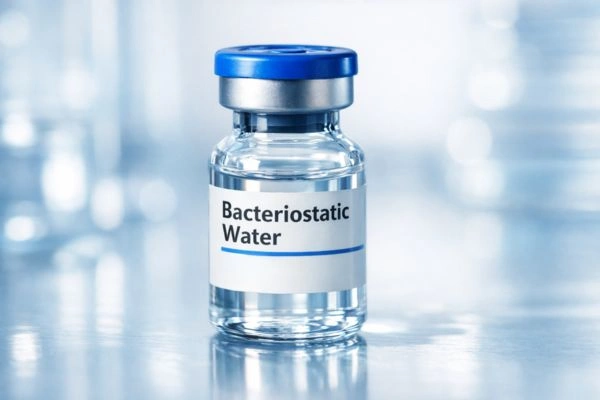
What Is Bacteriostatic Water?
Bacteriostatic water is sterile water that contains 0.9% benzyl alcohol as a preservative agent. The benzyl alcohol functions as a bacteriostatic, meaning it inhibits the growth and reproduction of bacteria without necessarily destroying existing organisms. This property is what distinguishes it from standard sterile water for injection and makes it particularly valuable in research settings where multi-use vials and extended storage periods are common.
Key Characteristics of Research-Grade Bacteriostatic Water
- Sterility: Manufactured under aseptic conditions and tested to meet USP (United States Pharmacopeia) standards for sterility
- Preservative content: Contains 0.9% benzyl alcohol (w/v), which inhibits microbial proliferation across multiple access points
- pH range: Typically maintained between 4.5 and 7.0, compatible with a wide range of lyophilized peptide compounds
- Endotoxin levels: Research-grade bacteriostatic water should meet stringent endotoxin thresholds to prevent interference with sensitive assays
- Shelf stability: When stored properly and unopened, bacteriostatic water maintains integrity significantly longer than non-preserved sterile water
Why Bacteriostatic Water Is Preferred for Peptide Reconstitution in Research
1. Multi-Use Viability
Unlike single-use sterile water, bacteriostatic water can be accessed multiple times over a defined period (typically up to 28 days after initial puncture when stored correctly). This is critical for researchers who reconstitute peptides and then draw measured aliquots across multiple experimental sessions.
2. Microbial Contamination Prevention
In a laboratory environment, contamination is the adversary of reproducibility. Each time a vial septum is punctured, there is a potential vector for microbial introduction. The benzyl alcohol in bacteriostatic water acts as a safeguard, suppressing bacterial growth that could compromise a reconstituted peptide solution and, by extension, invalidate research data.
3. Peptide Stability Preservation
Many synthetic research peptides are sensitive to degradation. Bacteriostatic water provides a relatively inert aqueous environment that, when combined with proper pH buffering and temperature control, supports the short-to-medium-term stability of reconstituted peptide solutions during active research use.
4. Consistency Across Experiments
Reliable research demands consistency. Bacteriostatic water produced under rigorous quality standards provides a uniform solvent that reduces variability between reconstitution events, a factor that directly influences the reproducibility of experimental results.
Purity Standards: What Researchers Should Demand
Not all bacteriostatic water is created equal. When selecting a supplier for research-grade bacteriostatic water, qualified researchers and procurement specialists should evaluate the following purity benchmarks.
USP-Grade Compliance
The United States Pharmacopeia (USP) sets the benchmark standards for water quality in laboratory and pharmaceutical-manufacturing contexts. Research-grade bacteriostatic water should meet or exceed USP specifications for sterility, particulate matter, endotoxin content, and chemical composition.
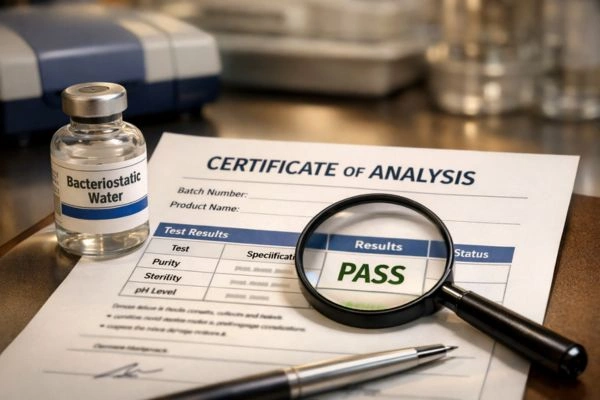
Certificate of Analysis (COA)
Every lot of bacteriostatic water used in peptide research should be accompanied by a Certificate of Analysis. A legitimate COA will detail batch-specific testing results, including sterility confirmation, benzyl alcohol concentration verification, pH measurement, endotoxin quantification, and particulate analysis. Researchers should verify that COAs are issued by accredited, third-party analytical laboratories.
Endotoxin Testing
Endotoxins, lipopolysaccharides derived from gram-negative bacterial cell walls, can profoundly interfere with cell-based assays, receptor-binding studies, and other sensitive in-vitro experiments. Research-grade bacteriostatic water should be tested via the Limulus Amebocyte Lysate (LAL) method and certified to contain endotoxin levels below established research thresholds.
Benzyl Alcohol Concentration Verification
The preservative concentration must be precisely controlled. Too little benzyl alcohol compromises the bacteriostatic function. Excessive concentrations could potentially interact with certain peptide structures or interfere with assay chemistry. Verified 0.9% (w/v) benzyl alcohol content is the accepted standard.
Packaging Integrity
Research-grade bacteriostatic water should be supplied in sealed, tamper-evident glass vials with medical-grade rubber stoppers. Plastic containers can leach compounds that introduce contaminants into the solvent. Glass vials with aluminum crimp seals are the industry standard for maintaining purity from manufacture through laboratory use.

Laboratory Best Practices for Peptide Reconstitution
Even the highest-purity bacteriostatic water will not compensate for poor reconstitution technique. The following best practices are recommended for researchers working with lyophilized peptide compounds.
Step 1: Prepare the Workspace
Reconstitution should be performed in a clean, controlled environment, ideally within a laminar flow hood or biological safety cabinet. Ensure all surfaces are disinfected, and gather all necessary materials (bacteriostatic water vial, peptide vial, appropriately sized sterile syringes, and alcohol swabs) before beginning.
Step 2: Verify Materials
Before opening any vials, confirm the following: the bacteriostatic water COA matches the lot number on the vial, the peptide vial is intact, the lyophilized powder appears consistent with expected characteristics, and all syringes and needles are sterile and within their expiration dates.
Step 3: Swab All Vial Stoppers
Using 70% isopropyl alcohol swabs, thoroughly clean the rubber septum of both the bacteriostatic water vial and the peptide vial. Allow the alcohol to evaporate completely before puncturing.
Step 4: Withdraw Bacteriostatic Water
Using a sterile syringe, draw the calculated volume of bacteriostatic water. The volume required depends on the desired final concentration of the peptide solution, which should be determined based on the specific experimental protocol.
Step 5: Introduce Water to the Peptide Vial
Insert the needle through the peptide vial’s septum and direct the stream of bacteriostatic water against the inside wall of the vial, not directly onto the lyophilized powder. This gentle introduction minimizes physical disruption to the peptide structure.
Step 6: Allow Gentle Dissolution
Do not shake or vortex the vial aggressively. Instead, allow the bacteriostatic water to slowly dissolve the lyophilized peptide. Gentle swirling or rolling the vial between the palms can accelerate dissolution without causing the mechanical stress that may degrade sensitive peptide bonds.
Step 7: Inspect the Solution
Once fully reconstituted, the solution should be clear and free of visible particulates. Cloudiness, floating debris, or persistent undissolved material may indicate degradation, contamination, or incompatibility, and the solution should not be used for research.
Step 8: Label and Store Properly
Clearly label the reconstituted peptide vial with the compound name, concentration, reconstitution date, and expiration date. According to the peptide manufacturer’s specifications, most reconstituted research peptides require refrigeration between 2°C and 8°C and should be used within a defined research window.
Common Reconstitution Errors to Avoid
Even experienced researchers occasionally compromise reconstituted peptide solutions through avoidable errors. Awareness of these pitfalls can meaningfully improve experimental outcomes.
- Using non-bacteriostatic sterile water for multi-dose access. Standard sterile water lacks a preservative and should only be used for single-access reconstitutions. Repeated needle punctures into non-preserved solutions invite contamination.
- Storing reconstituted solutions at room temperature. Most reconstituted peptide solutions degrade rapidly outside of refrigerated conditions. Ambient storage introduces both thermal degradation risk and accelerated microbial growth potential.
- Failing to calculate precise dilution volumes. Accurate concentration is foundational to valid research. Researchers should always calculate the required volume of bacteriostatic water based on the total peptide mass and the desired working concentration before beginning reconstitution.
- Reusing bacteriostatic water beyond its post-puncture window. Once a bacteriostatic water vial is accessed, the 28-day use window begins. Using bacteriostatic water beyond this period increases contamination risk, regardless of storage conditions.
- Neglecting documentation. Every reconstitution event should be recorded in a laboratory notebook or electronic lab management system, including the date, lot numbers of all materials used, volumes, and calculated concentrations. This documentation is essential for experimental reproducibility and audit compliance.

The Broader Context: Bacteriostatic Water in Research Infrastructure
Bacteriostatic water is more than a convenience; it is a critical component of research infrastructure for any laboratory working with lyophilized peptide compounds. Its role intersects with quality assurance, data integrity, and experimental reproducibility in meaningful ways.
As research into synthetic peptides continues to expand across academic institutions, government laboratories, and private research organizations, the demand for reliable, high-purity bacteriostatic water will continue to grow. Researchers who understand and implement the purity standards and best practices outlined above position their work on a foundation of methodological rigor.
Conclusion
Bacteriostatic water is not merely a solvent; it is a foundational safeguard for every reconstituted peptide in a research setting. Selecting USP-grade bacteriostatic water backed by a verifiable Certificate of Analysis, maintaining strict aseptic technique during reconstitution, and adhering to proper storage protocols are non-negotiable steps for any laboratory committed to producing reliable, reproducible data. Cutting corners on solvent quality or handling procedures introduces unnecessary variables that can compromise months of experimental work. Researchers should audit their current reconstitution workflows against the standards outlined in this article, verify that their bacteriostatic water supplier meets all purity benchmarks, and ensure that every reconstitution event is fully documented. By treating solvent selection and preparation with the same rigor applied to the peptides themselves, laboratories strengthen the integrity of their results from the very first step of experimental preparation.
Disclaimer: All products referenced in this article, including bacteriostatic water and research peptides, are intended strictly for in-vitro research and laboratory use only. They are not intended for human or animal consumption, therapeutic application, or any diagnostic purpose. This content is provided for educational and informational purposes for qualified researchers and academic professionals. No statements herein have been evaluated by the U.S. Food and Drug Administration (FDA). Nothing in this article should be construed as medical advice, treatment guidance, or an endorsement of any off-label or unapproved use.
Frequently Asked Questions
Why should researchers use bacteriostatic water instead of standard sterile water for peptide reconstitution?
Bacteriostatic water contains 0.9% benzyl alcohol, which actively inhibits bacterial growth each time the vial septum is punctured. Standard sterile water offers no such protection. If your protocol requires drawing multiple aliquots from a single reconstituted vial, as most multi-session experiments do, bacteriostatic water is the appropriate choice because it maintains microbial suppression throughout the vial’s post-puncture use window. Reserve plain sterile water only for single-access reconstitutions where the entire volume is consumed immediately.
How long can a reconstituted peptide solution made with bacteriostatic water be stored?
Once reconstituted, most peptide solutions should be refrigerated at 2 °C–8 °C and used within the timeframe specified by the peptide manufacturer, commonly 14 to 30 days, depending on the compound’s stability profile. Simultaneously, the bacteriostatic water vial itself carries a 28-day post-puncture window. Researchers should track both timelines and default to whichever expiration date arrives first. Always label vials with the reconstitution date to maintain an accurate usage window.
What should researchers look for when evaluating a bacteriostatic water supplier?
Prioritize suppliers that provide a lot-specific Certificate of Analysis (COA) from an accredited third-party laboratory. The COA should confirm USP-grade sterility, verified 0.9% benzyl alcohol concentration, endotoxin levels tested via the LAL method, and acceptable pH range (4.5–7.0). Additionally, confirm that the product is packaged in sealed glass vials with aluminum crimp caps and medical-grade rubber stoppers, not plastic containers, which risk leaching contaminants into the solvent.
Can aggressive mixing during reconstitution damage the peptide?
Yes. Vigorous shaking or vortexing can generate mechanical stress sufficient to break sensitive peptide bonds, leading to degradation and loss of biological activity. Instead, introduce bacteriostatic water slowly against the inner wall of the vial, then allow the lyophilized powder to dissolve passively. If needed, gently swirl the vial or roll it between your palms to accelerate dissolution without compromising the peptide’s structural integrity.
What steps should researchers take if the reconstituted solution appears cloudy or contains particulates?
Do not use the solution for research. Cloudiness, floating debris, or undissolved material may indicate peptide degradation, microbial contamination, or solvent incompatibility, any of which can invalidate experimental data. Document the observation in your lab notebook, set the vial aside, and investigate potential causes: expired bacteriostatic water, improper storage, incorrect dilution volume, or a compromised peptide lot. Contact the peptide supplier if the issue persists across fresh materials.