❌ Not for Human Consumption
●
✅ For Research Use Only
●
All products are intended strictly for laboratory research purposes only
●
❌ Not for Human Consumption
●
✅ For Research Use Only
●
All products are intended strictly for laboratory research purposes only
●

NAD+ Stability And Degradation: What Researchers Need To Know About Compound Handling

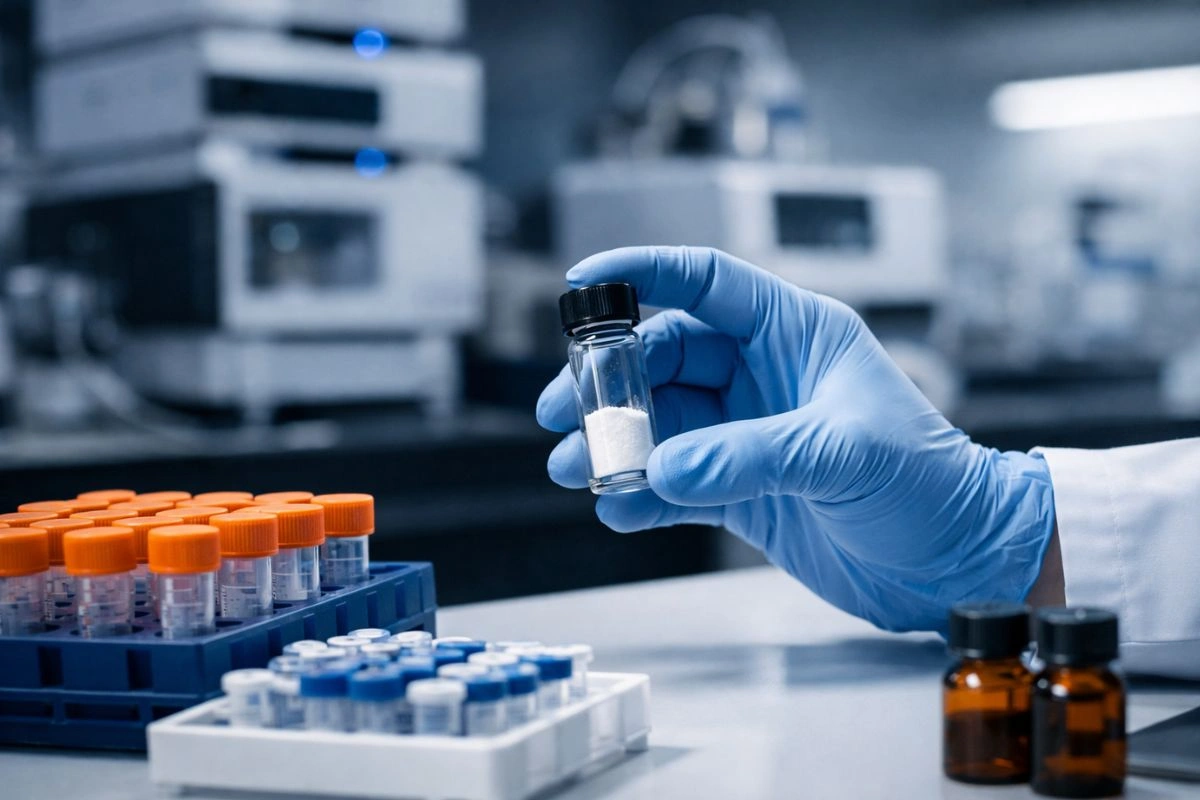
For researchers investigating cellular metabolism, enzymatic pathways, and redox biology, few molecules are as central to experimental design as Nicotinamide Adenine Dinucleotide (NAD+). This coenzyme participates in hundreds of known enzymatic reactions and serves as a critical substrate in numerous in vitro assay systems.
However, the practical challenge facing many laboratory professionals is straightforward: NAD+ is inherently unstable under common environmental conditions. Temperature fluctuations, pH shifts, exposure to light, and improper reconstitution techniques can all accelerate degradation, compromising experimental reproducibility and wasting valuable research materials.
This guide is designed to equip researchers, laboratory managers, and academic investigators with the actionable knowledge required to properly handle, store, and assess the integrity of NAD+ compounds throughout their research workflows.
DISCLAIMER: NAD+ (Nicotinamide Adenine Dinucleotide) sold by Penguin Peptides is intended strictly for in vitro research, laboratory use, and academic study only. This compound is NOT intended for human consumption, veterinary use, or any therapeutic application. This article is provided for educational and informational purposes to support the professional research community. No statements herein are intended as medical claims, diagnostic guidance, or treatment recommendations.
Understanding NAD+ at the Molecular Level: A Brief Primer for Researchers
Before addressing stability concerns, it is useful to review the structural features that make NAD+ both scientifically valuable and prone to degradation.
NAD+ is a dinucleotide composed of two nucleotides joined through their phosphate groups. One nucleotide contains an adenine nucleobase, while the other contains a nicotinamide moiety. This nicotinamide ring is the functionally active portion of the molecule; it accepts and donates hydride ions (H⁻) during redox reactions, cycling between the oxidized form (NAD+) and the reduced form (NADH).
From a compound-handling perspective, several structural features are relevant to researchers:
- The glycosidic bond connecting the nicotinamide ring to the ribose sugar is susceptible to both enzymatic and non-enzymatic hydrolysis. This bond represents the primary site of chemical degradation in most laboratory storage scenarios.
- The pyridinium ring of the nicotinamide moiety carries a positive charge in the oxidized (NAD+) form, making it electrophilic and reactive under certain conditions, particularly in alkaline environments.
- The phosphodiester backbone linking the two nucleotide halves can undergo hydrolytic cleavage, although this typically occurs more slowly than nicotinamide bond degradation under standard conditions.
Understanding these structural vulnerabilities allows researchers to anticipate and mitigate the specific degradation pathways most likely to compromise their NAD+ reference materials.
Primary Degradation Pathways: What Breaks Down and Why
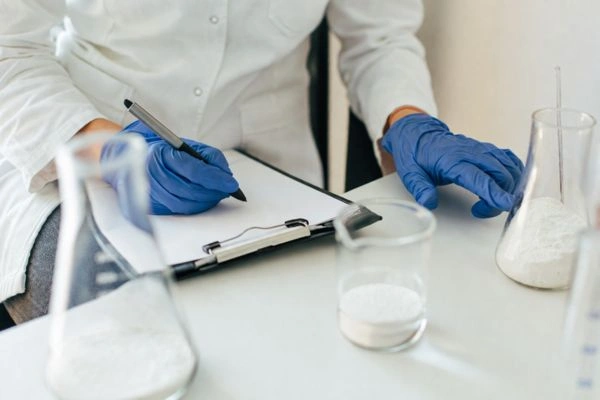
Researchers working with NAD+ should be familiar with the principal degradation mechanisms that affect compound integrity in the laboratory environment. Recognizing these pathways is essential for designing appropriate storage protocols and interpreting quality-control data.
1. Non-Enzymatic Hydrolysis of the Glycosidic Bond
The most well-characterized degradation pathway for NAD+ in aqueous solution is the hydrolysis of the nicotinamide–ribose glycosidic bond. This reaction produces free nicotinamide and ADP-ribose as the primary breakdown products.
Key factors that accelerate this pathway include:
- Elevated temperatures (rates increase significantly above 25°C)
- Acidic pH conditions (pH below 5.0 dramatically accelerate cleavage)
- Extended time in aqueous solution, even under otherwise favorable conditions
For researchers conducting time-course experiments or maintaining stock solutions, this pathway represents the most immediate threat to compound integrity.
2. Base-Catalyzed Decomposition
In alkaline environments (pH above 8.5), NAD+ undergoes a distinct degradation process. The nicotinamide ring is susceptible to nucleophilic addition at elevated pH, which can lead to ring-opening reactions and the formation of multiple degradation products.
This pathway is particularly relevant for researchers who reconstitute NAD+ in buffers with higher pH values or who work with alkaline assay systems.
3. Photodegradation
Exposure to ultraviolet and visible light can initiate photochemical degradation of both NAD+ and NADH. The adenine moiety absorbs UV light at approximately 260 nm, and the reduced nicotinamide ring of NADH absorbs at approximately 340 nm.
While NAD+ is somewhat more photostable than its reduced counterpart, prolonged light exposure, particularly from fluorescent laboratory lighting or direct sunlight, can contribute to cumulative degradation over time.
4. Oxidative Degradation
In the presence of reactive oxygen species (ROS), metal ion contaminants, or other oxidizing agents, NAD+ can undergo oxidative modifications that alter its functional properties. While NAD+ is already in the oxidized form, further oxidative damage can disrupt the adenine ring system or modify the ribose sugars.
Researchers should take particular care to use high-purity water and clean glassware when preparing NAD+ solutions to minimize exposure to trace metal catalysts.
Optimal Storage Conditions: Evidence-Based Recommendations for Researchers
Maintaining compound integrity from receipt through experimental use requires attention to storage conditions at every stage. The following recommendations are based on established principles of chemical stability and are intended to help researchers maximize the usable shelf life of their NAD+ reference materials.
Lyophilized (Dry Powder) Storage
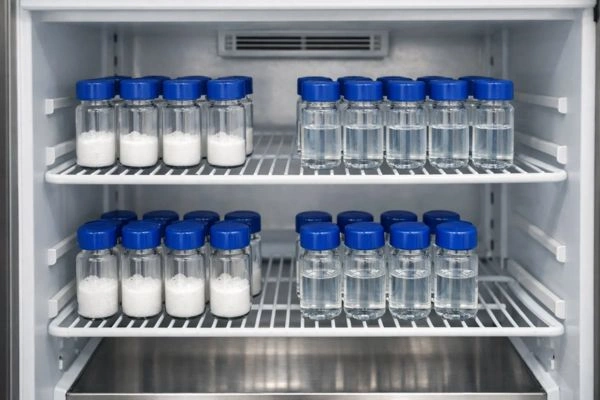
Research-grade NAD+ is most stable in its lyophilized form. For long-term storage of unopened or aliquoted dry powder, the following conditions are recommended:
- Temperature: Store at -20°C or below. For extended archival storage, -80°C is preferred.
- Atmosphere: Keep containers sealed under inert gas (nitrogen or argon) when possible to minimize oxidative exposure.
- Light protection: Store in amber vials or opaque secondary containers. Avoid exposure to direct laboratory lighting during handling.
- Desiccation: Use desiccant packs within secondary storage containers to prevent moisture absorption, which can initiate hydrolysis even in nominally “dry” powder.
Under these conditions, high-purity lyophilized NAD+ typically maintains acceptable integrity for 12–24 months, though researchers should always verify compound quality before use in critical experiments.
Reconstituted Solution Storage
Once NAD+ is dissolved in aqueous solution, degradation kinetics accelerate significantly. Researchers should observe the following practices:
- Prepare fresh solutions whenever possible. Avoid maintaining large-volume stock solutions for extended periods.
- Buffer selection matters. Reconstitute in buffers at pH 6.5–7.5 for optimal stability. Avoid strongly acidic or alkaline buffers. Phosphate and HEPES buffers at neutral pH are commonly used.
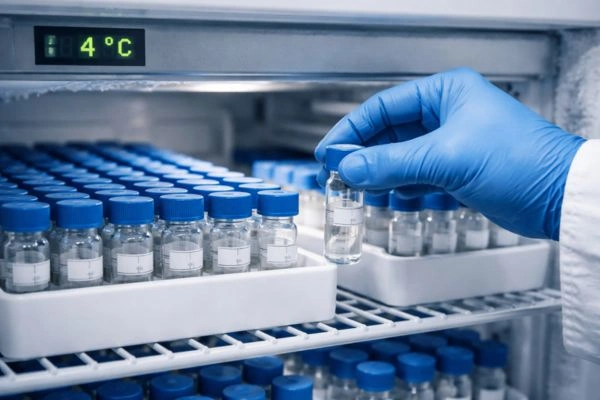
- Aliquot immediately after reconstitution. Divide stock solutions into single-use aliquots to avoid repeated freeze-thaw cycles.
- Store aliquots at -20°C or -80°C. Reconstituted NAD+ solutions stored at 4°C show measurable degradation within days, depending on concentration and buffer composition.
- Minimize freeze-thaw cycles. Each freeze-thaw event introduces both thermal stress and potential moisture contamination. Plan aliquot volumes according to experimental needs.
During Active Use
When NAD+ solutions are in active use at the bench, researchers should take practical steps to minimize unnecessary degradation:
- Keep solutions on ice or in a cold block during experimental setup.
- Shield working solutions from overhead lighting using foil wraps or opaque containers.
- Return stock containers to cold storage promptly after withdrawing the needed volume.
- Do not combine fresh and previously thawed aliquots; use separate aliquots for each experimental session.

Assessing NAD+ Integrity: Quality Control Methods for the Research Laboratory
Even with careful storage and handling, researchers must verify compound integrity before use in experiments where data quality is critical. Several analytical approaches are available for assessing NAD+ purity and detecting degradation products.
UV-Vis Spectrophotometry
The simplest and most accessible quality-control method for most laboratories is UV-Vis spectrophotometry.
- NAD+ in its oxidized form shows a characteristic absorption peak at approximately 260 nm (contributed primarily by the adenine moiety).
- NADH (reduced form) exhibits an additional absorption peak at approximately 340 nm.
- A shift in the 260/280 nm absorbance ratio or the unexpected appearance of a 340 nm peak may indicate degradation or reduction of the compound.
This method provides a rapid first-pass assessment of compound integrity and can be performed with standard laboratory spectrophotometers.
High-Performance Liquid Chromatography (HPLC)
For more rigorous quantitative assessment, reverse-phase or ion-pairing HPLC methods offer superior resolution of NAD+ from its degradation products (nicotinamide, ADP-ribose, AMP, and others). HPLC analysis allows researchers to determine the precise purity of their NAD+ stocks and to identify specific degradation products.
Published HPLC methods for NAD+ analysis typically employ C18 columns with phosphate or ammonium acetate mobile phases. Researchers establishing these methods should consult the peer-reviewed literature for validated protocols appropriate to their analytical instrumentation.
Enzymatic Activity Assays
Because NAD+ functions as a coenzyme, its biological activity can be assessed using well-characterized enzymatic assay systems. Alcohol dehydrogenase (ADH) and lactate dehydrogenase (LDH) coupled assays are commonly used to confirm the functional competence of NAD+ preparations.
A reduction in expected enzymatic activity, when all other assay components are controlled, may indicate NAD+ degradation even when spectrophotometric analysis appears normal.
Mass Spectrometry
For research groups with access to mass spectrometry instrumentation, LC-MS or direct-infusion MS provides definitive identification of NAD+ and its degradation products based on molecular mass and fragmentation patterns. This approach is especially valuable for characterizing unexpected degradation products or for validating the identity of NAD+ from new supplier lots.
Common Handling Mistakes: What to Avoid in the Laboratory
Even experienced researchers occasionally encounter avoidable compound-handling errors. The following are among the most frequently observed mistakes in NAD+ handling, and their solutions.
Mistake #1: Reconstituting in Inappropriate Buffers
Reconstituting NAD+ in strongly acidic (pH < 5) or strongly alkaline (pH > 9) buffers dramatically accelerates degradation. Some researchers inadvertently use Tris buffers at elevated pH, carbonate buffers, or even unbuffered water that has absorbed atmospheric CO₂ (lowering pH over time).
Solution: Use freshly prepared neutral-pH buffers (pH 6.5–7.5). Verify buffer pH immediately before reconstitution.
Mistake #2: Storing Reconstituted Solutions at 4°C for Extended Periods
Refrigerator temperatures (2–8°C) slow degradation relative to room temperature but are insufficient for preserving NAD+ solutions beyond a few days. Researchers who prepare Monday’s stock solution and continue using it on Friday may observe a significant loss of compound integrity.
Solution: Prepare fresh solutions for each experimental day, or aliquot and freeze at -20°C or below immediately after reconstitution.
Mistake #3: Repeated Freeze-Thaw Cycling
Retrieving the same tube of reconstituted NAD+ from the freezer multiple times, thawing, withdrawing a portion, and refreezing, subjects the compound to cumulative thermal and mechanical stress with each cycle.
Solution: Aliquot into single-use volumes before initial freezing. Label aliquots clearly with the preparation date and concentration.
Mistake #4: Neglecting Light Protection
Researchers who work with NAD+ solutions on an open bench under standard fluorescent or LED lighting for extended periods may not realize that cumulative photodegradation is occurring.
Solution: Wrap working tubes in aluminum foil. Use amber microcentrifuge tubes when available. Minimize the time solutions spend outside of opaque containers.
Mistake #5: Failing to Verify Compound Integrity Before Critical Experiments
Using NAD+ without confirming its purity and activity, especially from older lots or stocks that may have experienced suboptimal storage conditions, introduces an uncontrolled variable into experimental results.
Solution: Incorporate a brief spectrophotometric check or enzymatic activity assay into your pre-experiment workflow, particularly for high-stakes or publication-quality experiments.

Implications for Experimental Reproducibility
Compound degradation is an underappreciated source of variability in laboratory research. When NAD+ preparations lose integrity between experiments, or even between replicates within the same experiment, the resulting data may reflect compound quality rather than the biological phenomenon under investigation.
Researchers can strengthen experimental reproducibility by incorporating the following practices into their standard operating procedures:
- Document lot numbers, storage conditions, and preparation dates for all NAD+ stocks used in published experiments.
- Include compound quality-control data (spectrophotometric readings, HPLC purity assessments) in laboratory notebooks alongside experimental results.
- Establish internal acceptance criteria, define the minimum purity threshold below which NAD+ stocks should be discarded and replaced.
- Standardize reconstitution protocols across the research group to eliminate operator-dependent variability.
These practices align with broader initiatives to improve rigor and reproducibility in the biological sciences and are especially important when research results will be submitted for peer review or regulatory consideration.

Sourcing Research-Grade NAD+: What to Look For
The quality of NAD+ compound handling begins with the quality of the compound itself. When evaluating suppliers of research-grade NAD+, investigators should consider the following criteria:
- Certificate of Analysis (CoA): Each lot should be accompanied by a CoA documenting purity (typically ≥95% or ≥98% for research-grade material), identity confirmation, and relevant analytical data.
- Purity determination method: HPLC-based purity assessment is preferred over less specific methods.
- Storage and shipping conditions: Suppliers should ship lyophilized NAD+ on dry ice or with cold packs, with appropriate packaging to protect from light and moisture during transit.
- Clear labeling: Research-grade compounds must be clearly labeled with the intended use (research use only), lot number, molecular weight, and recommended storage conditions.
- Technical support: Reputable suppliers provide accessible technical support for questions about reconstitution, storage, and handling.
At Penguin Peptides, our research-grade NAD+ is manufactured to stringent quality standards and is accompanied by comprehensive documentation to support your laboratory’s quality-assurance requirements. Every lot is tested for purity and identity and is shipped under conditions designed to preserve compound integrity from our facility to your bench.
Conclusion
NAD+ is indispensable to modern biochemical research, but its value in the laboratory hinges entirely on how well it is handled. Every stage of the compound’s lifecycle, from initial storage through reconstitution, active bench use, and quality verification, presents opportunities for degradation that can quietly undermine months of experimental work. The good news is that these risks are manageable. By storing lyophilized NAD+ at -20°C or below, reconstituting in neutral-pH buffers, aliquoting into single-use volumes, shielding from light, and routinely checking purity via spectrophotometry or HPLC, researchers can preserve compound integrity and protect the reliability of their data. Make these protocols non-negotiable within your lab. Document every handling step, enforce acceptance criteria for compound quality, and never assume yesterday’s stock solution is still fit for today’s experiment. Rigorous compound stewardship is not extra work; it is the foundation of reproducible science.
DISCLAIMER: NAD+ (Nicotinamide Adenine Dinucleotide) sold by Penguin Peptides is intended strictly for in vitro research, laboratory use, and academic study only. This compound is NOT intended for human consumption, veterinary use, or any therapeutic application. This article is provided for educational and informational purposes to support the professional research community. No statements herein are intended as medical claims, diagnostic guidance, or treatment recommendations.
Frequently Asked Questions
How can I tell if my NAD+ has degraded without running a full HPLC analysis?
Start with a quick UV-Vis spectrophotometric scan. Intact NAD+ produces a strong absorption peak near 260 nm. If you observe a significant shift in the 260/280 nm absorbance ratio or an unexpected peak emerging around 340 nm (characteristic of NADH), degradation or reduction has likely occurred. For functional confirmation, run a coupled enzymatic assay using alcohol dehydrogenase or lactate dehydrogenase, a drop in expected activity with all other variables controlled points directly to compromised NAD+. Reserve HPLC or mass spectrometry for situations requiring precise quantification of degradation products.
What is the maximum amount of time I can keep a reconstituted NAD+ solution at 4°C?
Treat refrigerated NAD+ solutions as short-lived. Measurable degradation can appear within days at 2–8°C, depending on buffer composition and concentration. As a practical rule, prepare fresh solutions on the day of your experiment or, if that is not feasible, aliquot immediately after reconstitution and store at -20°C or colder. Never carry a refrigerated stock solution from one experimental day to the next without verifying its integrity first.
Which buffer should I use when reconstituting NAD+ for in vitro assays?
Choose a buffer that holds the solution within the pH 6.5–7.5 stability window. Phosphate buffer and HEPES at neutral pH are widely used and well-suited for most in vitro applications. Avoid Tris buffers adjusted to high pH, carbonate buffers, and unbuffered ultrapure water, the latter can drift acidic as it absorbs atmospheric CO₂. Always confirm your buffer’s pH with a calibrated meter immediately before dissolving the compound.
How many freeze-thaw cycles can NAD+ solutions tolerate before quality is compromised?
There is no universally safe number, because each cycle introduces cumulative thermal stress and the risk of moisture contamination. The most reliable approach is to eliminate repeated freeze-thaw events altogether. Immediately after reconstitution, divide your stock into single-use aliquots sized to match your typical experimental volumes, then freeze them at -20°C or -80°C. Use one aliquot per session and discard any remainder rather than refreezing it.
What documentation should I maintain for NAD+ stocks used in publication-quality experiments?
Record the supplier lot number, certificate of analysis data, storage temperatures, reconstitution date, buffer identity and pH, aliquot volumes, and the number of freeze-thaw cycles (if any) for every stock used. Pair this with a pre-experiment quality-control reading, at minimum a UV-Vis absorbance measurement, ideally an HPLC purity value. Logging these details in your laboratory notebook ensures you can trace any data anomaly back to compound handling and satisfies the documentation standards reviewers and regulatory bodies increasingly expect.