❌ Not for Human Consumption
●
✅ For Research Use Only
●
All products are intended strictly for laboratory research purposes only
●
❌ Not for Human Consumption
●
✅ For Research Use Only
●
All products are intended strictly for laboratory research purposes only
●

Proper Laboratory Handling And Reconstitution Of Tesamorelin For Research Studies

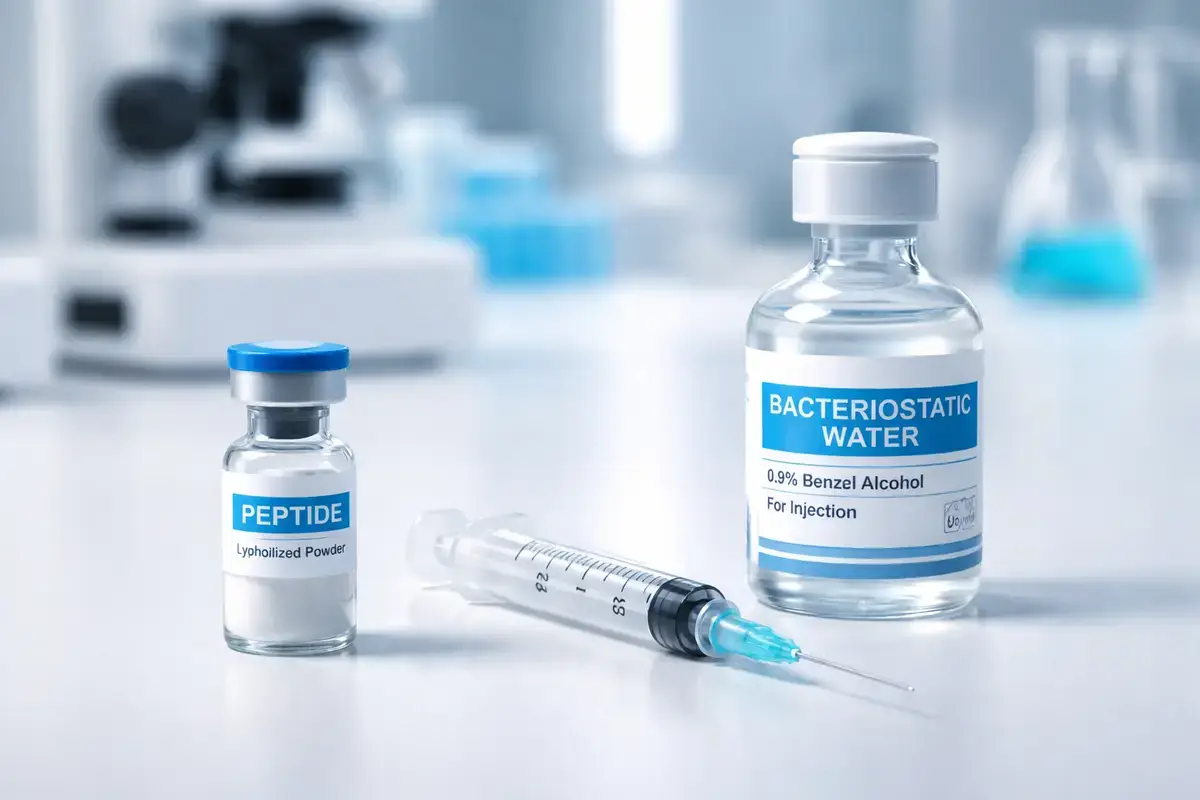
Tesamorelin is a synthetic growth hormone-releasing factor (GRF) analog consisting of 44 amino acids. In laboratory settings, researchers study Tesamorelin to better understand growth hormone-releasing hormone (GHRH) receptor activity, peptide signaling pathways, and the broader mechanisms of neuroendocrine function.
For professionals conducting in vitro studies and controlled laboratory experiments, proper reconstitution and handling of this research peptide is essential to preserving compound integrity and generating reproducible data. This guide walks research teams through best practices for peptide preparation, storage protocols, and quality assurance steps that support reliable experimental outcomes.
Disclaimer: Tesamorelin is sold strictly for research purposes only and is not intended for human consumption. The information provided in this article is for educational and research use only. It does not constitute medical advice, and no statements herein should be interpreted as diagnostic, therapeutic, or curative claims. Researchers must comply with all applicable federal, state, and local regulations when handling research peptides.
Why Proper Reconstitution Matters in Peptide Research
Peptide stability is one of the most critical variables in any study involving synthetic GHRH analogs. Improper reconstitution can introduce degradation, aggregation, or oxidation, all of which compromise the biological activity of the compound and skew experimental results.
Researchers working with Tesamorelin should understand that this peptide, like most lyophilized research compounds, arrives in a freeze-dried powder form. Converting it into a usable solution requires precision. Contamination, incorrect solvent selection, or aggressive agitation can reduce peptide purity and undermine the validity of downstream assays.
Maintaining peptide integrity from the moment of reconstitution through final use in a controlled experiment directly impacts data quality, reproducibility, and the overall credibility of published findings.
Required Laboratory Equipment and Materials
Before beginning the reconstitution process, ensure the following supplies are available in your research workspace:
- Lyophilized Tesamorelin peptide vial (research grade)
- Bacteriostatic water (BAC water) or sterile water for research applications
- Sterile syringes (1 mL insulin-type syringes are standard for precision)
- Alcohol swabs (70% isopropyl alcohol)
- Personal protective equipment (PPE): nitrile gloves, lab coat, safety goggles
- Calibrated pipettes for precise volume measurement
- Sterile vials for aliquoting reconstituted solution
- Temperature-controlled storage unit (refrigerator rated for 2°C to 8°C)
- Laminar flow hood or clean bench (recommended for aseptic technique)
Having these materials prepared in advance reduces the risk of contamination and supports a controlled, efficient reconstitution workflow.
Step-by-Step Reconstitution Protocol for Tesamorelin
Step 1: Workspace Preparation
Begin by sanitizing the laboratory bench or work surface with an appropriate disinfectant. If available, perform all reconstitution steps within a laminar flow hood to minimize particulate and microbial contamination.
Put on clean nitrile gloves and ensure all PPE is in place before handling the peptide vial or any sterile supplies.
Step 2: Inspect the Lyophilized Peptide
Remove the Tesamorelin vial from its packaging and visually inspect the contents. The lyophilized powder should appear as a white to off-white cake or loose powder. If the powder shows signs of discoloration, clumping with visible moisture, or a compromised seal, do not proceed. Document the observation and contact the supplier for a replacement.
Step 3: Prepare the Solvent
For most research applications, bacteriostatic water is the preferred reconstitution solvent. BAC water contains 0.9% benzyl alcohol, which inhibits microbial growth and extends the usable life of the reconstituted solution for multi-use research protocols.
Sterile water may also be used, but the reconstituted peptide solution should then be used within a shorter timeframe or aliquoted into single-use portions immediately after preparation.
Step 4: Swab and Access the Vial
Using a 70% isopropyl alcohol swab, clean the rubber stopper on the Tesamorelin vial. Allow it to air dry for several seconds. This step is critical for maintaining aseptic conditions and preventing the introduction of bacteria into the solution.
Step 5: Add Solvent Slowly
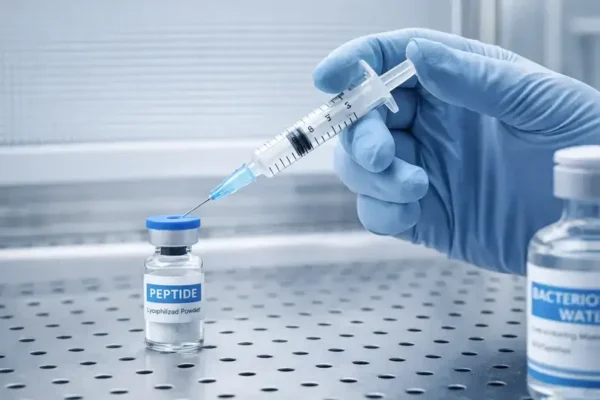
Draw the desired volume of bacteriostatic water into a sterile syringe. A common reconstitution volume is 1 mL to 2 mL per vial, though the exact amount will depend on the concentration required for your specific research protocol.
Insert the syringe needle into the rubber stopper at a slight angle and release the solvent slowly against the inner wall of the vial. Do not inject the water directly onto the lyophilized powder. Directing the stream against the glass wall allows the solvent to flow gently over the peptide, minimizing physical stress on the amino acid chain.
Step 6: Allow Dissolution Without Agitation
After adding the solvent, set the vial on a stable surface and allow the peptide to dissolve naturally. This process may take several minutes. Gentle swirling of the vial is acceptable if needed, but avoid vigorous shaking, vortexing, or any rapid agitation.
Aggressive mixing can cause peptide denaturation, chain fragmentation, and foaming, all of which degrade the compound and reduce its activity in receptor binding assays, cell culture experiments, and other research applications.
Step 7: Verify Complete Dissolution
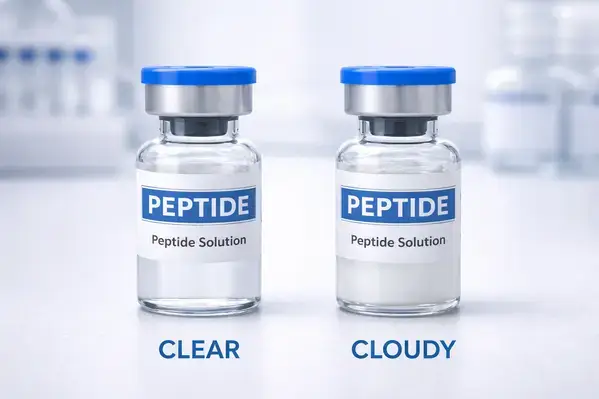
Once the powder has fully dissolved, the resulting solution should be clear and free of visible particles. If particulate matter remains after 10 to 15 minutes of gentle swirling, allow additional time for dissolution. Persistent cloudiness or floating particles may indicate degradation or contamination, and the solution should not be used for precision research.
Concentration Calculations for Research Use
Accurate concentration calculations are fundamental to reproducible peptide research. The formula is straightforward:
Concentration (mcg/mL) = Total peptide amount (mcg) / Volume of solvent added (mL)
For example, if a vial contains 2 mg (2,000 mcg) of Tesamorelin and you add 2 mL of bacteriostatic water, the resulting concentration is 1,000 mcg/mL (or 1 mg/mL).
Researchers should document the reconstitution volume, date of preparation, and calculated concentration on the vial label. This information supports traceability and is a standard component of good laboratory practice (GLP) documentation.
Storage Guidelines for Reconstituted Tesamorelin
Proper storage conditions directly affect the shelf life and functional integrity of reconstituted peptide solutions. Follow these guidelines to maintain compound stability:
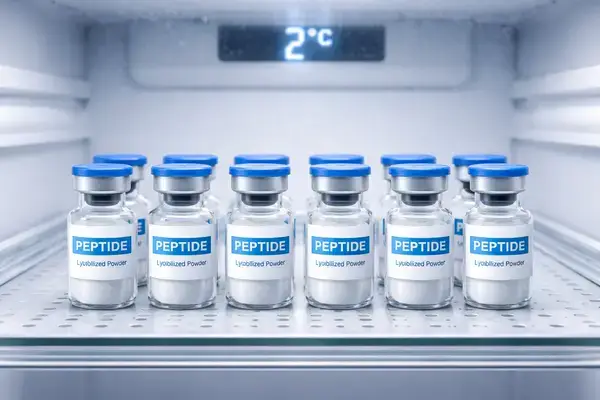
Refrigeration (2°C to 8°C): Store reconstituted Tesamorelin in a standard laboratory refrigerator. At this temperature range, peptide solutions reconstituted with bacteriostatic water typically remain stable for research use for up to 25 to 30 days.
Avoid Freezing Reconstituted Solutions: Repeated freeze-thaw cycles cause peptide aggregation and loss of biological activity. If long-term storage is needed, aliquot the reconstituted solution into single-use volumes and freeze individual aliquots at -20°C. Thaw each aliquot only once before use.
Protect from Light: Peptides are susceptible to photodegradation. Store vials in a dark location within the refrigerator or wrap them in aluminum foil to limit light exposure.
Lyophilized (Unreconstituted) Storage: Unopened lyophilized Tesamorelin vials can be stored at -20°C for extended periods. Some researchers also store lyophilized peptides at 2°C to 8°C for shorter durations. Always refer to the certificate of analysis (COA) provided by the supplier for specific storage recommendations.
Common Reconstitution Errors and How to Avoid Them
Even experienced research professionals can encounter issues during peptide preparation. Here are frequent mistakes and practical solutions:
Injecting solvent too quickly. Rapid injection creates turbulence that can damage the peptide structure. Always release the solvent slowly along the vial wall.
Shaking the vial. This introduces air bubbles and can cause surface denaturation at the air-liquid interface. Gentle swirling is the correct technique.
Using the wrong solvent. Some protocols call for specific solvents such as acetic acid solutions or saline buffers depending on the peptide. For Tesamorelin, bacteriostatic water is the standard reconstitution solvent for most research applications. Verify solvent compatibility with your study protocol before proceeding.
Failing to document reconstitution details. Without records of the reconstitution date, solvent type, volume, and calculated concentration, it becomes impossible to troubleshoot inconsistencies in experimental results. Maintain a detailed lab notebook entry for every reconstitution event.
Contaminating the vial stopper. Skipping the alcohol swab step or touching the stopper with ungloved hands introduces microbial contamination that can compromise the solution within days.
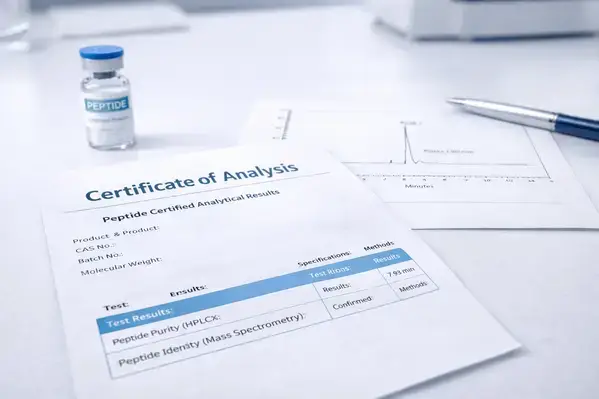
Quality Assurance and Peptide Purity Verification
Professional researchers should always request and review the certificate of analysis (COA) for each batch of Tesamorelin received. A reputable research peptide supplier will provide documentation that includes:
- HPLC (High-Performance Liquid Chromatography) purity analysis, typically showing 98% or higher purity for research-grade peptides
- Mass spectrometry data confirming the correct molecular weight
- Amino acid sequence verification
- Appearance and solubility data
- Lot number and manufacturing date
Cross-referencing COA data with your own quality control testing (if available) adds an additional layer of confidence in the integrity of your research materials.
Applicable Regulations and Compliance Considerations
Researchers working with Tesamorelin should be aware of the regulatory framework surrounding research peptides:
FDA Classification: Tesamorelin, when sold for research purposes, is classified as a research chemical. It is not a dietary supplement, food product, or over-the-counter compound. Research suppliers must clearly label the product as “For Research Use Only” and “Not for Human Consumption.”
Institutional Review: If your study involves any biological testing beyond basic in vitro work, confirm that your research protocol has been reviewed and approved by the appropriate institutional body, such as an Institutional Animal Care and Use Committee (IACUC) for animal studies.
Handling and Disposal: Dispose of unused peptide solutions, syringes, and contaminated materials in accordance with your institution’s chemical waste and biohazard disposal policies. Never discard research chemicals through standard drain systems.
Conclusion
Tesamorelin reconstitution is not a step to rush or improvise. Every decision in the preparation process, from solvent selection to storage temperature, has a measurable impact on peptide stability, assay accuracy, and the overall reliability of your research data. Researchers who follow standardized protocols for handling lyophilized GHRH analogs position their studies for consistent, reproducible outcomes that hold up under peer review.
Take the time to verify your certificate of analysis, maintain detailed lab notebook entries, and enforce aseptic technique at every stage. These practices are not optional for serious peptide research. They are the baseline. Whether your work focuses on receptor binding characterization, cell signaling pathways, or neuroendocrine mechanism studies, the quality of your reconstitution protocol sets the ceiling for everything that follows. Start with precision and let the data speak for itself.
FAQs
What concentration should I reconstitute Tesamorelin to for laboratory research?
The target concentration depends entirely on your specific study protocol and assay requirements. A standard starting point is 1 mg/mL, achieved by adding 2 mL of bacteriostatic water to a 2 mg vial. Always calculate and document the final concentration before using the reconstituted solution in any experiment.
Can I use normal saline instead of bacteriostatic water to reconstitute Tesamorelin?
Bacteriostatic water remains the preferred solvent for most Tesamorelin research applications due to its antimicrobial properties. Normal saline (0.9% sodium chloride) may be suitable for certain protocols, but researchers should verify solvent compatibility with their specific experimental design before substituting. Consult the peptide supplier’s technical documentation or certificate of analysis for solvent guidance.
How do I know if my reconstituted Tesamorelin has degraded?
Visual inspection is the first line of quality control. A properly reconstituted solution should be clear, colorless, and free of visible particulates, cloudiness, or discoloration. If you observe any of these signs or experience inconsistent results across repeated assays, the peptide may have degraded and should be replaced with a fresh preparation.
What is the difference between lyophilized and reconstituted peptide storage requirements?
Lyophilized Tesamorelin is highly stable and can be stored at -20°C for extended periods without significant loss of integrity. Once reconstituted, the peptide becomes more susceptible to degradation from temperature fluctuations, light exposure, and microbial contamination, requiring refrigeration at 2°C to 8°C and use within 25 to 30 days.
Why is it important to avoid direct injection of solvent onto the lyophilized powder?
Direct contact between the solvent stream and the freeze-dried peptide cake creates localized physical stress that can fragment the amino acid chain and trigger aggregation. Releasing bacteriostatic water slowly along the inner wall of the vial allows the solvent to flow over the powder gradually, preserving the structural integrity of the compound. This technique is a standard best practice across all lyophilized peptide reconstitution protocols in professional research settings.