❌ Not for Human Consumption
●
✅ For Research Use Only
●
All products are intended strictly for laboratory research purposes only
●
❌ Not for Human Consumption
●
✅ For Research Use Only
●
All products are intended strictly for laboratory research purposes only
●

Stability And Storage Of NAD+ In Research-Grade Lab Settings: A Practical Guide


Nicotinamide adenine dinucleotide (NAD+) is a cornerstone coenzyme in biochemical research, supporting studies in enzyme kinetics, metabolic flux analysis, redox biology, and cell signaling. Yet NAD+ is also highly sensitive to its environment. Temperature shifts, moisture exposure, pH extremes, and light can all degrade the compound before it ever reaches your assay, quietly undermining data quality and wasting costly reagent. For any laboratory that relies on consistent, high-purity NAD+ to produce reproducible results, controlling storage and handling conditions is not a secondary concern. It is a core requirement of reliable experimental design.
This guide delivers a practical, step-by-step framework for storing, reconstituting, and verifying research-grade NAD+ across common lab workflows. From lyophilized powder management to reconstituted stock solution stability, the protocols here will help you protect reagent integrity and strengthen confidence in your data. All NAD+ referenced in this article is for research use only, is not intended for human consumption, and has not been evaluated by the FDA for any clinical purpose.
Disclaimer: The nicotinamide adenine dinucleotide (NAD+) products referenced in this article are sold strictly for research purposes only. They are not intended for human consumption, veterinary use, or any therapeutic application. This content is provided for educational and informational purposes for professional researchers and academic institutions. Nothing in this article constitutes medical advice, a medical claim, or a recommendation for any form of clinical use. Researchers are responsible for complying with all applicable local, federal, and institutional regulations governing the use of research-grade materials.
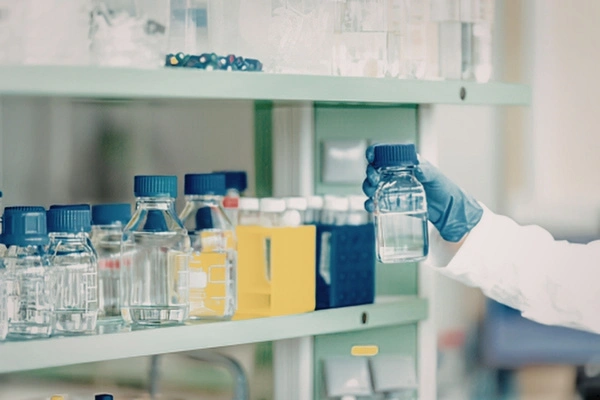
Why Storage Conditions Matter for NAD+ Research Integrity
If you work with nicotinamide adenine dinucleotide (NAD+) in a research environment, you already know that reproducibility hinges on reagent quality. A carefully designed assay can still produce unreliable data if the NAD+ on the bench has degraded before the experiment even begins. Temperature fluctuations, hydration, pH shifts, and light exposure all threaten the structural integrity of this coenzyme, and consequently, the validity of your results.
This guide walks through the practical steps researchers and laboratory teams should take to maximize the stability and shelf life of research-grade NAD+ across common storage scenarios, handling workflows, and reconstitution protocols. Many of the principles outlined here parallel proper storage and handling protocols for lyophilized peptides used in other areas of peptide research.
Important Reminder: All NAD+ material discussed herein is for in vitro, in vivo (non-human), or analytical research use only. It is not for human consumption and has not been approved, evaluated, or cleared by the U.S. Food and Drug Administration (FDA) for any clinical or therapeutic purpose.
Understanding NAD+ Degradation Pathways
Before diving into storage recommendations, it helps to understand how NAD+ breaks down. In aqueous solution, NAD+ is susceptible to hydrolysis, particularly at the glycosidic bond linking the nicotinamide ring to the ribose sugar. This non-enzymatic hydrolysis is accelerated by elevated temperature, extremes of pH, and the presence of certain metal ions.
In the solid (lyophilized) state, NAD+ is considerably more stable, but it is not indestructible. Moisture absorption, also called hygroscopic uptake, is the primary concern for powdered NAD+. Once the solid absorbs ambient humidity, localized aqueous microenvironments form and hydrolysis can begin even inside a sealed container.
Key degradation factors for researchers to monitor include:
- Temperature. Reaction kinetics for non-enzymatic hydrolysis roughly double with each 10 °C increase. Storing reconstituted NAD+ at 37 °C instead of –20 °C can drastically shorten its useful window.
- pH. NAD+ is most stable near neutral pH (approximately pH 7.0–7.5) in aqueous solution. Strongly acidic or basic conditions accelerate ring-opening and hydrolysis reactions.
- Light exposure. The nicotinamide moiety absorbs UV and near-UV light, which can drive photodegradation. Amber vials or foil wrapping are standard mitigation tools.
- Dissolved oxygen and metal ions. Trace metals (Fe²⁺, Cu²⁺) can catalyze oxidative side reactions. Using high-purity water and metal-free buffers during reconstitution reduces this risk.
Best Practices for Storing Lyophilized (Powder) NAD+
Lyophilized NAD+ is the format most commonly shipped by research-grade suppliers and is inherently the most shelf-stable form. To preserve its quality upon receipt:
- Store at –20 °C or colder. Many manufacturers specify –20 °C for routine long-term storage. If your facility has –80 °C freezer capacity and you do not plan to use the material for several months, ultra-low temperature storage provides additional insurance against any slow degradation.
- Keep the container tightly sealed with a desiccant. After each opening, ensure the cap or stopper is secured immediately. Place a fresh silica gel desiccant packet inside the secondary container or bag. This is especially important in humid laboratory environments common in tropical and subtropical climates.
- Minimize freeze-thaw cycles for the powder. If you anticipate needing small amounts over time, consider pre-weighing aliquots under inert, dry conditions and storing each aliquot in a separate sealed vial. This prevents repeated exposure of the entire stock to ambient air each time you need material.
- Protect from light. Store vials in opaque or amber containers, or wrap them in aluminum foil, particularly if your freezer is opened frequently.
Under these conditions, research-grade lyophilized NAD+ from a reputable research peptide supplier typically maintains its stated purity specification for the duration indicated on the certificate of analysis (CoA). Always refer to the lot-specific CoA for storage recommendations and expiration data. If you are unfamiliar with how to read CoA documentation, our researcher’s interpretation guide for certificate of analysis data provides a helpful starting point.
Reconstitution: Preparing NAD+ Stock Solutions
When preparing aqueous stock solutions for experimental use, the reconstitution step is a critical control point. Careless preparation can compromise the material before it reaches the assay.
- Use high-purity water or a buffer. Molecular biology-grade water (nuclease-free, metal-free) is preferred for general-purpose stock solutions. If your assay requires a specific buffer, prepare it fresh and verify its pH before dissolving NAD+. For a deeper comparison of solvent options, see our guide on choosing the right solvent for your research peptides.
- Target a neutral pH. If dissolving NAD+ in unbuffered water, be aware that concentrated NAD+ solutions can be mildly acidic. For long-term stored stocks, consider using a mild buffering agent (such as Tris-HCl or HEPES at pH 7.0–7.4) to maintain stability. Confirm that the buffer does not interfere with your downstream assay.
- Dissolve at room temperature, then chill immediately. Allow the powder to equilibrate briefly to room temperature before opening the vial (to reduce condensation ingress). Dissolve the powder by gentle vortexing or pipetting. Avoid vigorous sonication, which can introduce local heating. Once dissolved, transfer the stock solution to ice and then to the freezer promptly.
- Sterile-filter if necessary. For cell-culture-adjacent research, pass the reconstituted stock through a 0.22 µm syringe filter into sterile vials. Use low-protein-binding filters to minimize adsorptive loss.
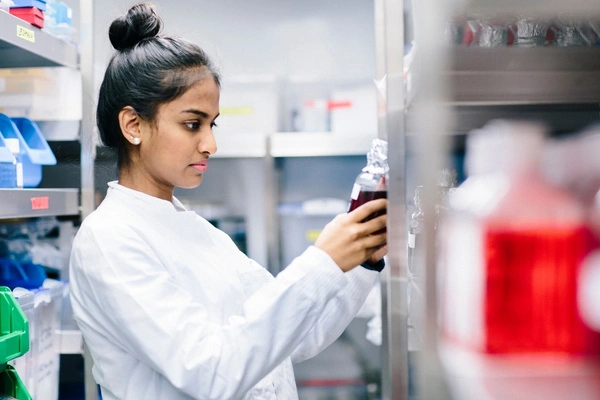
Storing Reconstituted NAD+ Solutions
Aqueous NAD+ is far less stable than the dry powder. Implement the following practices to extend its usable life. These recommendations align closely with the broader best practices for handling and storing pre-mixed peptide solutions in research labs and our overview of quality assurance for liquid-form research compounds.
- Aliquot immediately after reconstitution. Divide the stock solution into single-use or limited-use aliquots. This is the single most impactful step you can take. Each freeze-thaw cycle introduces a small but cumulative amount of degradation, so aliquots that are thawed once and discarded outperform a single large-volume stock that is repeatedly frozen and thawed.
- Store aliquots at –20 °C for short-to-medium term use. For experiments planned within a few weeks, –20 °C is generally adequate. Mark each aliquot with the preparation date, concentration, buffer composition, and the lot number of the parent material.
- Store at –80 °C for extended periods. If you need reconstituted stocks to remain stable for months, –80 °C storage is recommended. Some researchers report acceptable stability at –80 °C for six months or longer, though independent verification via HPLC or enzymatic assay is advisable before use in critical experiments.
- Never store working solutions at 4 °C for more than 24–48 hours. Refrigerator temperatures slow hydrolysis relative to ambient, but they do not arrest it. Treat 4 °C storage as a within-day convenience, not a preservation strategy.
- Use amber or foil-wrapped microcentrifuge tubes. Even inside a freezer, incidental light exposure during retrieval and handling can accumulate over time.
Verifying NAD+ Integrity Before Use
Relying solely on storage conditions without verification introduces an uncontrolled variable into your experiments. Build a simple quality check into your workflow:
- UV absorbance at 260 nm. NAD+ has a characteristic absorption peak near 260 nm (ε ≈ 18,000 M⁻¹cm⁻¹). A quick spectrophotometric reading confirms concentration and can flag gross degradation if the absorbance spectrum shifts or a secondary peak appears.
- A260/A280 ratio. A ratio near the expected value for pure NAD+ indicates the absence of significant contamination or degradation products. Deviations suggest either decomposition or impurity introduction.
- Enzymatic cycling assay. For the highest confidence, use an enzyme-coupled assay (such as an alcohol dehydrogenase cycling reaction) to confirm that the NAD+ is functionally active, not merely present. Degradation products may absorb at 260 nm but lack coenzyme activity.
- HPLC analysis. Reverse-phase or ion-pairing HPLC provides a definitive purity assessment and can quantify specific degradation products like nicotinamide and ADP-ribose. This is the gold-standard approach for labs running high-stakes experiments or validating a new lot of material.
Common Storage Mistakes to Avoid
Even experienced researchers occasionally fall into habits that compromise reagent quality. Watch for these frequent pitfalls:
- Leaving reconstituted stock on the bench during a long experiment. If your assay runs for several hours, keep the stock on ice between pipetting steps, not at room temperature.
- Pooling leftover aliquots. Combining partially used aliquots introduces variable degradation histories into a single tube. Discard any thawed aliquot you do not fully consume during that session.
- Using expired or undocumented material. If a vial lacks a preparation date, lot number, or storage history, it should not be used in any experiment where data integrity matters. The cost of a replacement vial is negligible compared to the cost of troubleshooting irreproducible results.
- Reconstituting in phosphate-buffered saline (PBS) without checking compatibility. While PBS is ubiquitous, some formulations contain trace metals or have a pH on the lower end of the NAD+ stability window. Verify your specific PBS formulation’s suitability before use.
Quick-Reference Storage Summary
- Lyophilized (powder) NAD+: Store at –20 °C or –80 °C, sealed with desiccant, protected from light. Shelf life per manufacturer CoA (commonly 12–24 months under recommended conditions).
- Reconstituted stock solution (single-use aliquots): Store at –20 °C for short-term (weeks) or –80 °C for long-term (months). Avoid repeated freeze-thaw. Verify activity before critical experiments.
- Working dilution (bench-ready): Prepare fresh daily. Keep on ice during use. Discard at end of session.
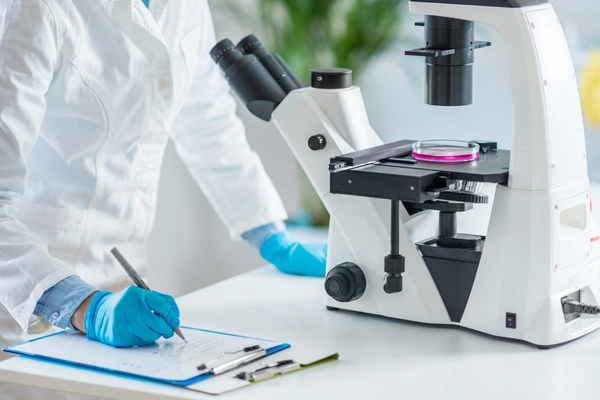
Integrating Storage SOPs Into Your Lab Workflow
Documenting your NAD+ handling procedure in a standard operating procedure (SOP) ensures consistency across personnel and over time. A good SOP for NAD+ management should include the receiving and inspection protocol (verify CoA, check packaging integrity, log lot number), the storage assignment procedure (designated freezer, shelf location, secondary containment details), the reconstitution protocol (water grade, buffer, target concentration, aliquot volume, labeling scheme), the quality verification steps (frequency, method, acceptance criteria), and the disposal and expiration policy.
Training all lab members on this SOP, not just the PI or senior researcher, reduces the risk of a single handling error corrupting an entire batch of material.
Final Considerations for Procurement
When sourcing NAD+ for your research program, prioritize suppliers who provide a detailed certificate of analysis for each lot, including identity confirmation (mass spectrometry or NMR), purity by HPLC, moisture content, and endotoxin levels if the material will be used in cell-based assays. Transparent documentation is the starting point for every reliable experiment. Penguin Peptides provides lot-specific CoA data with every research-grade product to support this standard of traceability.
Conclusion
NAD+ is a valuable but stability-sensitive reagent, and the way you store, reconstitute, and verify it directly shapes the quality of every experiment it touches. Start by keeping lyophilized powder sealed at -20 °C or colder with desiccant. When you reconstitute, use high-purity water or a validated buffer at neutral pH, then aliquot immediately and move those aliquots to -20 °C or -80 °C storage. Never rely on refrigerator temperatures for more than a single working day. Before running any critical assay, confirm NAD+ integrity through UV absorbance, an enzymatic cycling assay, or HPLC analysis. Document every step in a written SOP so that all lab personnel follow the same protocol. These practices are straightforward to implement and pay for themselves many times over in reproducible, publication-ready data. Protect the reagent, and the reagent will protect your results.
Reminder: All NAD+ referenced in this article is for research use only and is not intended for human consumption.
FAQs
What is the best temperature to store lyophilized NAD+ powder?
Store lyophilized NAD+ at -20 °C for routine use or at -80 °C if you do not plan to access the material for several months. Keep the container tightly sealed with a desiccant packet to prevent moisture absorption, and protect it from light by using amber vials or aluminum foil wrapping. Under these conditions, most research-grade NAD+ maintains its labeled purity for the shelf life stated on the certificate of analysis. All NAD+ referenced here is sold for laboratory research purposes only and is not intended for human consumption.
How should I reconstitute NAD+ for use in research assays?
Dissolve lyophilized NAD+ in molecular biology-grade water or a mild neutral buffer (pH 7.0 to 7.4) such as Tris-HCl or HEPES. Allow the sealed vial to reach room temperature briefly before opening to minimize condensation, then dissolve the powder by gentle vortexing. Immediately divide the resulting stock solution into single-use aliquots and transfer them to -20 °C or -80 °C storage. Avoid sonication, which can generate localized heat and accelerate degradation. This product is for research use only and is not for human consumption.
How many freeze-thaw cycles can reconstituted NAD+ tolerate?
Each freeze-thaw cycle introduces a small but cumulative degree of hydrolytic degradation to aqueous NAD+. For best results, prepare single-use aliquots at the time of reconstitution so that each tube is thawed only once and then discarded. If single-use aliquoting is not practical, limit yourself to no more than two or three freeze-thaw cycles and verify NAD+ activity by UV absorbance or an enzymatic assay before using the material in a critical experiment. NAD+ discussed in this article is intended strictly for research applications and is not for human consumption.
How can I verify that my stored NAD+ has not degraded?
Run a quick UV absorbance reading at 260 nm to confirm the expected concentration and check the A260/A280 ratio for signs of decomposition. For higher confidence, use an enzyme-coupled cycling assay (such as an alcohol dehydrogenase reaction) to confirm functional coenzyme activity, since degradation products can still absorb at 260 nm without being biologically active. HPLC analysis offers the most definitive purity assessment and can identify specific breakdown products like nicotinamide and ADP-ribose. Build at least one of these checks into your workflow before every critical experiment.
Can I store reconstituted NAD+ in the refrigerator at 4 °C?
Refrigerator storage at 4 °C should only be used as a within-day convenience, not as a preservation method. NAD+ undergoes non-enzymatic hydrolysis in aqueous solution, and while 4 °C slows that process relative to room temperature, it does not stop it. Do not keep reconstituted NAD+ at 4 °C for more than 24 to 48 hours. For anything beyond same-day use, store aliquots at -20 °C (short-term) or -80 °C (long-term) and thaw only what you need for each session. All NAD+ products discussed here are for research use only and are not intended for human consumption.
Regulatory Notice and Disclaimer:
The NAD+ products referenced in this publication are intended exclusively for qualified researchers in professional laboratory settings. This material is sold for research use only (RUO) and is not intended for human consumption, diagnostic procedures, or therapeutic applications of any kind. No statements in this article have been evaluated by the U.S. Food and Drug Administration. This article does not make any claims regarding the treatment, diagnosis, cure, mitigation, or prevention of any disease or medical condition in humans or animals. Researchers must adhere to all applicable institutional, local, state, and federal regulations when handling, storing, and utilizing research-grade chemical reagents. The information provided here is educational in nature and should not be construed as medical, legal, or regulatory advice. Use of any product in a manner inconsistent with its labeling or outside applicable regulatory frameworks is solely the responsibility of the end user.