❌ Not for Human Consumption
●
✅ For Research Use Only
●
All products are intended strictly for laboratory research purposes only
●
❌ Not for Human Consumption
●
✅ For Research Use Only
●
All products are intended strictly for laboratory research purposes only
●

HPLC And Mass Spectrometry For Epithalon Purity Testing

Written By: Gary Hite, Research Content Writer
Reviewed By: Natalie Kunsman, M.D., Board-Certified Physician
Last Reviewed: September 14, 2026
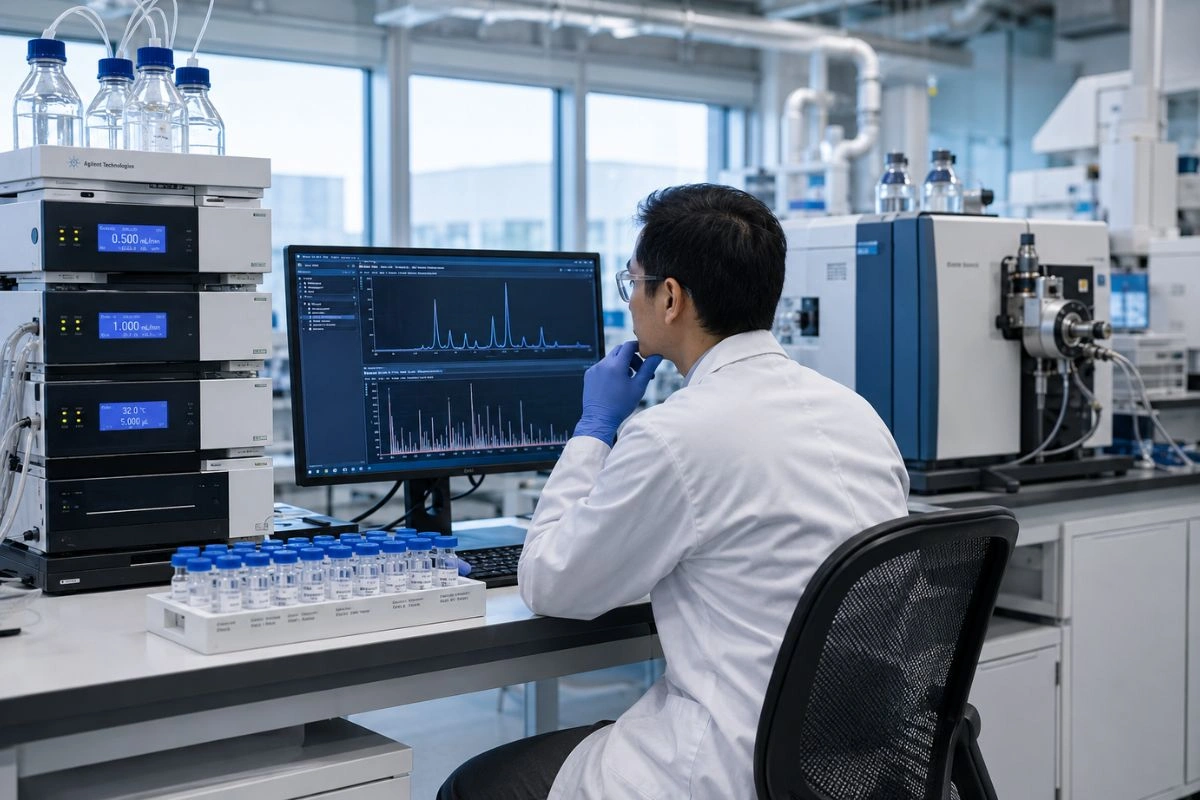
Epithalon is a synthetic tetrapeptide, and like any peptide produced for the laboratory, its value as a research material depends on confirmed purity and identity. High-performance liquid chromatography (HPLC) and mass spectrometry are the two cornerstone techniques researchers use to verify both. HPLC quantifies how much of a sample is the target peptide, while mass spectrometry confirms that the peptide is what it claims to be and reveals the nature of any impurities. This article details how to apply both methods to verify Epithalon purity, written for analytical chemists, peptide scientists, and academic researchers.
Disclaimer: Epithalon is intended strictly for laboratory research and educational use only. It is not for human consumption and not for any diagnostic or therapeutic application. The information below describes analytical purity verification for qualified researchers and academic professionals.
Why Purity Verification Matters for Epithalon Research Material
Synthetic peptides are typically produced by solid-phase peptide synthesis, a process that, however well controlled, can leave a range of impurities behind. These include deletion and truncated sequences from incomplete coupling, products of incomplete side-chain deprotection, residual scavengers and reagents, counterions such as trifluoroacetate, and variable water content. Each of these affects the true composition of a sample.
For research to be reproducible, the proportion of intact target peptide and the identity of that peptide must be established before the material is used. Verifying purity is therefore not a formality. It is the step that makes downstream data interpretable and comparable across experiments and laboratories, and it protects researchers from drawing conclusions on poorly defined material.
Understanding Epithalon as an Analytical Target
Epithalon is composed of four amino acid residues in the sequence alanine, glutamic acid, aspartic acid, and glycine (Ala-Glu-Asp-Gly), giving the molecular formula C14H22N4O9 and a monoisotopic mass near 390 daltons. Several of its features shape how it is analyzed.
It is small and highly polar, with two acidic side chains, which means it can be weakly retained on standard reversed-phase columns and may require ion-pairing or an alternative separation mode. It also contains no aromatic residues, so it lacks strong absorbance at 280 nanometers. Detection instead relies on the peptide bond absorbance in the low ultraviolet region near 214 nanometers. Recognizing these properties at the outset guides the selection of column, mobile phase, and detection wavelength, and it prevents the common mistake of applying a generic peptide method that does not suit a short, polar analyte.
HPLC for Chromatographic Purity
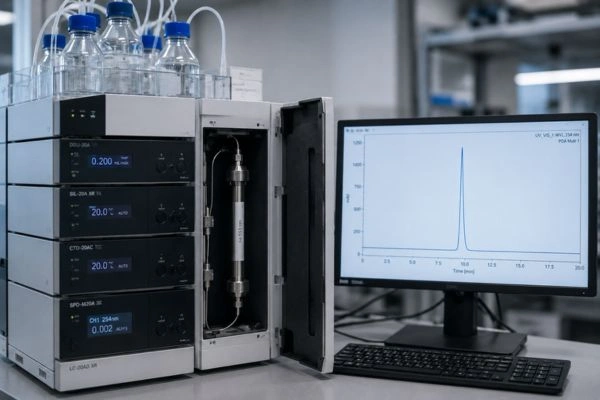
Reversed-phase HPLC (RP-HPLC) is the primary method for determining the chromatographic purity of Epithalon. A typical setup pairs a C18 column with a gradient of water and acetonitrile, modified with an ion-pairing agent such as trifluoroacetic acid to improve retention and peak shape for this polar peptide. Detection by ultraviolet absorbance at approximately 214 nanometers captures the peptide bond signal, and purity is reported as area percent: the area of the main Epithalon peak relative to the total integrated peak area. Carefully chosen gradient slope, flow rate, column temperature, and injection volume all influence resolution between the target peak and closely eluting impurities.
Because Epithalon is short and hydrophilic, researchers sometimes find that reversed-phase retention is insufficient to resolve early-eluting impurities. In these cases, hydrophilic interaction liquid chromatography (HILIC) offers an orthogonal separation that retains polar analytes more strongly, and running both RP-HPLC and HILIC provides complementary purity assessments that are harder to fool than either method alone. Ultra-high-performance liquid chromatography (UHPLC) further improves resolution and shortens run times when finer separation is needed.
Mass Spectrometry for Identity and Impurity Profiling
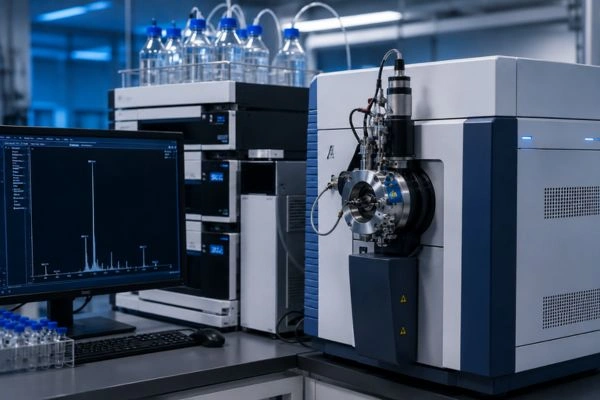
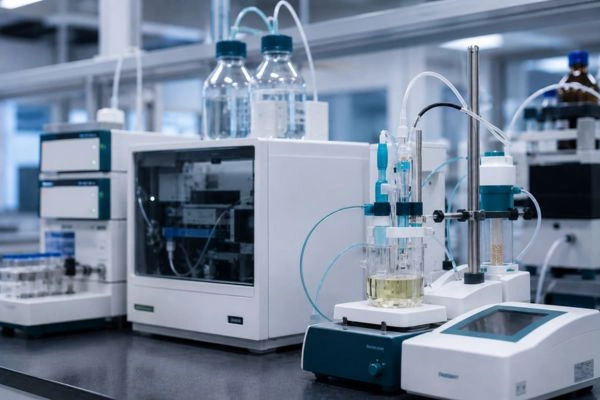
HPLC establishes how pure a sample is, but it does not, on its own, confirm what the main peak is. Mass spectrometry provides that confirmation. Electrospray ionization mass spectrometry (ESI-MS) is the standard approach for a peptide of this size, generating a protonated molecular ion, [M+H] plus, at a mass-to-charge ratio near 391 for Epithalon, with a corresponding deprotonated ion observable in negative mode.
Coupling the separation directly to the detector as liquid chromatography mass spectrometry (LC-MS) lets researchers assign a mass to the main peak and to each resolved impurity in a single run. Impurity masses often reveal their origin, since a deletion sequence or an incompletely deprotected product carries a predictable mass difference from the target peptide. This turns impurity profiling from guesswork into a structured interpretation of the data.
High-Resolution and Tandem Mass Spectrometry
For definitive identity confirmation, high-resolution mass spectrometry (HRMS) on a Q-TOF or Orbitrap instrument measures the accurate mass of Epithalon precisely enough to confirm its molecular formula, C14H22N4O9. Accurate mass narrows the possibilities far beyond what nominal mass can, reducing the risk of misassignment.
Tandem mass spectrometry (MS/MS) goes one step further by fragmenting the peptide and reading the resulting production ions. The fragment pattern reconstructs the amino acid sequence, confirming not only the mass but the order of residues. For a research peptide, combining accurate mass with sequence confirmation provides strong, orthogonal evidence of identity that supports confident characterization.
Orthogonal Characterization Methods
A complete purity picture extends beyond chromatographic area percent and mass confirmation. Amino acid analysis (AAA) hydrolyzes the peptide and quantifies its constituent amino acids, confirming composition and supporting accurate quantitation. Net peptide content analysis accounts for the fact that a weighted sample includes water, counterions, and salts in addition to the peptide itself, so the actual peptide mass is often lower than the gross weight.
Water content is measured directly by Karl Fischer titration, and residual counterions such as trifluoroacetate are quantified by ion chromatography. Where full structural confirmation is required, nuclear magnetic resonance (NMR) spectroscopy resolves the peptide’s structure in detail. Together, these methods convert a simple purity number into a thorough characterization of the research material.
Method Validation and System Suitability
To trust a purity result, the analytical method itself must be validated. Specificity confirms that the method separates Epithalon from its impurities and from blank components. Linearity establishes that detector response is proportional to concentration across the working range, while the limit of detection and limit of quantification define the smallest impurities the method can reliably see and measure. Precision is assessed through repeated injections and separate preparations, and accuracy is verified through recovery experiments.
System suitability checks run alongside each analysis to confirm the instrument is performing as expected. These typically include resolution between critical peaks, theoretical plate count, peak tailing factor, and repeatability of replicate injections. Passing system suitability before reporting results ensures that the purity value reflects the sample rather than instrument drift.
Building a Reliable Purity Verification Workflow
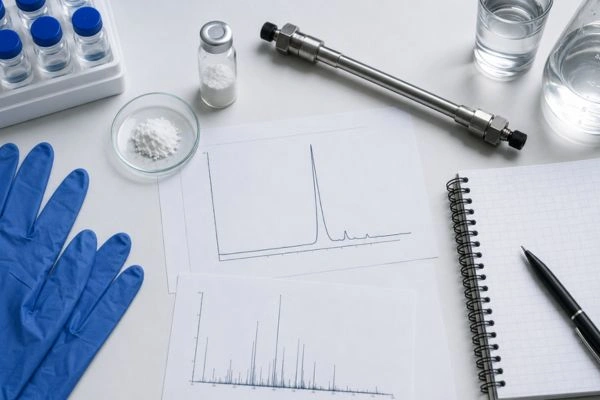
To verify Epithalon purity effectively, combine the techniques into a deliberate sequence. Begin with RP-HPLC at 214 nanometers to measure chromatographic purity, and add a HILIC separation as an orthogonal cross-check. Use LC-MS to confirm the identity of the main peak and to assign masses to impurities, then apply HRMS and MS/MS where definitive formula and sequence confirmation are required. Round out the characterization with orthogonal methods such as amino acid analysis, peptide content, water content, and counterion analysis.
Throughout, validate the method and document every parameter, including columns, mobile phases, gradients, and data processing settings, so that other researchers can reproduce the analysis and verify the result. A documented, validated workflow is what allows a purity figure to carry weight beyond a single laboratory.
Conclusion
Verifying Epithalon purity rests on two complementary pillars: HPLC to quantify how much of a sample is the intended tetrapeptide, and mass spectrometry to confirm that peptide’s identity and characterize its impurities. The peptide’s small, polar, non-aromatic structure shapes the practical choices, from a 214 nanometer detection wavelength to the use of ion-pairing or HILIC separations, while high-resolution and tandem mass spectrometry supply definitive identity confirmation. By pairing these methods with orthogonal characterization and rigorous validation, analytical chemists and academic researchers can document Epithalon purity with the precision and reproducibility that sound research requires.
Disclaimer: All products and reference materials referenced are intended strictly for laboratory research and educational use only. Epithalon is not for human consumption, is not for diagnostic or therapeutic use, and is not intended to treat, cure, or prevent any condition. Nothing in this article constitutes medical, clinical, or professional advice. This content is provided for informational and educational purposes for qualified researchers and academic professionals. Handling, storage, and use of research materials must comply with all applicable institutional guidelines, safety protocols, and local, state, and federal regulations.
Frequently Asked Questions
Which HPLC method should I use for Epithalon purity?
Start with reversed-phase HPLC on a C18 column using a water and acetonitrile gradient modified with trifluoroacetic acid as an ion-pairing agent, and detect at approximately 214 nanometers to capture the peptide bond signal. Report purity as area percent, the main Epithalon peak relative to total integrated peak area. Tune your gradient slope, flow rate, column temperature, and injection volume to resolve the target from closely eluting impurities. If reversed-phase retention falls short for this short, polar peptide, add a HILIC separation as an orthogonal cross-check, and reach for UHPLC when you need finer resolution and shorter run times.
Why detect Epithalon at 214 nanometers instead of 280?
Choose 214 nanometers because Epithalon contains no aromatic residues and therefore lacks strong absorbance at 280 nanometers. Detection instead relies on the peptide bond absorbance in the low ultraviolet region near 214 nanometers. Set your detector to this wavelength from the outset, and recognize the peptide’s small, highly polar, non-aromatic structure before you build the method. This prevents the common mistake of applying a generic peptide method, which often assumes 280 nanometer detection that does not work for this analyte.
How does mass spectrometry confirm Epithalon identity?
Use electrospray ionization mass spectrometry to generate a protonated molecular ion, [M+H]+, at a mass-to-charge ratio near 391, with a corresponding deprotonated ion in negative mode. Couple the separation directly to the detector as LC-MS so you can assign a mass to the main peak and to each resolved impurity in a single run. For definitive confirmation, apply high-resolution mass spectrometry on a Q-TOF or Orbitrap to verify the molecular formula C14H22N4O9, then run tandem mass spectrometry to fragment the peptide and reconstruct the residue sequence.
What impurities should I expect in synthetic Epithalon?
Anticipate the impurities that solid-phase peptide synthesis can leave behind: deletion and truncated sequences from incomplete coupling, products of incomplete side-chain deprotection, residual scavengers and reagents, counterions such as trifluoroacetate, and variable water content. Profile them with LC-MS, since a deletion sequence or incompletely deprotected product carries a predictable mass difference from the target peptide. Measure water directly by Karl Fischer titration and quantify residual counterions by ion chromatography, so you account for everything in the weighed sample beyond the peptide itself.
How do I validate my Epithalon purity method?
Validate the method against defined parameters before you trust any result. Confirm specificity by separating Epithalon from its impurities and blank components, establish linearity across the working range, and determine the limit of detection and limit of quantification for the smallest impurities. Assess precision through repeated injections and separate preparations, and verify accuracy through recovery experiments. Run system suitability checks alongside each analysis, including peak resolution, theoretical plate count, tailing factor, and replicate repeatability, and confirm they pass before reporting so the purity value reflects the sample rather than instrument drift.