❌ Not for Human Consumption
●
✅ For Research Use Only
●
All products are intended strictly for laboratory research purposes only
●
❌ Not for Human Consumption
●
✅ For Research Use Only
●
All products are intended strictly for laboratory research purposes only
●

GLP-3R Storage And Handling For Research Integrity

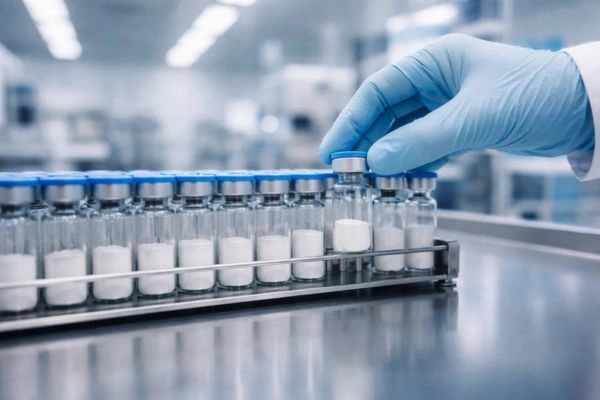
Maintaining data reliability in peptide research starts well before the first assay begins. Every misstep during storage or handling can compromise the molecular integrity of your GLP-3R compound, leading to degraded samples, inconsistent results, and wasted resources.
For professional researchers and academic teams investing in receptor-binding studies, cell-based assays, or pharmacokinetic modeling, following strict storage and handling protocols is not optional. It is foundational.
This guide provides actionable, step-by-step procedures to help your laboratory preserve the stability and potency of GLP-3R throughout its research lifecycle.
Disclaimer: GLP-3R is a research compound sold strictly for laboratory and academic research purposes. It is not intended for human consumption, veterinary use, or any clinical application. GLP-3R has not been approved by the FDA for any therapeutic or diagnostic use. All purchasers must be qualified researchers operating in licensed facilities. Nothing in this article constitutes medical advice, a health claim, or an endorsement of off-label use.
Understanding the Chemical Sensitivity of GLP-3R
GLP-3R, like many synthetic peptide compounds used in research, is sensitive to environmental variables that accelerate degradation. The three primary threats to compound integrity are:
- Temperature fluctuation: Peptides undergo hydrolysis and deamidation when exposed to elevated temperatures, even briefly during transit between storage and the bench.
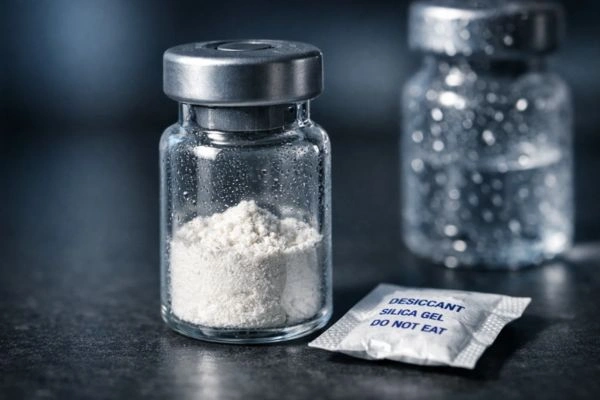
- Moisture exposure: Humidity introduces water molecules that catalyze unwanted chemical reactions within lyophilized (freeze-dried) peptide samples.
- Light and oxidation: UV and ambient light can trigger oxidative degradation, altering the compound’s functional structure and invalidating downstream experimental results.
Understanding these vulnerabilities enables your team to build a handling protocol that defends against each one.
Step 1: Receiving and Inspecting Your GLP-3R Shipment
When your GLP-3R research compound arrives at the laboratory, take the following immediate actions:
- Verify packaging integrity. Inspect the outer container for any punctures, tears, or signs of temperature compromise (such as condensation inside sealed bags). Document any irregularities with photographs before opening.
- Check accompanying documentation. Confirm that the Certificate of Analysis (COA) matches the lot number printed on the vial label. The COA provides critical data, including purity percentage, molecular weight, and recommended storage conditions.
- Record the receipt timestamp. Log the exact date, time, and ambient temperature at the receiving location. This creates an unbroken chain of custody record, which is essential for Good Laboratory Practice (GLP) compliance and audit readiness.
- Transfer promptly. Do not leave GLP-3R at room temperature on a receiving dock or countertop. Move the compound to its designated storage location within 15 minutes of receipt.
Reminder: GLP-3R is intended solely for qualified researchers conducting laboratory investigations. It must not be used for any purpose outside of professional research settings.
Step 2: Establishing Correct Storage Conditions
Proper storage is the single most impactful factor in preserving your GLP-3R compound. Follow these guidelines based on the form of the peptide you have received.
Lyophilized (Powder) Form
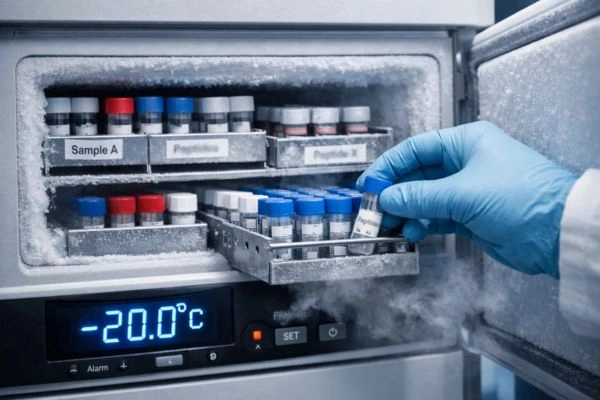
Store lyophilized GLP-3R at -20°C or colder in a manual-defrost freezer. Frost-free freezers cycle temperatures during auto-defrost, which introduces repeated freeze-thaw stress. Keep the vial sealed in its original container with desiccant packets to absorb residual moisture.
Under these conditions, lyophilized GLP-3R remains stable for extended periods, though researchers should always confirm shelf life specifications listed on the COA.
Reconstituted (Solution) Form
Once reconstituted, the GLP-3R solution is significantly more susceptible to degradation. Store reconstituted samples at -20°C to -80°C in single-use aliquots. Aliquoting prevents repeated freeze-thaw cycles, which are a leading cause of peptide breakdown.
Use sterile, low-binding microcentrifuge tubes (polypropylene) to minimize peptide adsorption to container walls. Label each aliquot clearly with the lot number, reconstitution date, concentration, and solvent used.
Step 3: Reconstitution Best Practices
Reconstitution is one of the most error-prone steps in peptide handling. Follow these practices to protect your GLP-3R compound during preparation.
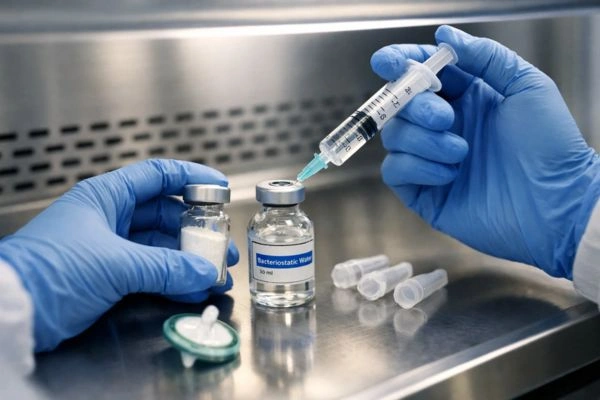
- Select the correct solvent. Refer to the product data sheet for the recommended reconstitution solvent. Common choices include sterile water, bacteriostatic water, DMSO, or dilute acetic acid, depending on the peptide’s solubility profile. Using the wrong solvent can cause precipitation or structural damage.
- Add solvent slowly. Direct the solvent stream along the inside wall of the vial rather than directly onto the peptide cake. This gentle approach prevents foaming and ensures even dissolution.
- Allow passive dissolution. After adding solvent, let the vial sit at room temperature for several minutes. Avoid aggressive vortexing. Gentle swirling or slow rotation is sufficient to achieve a clear solution.
- Calculate concentration accurately. Use the net peptide content listed on the COA (not the gross weight on the vial) to determine the true concentration of your reconstituted solution.
- Filter if necessary. If your downstream application requires sterile solution, pass the reconstituted GLP-3R through a 0.22-micrometer syringe filter into a sterile receiving vessel.
Step 4: Minimizing Freeze-Thaw Cycles
Repeated freezing and thawing is one of the most destructive forces a peptide can endure in the laboratory. Each cycle promotes aggregation, oxidation, and loss of biological activity.
- Aliquot immediately after reconstitution. Divide your GLP-3R solution into the smallest volumes practical for your experimental design. If your typical assay uses 50 microliters, prepare aliquots of 55 to 60 microliters to account for pipetting loss.
- Thaw only what you need. Remove a single aliquot from the freezer for each experiment. Allow it to reach the required temperature on ice or at 4°C rather than at room temperature.
- Discard unused portions. Do not refreeze a thawed aliquot. Even a single additional freeze-thaw cycle can measurably reduce compound integrity and compromise the accuracy of your experimental data.

Step 5: Light Protection and Contamination Prevention
- Work under reduced lighting when possible. Amber-tinted vials or aluminum foil wrapping can shield GLP-3R from photodegradation during active use on the bench.
- Use aseptic technique. Even though GLP-3R is a research-only compound and not a pharmaceutical product, microbial contamination can interfere with cell-based assays and in vitro experiments. Handle reconstituted solutions in a laminar flow hood or biosafety cabinet whenever feasible.
- Wear appropriate PPE. Nitrile gloves, lab coats, and safety goggles protect both the researcher and the compound from cross-contamination. Change gloves between handling different research materials to prevent unintended sample mixing.
Step 6: Documentation and Traceability
Robust documentation is a cornerstone of research integrity. For every GLP-3R sample in your laboratory, maintain the following records:
- Storage log: Record the storage location (freezer ID, shelf, rack position), temperature readings (manual or continuous monitoring), and dates of placement and removal.
- Usage log: Track the date, researcher name, aliquot ID, volume used, and the specific experiment or protocol associated with each use.
- Disposal log: When an aliquot is discarded (due to expiration, contamination, or excess freeze-thaw cycles), document the reason and method of disposal in compliance with your institution’s chemical waste policies.
These records support audit readiness, enable troubleshooting when results deviate, and demonstrate adherence to GLP and institutional compliance standards.
Step 7: Equipment Calibration and Monitoring
Your storage equipment must be maintained in verified working order.
- Calibrate freezers regularly. Confirm that your -20°C and -80°C units are holding their target temperatures using a NIST-traceable thermometer at least once per quarter.
- Install continuous temperature monitoring. Digital data loggers or networked monitoring systems with alarm capabilities provide real-time alerts if a freezer drifts out of range. This early warning system allows your team to relocate samples before significant degradation occurs.
- Maintain backup power. Ensure that freezers storing GLP-3R and other sensitive research compounds are connected to an uninterruptible power supply (UPS) or emergency generator. A prolonged power outage can destroy months of stored material.
Common Mistakes to Avoid
Even experienced laboratories encounter pitfalls. Watch for these common errors when working with GLP-3R:
- Storing reconstituted peptide at refrigerator temperature (4°C) for extended periods. This temperature range does not provide adequate protection against degradation for most peptide solutions. Use freezer storage and aliquoting instead.
- Relying on gross vial weight for concentration calculations. The gross weight includes salts, counterions, and residual moisture. Always use the net peptide content from the COA for accurate molarity calculations.
- Skipping documentation for “quick” experiments. Every use of GLP-3R should be logged, regardless of the experiment’s scale or perceived importance. Incomplete records create gaps that undermine reproducibility.
- Using frost-free freezers. As noted above, the automatic defrost cycles in these units subject samples to periodic warming. Always opt for manual-defrost units for peptide storage.

Supporting Research Integrity Across Your Team
Storage and handling protocols only work when every member of the research team follows them consistently. Consider the following strategies to build a culture of compliance in your laboratory:
- Post handling SOPs visibly. Place laminated standard operating procedure (SOP) summaries near freezers and preparation areas for quick reference.
- Train new team members formally. Include GLP-3R handling in your onboarding procedures. Require sign-off before new personnel are authorized to access stored compounds.
- Conduct periodic audits. Review storage logs, check vial inventories against records, and verify freezer temperatures on a quarterly basis. Address discrepancies immediately.
Conclusion
Every data point your lab generates from GLP-3R depends on decisions made during storage and handling, not just during the assay itself. Commit to the protocols outlined above without exception: transfer shipments to designated freezer storage within 15 minutes of receipt, store lyophilized compound at -20°C or colder in a manual-defrost unit, aliquot reconstituted solutions immediately into single-use volumes, and never refreeze a thawed aliquot. Protect every preparation from light, moisture, and contamination using amber vials, desiccant, and aseptic technique. Log each storage event, each use, and each disposal, no experiment is too small to document. Calibrate your freezers quarterly, install continuous temperature monitoring, and confirm backup power connections now rather than after an outage. Train every team member to the same standard and audit compliance regularly. Rigorous handling is not overhead, it is the infrastructure that makes your research defensible.
Frequently Asked Questions
Why must GLP-3R be stored in a manual-defrost freezer rather than a standard frost-free unit?
Frost-free freezers cycle temperatures during automatic defrost periods, subjecting stored compounds to repeated warming events. These micro freeze-thaw cycles promote peptide aggregation, oxidation, and loss of bioactivity over time. Switch to a manual-defrost unit set at -20°C or colder, and verify its temperature quarterly with a NIST-traceable thermometer to ensure your GLP-3R remains within spec throughout its storage life.
How quickly should GLP-3R be moved to cold storage after delivery?
Transfer the compound to its designated freezer location within 15 minutes of receipt. Leaving GLP-3R at ambient temperature, even briefly on a receiving dock or benchtop, exposes the lyophilized peptide to moisture and heat that accelerate degradation. Inspect packaging integrity and verify the COA lot number match during that window, then store immediately.
What is the correct way to calculate reconstituted GLP-3R concentration?
Always use the net peptide content listed on the Certificate of Analysis, not the gross weight printed on the vial. Gross weight includes salts, counterions, and residual moisture that inflate the apparent mass. Divide the net peptide mass by your solvent volume to determine the true working concentration, and record this calculation in your lab notebook for every preparation.
How should reconstituted GLP-3R aliquots be sized for daily laboratory use?
Match each aliquot to a single experiment’s volume requirement, plus a small overage for pipetting loss. If your typical assay calls for 50 µL, prepare aliquots of 55–60 µL. Thaw only one aliquot per experiment on ice or at 4°C, use it in full, and discard any remainder. Never refreeze a thawed aliquot, even one additional cycle measurably reduces compound integrity.
What documentation should researchers maintain for every GLP-3R sample in the lab?
Keep three parallel logs: a storage log recording freezer location, temperature readings, and placement/removal dates; a usage log tracking the date, researcher name, aliquot ID, volume drawn, and associated experiment; and a disposal log noting when and why each aliquot was discarded. These records support GLP compliance, enable rapid troubleshooting when results deviate, and demonstrate full chain-of-custody traceability during institutional audits.