❌ Not for Human Consumption
●
✅ For Research Use Only
●
All products are intended strictly for laboratory research purposes only
●
❌ Not for Human Consumption
●
✅ For Research Use Only
●
All products are intended strictly for laboratory research purposes only
●

BPC 157 Reconstitution, Storage, And Lab Protocols

Written By: Gary Hite, Research Content Writer
Reviewed By: Natalie Kunsman, M.D., Board-Certified Physician
Last Reviewed: July 13, 2026
Disclaimer: BPC 157 (Body Protection Compound-157) is sold exclusively for in vitro research and laboratory use. It is not a drug, supplement, or food product. BPC 157 is not approved by the FDA for any medical use, is not intended for human or animal consumption, and must not be used for diagnostic, therapeutic, or veterinary purposes. This product is for research use only. Researchers must comply with all applicable federal, state, and local regulations governing the purchase, handling, and use of research peptides.
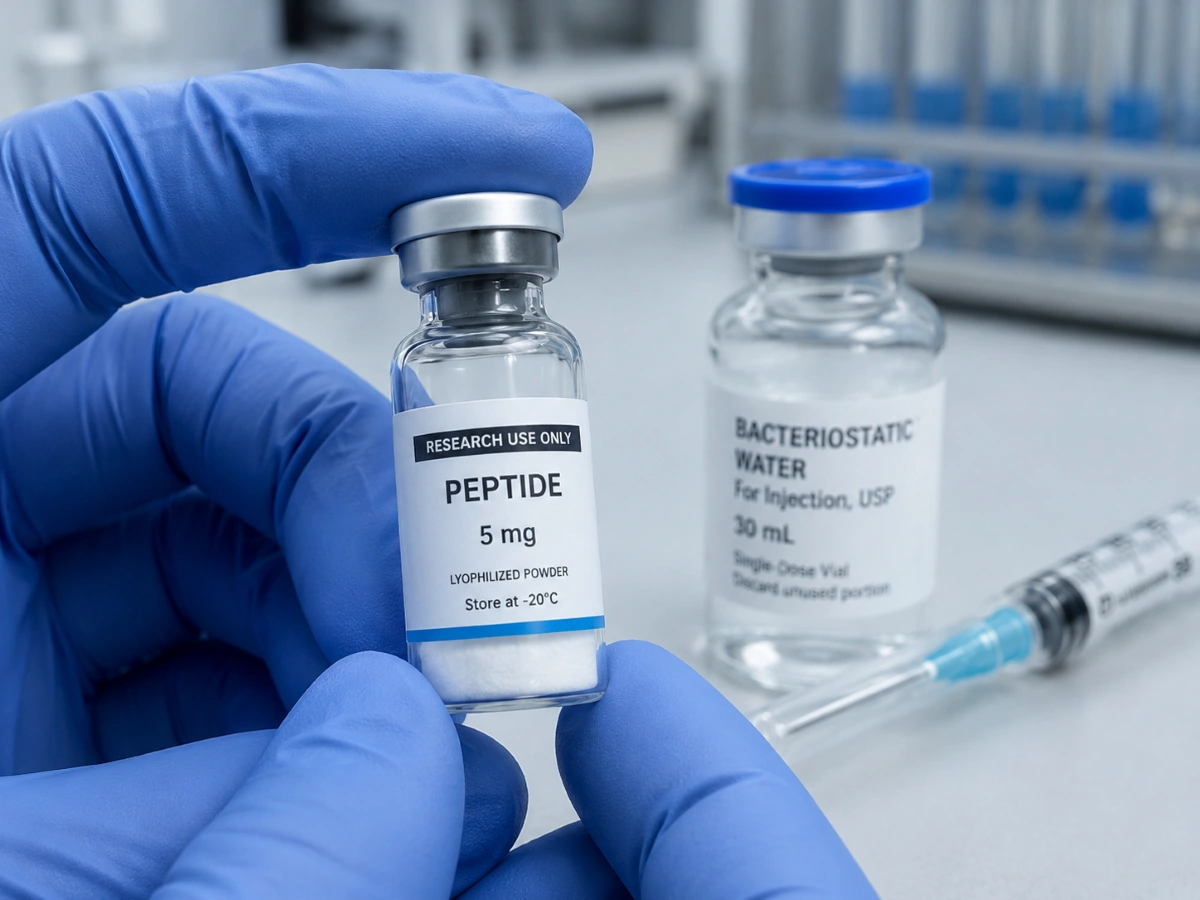
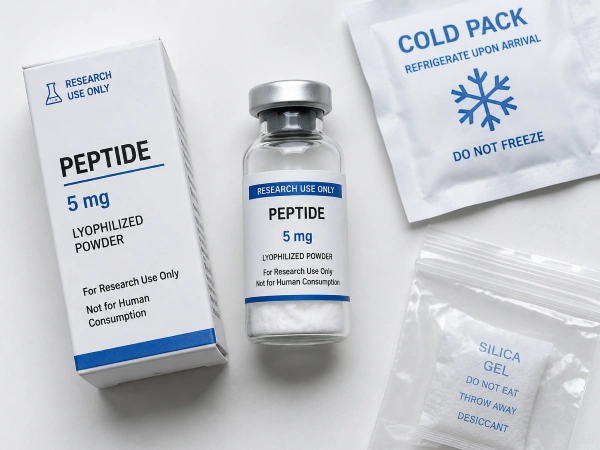
A 5 mg vial of BPC 157 arrives as a lyophilized powder, roughly 0.3 mL of compacted peptide that’s biologically inert until you add solvent. The reconstitution step is where most lab errors originate. Contamination, incorrect solvent volume, aggressive mixing, and poor storage conditions can degrade the peptide before a single assay begins. This guide from Penguin Peptides covers the precise calculations, procedures, and environmental controls that keep BPC 157 research-grade from vial to experiment.
We’re writing this because the published literature on BPC 157 (over 100 peer-reviewed papers dating back to foundational work in 1993) relies on researchers executing clean reconstitution and accurate concentration math. A miscalculated dilution doesn’t just waste peptides. It produces unreproducible data.
What Arrives in the Vial
BPC 157 is a synthetic pentadecapeptide (15 amino acids, molecular weight approximately 1,419.53 Da) derived from a segment of human gastric juice protein. A standard BPC 157 vial arrives in lyophilized form produced through freeze-drying, which removes water while preserving the peptide’s tertiary structure. When stored properly as a dry powder, lyophilized BPC 157 remains stable at room temperature for months and at -20°C for years.
The critical transition happens at reconstitution. Once dissolved, the peptide becomes susceptible to proteolytic degradation, oxidation, adsorption to container walls, and microbial contamination. Every decision from this point (solvent choice, volume, mixing technique, storage temperature, number of freeze-thaw cycles) directly impacts the functional concentration available for experimental protocols.
Solvent Selection
Two solvents dominate BPC 157 reconstitution in the published literature:
- Bacteriostatic water (BAC water) contains 0.9% benzyl alcohol as a preservative. It’s the standard choice for multi-use vials where the rubber septum will be punctured repeatedly over days or weeks. The benzyl alcohol inhibits microbial growth, extending usable life to approximately 28 days when refrigerated at 2-8°C. Most commercial research suppliers ship reconstitution water specifically for peptide reconstitution.
- Sterile water for injection (SWFI) contains no preservatives. It’s appropriate for single-use reconstitution where the entire vial contents will be aliquoted immediately after dissolution. Without antimicrobial protection, a reconstituted vial of BPC 157 in SWFI should be aliquoted within hours of preparation and frozen immediately.
Normal saline (0.9% NaCl) appears in some protocols, particularly those mimicking physiological conditions for cell culture work. It’s an acceptable alternative but offers no preservation advantage over SWFI.
Don’t use DMSO, acetic acid, or other organic solvents unless your specific assay demands it. BPC 157 is highly water-soluble, and harsh solvents can denature the peptide or introduce confounding variables into downstream experiments. Understanding why theright solvent matters is one of the most overlooked fundamentals in peptide handling.
Reconstitution Procedure
The physical act of reconstitution is straightforward, but the details matter more than most new researchers expect.
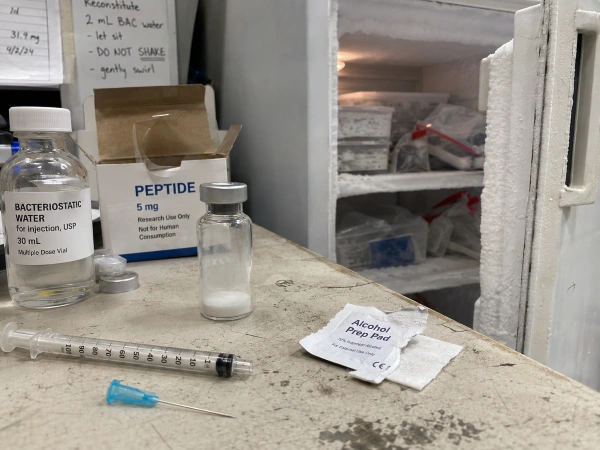
Start by swabbing the vial’s rubber stopper and the BAC water vial with 70% isopropyl alcohol. Let both air dry completely because wet alcohol can enter the vial and alter your final concentration. Using a sterile syringe (insulin syringes work well for the small volumes involved), draw your calculated volume of solvent.
Here’s where the most common mistake happens: never inject solvent directly onto the lyophilized cake. Aim the needle at the inner glass wall of the vial and let the liquid trickle down slowly. Direct injection can splash powder out of solution, create foam, or physically damage peptide structures through shear force.
Once the solvent contacts the powder, set the vial down. Don’t shake it. Don’t vortex it. Don’t flick it. Gently roll the vial between your palms for 30-60 seconds, then let it sit. BPC 157 typically dissolves completely within 2-5 minutes. If undissolved particles remain after 10 minutes of gentle periodic rolling, your powder may have degraded during shipping or storage, so don’t force it into solution.
The reconstituted solution should be clear and colorless. Any cloudiness, particulate matter, or discoloration indicates potential degradation or contamination. Discard and start with a fresh vial.
Concentration Calculations
This is pure arithmetic, but researchers routinely get it wrong because they conflate mass, volume, and concentration units. Here’s the framework.
The base formula:
This is pure arithmetic, but researchers routinely get it wrong because they conflate mass, volume, and concentration units. Here’s the framework.
The base formula:
Concentration (mcg/mL) = Total peptide mass (mcg) ÷ Solvent volume (mL)
A standard 5 mg vial contains 5,000 mcg of BPC 157. The solvent volume you add determines your stock concentration. Common configurations:
Adding 1 mL of solvent to a 5 mg vial yields 5,000 mcg/mL (5 mg/mL). This is a high-concentration stock suitable for research protocols requiring small administration volumes in published animal models. At this concentration, each 0.1 mL contains 500 mcg.
Adding 2 mL of solvent to a 5 mg vial yields 2,500 mcg/mL (2.5 mg/mL). This middle-ground concentration provides a good balance between precision and practicality. Each 0.1 mL contains 250 mcg, a common reference concentration in published rodent studies.
Adding 2.5 mL of solvent to a 5 mg vial yields 2,000 mcg/mL (2 mg/mL). Clean round numbers make downstream serial dilutions simpler. Each 0.1 mL contains exactly 200 mcg.
Adding 5 mL of solvent to a 5 mg vial yields 1,000 mcg/mL (1 mg/mL). The most dilute standard stock, useful when protocols call for larger volumes with lower per-unit concentrations.
For serial dilutions: If your assay requires concentrations in the nanomolar range (common in cell culture and receptor binding studies), prepare your stock at 5 mg/mL, then perform serial 1:10 dilutions using the same solvent. Label every tube with concentration, date, and passage number.
Molar concentration conversion: To convert mass concentration to molar concentration, use the molecular weight of 1,419.53 g/mol. A 1 mg/mL (1,000 mcg/mL) solution equals approximately 704.5 nM. This conversion matters for studies comparing BPC 157 activity against other peptides on a molar-equivalent basis.
Storage Protocols
Peptide degradation follows predictable rules. Temperature, light exposure, freeze-thaw cycling, and container material all contribute. Establishing consistent peptide storage protocols before your first reconstitution prevents the most common integrity failures.
- Lyophilized (unreconstituted) BPC 157: Store at -20°C for maximum long-term stability. At this temperature, lyophilized BPC 157 maintains integrity for 24+ months based on manufacturer stability data. Room temperature storage (20-25°C) is acceptable for short periods (weeks, not months). Keep vials in a desiccated container or sealed bag with silica gel packets to prevent moisture absorption, which can initiate degradation even before formal reconstitution.
- Reconstituted BPC 157: Refrigerate at 2-8°C immediately after reconstitution. In BAC water, the solution remains usable for up to 28 days. In sterile water without preservatives, use within 48 hours or freeze. Never leave reconstituted peptide at room temperature longer than the time required to draw your experimental aliquots.
- Frozen aliquots: For experiments spanning weeks or months, the gold standard is single-use aliquoting. Immediately after reconstitution, divide the solution into individual-use volumes in sterile microcentrifuge tubes. Flash-freeze in liquid nitrogen if available, or place directly in a -20°C freezer. Each aliquot gets thawed once, used, and discarded.
Why this matters: each freeze-thaw cycle degrades approximately 5-15% of dissolved peptide, depending on concentration and container material. After three cycles, you may have lost 30-40% of functional peptide while your records still show the original calculated concentration. That discrepancy propagates through every downstream result.
Container considerations: Peptides adsorb to surfaces, particularly at low concentrations. Polypropylene microcentrifuge tubes outperform glass for storage of dilute peptide solutions. Siliconized or low-bind tubes reduce adsorption further, and the marginal cost increase is worth it for experiments where concentration accuracy is critical. At stock concentrations above 1 mg/mL, adsorption losses are proportionally negligible.
Light protection: BPC 157 contains no tryptophan residues (which are the primary photosensitive amino acids in peptides), so it’s less light-sensitive than many peptides. Still, wrapping vials in aluminum foil or storing in opaque containers is cheap insurance against UV-induced oxidation of methionine residues over extended storage periods.
Quality Control Checks
Before committing expensive reagents and researcher time to an experiment, verify your reconstituted peptide.
- Visual inspection is the minimum standard. Clear, colorless, particulate-free solution passes. Anything else fails.
- pH measurement provides a quick degradation check. Freshly reconstituted BPC 157 in BAC water should read approximately pH 5.5-7.0. Significant drift from this range over storage time suggests hydrolysis of peptide bonds producing acidic fragments.
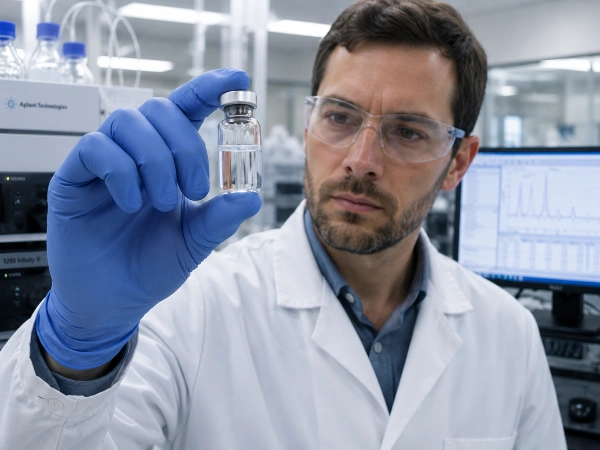
- HPLC analysis, if your lab has access, is the definitive purity confirmation. Compare retention time and peak area against a freshly reconstituted reference standard. A purity drop below 95% of initial values warrants replacement. Reputable suppliers provide certificates of analysis with HPLC data for every batch, giving you a baseline to compare against.
For labs running high-throughput screens or dose-response curves, building in a positive control using freshly reconstituted peptide alongside stored aliquots catches degradation that visual inspection misses.
Common Errors and How to Avoid Them
Across hundreds of published BPC 157 studies, a few procedural failures recur:
- Skipping the alcohol swab. Seems trivial. It isn’t. A single bacterial colony introduced through a contaminated septum can consume measurable peptide within 48 hours while producing proteases that accelerate degradation.
- Reusing syringes between vials or between different peptides. Cross-contamination isn’t just a purity concern. Trace amounts of one peptide can interfere with binding assays for another at nanomolar sensitivity levels.
- Storing reconstituted vials in a frost-free freezer. Frost-free freezers cycle through warming periods to prevent ice buildup. Those thermal cycles are mini freeze-thaws for your peptide. Use a manual-defrost freezer or a dedicated laboratory freezer with stable temperature control.
- Recording the reconstitution date on the vial but not the concentration or solvent type. Three weeks later, you won’t remember whether you added 1 mL or 2 mL. Label everything: peptide name, lot number, concentration, solvent, date, and your initials.
A Note on Published Research Context
BPC 157 appears in peer-reviewed literature primarily in rodent models investigating gastrointestinal tissue, connective tissue research models and vascular signaling studies. The largest body of published work comes from a research group at the University of Zagreb, with studies examining dose-response relationships across multiple tissue types. The concentrations and storage conditions in this guide align with the methodologies described in that body of published research.
This peptide remains a research tool. It has not completed clinical trials, does not hold FDA approval for any indication, and its mechanism of action is not fully characterized. Researchers should approach BPC 157 studies with the same rigor applied to any investigational compound: controlled conditions, verified reagent quality, and reproducible protocols.
Quick Reference Card
| Vial Size | Solvent Added | Stock Concentration | Per 0.1 mL |
| 5 mg | 1 mL | 5,000 mcg/mL | 500 mcg |
| 5 mg | 2 mL | 2,500 mcg/mL | 250 mcg |
| 5 mg | 2.5 mL | 2,000 mcg/mL | 200 mcg |
| 5 mg | 5 mL | 1,000 mcg/mL | 100 mcg |
| Storage Condition | Form | Duration |
| -20°C | Lyophilized | 24+ months |
| 2-8°C | Reconstituted (BAC water) | Up to 28 days |
| 2-8°C | Reconstituted (sterile water) | 48 hours max |
| -20°C | Frozen single-use aliquots | 6+ months |
Conclusion
Reconstitution isn’t the glamorous part of peptide research, but it’s where data integrity is won or lost. A 5 mg vial of BPC 157 reconstituted with the wrong volume, stored in a frost-free freezer, or subjected to four freeze-thaw cycles doesn’t produce a slightly less accurate experiment. It produces an unreliable one, and unreliable data wastes every hour of downstream analysis built on top of it.
Treat reconstitution as a protocol step that deserves the same documentation rigor as your primary assay. Record solvent type, volume, concentration, date, and lot number on every vial and aliquot. Use single-use aliquots frozen at -20°C when experiments span more than a few days. Verify peptide integrity with visual inspection at minimum, HPLC when precision matters. These aren’t suggestions. They’re the baseline practices that separate publishable results from noise. The peptide chemistry is straightforward. Keep the lab work equally clean, and BPC 157 will maintain greater experimental consistencyacross your experimental timeline.
FAQs
What solvent should I use to reconstitute BPC 157?
Bacteriostatic water (containing 0.9% benzyl alcohol) is the standard choice for multi-use vials, providing antimicrobial protection for up to 28 days at 2-8°C. Use sterile water for injection only if you plan to aliquot the entire vial immediately after reconstitution, since it contains no preservative and must be frozen or used within 48 hours.
How do I calculate the concentration after reconstituting a 5 mg vial?
Divide the total peptide mass (5,000 mcg) by the volume of solvent you add. For example, adding 2 mL yields a 2,500 mcg/mL stock concentration, meaning each 0.1 mL drawn from the vial contains 250 mcg, a common reference concentration in published rodent studies.
How long does reconstituted BPC 157 last in storage?
In bacteriostatic water at 2-8°C, reconstituted BPC 157 remains usable for approximately 28 days. Frozen single-use aliquots at -20°C extend viability to 6 months or longer. Each freeze-thaw cycle degrades roughly 5-15% of dissolved peptide, so avoid repeated thawing of the same tube.
Can I shake the vial to dissolve the powder faster?
No. Aggressive shaking, vortexing, or flicking introduces shear forces that can damage the peptide’s structure and create foam that traps material out of solution. Inject solvent against the glass wall, then gently roll the vial between your palms for 30-60 seconds. BPC 157 typically dissolves fully within 2-5 minutes without mechanical agitation.
What’s the best way to store BPC 157 long-term?
Keep lyophilized (unreconstituted) vials at -20°C with desiccant packets to prevent moisture absorption, which maintains stability for 24+ months. Once reconstituted, immediately divide the solution into single-use aliquots in low-bind polypropylene tubes, freeze at -20°C in a manual-defrost freezer, and thaw each tube only once before discarding.
This article is provided for educational and informational purposes only and is intended exclusively for qualified researchers operating in laboratory settings. BPC 157 is a research peptide sold for in vitro and laboratory research use only. It has not been approved by the FDA for any human or veterinary use. This material is not intended for human consumption, and nothing in this article constitutes medical advice, a treatment recommendation, or an endorsement of any off-label application. BPC 157 has been identified by the World Anti-Doping Agency (WADA) and is not intended for use by athletes or in any context governed by anti-doping regulations. Researchers assume full responsibility for compliance with all applicable institutional, local, and federal regulations governing the handling and use of research chemicals. Consult your Institutional Review Board (IRB) or equivalent oversight body before incorporating BPC 157 into any research protocol.