
Nad+ And Cellular Energy Metabolism: A Research-Oriented Review Of Mitochondrial Pathways

Disclaimer: NAD+ (Nicotinamide Adenine Dinucleotide) sold by [Company Name] is intended strictly for in vitro laboratory research and educational purposes only. It is not intended for human consumption, veterinary use, or any therapeutic application. This article does not constitute medical advice, and no statements herein have been evaluated by the U.S. Food and Drug Administration (FDA). Researchers should adhere to all applicable local, state, and federal regulations when purchasing and handling research compounds. [Company Name] does not condone or encourage the misuse of any product.
Nicotinamide adenine dinucleotide (NAD+) stands as one of the most widely studied coenzymes in modern biochemistry. Found in virtually all living cells, NAD+ participates in hundreds of enzymatic reactions that govern how cells convert nutrients into usable energy. For professional researchers working in bioenergetics, redox biology, and mitochondrial physiology, NAD+ represents a critical node in the metabolic network that connects glycolysis, the tricarboxylic acid (TCA) cycle, and oxidative phosphorylation.
This review synthesizes existing peer-reviewed literature on NAD+ and its documented roles within mitochondrial energy metabolism. The goal is to provide a structured, research-oriented reference for academics and laboratory professionals investigating cellular bioenergetics.
Important: NAD+ referenced throughout this article is available exclusively for in vitro research use. It is not approved for human consumption, and no claims regarding therapeutic efficacy are made or implied.
The Biochemical Profile of NAD+
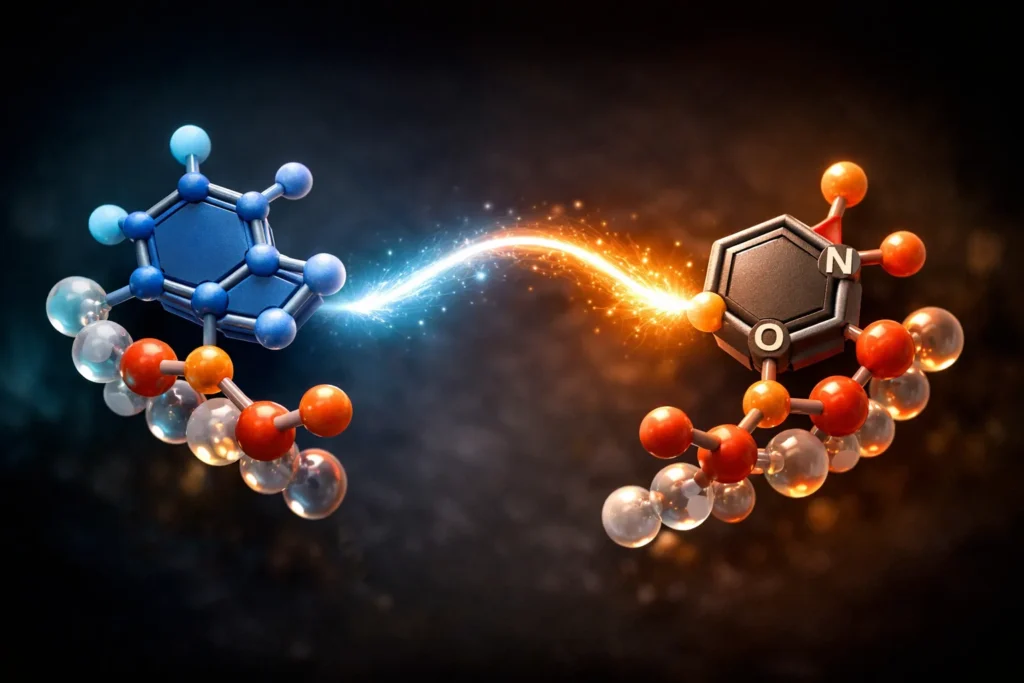
NAD+ exists in two primary forms within the cell: the oxidized form (NAD+) and the reduced form (NADH). This redox pair functions as an electron carrier, shuttling high-energy electrons between metabolic reactions. The ratio of NAD+ to NADH within a given cellular compartment influences the direction and rate of numerous metabolic processes.
Published research has established several key biochemical properties of NAD+ that make it a compound of significant interest in laboratory settings:
- Molecular structure and electron transfer capacity. NAD+ is a dinucleotide composed of two nucleotides joined through their phosphate groups. One nucleotide contains an adenine nucleobase, and the other contains nicotinamide. The nicotinamide ring is the reactive portion of the molecule, accepting a hydride ion (H-) during reduction to form NADH. This electron transfer capacity has been extensively characterized in enzyme kinetics studies and remains a cornerstone of bioenergetics research (Belenky et al., 2007, Cell).
- Compartmentalization within the cell. NAD+ pools are distributed across distinct cellular compartments, including the cytosol, mitochondria, and nucleus. Peer-reviewed literature indicates that these pools are regulated independently, and the transport mechanisms governing NAD+ movement between compartments remain an active area of investigation (Cambronne & Kraus, 2020, Trends in Biochemical Sciences).
- Dual functionality as coenzyme and substrate. Beyond its role as an electron carrier, NAD+ serves as a consumed substrate for enzymes such as sirtuins (SIRTs), poly(ADP-ribose) polymerases (PARPs), and CD38/CD157 ectoenzymes. This dual functionality distinguishes NAD+ from many other coenzymes and has driven substantial research interest across disciplines.
NAD+ in the Glycolytic Pathway
Glycolysis represents the first stage of glucose catabolism and takes place in the cytosol. During this ten-step enzymatic process, one molecule of glucose is converted into two molecules of pyruvate, yielding a net production of two ATP molecules and two NADH molecules per glucose.
NAD+ participates directly in the sixth step of glycolysis, catalyzed by glyceraldehyde-3-phosphate dehydrogenase (GAPDH). In this reaction, glyceraldehyde-3-phosphate is oxidized while NAD+ is reduced to NADH. Without sufficient cytosolic NAD+ availability, this reaction stalls, effectively halting glycolytic flux.
For researchers studying metabolic reprogramming in cultured cell lines, the cytosolic NAD+/NADH ratio is a well-documented variable that influences glycolytic rate and downstream metabolic outputs. Laboratory studies using NAD+ in controlled experimental conditions have examined how alterations in this ratio affect cellular metabolism under various in vitro parameters (Xiao et al., 2018, Molecular Cell).
NAD+ and the Tricarboxylic Acid (TCA) Cycle
Once pyruvate enters the mitochondrial matrix, it is converted into acetyl-CoA by the pyruvate dehydrogenase complex, a reaction that generates one NADH per pyruvate molecule. Acetyl-CoA then enters the TCA cycle (also referred to as the citric acid cycle or Krebs cycle), where it undergoes a series of eight enzymatic reactions.
Three of these reactions produce NADH from NAD+:
- Isocitrate dehydrogenase converts isocitrate to alpha-ketoglutarate while reducing NAD+ to NADH
- Alpha-ketoglutarate dehydrogenase converts alpha-ketoglutarate to succinyl-CoA while reducing NAD+ to NADH
- Malate dehydrogenase converts malate to oxaloacetate while reducing NAD+ to NADH
Across one full turn of the TCA cycle, three molecules of NADH are produced per acetyl-CoA. When combined with the NADH generated during pyruvate oxidation, the mitochondrial matrix accumulates a significant pool of NADH that carries high-energy electrons toward the electron transport chain.
Published research has demonstrated that the mitochondrial NAD+ pool plays a rate-limiting role in TCA cycle throughput. In in vitro models, manipulating mitochondrial NAD+ availability has been shown to affect the velocity of NAD+-dependent dehydrogenases within the cycle .
The Electron Transport Chain and Oxidative Phosphorylation
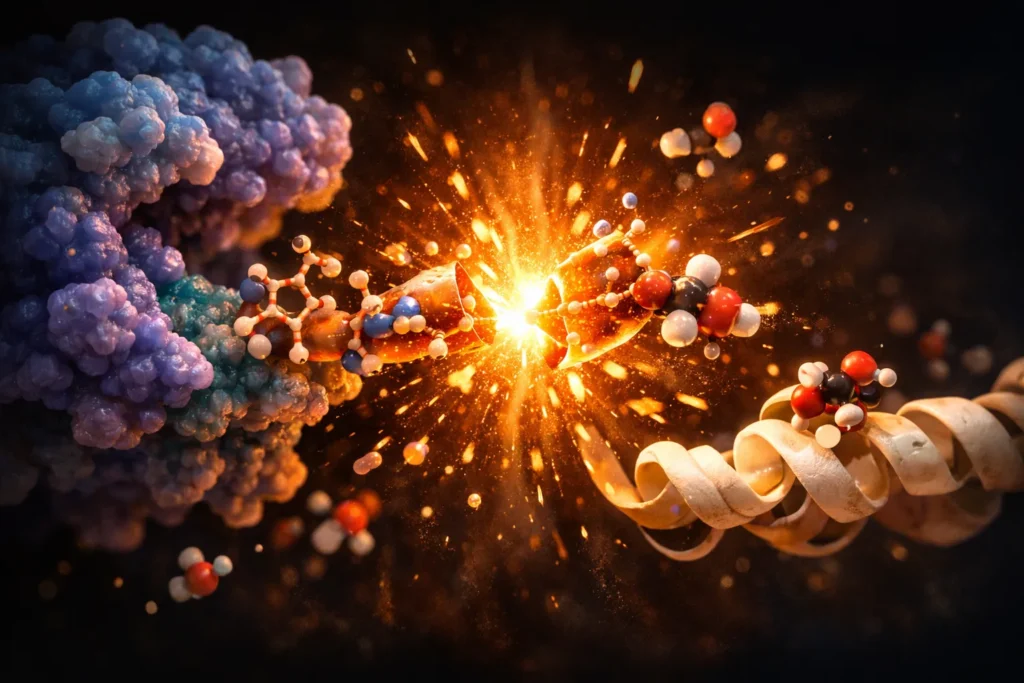
The electron transport chain (ETC) represents the primary mechanism by which cells convert the energy stored in NADH (and FADH2) into ATP. Located in the inner mitochondrial membrane, the ETC consists of four protein complexes (I through IV) and ATP synthase (sometimes designated Complex V).
Complex I (NADH:ubiquinone oxidoreductase) serves as the entry point for electrons carried by NADH. At this complex, NADH is oxidized back to NAD+, and the electrons are transferred to ubiquinone (coenzyme Q10). This electron transfer drives the pumping of four protons (H+) across the inner mitochondrial membrane, contributing to the electrochemical gradient known as the proton motive force.
The regeneration of NAD+ at Complex I is a critical step for sustaining mitochondrial metabolism. Without efficient NAD+ recycling at the ETC, the mitochondrial NAD+ pool would become depleted as NADH, and TCA cycle activity would slow. Research into Complex I activity and its relationship to NAD+ turnover remains a significant focus within mitochondrial bioenergetics (Hirst, 2013, Annual Review of Biochemistry).
The proton gradient generated across Complexes I, III, and IV ultimately drives ATP synthase, which catalyzes the phosphorylation of ADP to ATP. This process, oxidative phosphorylation, accounts for the majority of ATP produced in aerobic organisms and is directly dependent on the continuous cycling of NAD+/NADH.
NAD+ and Sirtuin Signaling in Research Models
Sirtuins (SIRT1 through SIRT7 in mammals) are a family of NAD+-dependent deacylases and ADP-ribosyltransferases. Unlike the metabolic enzymes discussed above, sirtuins do not simply use NAD+ as a reversible electron carrier. Instead, they consume NAD+ as a co-substrate, cleaving it during the deacetylation of target proteins.
This consumptive relationship means that sirtuin activity is directly linked to NAD+ availability. In in vitro research models, this connection has been extensively studied:
SIRT1 and SIRT3 have drawn significant attention in published literature for their roles in mitochondrial biogenesis and metabolic regulation in cell-based assay systems. SIRT3, localized to the mitochondrial matrix, has been shown to deacetylate several TCA cycle enzymes and ETC components, modulating their activity in laboratory settings (Lombard et al., 2007, Molecular and Cellular Biology).
SIRT1 activity in cellular models has been correlated with the expression of genes involved in mitochondrial function and biogenesis. In experimental conditions, researchers have investigated how NAD+ availability influences SIRT1-mediated deacetylation of transcription factors and coactivators relevant to energy metabolism (Cantó et al., 2009, Nature).
For academic researchers, the sirtuin-NAD+ axis represents a well-documented signaling interface where metabolic status intersects with gene regulation. Investigating this interface in vitro requires reliable access to research-grade NAD+ for use in enzymatic assays, cell culture experiments, and biochemical reconstitution studies.
NAD+ Biosynthesis Pathways: Context for Research Design
Understanding how cells synthesize and recycle NAD+ is essential for researchers designing experiments that involve manipulating intracellular NAD+ levels. Published literature describes three primary biosynthetic routes:
The de novo pathway (from tryptophan). Also known as the kynurenine pathway, this route converts the essential amino acid L-tryptophan into NAD+ through a multi-step enzymatic process. While functional in many cell types, this pathway has limited throughput in most tissues studied in vitro.
The Preiss-Handler pathway (from nicotinic acid). This three-step pathway converts nicotinic acid (a form of vitamin B3) into NAD+ via nicotinic acid mononucleotide (NaMN) and nicotinic acid adenine dinucleotide (NaAD+). It has been characterized extensively in hepatic cell lines and microbial models.
The salvage pathway (from nicotinamide). The most active NAD+ recycling route in mammalian cells, this pathway converts nicotinamide (a byproduct of sirtuin and PARP activity) back into NAD+ via nicotinamide mononucleotide (NMN). The rate-limiting enzyme in this pathway, nicotinamide phosphoribosyltransferase (NAMPT), has become a significant research target in bioenergetics and cell biology (Revollo et al., 2004, Journal of Biological Chemistry).
Researchers investigating mitochondrial energy metabolism should consider these biosynthetic pathways when designing in vitro protocols, as the choice of cell type, culture medium composition, and experimental timeline can all influence endogenous NAD+ availability.
NAD+ and Redox Homeostasis in Experimental Systems
Beyond its roles in energy metabolism and sirtuin signaling, NAD+ participates in the maintenance of cellular redox balance. The NAD+/NADH ratio reflects the overall oxidation-reduction state of the cell and influences a wide range of biochemical processes.
In laboratory research, measuring the NAD+/NADH ratio has become a standard approach for assessing metabolic status in cultured cells and tissue samples. Published methodologies include enzymatic cycling assays, HPLC-based quantification, and genetically encoded fluorescent biosensors (Hung et al., 2011, Cell Metabolism).
NAD+ also serves as a precursor for NADP+ (nicotinamide adenine dinucleotide phosphate), which is phosphorylated by NAD+ kinases. The NADP+/NADPH pair plays a central role in anabolic reactions and antioxidant defense systems, particularly through its involvement with glutathione reductase and thioredoxin reductase.
For researchers working in oxidative stress biology, understanding NAD+ dynamics and their downstream effects on NADP+/NADPH pools is essential for accurate experimental design and data interpretation.
Applications of NAD+ in Laboratory Research Settings
Research-grade NAD+ is utilized across a broad range of in vitro and biochemical applications. Published literature documents its use in:
Enzymatic activity assays. NAD+ serves as a required co-substrate for dehydrogenases, sirtuins, PARPs, and other enzyme families. Researchers use exogenous NAD+ to reconstitute enzymatic reactions, measure kinetic parameters, and screen for modulators of enzyme activity.
Mitochondrial respiration studies. In isolated mitochondria preparations and permeabilized cell assays, NAD+ (and its reduced counterpart NADH) is used to drive electron transport chain activity and measure oxygen consumption rates using platforms such as the Seahorse XF Analyzer or Oroboros Oxygraph.
Cell culture-based metabolic studies. Researchers investigating NAD+ metabolism in cultured cells may supplement growth media with NAD+ or its precursors to examine effects on cellular bioenergetics, proliferation, or stress responses under controlled in vitro conditions.
Structural biology and crystallography. NAD+ is co-crystallized with target proteins to resolve binding site architecture and understand enzyme mechanisms at atomic resolution.
Frequently Asked Questions (FAQ)
What is NAD+ and why is it studied in cellular energy metabolism?
NAD+ (Nicotinamide Adenine Dinucleotide) is a coenzyme found in all living cells that participates in redox reactions central to energy metabolism. Researchers study NAD+ because it serves as an electron carrier in glycolysis, the TCA cycle, and oxidative phosphorylation, and also functions as a consumed substrate for signaling enzymes such as sirtuins and PARPs.
How does NAD+ function within mitochondrial pathways?
Within the mitochondria, NAD+ accepts electrons from metabolic intermediates during the TCA cycle, forming NADH. NADH then donates these electrons to Complex I of the electron transport chain, regenerating NAD+ and contributing to the proton gradient that drives ATP production through oxidative phosphorylation.
What is the relationship between NAD+ and sirtuins in research contexts?
Sirtuins are a family of NAD+-dependent enzymes that consume NAD+ during protein deacetylation reactions. In in vitro research models, sirtuin activity has been shown to depend directly on NAD+ availability, making the NAD+-sirtuin axis a well-studied interface in metabolic signaling research.
What are the primary biosynthesis pathways for NAD+?
Published literature describes three main routes: the de novo pathway from tryptophan, the Preiss-Handler pathway from nicotinic acid, and the salvage pathway from nicotinamide. The salvage pathway is considered the most active NAD+ recycling mechanism in mammalian cells.
How is research-grade NAD+ used in laboratory settings?
Research-grade NAD+ is used in enzymatic activity assays, mitochondrial respiration studies with isolated mitochondria or permeabilized cells, cell culture-based metabolic experiments, and structural biology applications including protein crystallography.