❌ Not for Human Consumption
●
✅ For Research Use Only
●
All products are intended strictly for laboratory research purposes only
●
❌ Not for Human Consumption
●
✅ For Research Use Only
●
All products are intended strictly for laboratory research purposes only
●

BPC-157 Solubility And Delivery Vehicles In Research

Written By: Gary Hite, Research Content Writer
Reviewed By: Natalie Kunsman, M.D., Board-Certified Physician
Last Reviewed: August 6, 2026
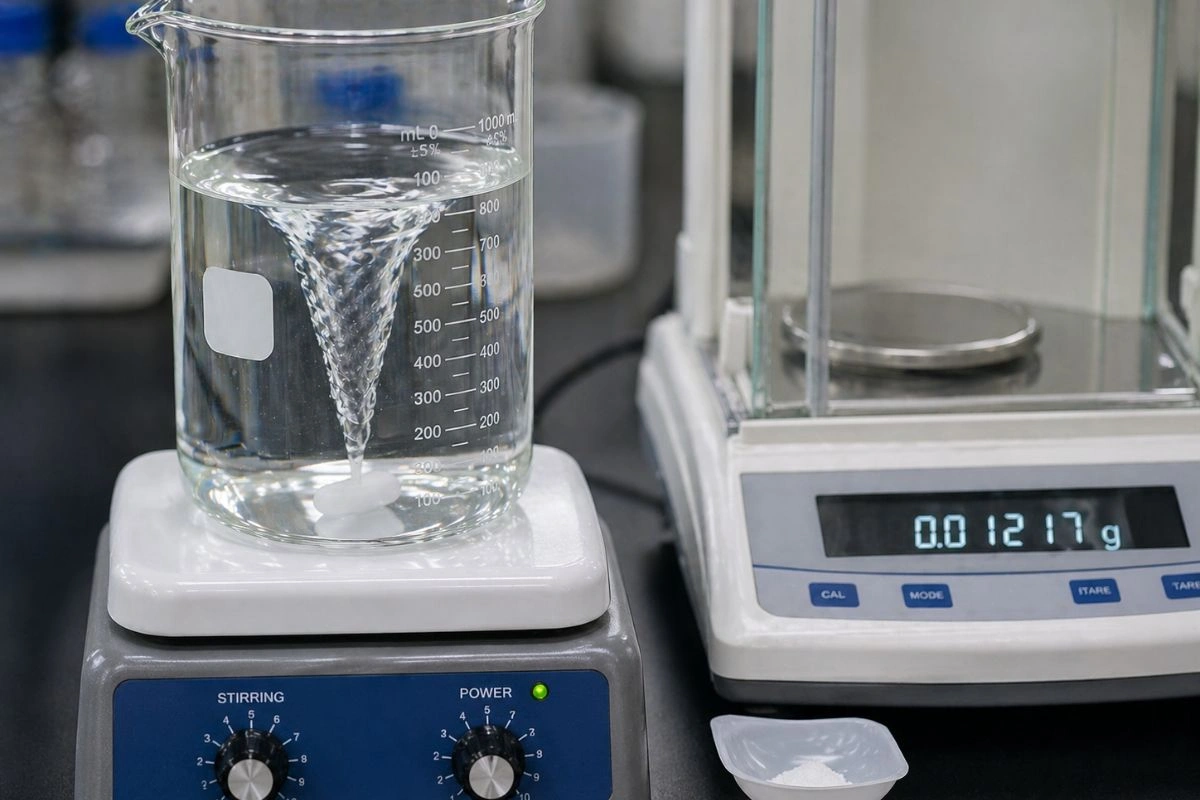
Solubility is one of the most fundamental variables in peptide science. A peptide’s behavior in solution directly influences its stability, bioavailability in assay systems, and the reproducibility of experimental outcomes. For researchers working with BPC-157, understanding solubility characteristics is not a secondary consideration. It is a prerequisite for generating reliable data.
BPC-157, a synthetic pentadecapeptide consisting of 15 amino acids, has appeared in a growing body of preclinical research literature. Its solubility profile and interaction with various delivery vehicles have been subjects of laboratory investigation, and researchers designing new studies benefit from reviewing these findings before finalizing their own protocols.
This article surveys the key aspects of BPC-157 solubility and delivery vehicle research that professional investigators should evaluate when planning laboratory work with this peptide.
Disclaimer: BPC-157 is sold strictly for research purposes only. This compound is not intended for human consumption, therapeutic application, or diagnostic use. The following content is provided solely for educational and informational purposes directed at professional researchers and academic investigators. Nothing in this article constitutes medical advice or a claim of therapeutic benefit.
The Amino Acid Composition and Its Influence on Solubility
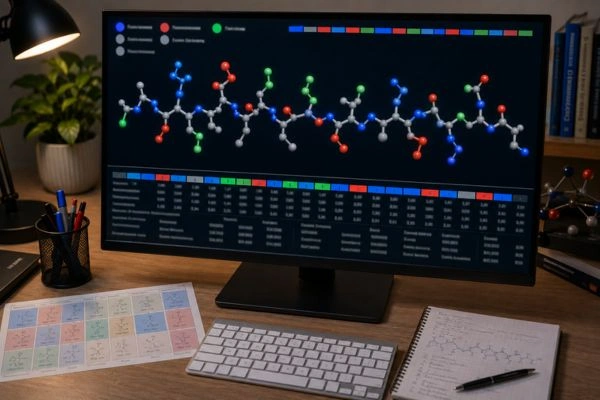
The solubility of any peptide is determined in large part by its amino acid sequence. Hydrophilic residues promote aqueous solubility, while hydrophobic residues can reduce it. BPC-157 contains a mix of charged, polar, and nonpolar amino acid residues, which gives it a distinct solubility profile that researchers must account for during reconstitution and assay preparation.
Published research has generally indicated that BPC-157 demonstrates favorable solubility in aqueous environments, particularly in water and saline-based solutions. However, solubility is not a fixed property. It varies depending on pH, temperature, ionic strength, and the presence of co-solutes in the preparation buffer. Researchers should not assume uniform solubility across all experimental conditions without performing independent verification under their specific laboratory parameters.
Practical steps for assessing solubility in the lab include visual inspection of the reconstituted solution for clarity and absence of particulates, turbidity measurements using UV-Vis spectrophotometry at appropriate wavelengths, dynamic light scattering (DLS) to detect aggregation events that may not be visible to the eye, and concentration verification through reverse-phase HPLC to confirm that the expected amount of peptide is actually in solution.
pH-Dependent Solubility Behavior
One of the most frequently discussed variables in BPC-157 solubility research is pH sensitivity. Peptides containing ionizable amino acid side chains will exhibit different charge states at different pH values, and these charge states directly affect solubility.
Research literature has explored BPC-157 behavior across a range of pH conditions. In general, peptides with a net charge (either positive or negative) tend to be more soluble than those near their isoelectric point, where the net charge approaches zero and intermolecular attraction can promote aggregation or precipitation.
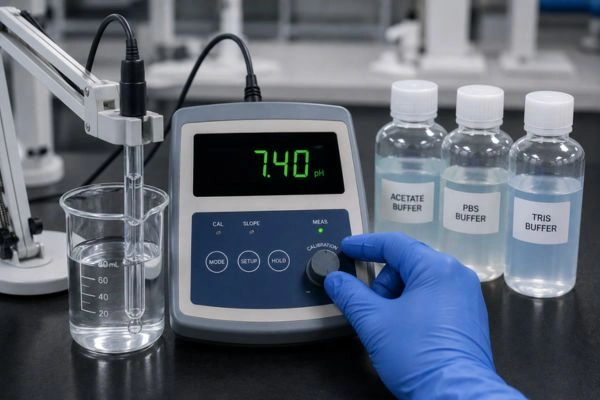
For researchers preparing BPC-157 solutions, this means that buffer selection is a critical experimental decision. Phosphate-buffered saline (PBS) at physiological pH, acetate buffers at lower pH, and Tris-based buffers at slightly alkaline pH each create different ionic environments that can shift solubility outcomes. Investigators should document the exact buffer composition, pH, and preparation method used in every experiment to support reproducibility and cross-study comparisons.

Delivery Vehicle Studies in the Research Literature
Beyond basic aqueous solubility, a growing area of interest in the research literature involves the study of delivery vehicles designed to modify peptide behavior in controlled laboratory systems. Delivery vehicle research examines how different carrier materials, formulations, and encapsulation strategies affect peptide stability, release kinetics, and interaction with biological substrates in vitro.
Several categories of delivery vehicles have been explored in preclinical peptide research. While not all of the following have been tested specifically with BPC-157, they represent the broader landscape of approaches that researchers in this field evaluate.
Hydrogel-Based Systems
Hydrogels are three-dimensional polymer networks that absorb significant amounts of water while maintaining structural integrity. Researchers have investigated hydrogels as potential peptide carriers because of their tunable degradation rates, ability to sustain peptide release over time, and compatibility with aqueous peptide solutions. Laboratory studies examine how peptide encapsulation efficiency, release profiles, and structural integrity change across different hydrogel compositions.
Nanoparticle Encapsulation
Polymeric and lipid-based nanoparticles have been studied as delivery vehicles for various peptides in research settings. Nanoparticle encapsulation can protect peptides from enzymatic degradation in assay systems and modify release kinetics. Researchers working with BPC-157 may consider nanoparticle formulations when studying how encapsulation affects peptide stability or activity in cell-based assays.
Liposomal Delivery
Liposomes are spherical vesicles composed of lipid bilayers that can encapsulate hydrophilic compounds in their aqueous core. Liposomal formulations have a long history in peptide delivery research. For BPC-157, liposomal encapsulation represents a potential avenue for studying how lipid-based carriers influence peptide behavior in controlled in vitro conditions.
Polymer Conjugation
Conjugating peptides to biocompatible polymers such as polyethylene glycol (PEG) is another strategy explored in the delivery vehicle literature. PEGylation studies examine how polymer attachment affects peptide solubility, hydrodynamic size, and interaction kinetics with target substrates. Researchers evaluating BPC-157 in this context should carefully control for the impact of the polymer itself on assay readouts.
Stability Considerations Across Delivery Formats
Regardless of the delivery vehicle selected, peptide stability remains a central concern. BPC-157, like all synthetic peptides, is susceptible to degradation through hydrolysis, oxidation, and aggregation. Each delivery vehicle introduces its own set of stability variables.
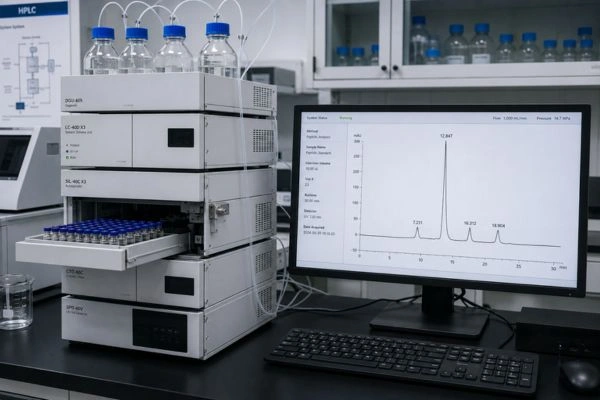
Researchers should perform stability assessments at defined time points using analytical methods such as HPLC for purity and degradation product detection, mass spectrometry for molecular weight confirmation and identification of modification events, circular dichroism (CD) spectroscopy for secondary structure monitoring, and accelerated stability testing under elevated temperature and humidity conditions to predict longer-term behavior.
Documenting stability data alongside solubility and delivery vehicle parameters creates a comprehensive dataset that supports both internal reproducibility and the ability of other research groups to build on published findings.
Research Use Notice: BPC-157 is intended for research purposes only and is not approved for human consumption by the FDA or any regulatory authority.
Best Practices for Reconstitution and Storage
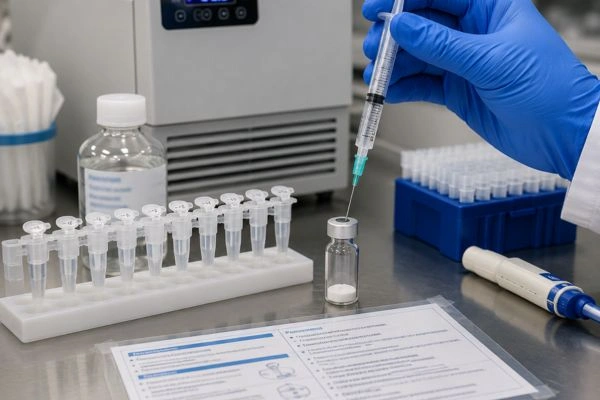
For researchers handling BPC-157 in the laboratory, a few standard practices help maintain peptide quality from the point of reconstitution through the final experimental time point.
Store lyophilized peptide at the temperature recommended by the supplier, typically at or below minus twenty degrees Celsius. Reconstitute using the buffer most appropriate for the planned assay, and prepare only the volume needed for immediate use to minimize freeze-thaw cycles. Aliquot reconstituted solutions into single-use volumes when possible. Verify peptide integrity before and after storage using HPLC or mass spectrometry, and record all handling conditions in the laboratory notebook.
Building a Stronger Foundation for BPC-157 Research
Solubility and delivery vehicle selection are not peripheral concerns in peptide research. They sit at the center of experimental design and directly influence the quality and interpretability of laboratory data. By reviewing the existing literature, validating solubility under specific conditions, and rigorously evaluating delivery vehicle options, researchers working with BPC-157 position themselves to produce data that advances the field.
Approach every reconstitution, every buffer choice, and every delivery system evaluation with the same precision you bring to your primary assay. The strength of your results depends on it.
Conclusion
Solubility and delivery vehicle selection are not downstream detailS, they are upstream decisions that determine whether your BPC-157 data holds up under scrutiny. Treat every reconstitution step as an experiment in itself. Verify solubility under your exact buffer composition, pH, and temperature conditions using HPLC, UV-Vis spectrophotometry, or dynamic light scattering rather than relying on general literature values. When evaluating delivery vehicles, whether hydrogels, nanoparticles, liposomes, or polymer conjugates, isolate the carrier’s influence on assay readouts by running vehicle-only controls alongside peptide-loaded formulations. Perform stability assessments at defined time points across every delivery format, and document degradation profiles with the same rigor you apply to primary endpoints. Aliquot reconstituted solutions into single-use volumes, minimize freeze-thaw cycles, and confirm peptide integrity before and after storage. Every buffer choice, every encapsulation decision, and every storage protocol either protects or compromises the data your research depends on. Act accordingly.
Final Disclaimer: BPC-157 is sold exclusively for laboratory research purposes. It is not a drug, supplement, food product, or therapeutic agent. This compound is not intended for human consumption and has not been evaluated or approved by the FDA for any clinical application. All handling, storage, use, and disposal of this compound must comply with applicable institutional, local, state, and federal regulations. This content is directed solely at licensed researchers and academic professionals.
Frequently Asked Questions
What is the best solvent for reconstituting BPC-157 in laboratory settings?
BPC-157 generally demonstrates favorable solubility in aqueous environments, particularly sterile water and saline-based solutions. However, do not default to a single solvent across all protocols. Select your reconstitution buffer based on the specific assay you are running, phosphate-buffered saline for physiological pH conditions, acetate buffers for lower pH requirements, or Tris-based buffers for slightly alkaline environments. Always verify actual solubility under your chosen conditions using visual inspection, turbidity measurements, and reverse-phase HPLC concentration confirmation.
How does pH affect BPC-157 solubility, and how should I account for it?
BPC-157 contains ionizable amino acid side chains that shift charge states across different pH values. The peptide is generally more soluble when it carries a net charge and less soluble near its isoelectric point, where reduced charge promotes aggregation or precipitation. Document the exact buffer composition, pH value, and preparation method for every experiment. Test solubility at your target pH independently rather than extrapolating from studies conducted under different conditions.
Which delivery vehicles are most commonly studied alongside BPC-157 in preclinical research?
The four primary categories appearing in the peptide delivery literature are hydrogel-based systems, polymeric and lipid-based nanoparticles, liposomal formulations, and polymer conjugates such as PEGylated compounds. Each vehicle modifies peptide stability, releases kinetics, and substrates interaction differently. When selecting a delivery vehicle, match it to your specific research question and always include vehicle-only controls to distinguish carrier effects from peptide activity in your assay results.
How should I assess BPC-157 stability across different delivery formats?
Perform stability assessments at predefined time points using multiple analytical methods: HPLC for purity and degradation product detection, mass spectrometry for molecular weight confirmation, and circular dichroism spectroscopy for secondary structure monitoring. Run accelerated stability testing under elevated temperature and humidity conditions to predict longer-term behavior. Document stability data alongside all solubility and delivery vehicle parameters to build a dataset that supports reproducibility within your lab and across the broader research community.
What storage and handling practices protect BPC-157 integrity after reconstitution?
Store lyophilized peptide at or below negative twenty degrees Celsius as recommended by the supplier. Reconstitute only the volume required for immediate use and aliquot into single-use volumes to minimize freeze-thaw cycles, which accelerate degradation. Verify peptide integrity using HPLC or mass spectrometry both before and after storage. Record every handling condition, reconstitution buffer, storage temperature, aliquot volume, freeze-thaw count in your laboratory notebook to maintain full traceability across experiments.