❌ Not for Human Consumption
●
✅ For Research Use Only
●
All products are intended strictly for laboratory research purposes only
●
❌ Not for Human Consumption
●
✅ For Research Use Only
●
All products are intended strictly for laboratory research purposes only
●

Reconstitution And Storage Protocols For DAC-Modified Peptides In Research Settings

Written By: Gary Hite, Research Content Writer
Reviewed By: Natalie Kunsman, M.D., Board-Certified Physician
Last Reviewed: August 12, 2026
A DAC-modified peptide can lose 15 to 20 percent of its maleimide reactivity within four hours of reconstitution in standard phosphate buffer if the pH drifts above 7.5. That single variable, ignored in most generic peptide handling protocols, compromises binding data before the experiment starts.
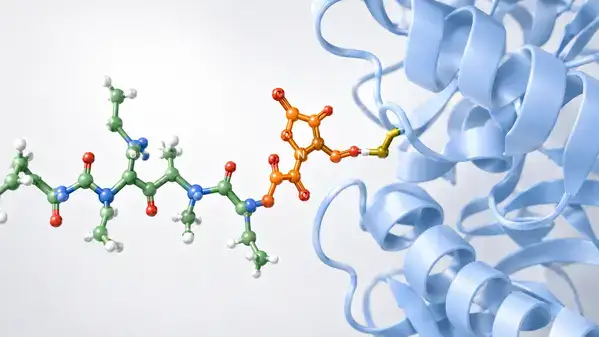
DAC (Drug Affinity Complex) modification attaches a maleimidopropionic acid (MPA) linker to a peptide sequence, enabling covalent conjugation to free cysteine residues on serum albumin in research models. The chemistry produces a research compound with substantially extended functional half-life. CJC-1295 DAC, the prototype DAC-modified GHRH analog studied in laboratory settings since 2005, illustrates the principle clearly: in vitro half-life extends from roughly 30 minutes for the unmodified peptide to approximately 8 days for the DAC variant.
Disclaimer: This protocol guide covers reconstitution and storage for DAC-modified research compounds. All material discussed is for in vitro laboratory research and academic study only. These compounds are not for human consumption, and no medical claims are made or implied. This content is intended solely for qualified researchers and academic professionals operating within appropriately equipped laboratory environments.
Why DAC peptides break standard protocols
Most peptide reconstitution guides treat lyophilized compounds the same way: add bacteriostatic water, swirl, store cold. DAC-modified peptides need different thinking because the maleimide group is chemically reactive and time-sensitive in solution.
Three factors complicate handling:
The maleimide linker hydrolyzes in aqueous solution at a rate dependent on pH and temperature. Above pH 7.5, hydrolysis accelerates measurably. A hydrolyzed maleimide can’t conjugate with albumin cysteines, which defeats the purpose of the modification.
Thiol-containing reducing agents (DTT, beta-mercaptoethanol, TCEP) common in many research buffers will quench maleimide reactivity within minutes. A buffer prep that works fine for standard peptides destroys DAC functionality.
The peptide must remain structurally stable long enough for albumin conjugation in the research model. That requires a reconstitution medium preserving both peptide structure and linker reactivity.
Reconstitution protocol
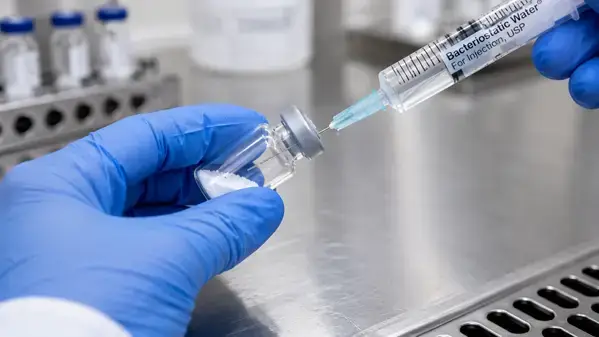
Bacteriostatic water containing 0.9 percent benzyl alcohol serves as the standard reconstitution medium for DAC-modified peptides in research applications. Sterile water also works but offers no antimicrobial activity for stock solutions. Acetic acid solutions, sometimes used for hydrophobic peptides, slowly degrade peptide bonds during extended storage and should be avoided here.
The procedure:
- Bring the lyophilized vial and reconstitution solvent to room temperature before opening. Cold vials trap condensation that introduces water before you control the final volume.
- Calculate target concentration based on downstream assay needs. For most laboratory binding studies, 1 to 5 milligrams per milliliter provides workable stock for serial dilution.
- Wipe both vial stoppers with 70 percent isopropanol. Allow to dry completely.
- Draw bacteriostatic water with a sterile syringe and inject slowly against the inside wall of the peptide vial. Never inject directly onto the lyophilized pellet, which causes foaming and aggregation.
- Let the vial rest for 2 to 3 minutes. Swirl gently in a circular motion. Do not shake or vortex. Mechanical shear damages peptide structure and can break disulfide bonds.
- Inspect for complete dissolution. The solution should appear clear with no visible particulates. If particulates persist, centrifuge briefly at 5,000 rpm for 30 seconds and use the supernatant.
- Record the date, time, and concentration on the vial label. Functional integrity of the maleimide group tracks from this moment forward.
Storage parameters
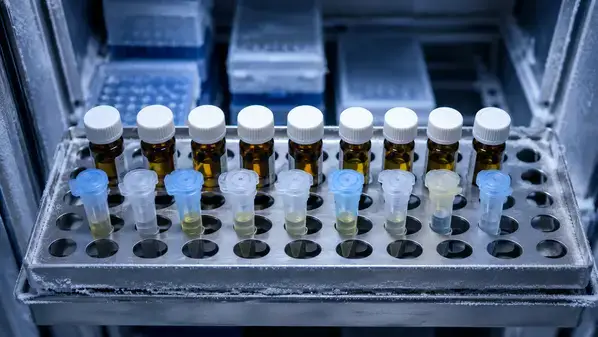
Lyophilized DAC-modified peptides remain stable at minus 20 degrees Celsius for approximately 24 months in their original sealed vials. Short-term storage at 4 degrees Celsius (up to 30 days) works for compounds in active use, though degradation accelerates noticeably past the 60 day mark at this temperature.
Reconstituted material needs more careful handling. Store working stocks at 2 to 8 degrees Celsius if planned use falls within 14 days. For longer holds, aliquot into single-use volumes and freeze at minus 20 or minus 80 degrees Celsius. The aliquot strategy matters because freeze-thaw cycles damage DAC peptides faster than they damage standard peptides. Three thaw cycles represents the practical maximum before maleimide reactivity drops below useful thresholds in most assay systems.
Wrap vials in foil or use amber glass containers. The maleimide group shows documented sensitivity to UV-A wavelengths that affects linker integrity over weeks of exposure to standard laboratory lighting.
Four protocol failures that wreck data
In published research and conversations with laboratory teams, the same reconstitution errors appear repeatedly:
Using buffers above pH 7.5 for reconstitution. Phosphate buffered saline (PBS) at pH 7.4 sits right at the edge of acceptable. Tris buffer at pH 8.0 accelerates maleimide hydrolysis dramatically. If a downstream assay requires higher pH, perform conjugation chemistry first at neutral pH, then transfer the buffer.
Including reducing agents in stock preparation. Researchers accustomed to working with disulfide-containing peptides sometimes default to adding DTT during reconstitution. This destroys DAC peptide functionality within minutes.
Vigorous mixing. Vortexing a freshly reconstituted DAC peptide stock generates shear forces that fragment the peptide backbone. Gentle inversion or swirling preserves structural integrity.
Inadequate aliquoting. Reconstituting a single large stock and repeatedly accessing it for daily experiments accumulates freeze-thaw damage that compounds across the study timeline. Aliquot at reconstitution, not later.
Validation before assay use
Functional validation matters more for DAC-modified peptides than for standard research peptides because no visual inspection reveals whether the maleimide group remains active. Two practical tests work well in academic settings.
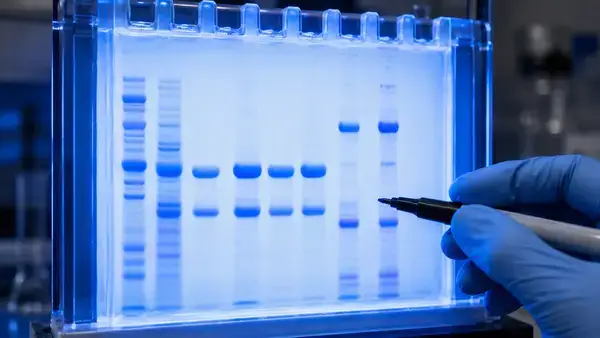
Albumin conjugation assay: mix a known concentration of reconstituted DAC peptide with purified bovine serum albumin (BSA) at a 2 to 1 molar ratio. Run SDS-PAGE after 30 minutes. A successful conjugation shifts the apparent molecular weight by approximately the peptide mass plus the albumin mass. Free peptide and unconjugated albumin should diminish proportionally on the gel.
Mass spectrometry: LC-MS confirms intact peptide mass and detects maleimide hydrolysis products. A mass shift of plus 18 daltons indicates hydrolyzed maleimide. For laboratories without in-house MS capacity, sending a sample to a core facility before a full study cycle protects months of downstream work.
Conclusion
DAC-modified peptides reward laboratories that build protocol discipline into the first hour of handling rather than the third week of analysis. Set up reconstitution stations with pre-equilibrated bacteriostatic water, dedicated thiol-free buffer stocks, and pre-labeled aliquot tubes before opening a single vial. Document pH measurements of every buffer in the workflow, not just the final assay buffer. Run an albumin conjugation check on each new lot before committing it to a primary study, since lot-to-lot maleimide content can vary by 5 to 10 percent even from the same supplier. Most variance in DAC peptide research data traces back to handling decisions made in minutes one through ten of reconstitution, not to the peptide chemistry itself. Researchers who internalize this control roughly 80 percent of the failure modes that compromise downstream binding studies, leaving the actual experimental question as the genuine source of uncertainty.
FAQs
What buffer should I use to reconstitute DAC-modified peptides?
Bacteriostatic water containing 0.9 percent benzyl alcohol is the standard reconstitution medium for research applications. Sterile water works for short-term protocols but offers no antimicrobial protection in stock solutions. Avoid phosphate or Tris buffers above pH 7.5 at the reconstitution step, since maleimide hydrolysis accelerates rapidly in those conditions. If the downstream assay requires a higher pH buffer, perform albumin conjugation first at pH 7.0 to 7.4, then transfer the conjugated product into the assay environment.
How many freeze-thaw cycles can a reconstituted DAC peptide tolerate?
Three cycles is the practical maximum before maleimide reactivity drops below useful thresholds in most binding assays. Each cycle damages the peptide backbone and reduces conjugation efficiency measurably. The fix is to aliquot at the moment of reconstitution into single-use volumes matched to daily experimental needs. A 1 milligram per milliliter stock split into 25 microliter aliquots covers most laboratory protocols without forcing repeated thaws on the same tube.
Why do reducing agents like DTT destroy DAC peptide function?
The maleimide group on a DAC-modified peptide reacts covalently with free thiol groups. DTT, beta-mercaptoethanol, and TCEP all contain or generate thiols that quench the maleimide before it can conjugate with albumin cysteines in the research model. Standard working concentrations of these reducing agents (1 to 10 millimolar DTT, for example) destroy DAC functionality within minutes. Keep all reconstitution and storage buffers thiol-free, and add reducing agents only to downstream steps that have no DAC conjugation requirement.
How long do lyophilized DAC peptides remain stable before reconstitution?
Lyophilized DAC-modified peptides typically hold stability at minus 20 degrees Celsius for approximately 24 months in their original sealed vials. Storage at 4 degrees Celsius works for active-use periods up to 30 days, but degradation accelerates noticeably past the 60 day mark at that temperature. Keep vials in their original packaging until the moment of reconstitution to limit cumulative moisture exposure from cap removal cycles.
How do I verify a reconstituted DAC peptide is still functionally active?Run an albumin conjugation assay before committing a stock to a primary study. Mix the DAC peptide with purified bovine serum albumin (BSA) at a 2 to 1 molar ratio and analyze by SDS-PAGE after 30 minutes at room temperature. A functional DAC peptide shifts the apparent molecular weight on the gel by approximately the combined peptide and albumin mass. LC-MS provides quantitative confirmation: a plus 18 dalton mass shift on the peptide signal indicates hydrolyzed maleimide and reduced conjugation capacity in the lot.