❌ Not for Human Consumption
●
✅ For Research Use Only
●
All products are intended strictly for laboratory research purposes only
●
❌ Not for Human Consumption
●
✅ For Research Use Only
●
All products are intended strictly for laboratory research purposes only
●

Sourcing High-Purity GLP-3R For Triple Agonist Receptor Studies: What Researchers Should Know

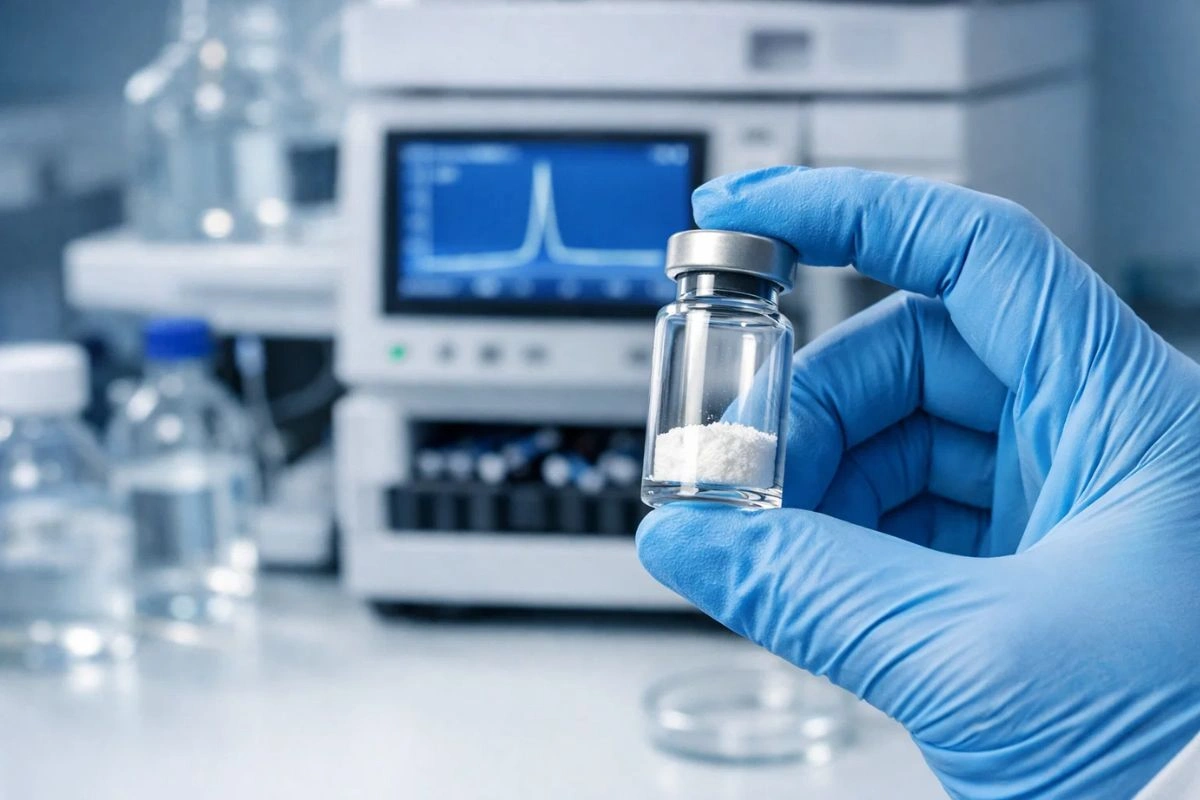
A 2% variance in peptide purity can produce a 15-20% swing in receptor binding affinity data and most researchers don’t catch the problem until they’re three months into a study with irreproducible results. That’s the reality of working with triple agonist receptor compounds like GLP-3R, where simultaneous activity across GLP-1, GIP, and glucagon receptor pathways makes purity a non-negotiable variable.
This isn’t a general overview of peptide sourcing. It’s a specific framework for evaluating GLP-3R suppliers, validating compound integrity before it enters your assay, and avoiding the procurement mistakes that derail multi-receptor agonist research timelines.
Disclaimer: GLP-3R is provided exclusively for use in controlled laboratory research settings by qualified professionals. This compound is not approved for human consumption, therapeutic use, or any clinical application. It is the responsibility of the purchasing researcher and their institution to ensure all procurement, handling, and experimental use complies with applicable local, state, and federal regulations, including FDA guidelines governing research-use compounds. Nothing in this article constitutes medical advice, therapeutic recommendation, or encouragement of off-label use.
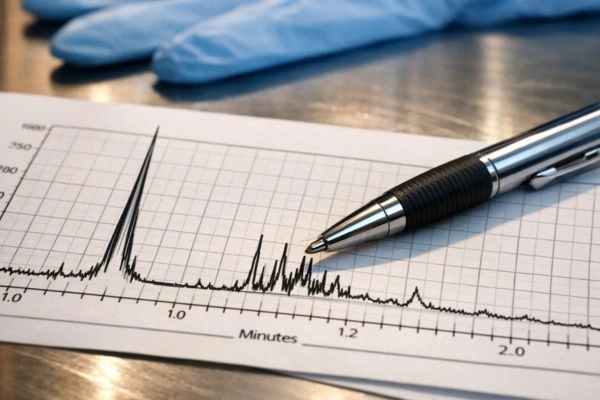
Why Triple Agonist Purity Standards Differ from Single-Target Compounds
Most peptide researchers default to the same vendor evaluation criteria regardless of what they’re studying. That approach falls apart with triple receptor agonists.
Single-target compounds give you a relatively straightforward signal-to-noise ratio. If your GLP-1 receptor agonist is 95% pure, the 5% impurity profile is unlikely to produce meaningful cross-receptor interference. You’ll see some noise, but your primary binding data stays interpretable.
GLP-3R changes that math entirely. Because the compound is designed to engage three distinct receptor subtypes simultaneously, impurities don’t just create noise, they can generate false positive binding signals at non-target receptors. A degradation byproduct that happens to show partial GIP receptor affinity will contaminate your dose-response curves in ways that look like genuine pharmacological activity. You won’t identify the problem from your primary data alone.
The practical threshold most triple agonist researchers have converged on is 98% or higher purity by HPLC, with a full impurity profile that identifies individual degradants above 0.5%. Anything below that introduces too many confounding variables for meaningful multi-receptor analysis.
Five Vendor Evaluation Criteria Specific to GLP-3R Procurement
Not every research compound supplier can handle triple agonist peptides competently. The synthesis is more complex, the analytical validation requires specialized methods, and the storage requirements are stricter. Here’s what to evaluate before placing an order.
1. Certificate Of Analysis Specificity
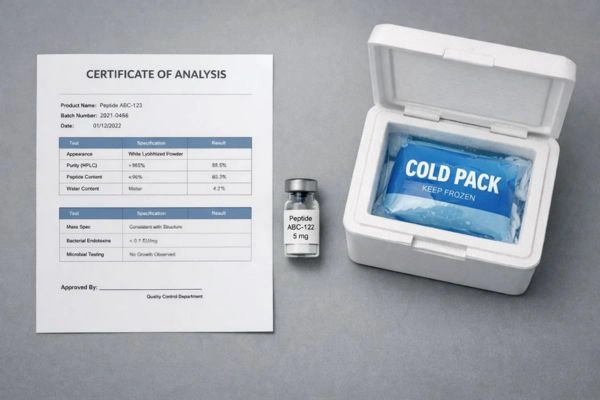
A CoA that lists only overall HPLC purity and molecular weight is insufficient for GLP-3R. You need individual impurity identification (not just “total impurities”), mass spectrometry confirmation of the primary sequence, and amino acid analysis showing correct ratios for the full peptide chain. If a vendor can’t provide these three data points per batch, they’re not doing adequate QC for a compound this complex.
2. Synthesis Method Transparency
Solid-phase peptide synthesis (SPPS) using Fmoc chemistry is standard, but the coupling strategy matters. GLP-3R’s longer chain length (typically 39+ residues depending on the analog) makes it susceptible to deletion sequences and incomplete couplings. Ask whether the vendor uses microwave-assisted synthesis, which reduces aggregation during longer peptide builds. Vendors who won’t discuss their synthesis approach in basic terms are a red flag.
3. Batch-To-Batch Consistency Data
Request CoAs from at least three separate production batches. Compare retention times, purity percentages, and impurity profiles. If purity varies by more than 1.5% across batches, the vendor’s process control isn’t tight enough for receptor binding studies where you need reproducible baselines.
4. Storage And Shipping Protocols
GLP-3R degrades faster than most researchers expect. Lyophilized form under argon or nitrogen at -20C is the minimum standard. Any vendor shipping peptides at ambient temperature or without desiccant is compromising your compound before it reaches your lab. Ask specifically about cold chain documentation.
5. Regulatory Compliance Documentation
The supplier should provide clear documentation that the compound is manufactured, labeled, and sold exclusively for research use. This includes proper labeling (“Not for human consumption”), material safety data sheets, and for US based procurement, documentation consistent with FDA regulatory frameworks for research-use-only compounds.
Reconstitution and Handling Protocol for Maintaining GLP-3R Compound Integrity
Even high-purity GLP-3R will degrade rapidly if reconstituted or stored incorrectly. The triple agonist structure is particularly sensitive to oxidation at methionine residues and deamidation at asparagine positions.
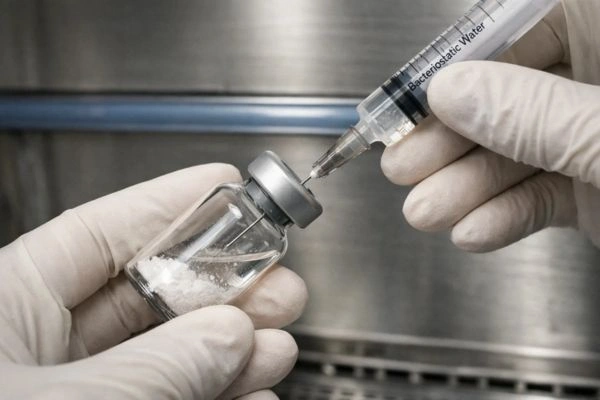
Use bacteriostatic water or sterile PBS at pH 7.4 for reconstitution. Avoid acidic buffers below pH 5.0 unless your specific assay requires them, the glucagon receptor-binding region of most triple agonist analogs shows accelerated degradation under acidic conditions. Reconstitute slowly by letting the solvent run down the vial wall rather than injecting directly onto the lyophilized cake.
Once reconstituted, aliquot immediately into single-use volumes. Every freeze-thaw cycle measurably reduces active compound concentration. In stability testing, reconstituted GLP-3R stored at 4C typically shows detectable degradation within 48-72 hours. At -20C, aliquoted solutions remain stable for approximately 30 days. At -80C, you can extend that to 90 days with minimal activity loss.
Don’t skip the post-reconstitution verification step. Running a quick analytical HPLC on your working solution adds an hour to your prep time but catches degradation issues before they contaminate a week’s worth of assay data.
The Most Common Procurement Mistake in Triple Agonist Research
Here’s something that surprises even experienced peptide researchers: the biggest source of data variability in GLP-3R studies isn’t vendor quality or handling errors. It’s using the same lot across studies that span different time periods without re-verifying compound integrity.
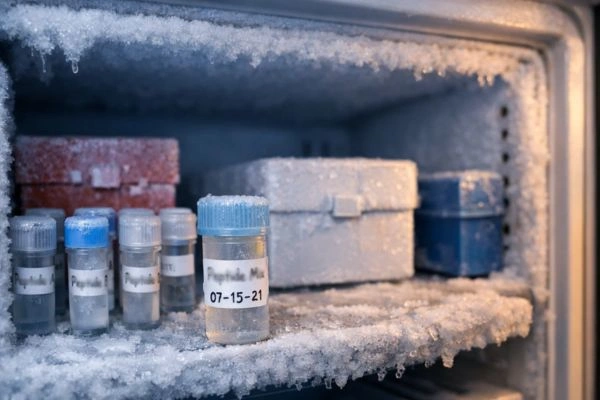
A research group can purchase a high-purity batch, validate it thoroughly, produce excellent initial data and then continue drawing from that same stock six months later assuming it’s unchanged. Lyophilized peptides are stable, but they’re not inert. Trace moisture ingress, repeated vial openings, and cumulative temperature excursions during freezer access all contribute to gradual degradation that won’t be visible to the eye.
The solution is straightforward but rarely followed: re-run analytical QC on any stock that’s more than 90 days from the original CoA date, regardless of storage conditions. Treat the CoA as a snapshot of the compound at the time of testing, not a permanent guarantee of purity.
Building a GLP-3R Qualified Supplier Relationship
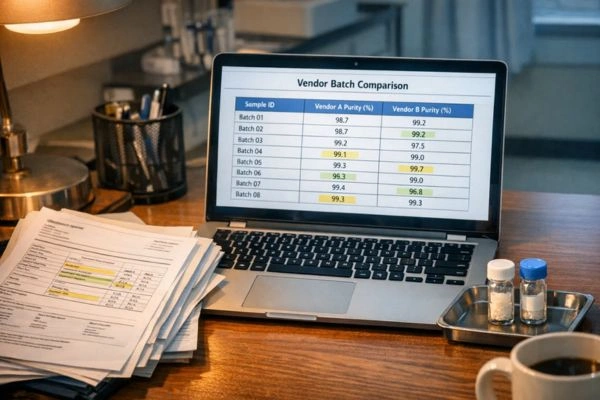
One-off purchasing is the most expensive way to source GLP-3R in the long run. Researchers who establish ongoing relationships with qualified vendors gain access to batch reservation (critical for longitudinal studies requiring lot consistency), priority synthesis scheduling, and often custom purity specifications above the standard catalog offering.
When initiating a supplier relationship, request a small trial quantity first typically 5-10mg, with full analytical documentation. Run your own independent verification against the vendor’s CoA. If the data matches within acceptable tolerance (less than 1% purity deviation, consistent impurity profile), you’ve got a supplier worth scaling with.
Document everything. Your institution’s compliance office and any funding body reviewing your procurement records will want to see a clear chain from vendor qualification through compound receipt to storage verification. This documentation also protects you in the event of data review or audit, demonstrating that your research materials met defined quality standards at the time of use.
What Rigorous Sourcing Actually Protects
The downstream cost of a bad GLP-3R batch isn’t just the price of the compound. It’s the three to six months of researcher time, the consumables budget, and, most critically, the scientific conclusions built on compromised data. In multi-receptor agonist research, where the interaction profiles are complex and the margin for artifact is thin, compound quality is the foundation every other variable rests on.
Conclusion
Every triple agonist study lives or dies on what happens before the first assay runs at the procurement stage. Researchers who treat GLP-3R sourcing as a checkbox rather than a critical variable are building experiments on a foundation they haven’t verified. The 98% purity threshold, batch-to-batch CoA comparisons, post-reconstitution HPLC checks, and 90-day re-verification windows aren’t excessive protocols. They’re the minimum standard for producing multi-receptor binding data that holds up under scrutiny. Start with a 5-10mg trial order, validate independently against the vendor’s CoA, and don’t scale until the numbers match. The compound cost is the smallest line item in any GLP-3R study budget, researcher hours and reproducibility are where the real investment sits. A source like your data depends on it, because it does.
Disclaimer: GLP-3R is provided exclusively for use in controlled laboratory research settings by qualified professionals. This compound is not approved for human consumption, therapeutic use, or any clinical application. It is the responsibility of the purchasing researcher and their institution to ensure all procurement, handling, and experimental use complies with applicable local, state, and federal regulations, including FDA guidelines governing research-use compounds. Nothing in this article constitutes medical advice, therapeutic recommendation, or encouragement of off-label use.
Frequently Asked Questions
What purity level should I require when purchasing GLP-3R for receptor binding research?
Target 98% or higher purity by HPLC, with a full impurity profile identifying individual degradants above 0.5%. Unlike single-target peptides where 95% purity is often workable, GLP-3R’s simultaneous activity across GLP-1, GIP, and glucagon receptors means even small impurities can generate false positive binding signals at non-target receptor sites. Request a Certificate of Analysis that includes individual impurity identification, mass spectrometry sequence confirmation, and amino acid ratio analysis, not just a summary purity figure.
How should I reconstitute and store GLP-3R to prevent degradation?
Reconstitute with bacteriostatic water or sterile PBS at pH 7.4, letting the solvent run down the vial wall slowly rather than injecting directly onto the lyophilized cake. Avoid buffers below pH 5.0, the glucagon receptor-binding region degrades faster under acidic conditions. Aliquot into single-use volumes immediately after reconstitution. Expect detectable degradation within 48-72 hours at 4C, roughly 30 days of stability at -20C, and up to 90 days at -80C. Every freeze-thaw cycle reduces active compound concentration.
How often should I re-verify GLP-3R compound integrity during an ongoing study?
Re-run analytical QC on any stock older than 90 days from the original CoA date, regardless of how carefully it’s been stored. Trace moisture ingress, repeated vial openings, and cumulative temperature fluctuations during freezer access cause gradual degradation that isn’t visible. Treat the vendor’s CoA as a snapshot at the time of testing, not a permanent guarantee. A quick HPLC verification adds minimal time compared to discovering months later that your data was built on a degraded compound.
What should I look for when evaluating a GLP-3R supplier for the first time?
Order a small trial quantity (5-10mg) with full analytical documentation and run independent verification against the vendor’s CoA. The results should match within 1% purity deviation with a consistent impurity profile. Beyond that initial test, request CoAs from at least three separate production batches to assess process control, purity variation above 1.5% across batches signals insufficient consistency for reproducible receptor binding work. Confirm the vendor uses Fmoc-based SPPS (preferably microwave-assisted for GLP-3R’s 39+ residue chain length) and ships lyophilized product under argon or nitrogen at -20C with cold chain documentation.
Is GLP-3R approved for any clinical or therapeutic applications?
No. GLP-3R is provided exclusively for use in controlled laboratory research settings by qualified professionals. It is not approved for human consumption, therapeutic use, or any clinical application. All procurement, handling, and experimental use must comply with applicable local, state, and federal regulations, including FDA guidelines governing research-use-only compounds. Researchers and their institutions are responsible for ensuring full regulatory compliance throughout the sourcing and experimental process.