❌ Not for Human Consumption
●
✅ For Research Use Only
●
All products are intended strictly for laboratory research purposes only
●
❌ Not for Human Consumption
●
✅ For Research Use Only
●
All products are intended strictly for laboratory research purposes only
●

Reconstitution, Storage, And Handling Protocols For Hexarelin Acetate In The Laboratory

Written By: Gary Hite, Research Content Writer
Reviewed By: Natalie Kunsman, M.D., Board-Certified Physician
Last Reviewed: September 23, 2026
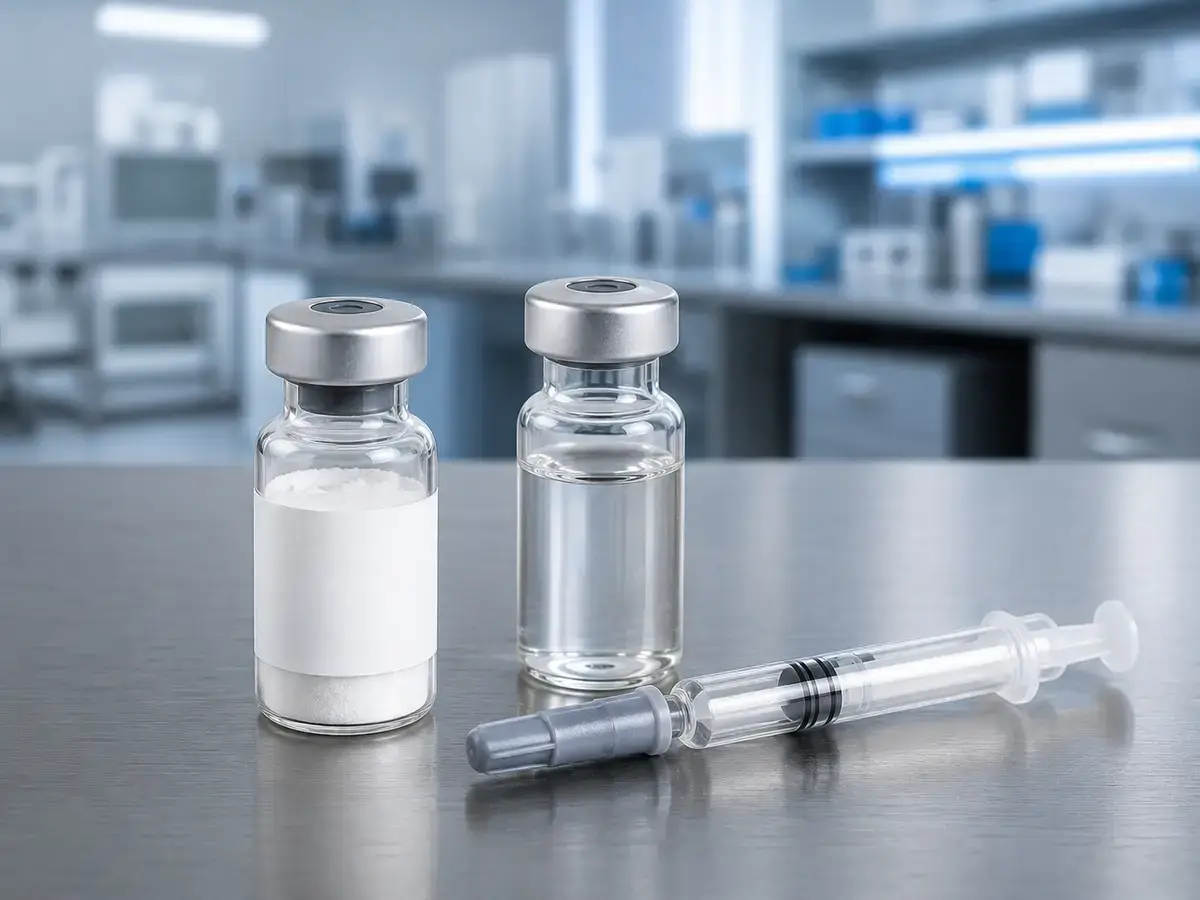
Accurate reconstitution, disciplined storage, and careful handling are the foundation of reliable peptide research. Hexarelin Acetate is a synthetic research peptide supplied as a lyophilized powder, and its stability depends entirely on how it is prepared and maintained once it reaches the bench. This guide walks qualified researchers and academic professionals through each protocol step, from the moment a vial arrives to long-term storage of working stocks.
Important disclaimer: Hexarelin Acetate is intended and sold exclusively for in vitro laboratory research and educational purposes by qualified researchers and academic professionals. It is not for human consumption, not for animal or veterinary use, and not for any in vivo application. This compound is not a drug, food, cosmetic, or dietary supplement. It has not been approved by the U.S. Food and Drug Administration (FDA) for any use, and the statements in this article have not been evaluated by the FDA. Nothing in this article is intended to diagnose, treat, cure, or prevent any disease or health condition, and nothing here should be interpreted as medical advice or as encouragement of any use other than controlled laboratory research. Any individual who acquires this compound is solely responsible for handling, storing, and using it in full compliance with all applicable local, state, federal, and international laws and regulations, as well as their institution’s safety and ethics policies.
Understanding Hexarelin Acetate as a Research Compound
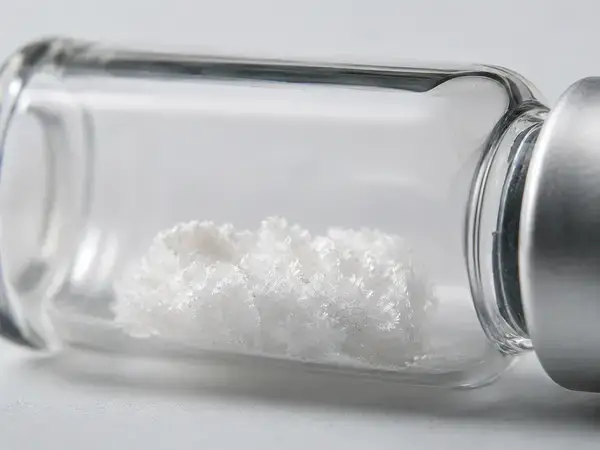
Hexarelin Acetate is a synthetic hexapeptide classified within the growth hormone-releasing peptide (GHRP) family. It is studied in controlled laboratory and preclinical settings as a reference compound for investigations into receptor signaling and peptide chemistry. For handling purposes, the most relevant point is that it is a small peptide supplied in freeze-dried form, which makes correct reconstitution and cold storage essential to preserving sample integrity.
Key reference specifications for your laboratory documentation:
- Compound: Hexarelin Acetate (also referenced as Examorelin)
- Molecular formula: C47H58N12O6 (acetate salt form expressed as C47H58N12O6 . xCH3CO2H)
- Molecular weight: approximately 887.04 g/mol (peptide free base)
- Amino acid sequence: His-D-2-Me-Trp-Ala-Trp-D-Phe-Lys-NH2
- Physical form: lyophilized (freeze-dried) powder
- CAS reference (acetate): 208251-52-9
Always confirm lot-specific details, including peptide content and water content, against the Certificate of Analysis (COA) supplied with your vial.
Why Proper Handling Protocols Matter
Peptides are sensitive molecules. Exposure to heat, light, moisture, repeated temperature swings, and microbial contamination can degrade a sample and compromise experimental results. For any research program, inconsistent handling introduces variables that undermine reproducibility and waste valuable material.
Treat every protocol below as a method for protecting two things at once: the chemical stability of the compound and the integrity of your data. Documenting each step also supports good laboratory practice and makes results easier to validate and replicate.
Prepare Your Laboratory Before Reconstitution
Set up your workspace before opening any vial. Preparation reduces handling time and limits exposure to contaminants.
- Inspect the vial on arrival. Confirm the label, lot number, and quantity match your order and COA. The lyophilized powder may appear as a solid pellet or a thin film at the base of the vial.
- Gather your materials. You will typically need your chosen reconstitution solvent, sterile syringes or pipette tips, alcohol wipes, labeled storage vials for aliquots, and a calculator for concentration math.
- Equilibrate to room temperature. Allow a refrigerated or frozen vial to reach room temperature before opening to prevent condensation from forming inside.
- Wear appropriate personal protective equipment (PPE), including gloves and eye protection, and work in a clean, designated area.
How to Reconstitute Hexarelin Acetate: Step by Step
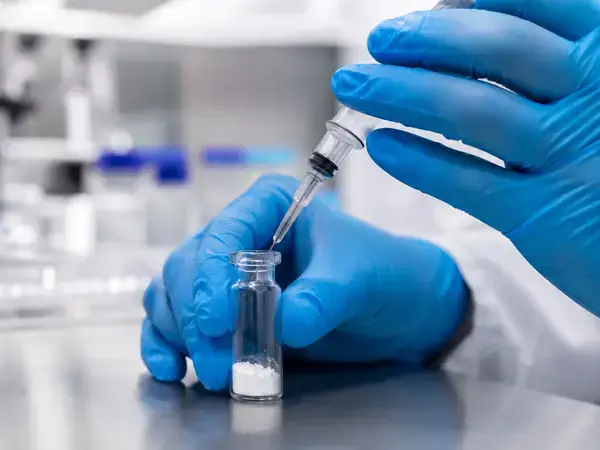
Reconstitution dissolves the lyophilized powder into a liquid stock that can be measured and diluted for research applications. Follow these steps deliberately.
- Select your solvent. Bacteriostatic water (sterile water containing 0.9% benzyl alcohol) is a common choice for stocks intended to be stored for several weeks, while sterile water is often used when a preservative-free solution is required. Consult the COA for solvent recommendations specific to your lot.
- Sanitize the surfaces. Wipe the rubber stopper of both the peptide vial and the solvent vial with an alcohol wipe and allow them to dry.
- Draw your calculated solvent volume. Measure the exact volume needed to reach your target stock concentration (see the calculation section below).
- Add the solvent slowly. Direct the stream gently down the inside wall of the vial. Do not spray solvent directly onto the powder, since force can damage the peptide.
- Dissolve without agitation. Allow the powder to go into solution on its own, and swirl gently if needed. Do not shake or vortex, since vigorous agitation can degrade peptide structure and introduce foaming.
- Inspect the solution. A properly reconstituted stock should be clear and free of particulates. Cloudiness or undissolved material warrants review before use.
Calculate Reconstitution Concentration
Concentration math is straightforward once you know the mass in the vial and the volume of solvent you add. The formula is:
Concentration = mass of peptide / volume of solvent
For example, reconstituting a 5 mg vial with 5 mL of solvent produces a stock concentration of 1 mg/mL, which equals 1000 mcg/mL. Reconstituting the same 5 mg vial with 2 mL of solvent produces a stock of 2.5 mg/mL.
To prepare working solutions for an assay, dilute the stock further in the appropriate buffer or medium for your protocol. Record every dilution so concentrations remain traceable across the project.
Storage Protocols for Hexarelin Acetate
Storage requirements differ before and after reconstitution. Match your conditions to the state of the material.
Lyophilized (Pre-Reconstitution) Storage
In its freeze-dried form, Hexarelin Acetate is more stable, but it still benefits from cold, dry, dark conditions. Store the sealed lyophilized vial at -20°C for long-term storage, and protect it from light and moisture. Brief exposure to room temperature during shipping is generally acceptable for a stable lyophilized peptide, but return it to cold storage promptly.
Reconstituted (Post-Reconstitution) Storage
Once dissolved, the peptide is more vulnerable to degradation. Store the reconstituted solution refrigerated at 2°C to 8°C and keep it away from light. As a general research guideline, plan to use a refrigerated reconstituted solution within approximately 28 days, and always evaluate the solution for clarity before each use.
Aliquot and Avoid Freeze-Thaw Cycles
Repeated freezing and thawing is one of the most common causes of peptide degradation. To protect a reconstituted stock intended for extended storage:
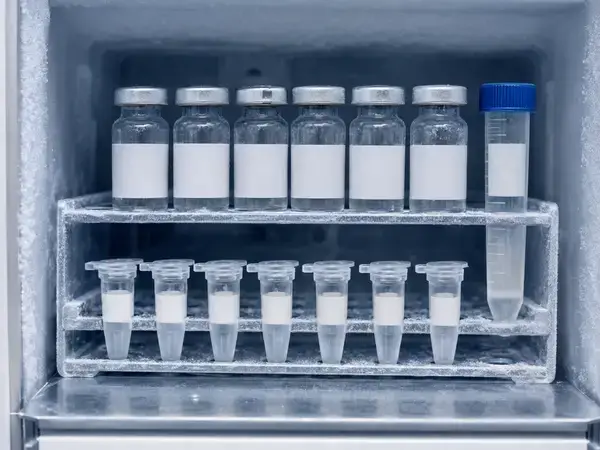
- Divide the solution into single-use aliquots in clean, labeled vials immediately after reconstitution.
- Freeze aliquots so that each one is thawed only once, then used or discarded.
- Label every aliquot with the compound name, concentration, date, and lot number.
This approach preserves the bulk of your sample while exposing only small portions to handling.
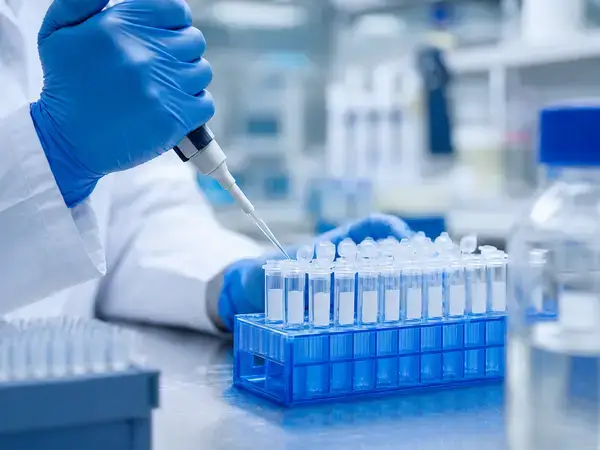
Handling and Laboratory Safety Best Practices
Consistent technique keeps both your sample and your workspace protected.
- Maintain sterile technique. Use sterile consumables, sanitize stoppers before each puncture, and minimize the time vials remain open.
- Limit light and heat exposure. Keep vials in opaque storage or away from direct light, and avoid leaving material at room temperature longer than necessary.
- Document everything. Record reconstitution dates, solvent type and volume, concentrations, storage locations, and aliquot counts in your lab notebook or LIMS.
- Handle with proper PPE. Treat all research compounds as substances requiring gloves, eye protection, and careful disposal in accordance with your institution’s guidelines.
- Follow your safety data sheet. Review the Material Safety Data Sheet (MSDS/SDS) for the compound and follow your facility’s protocols for handling and disposal.
Common Handling Mistakes to Avoid
- Spraying solvent directly onto the powder instead of along the vial wall.
- Shaking or vortexing the vial, which can degrade the peptide and cause foaming.
- Storing reconstituted solution at room temperature.
- Allowing aliquots to undergo multiple freeze-thaw cycles.
- Skipping documentation, which makes results difficult to reproduce.
- Failing to cross-check material against the Certificate of Analysis.
Conclusion
Reliable peptide research begins with disciplined technique at every stage of handling Hexarelin Acetate. Treat reconstitution, storage, and documentation not as routine chores but as the controls that protect your sample and your data. Warm each vial before opening, add solvent gently along the wall, and dissolve without agitation to preserve the peptide’s structure. Store the lyophilized powder cold and dark, refrigerate reconstituted solutions, and aliquot your stock so no portion endures repeated freeze-thaw cycles. Cross-check every batch against its Certificate of Analysis, label aliquots clearly, and record solvent volumes and concentrations so your results stay traceable and reproducible. When you follow these protocols consistently, you reduce variability, conserve valuable material, and build experiments on a stable foundation. Apply this framework to every vial that reaches your bench, and remember that Hexarelin Acetate is intended strictly for in vitro laboratory research and educational use, never for human consumption.
FAQs
How do I reconstitute Hexarelin Acetate correctly?
Warm the lyophilized vial to room temperature, then sanitize the stopper with an alcohol wipe. Draw your calculated volume of bacteriostatic water (or sterile water for a preservative-free preparation) and add it slowly down the inside wall of the vial. Let the powder dissolve on its own, swirling gently if needed, and never spray solvent onto the powder or shake the vial. Confirm the solution is clear before use, and follow the lot-specific solvent guidance on your Certificate of Analysis.
What temperature should Hexarelin Acetate be stored at?
Store the sealed lyophilized powder at -20°C in a dry, dark location, protected from light and moisture, for long-term stability. Once reconstituted, move the solution to refrigerated storage at 2°C to 8°C and keep it shielded from light. Match storage conditions to the state of the material, and return every vial to cold storage promptly after handling.
How long does reconstituted Hexarelin Acetate stay stable?
As a general research guideline, use a refrigerated reconstituted solution within approximately 28 days and inspect it for clarity before every use. To extend usable life, divide the stock into single-use aliquots immediately after reconstitution and freeze them so each portion is thawed only once. Always confirm stability expectations against your lot documentation.
How do I calculate the correct reconstitution volume?
Apply the formula concentration equals mass of peptide divided by volume of solvent. Set your target stock concentration first, then solve for the solvent volume. For example, adding 5 mL of solvent to a 5 mg vial produces a 1 mg/mL stock, while adding 2 mL produces 2.5 mg/mL. Record each dilution so concentrations remain traceable throughout your project.
How can I prevent peptide degradation during handling?
Protect the compound from the four most common threats: heat, light, moisture, and repeated freeze-thaw cycles. Keep vials cold and dark, minimize the time they remain open, swirl rather than shake, and aliquot reconstituted stock so individual portions are thawed only once. Maintain sterile technique and document each step to safeguard both sample integrity and reproducibility.