❌ Not for Human Consumption
●
✅ For Research Use Only
●
All products are intended strictly for laboratory research purposes only
●
❌ Not for Human Consumption
●
✅ For Research Use Only
●
All products are intended strictly for laboratory research purposes only
●

GLOW Research Blend: Identifying Component Peptides

Written By: Gary Hite, Research Content Writer
Reviewed By: Natalie Kunsman, M.D., Board-Certified Physician
Last Reviewed: August 23, 2026
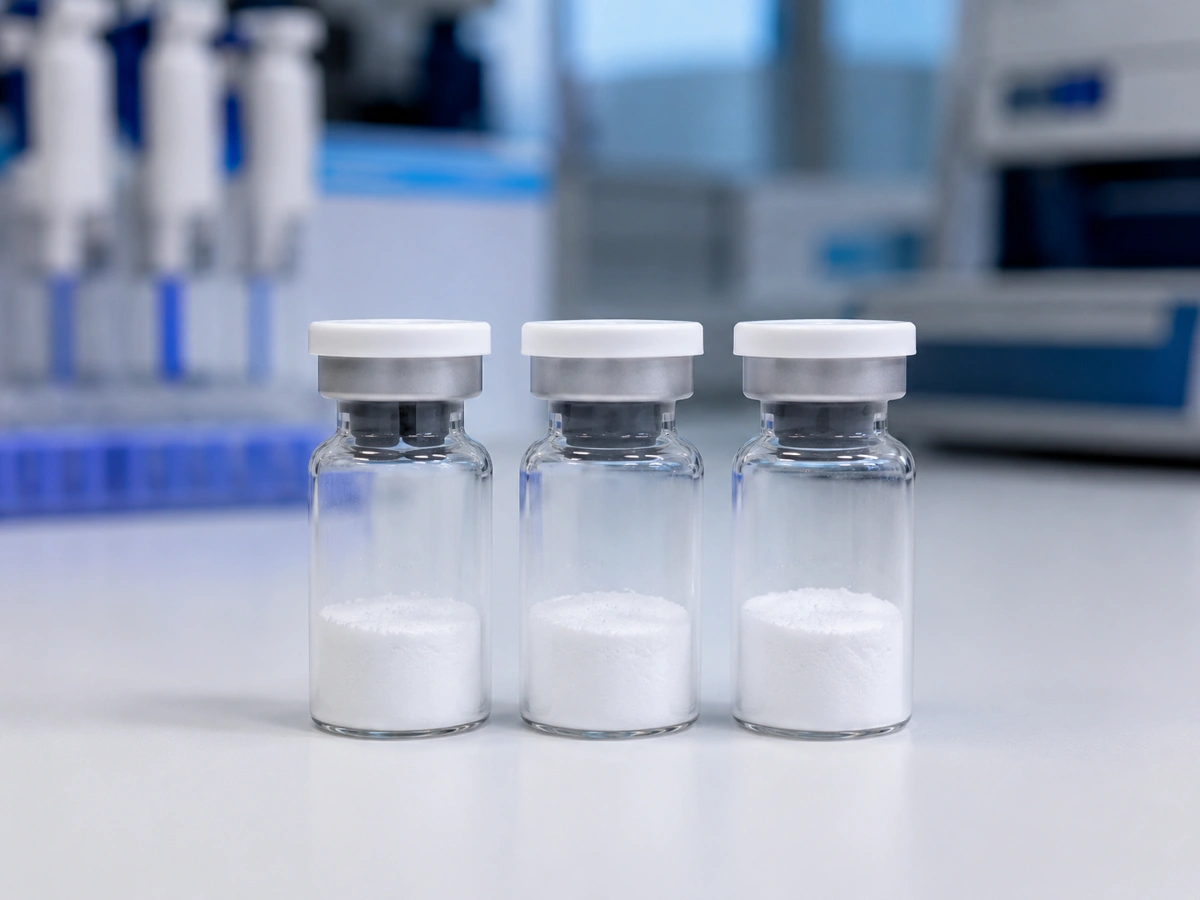
If your laboratory is evaluating a GLOW research blend, the first practical question is simple. What is in the vial? A blend is only as useful to a research program as the documentation behind it, so knowing the exact compounds and how they are characterized should come before anything else. This article breaks down the component peptides commonly associated with a GLOW research blend and outlines the verification details that matter when you assess these materials for in vitro and preclinical study.
Important notice: A GLOW research blend is sold strictly for laboratory research and educational purposes. It is not a drug, supplement, or cosmetic. It is not for human consumption, not for veterinary use, and not for any form of in-body administration. The information below is provided for informational and research purposes only.
What A GLOW Research Blend Refers To
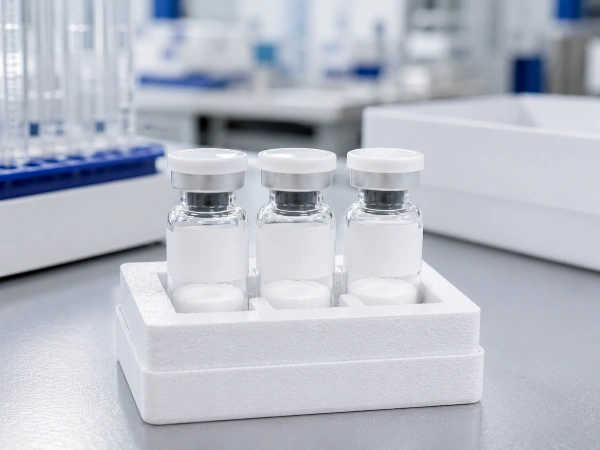
In the research supply space, “GLOW” is a branding convention rather than a regulatory or pharmacological designation. It typically describes a single research vial that contains three distinct peptides supplied together, sometimes cataloged as a GLOW research blend. The word “blend” here means nothing more than several characterized compounds packaged in one unit for laboratory convenience. It does not imply a tested formulation, a combined mechanism, or any defined outcome in any living system.
Because the label is a marketing term, the actual contents can vary between suppliers. That is exactly why identifying the component peptides, and confirming them against analytical documentation, is the responsible starting point for any research team.
The Three Component Peptides
A GLOW research blend is most often associated with the three research peptides described below. Each entry covers what the compound is at a structural level and the areas of scientific literature where it appears. None of the following describes an effect, benefit, or use in humans.
GHK-Cu (Copper Tripeptide-1)
GHK-Cu peptide is a small copper-binding tripeptide composed of the amino acid sequence glycyl-L-histidyl-L-lysine complexed with a copper(II) ion. It occurs naturally and has been documented in plasma within the scientific literature. In a research setting, it is studied in models examining extracellular matrix dynamics, fibroblast model readouts in cell culture, copper transport chemistry, and gene-expression patterns. References to GHK-Cu in academic work are tied to these laboratory investigations and are not statements about any human application.
BPC-157 (Pentadecapeptide)
BPC-157 peptide is a synthetic peptide made up of a sequence of fifteen amino acids. This sequence corresponds to a partial region of a protein that was originally identified in gastric juice in published research. Within preclinical literature, it appears in cell-culture and animal-model studies that examine signaling pathways such as preclinical signaling pathway models at the laboratory level. These references describe research-stage investigation only and should not be read as evidence of safety or effect in people.
TB-500 (Thymosin Beta-4 Fragment)
TB-500 peptide is a synthetic peptide fragment corresponding to an active region of thymosin beta-4, a naturally occurring protein documented in protein structure databases. In the research literature it is associated with laboratory work on actin binding and sequestration, cell-based response assays, and tissue-culture models. As with the other components, its presence in scientific study reflects ongoing research interest and does not establish any approved or intended use outside of controlled laboratory work.
Why These Peptides Are Supplied Together
Researchers sourcing research-grade peptides sometimes prefer combined vials to streamline inventory, reduce the number of separate reconstitutions in a workflow, or model how multiple compounds behave within a single experimental system. It is worth stating plainly that co-packaging does not imply a synergistic or additive result in any organism. The grouping is a supply format chosen for convenience, not a claim about combined activity.
Characterization Details Worth Verifying
This is where careful research teams separate a usable material from an unknown one. Before you incorporate any blend into a protocol, confirm the following against supplier documentation.
- Certificate of Analysis. Request a current, lot-specific certificate rather than a generic example. This document anchors every other claim about the material.
- HPLC purity. Check the reported purity for each peptide, commonly stated at greater than ninety-eight percent for research-grade material, and note the method used. The steps involved in verifying GHK-Cu purity are a useful reference point for the rest of the panel.
- Mass spectrometry confirmation. Verify that the measured molecular weight of each component matches its expected value, which you can cross-check against public chemical databases, confirming identity rather than just purity.
- Net peptide content. Distinguish gross vial mass from actual peptide content, since salts and counterions contribute to total weight and affect how you calculate working concentrations.
- Lot and batch traceability. Confirm that the lot number on the vial matches the documentation so results stay reproducible and auditable.
Treating these as non-negotiable inputs protects the integrity of your data and makes your findings far easier to replicate.
Laboratory Handling And Storage
Handling guidance for a GLOW research blend should be approached the same way as any laboratory reagent. Lyophilized peptides are generally stored cold and protected from light and moisture until use. Once prepared into a working stock for an assay, material is typically kept refrigerated for short periods or held frozen in single-use aliquots to limit freeze-thaw cycles that can degrade peptide integrity. The same care that applies to storing peptide solutions generally applies here, including appropriate personal protective equipment, clean technique, clear labeling, and accurate record keeping.
These notes describe bench handling for research only. They are not preparation instructions for any use in or on the body.

Compliance And Responsible Research Use
Research peptides occupy a category that depends entirely on responsible, documented, laboratory-only use. To keep your work on solid footing, treat the following as standing conditions.
- The material is intended for qualified professionals and academic researchers working in a controlled setting.
- It is not approved for, or intended for, human or animal administration, ingestion, or any clinical purpose.
- It is not a dietary supplement, food, drug, or cosmetic, and no therapeutic, diagnostic, or weight-related outcome is claimed or implied.
- The end user is responsible for compliance with all applicable institutional policies along with current regulatory guidance and local, state, and federal requirements governing acquisition, handling, and disposal.
Documenting your intended research use up front, and storing that record alongside your certificates of analysis, keeps both your science and your compliance posture defensible.
Conclusion
Identifying what sits inside a GLOW research blend is the foundation every credible study is built on, and the work does not stop at a label. Once you know the vial pairs GHK-Cu, BPC-157, and TB-500, your next moves are practical ones. Confirm each component against a current, lot-specific certificate of analysis, check the reported HPLC purity, verify identity through mass spectrometry, and separate net peptide content from gross mass before you calculate a single working concentration.
Treat handling, storage, and documentation with the same discipline you apply to any research reagent, and keep every step inside the controlled laboratory setting it was designed for. A blend is only as reliable as the records behind it, so build your protocol around verification rather than assumption. Source carefully, document thoroughly, match each lot to its paperwork, and the material will support reproducible, defensible research. For research use only. Not for human consumption.
FAQs
Which peptides are in a GLOW research blend?
A GLOW research blend is most commonly associated with three components: GHK-Cu, BPC-157, and TB-500. Because “GLOW” is a marketing label rather than a fixed formula, always confirm the exact contents and quantities against the supplier’s lot-specific certificate of analysis before you begin any work.
How do I verify the purity and identity of the blend?
Start with a current certificate of analysis, then check the reported HPLC purity for each peptide and confirm molecular weight through mass spectrometry. Cross-referencing expected values against public chemical databases adds a second layer of confidence, and matching the lot number on the vial to the paperwork keeps your records auditable.
Do GLOW research blends differ between suppliers?
Yes. Since the name is a branding convention, the specific peptides, ratios, and total milligram content can vary from one source to another. Treat each product as distinct, request its own documentation, and never assume two vials labeled “GLOW” are interchangeable without verifying the analytical data.
How should a GLOW research blend be stored in the laboratory?
Keep lyophilized material cold and protected from light and moisture until use. Once reconstituted into a working stock, store it according to the supplier’s stability data, divide it into single-use aliquots, and minimize freeze-thaw cycles that can compromise peptide integrity. Label everything clearly and log each step as you go.
Can a GLOW research blend be used in or on humans or animals?
No. A GLOW research blend is strictly for in vitro and laboratory research by qualified professionals. It is not a drug, supplement, or cosmetic, and it is not intended for human consumption, veterinary use, or any clinical application. Confirm that your intended use stays within these boundaries and complies with all applicable regulations.
Disclaimer: This content is provided for informational, educational, and research purposes only. A GLOW research blend and its component peptides are sold strictly for laboratory research use by qualified professionals and are not intended for human or veterinary use, consumption, or any clinical, diagnostic, or therapeutic application. Nothing in this article constitutes medical advice or a representation of safety or efficacy in any living organism. Purchasers and end users are solely responsible for handling these materials lawfully and in accordance with all applicable institutional, local, state, and federal regulations.