
Reconstitution Water Vs. Sterile Water Vs. Saline: Choosing The Right Solvent For Your Research Peptides

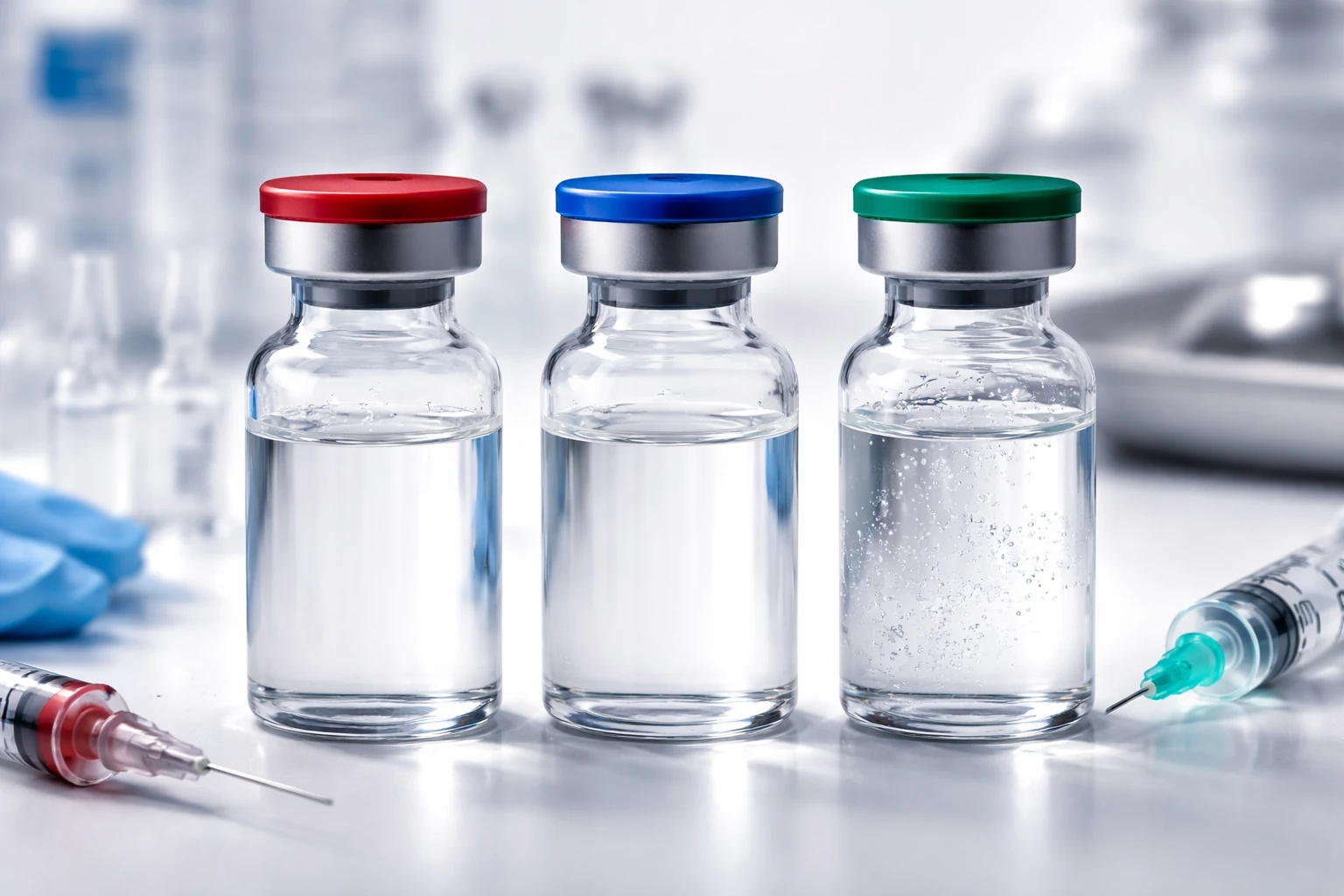
Disclaimer: All products, materials, and information discussed in this article are intended strictly for in vitro research and laboratory use only. Nothing in this article is intended for human or animal consumption, diagnosis, treatment, cure, or prevention of any disease. Researchers must comply with all applicable federal, state, and local regulations when purchasing and handling research materials.
Selecting the correct solvent is one of the most critical decisions a researcher faces during peptide reconstitution. The wrong choice can compromise peptide stability, alter experimental outcomes, and waste valuable research materials. Yet many early-career researchers and lab technicians overlook solvent selection entirely.
This guide breaks down the three most common solvents used in peptide research: reconstitution water (bacteriostatic water), sterile water for research, and normal saline solution. Each serves a distinct purpose in the laboratory. Understanding those distinctions protects both your research integrity and your investment in high-quality peptide compounds.
Why Solvent Selection Matters in Peptide Research
Peptides are inherently sensitive molecules. Their biological activity in research assays depends on proper handling at every stage. Storage temperature, light exposure, and reconstitution technique all influence outcomes. Solvent choice sits at the center of that equation.
The wrong solvent can cause precipitation, aggregation, or degradation of the peptide chain. These issues reduce the effective concentration of your solution. They introduce variables that compromise reproducibility across experiments.
Professional researchers understand that consistency starts with solvent selection. The goal is always to maintain peptide integrity from the moment of reconstitution through final use in your assay or study protocol.
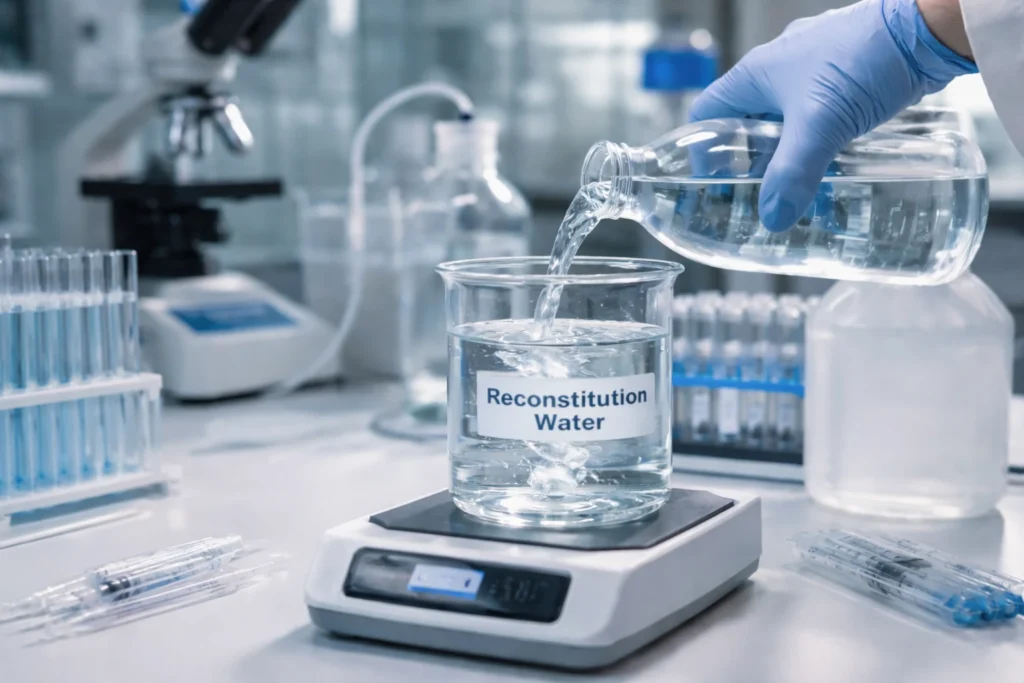
What Is Reconstitution Water (Bacteriostatic Water)?
Reconstitution water, commonly known as bacteriostatic water (BAC water), is sterile water that contains a small concentration of benzyl alcohol. The standard concentration is 0.9% benzyl alcohol by volume.
Key Characteristics
Benzyl alcohol functions as a bacteriostatic agent. It inhibits the growth of most bacteria and microorganisms within the solution. This preservative action does not sterilize the water. Instead, it prevents microbial proliferation over time.
This distinction matters for researchers who need to store reconstituted peptide solutions across multiple uses. Reconstitution water allows for repeated access to a single vial without the rapid contamination risk that accompanies preservative-free alternatives.
Ideal Research Applications
Reconstitution water is the preferred solvent in many peptide research settings for several reasons.
It extends the usable life of reconstituted peptide solutions. Most properly stored solutions reconstituted with BAC water remain viable for research use for up to 28 days when refrigerated at 2 to 8 degrees Celsius.
It reduces material waste. Researchers working with expensive or limited-supply peptides benefit from the ability to draw multiple aliquots from a single reconstituted vial.
It supports consistent concentration across draws. Because microbial growth is inhibited, the peptide concentration remains more stable between the first and last use of a vial.
Important Considerations
Benzyl alcohol can interact with certain peptide compounds. Some highly sensitive peptides may show altered stability or activity in the presence of preservatives. Researchers should always review existing literature on their specific peptide of interest before selecting reconstitution water as the solvent.
Reconstitution water is sold strictly for research and laboratory use. It is not intended for human or animal consumption under any circumstances.
What Is Sterile Water for Research?
Sterile water is purified water that has undergone sterilization. It contains no preservatives, additives, or bacteriostatic agents. The result is a chemically neutral solvent suitable for a wide range of laboratory applications.
Key Characteristics
Sterile water provides the purest possible aqueous environment for peptide reconstitution. The absence of benzyl alcohol or other additives eliminates one potential variable from your experimental design.
However, sterile water offers no protection against microbial contamination after the vial seal is broken. Once opened, the solution becomes vulnerable to bacterial growth with each subsequent access.
Ideal Research Applications
Sterile water is the best choice in specific research scenarios.
Single-use reconstitution protocols benefit from sterile water. If a researcher plans to use the entire reconstituted peptide solution in a single session, the lack of preservative is not a liability. It is an advantage.
Sensitive assay work where benzyl alcohol could interfere with results calls for sterile water. Cell culture studies, receptor binding assays, and other protocols with narrow tolerance ranges often require preservative-free solvents.
Researchers studying the peptide compound itself, rather than its downstream effects, may prefer sterile water. This removes preservative interaction as a confounding variable.
Important Considerations
Reconstituted peptide solutions made with sterile water should be used promptly. Storage beyond a single research session increases contamination risk significantly.
If multiple draws from a single vial are necessary, researchers should transfer aliquots into individual sterile containers immediately after reconstitution. Store all aliquots at the recommended temperature for the specific peptide under study.
Sterile water for research is not intended for human or animal consumption. It is manufactured and distributed exclusively for laboratory and in vitro research applications.
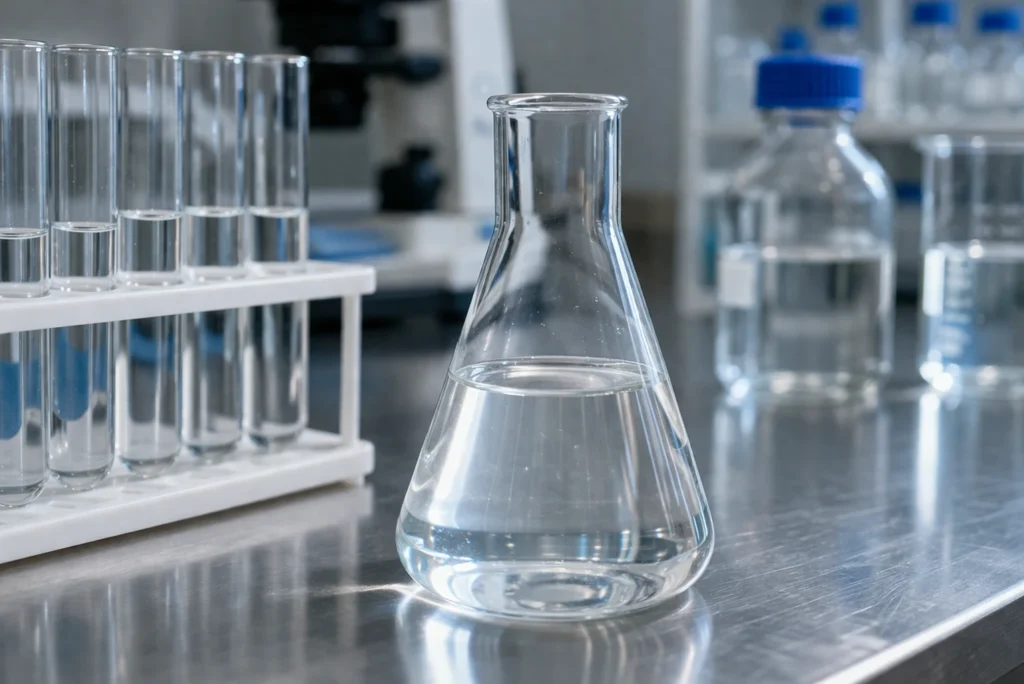
What Is Normal Saline (0.9% Sodium Chloride)?
Normal saline is a solution of 0.9% sodium chloride (NaCl) dissolved in sterile water. It is isotonic, meaning its osmolarity closely matches the conditions found in many biological research environments.
Key Characteristics
The sodium chloride content in normal saline provides ionic strength that can stabilize certain peptide structures. Some peptides maintain better solubility and structural integrity in saline compared to pure water.
Like sterile water, standard normal saline does not contain preservatives. Some formulations include bacteriostatic agents, so researchers should verify the specific product specifications before use.
Ideal Research Applications
Normal saline serves important roles in peptide research protocols.
Peptides that require isotonic conditions for accurate assay results benefit from saline-based reconstitution. This is particularly relevant in cell-based assays and in vitro models where osmolarity affects outcomes.
Dilution protocols often call for normal saline. When researchers need to prepare serial dilutions of reconstituted peptides, saline maintains consistent ionic conditions across concentration ranges.
Certain peptide classes demonstrate improved solubility in saline. Researchers working with hydrophobic or poorly soluble peptides may find that the ionic environment of saline promotes more complete dissolution.
Important Considerations
The sodium chloride in saline can affect certain analytical methods. Researchers using mass spectrometry, HPLC, or other sensitive instrumentation should account for salt content in their sample preparation.
Not all peptides respond favorably to ionic solutions. Some compounds may precipitate or aggregate in the presence of salt. Literature review and small-scale solubility testing are recommended before committing full peptide inventory to saline reconstitution.
Normal saline for research use is manufactured and sold exclusively for laboratory applications. It is not intended for human or animal consumption.
Side-by-Side Comparison: Which Solvent Fits Your Protocol?
| Feature | Reconstitution Water (BAC Water) | Sterile Water | Normal Saline (0.9% NaCl) |
|---|---|---|---|
| Preservative | Yes (0.9% benzyl alcohol) | No | Varies by product |
| Multi-use vial access | Yes (up to 28 days refrigerated) | Not recommended | Not recommended (unless bacteriostatic) |
| Peptide compatibility | Most peptides | All peptides (verify sensitivity) | Peptides requiring isotonic conditions |
| Contamination risk after opening | Low | High | High (unless bacteriostatic) |
| Best for | Multi-draw research protocols | Single-use protocols and sensitive assays | Cell-based and isotonic assay work |
| Intended use | Research only | Research only | Research only |
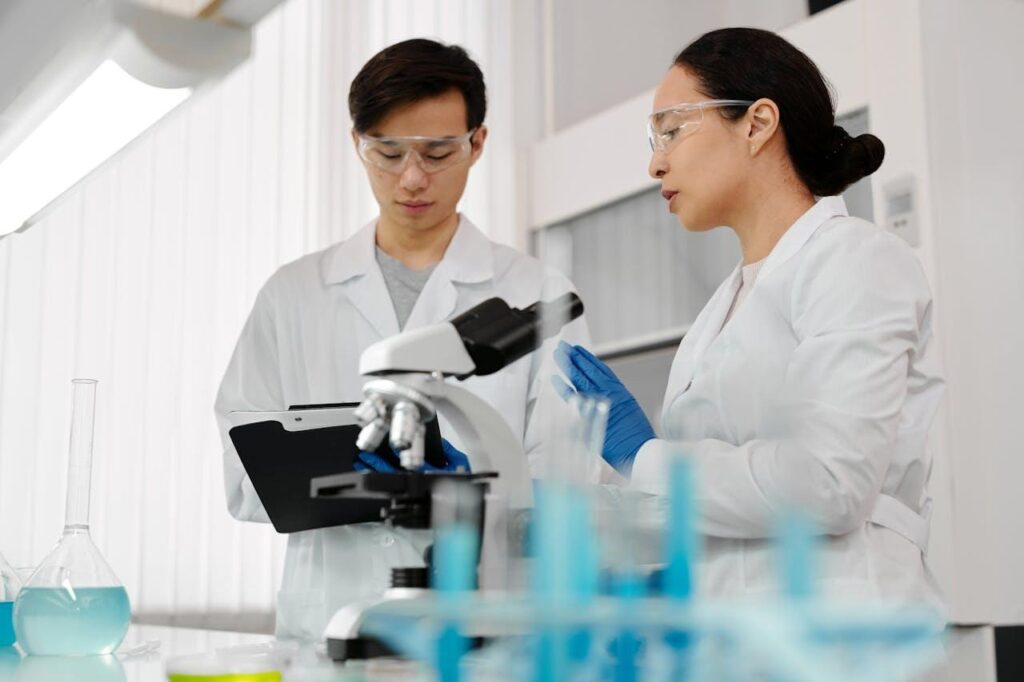
Best Practices for Peptide Reconstitution in the Lab
Regardless of which solvent you select, proper reconstitution technique protects your research outcomes. Follow these laboratory best practices.
Prepare Your Workspace
Work in a clean, controlled environment. A laminar flow hood or biosafety cabinet is strongly recommended. Sanitize all surfaces before beginning.
Gather all materials before starting. You will need the lyophilized peptide vial, your chosen solvent, appropriately sized syringes, and sterile alcohol swabs.
Follow a Gentle Reconstitution Protocol
Remove the peptide vial from storage. Allow it to reach room temperature before opening. Sudden temperature changes can cause condensation that affects peptide weight and concentration accuracy.
Add the solvent slowly. Direct the stream along the inner wall of the vial rather than directly onto the lyophilized powder. This reduces foaming and physical stress on the peptide.
Do not shake the vial. Gentle swirling or slow rotation encourages dissolution without introducing air bubbles or causing mechanical degradation.
Allow adequate time for complete dissolution. Some peptides dissolve within seconds. Others require several minutes of gentle agitation. Patience protects peptide integrity.
Label and Store Properly
Record the reconstitution date, solvent used, and final concentration on the vial label. Clear documentation supports reproducibility and regulatory compliance.
Store reconstituted peptides according to the manufacturer’s recommendations. Most reconstituted peptide solutions require refrigeration at 2 to 8 degrees Celsius. Some peptides may require frozen storage for extended stability.
Common Mistakes Researchers Should Avoid
Even experienced researchers occasionally make errors during reconstitution. Awareness of common pitfalls improves outcomes across the board.
- Using the wrong solvent concentration. Always verify the solvent specifications before use. Confirm that your reconstitution water contains the expected 0.9% benzyl alcohol. Confirm that your saline is 0.9% NaCl.
- Reusing sterile water vials across sessions. Sterile water without preservatives should not be accessed multiple times. Each needle puncture introduces potential contaminants.
- Storing reconstituted solutions at room temperature. Peptide degradation accelerates dramatically outside recommended temperature ranges. Refrigerate immediately after reconstitution.
- Failing to account for solvent interactions in data analysis. If your solvent contains preservatives or salt, factor those components into your experimental controls. Run solvent-only controls alongside peptide-treated samples.
- Skipping solubility verification. Before committing your full peptide supply to a specific solvent, test solubility with a small quantity. Visual inspection for precipitation or cloudiness can prevent costly errors.
Make the Right Choice for Your Research
Solvent selection is not a minor detail. It is a foundational decision that influences every downstream result in your peptide research. Reconstitution water, sterile water, and normal saline each serve distinct roles in the laboratory. Understanding those roles helps you protect peptide integrity, reduce waste, and generate reliable data.
Choose reconstitution water when you need multi-use access and extended storage. Choose sterile water when purity is paramount and single-use protocols are in place. Choose normal saline when isotonic or ionic conditions align with your experimental requirements.
Every solvent discussed in this article is intended exclusively for research and laboratory use. No product mentioned here is intended for human or animal consumption, diagnosis, treatment, cure, or prevention of any disease or condition.
Legal Disclaimer: This article is provided for educational and informational purposes only. It does not constitute medical, legal, or professional advice of any kind. All references to peptides, solvents, and research protocols are intended for qualified researchers, scientists, and academic professionals conducting lawful in vitro research. Products referenced in this article are not drugs, are not approved by the FDA for any purpose, and are not intended for human or animal use. Purchasers assume full responsibility for compliance with all applicable laws and regulations. The seller makes no claims regarding the safety, efficacy, or suitability of any product for any purpose other than bona fide scientific research.
Frequently Asked Questions
Can I use reconstitution water for all peptide research?
Reconstitution water works well for most peptide compounds in laboratory settings. However, some peptides interact with benzyl alcohol. Always check compatibility with your specific compound before proceeding. Reconstitution water is for research use only and is not intended for human consumption.
How long does a reconstituted peptide solution last?
Shelf life depends on the solvent and storage conditions. Solutions made with reconstitution water (BAC water) typically remain viable for up to 28 days when stored at 2 to 8 degrees Celsius. Solutions made with sterile water should be used in a single research session or aliquoted and frozen immediately.
Is normal saline better than sterile water for peptide research?
Neither is universally superior. The choice depends on your specific research protocol. Saline provides isotonic conditions and ionic strength that benefit certain assays. Sterile water offers a preservative-free and ion-free environment. Match the solvent to the requirements of your experimental design.
Where should I purchase research-grade solvents?
Source all solvents from reputable suppliers that provide certificates of analysis (COA) and adhere to current Good Manufacturing Practice (cGMP) standards. Verify product purity, sterility, and packaging integrity before use.
Do I need different solvents for different peptide classes?
Potentially, yes. Peptide solubility varies based on amino acid sequence, molecular weight, charge distribution, and hydrophobicity. Some peptides dissolve readily in pure water. Others require acidic, basic, or ionic conditions. Consult published solubility data for your specific peptide before selecting a solvent.