❌ Not for Human Consumption
●
✅ For Research Use Only
●
All products are intended strictly for laboratory research purposes only
●
❌ Not for Human Consumption
●
✅ For Research Use Only
●
All products are intended strictly for laboratory research purposes only
●

GLP-3R: Understanding Triple Receptor Agonism In Preclinical Research

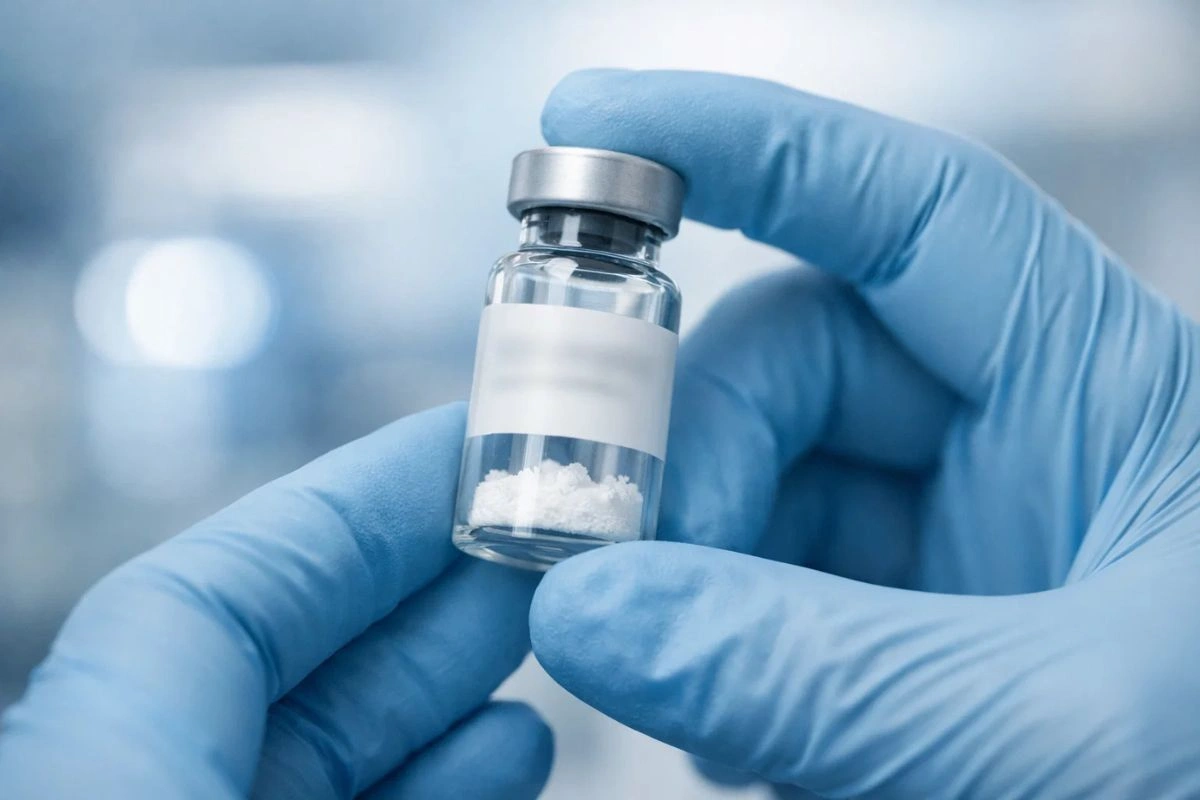
Three receptors. One molecule. That’s the core proposition driving GLP-3R to the forefront of metabolic peptide research, and it’s a departure from anything single- or dual-agonist compounds can replicate in preclinical models.
GLP-3R is a synthetic 39-amino-acid peptide that simultaneously activates the glucagon-like peptide-1 receptor (GLP-1R), the glucose-dependent insulinotropic polypeptide receptor (GIPR), and the glucagon receptor (GCGR). For researchers investigating multi-pathway metabolic signaling, this compound opens experimental territory that wasn’t accessible with earlier-generation research tools.
This article breaks down the receptor-level mechanisms, explains what published preclinical data actually show, and outlines what academic and institutional researchers should know before incorporating GLP-3R into their protocols.
DISCLAIMER: GLP-3R is sold strictly for laboratory and preclinical research purposes. It is not approved by the FDA or any regulatory body for human consumption, therapeutic use, or veterinary application. Nothing in this article constitutes medical advice or encourages non-research use of this compound.
Why Three Receptors Changes the Research Model
Most researchers working with incretin-based peptides are already familiar with GLP-1R agonists and dual GIP/GLP-1 compounds. GLP-3R adds a third dimension, glucagon receptor engagement and the pharmacological consequences of that addition aren’t simply additive. They’re synergistic, producing distinct signaling profiles in preclinical models in animal models that neither single nor dual agonists generate at comparable doses.
Here’s how each receptor pathway contributes to the compound’s preclinical profile:
- GLP-1R activation drives the signaling cascade most studied in incretin research: it is associated with changes in glucose-dependent insulin signaling in preclinical models, delayed gastric emptying, and modulation of appetite-associated signaling pathways. This is well-characterized territory, with decades of published literature on GLP-1R biology.
- GIPR activation provides complementary insulinotropic effects through a distinct signaling pathway. In preclinical models, GIP receptor engagement also appears to influence adipocyte-level fat distribution patterns, a finding published in the Journal of Clinical Investigation (Samms RJ, et al., 2023) that has drawn interest from researchers studying lipid partitioning.
- GCGR activation is where GLP-3R fundamentally diverges from dual-agonist compounds. Glucagon has historically been viewed as counterproductive in metabolic research contexts because it raises hepatic glucose output. But when GCGR is co-activated alongside GLP-1R and GIPR, the metabolic picture shifts. Preclinical rodent data have been associated with changes in hepatic metabolic pathways in animal studies without the hyperglycemic consequences seen when glucagon acts alone. The GLP-1R and GIPR components effectively counterbalance glucagon’s glucose-raising effects while the energy expenditure pathways remain active.
That three-way receptor crosstalk is the mechanism making GLP-3R a more versatile research tool than its predecessors. In diet-induced obese (DIO) mouse models, triple agonism produced larger reductions in liver triglyceride content and liver enzymes (ALT, AST) than dual agonism at comparable doses, a finding with direct implications for researchers running MASLD/MASH preclinical protocols.

The Structural Details Researchers Need
GLP-3R isn’t a simple linear peptide. Its 39-amino-acid sequence (molecular formula C223H343F3N46O70, molecular weight approximately 4,731 g/mol) incorporates a C18 fatty diacid conjugation. That fatty acid tail enables albumin binding in research models, extending the compound’s half-life to roughly six days in pharmacokinetic studies.
This structural complexity matters for sourcing decisions. Minor sequence errors or incomplete fatty acid conjugation during synthesis can substantially alter receptor binding profiles. A 2024 cryo-electron microscopy study published in Nature Communications resolved the structures of GLP-1R, GIPR, and GCGR bound to this triple agonist, confirming that relative potency varies across the three targets: approximately 8.9-fold more potent at GIPR compared to endogenous GIP, while showing 0.3x and 0.4x potency at GCGR and GLP-1R respectively relative to their native ligands.
Those binding ratios aren’t incidental. They explain why the compound’s metabolic effects in animal models skew heavily toward the GIP and glucagon pathways rather than presenting as a conventional GLP-1-dominant agonist.
For laboratories running binding assays or cell-based functional studies, this potency profile means that experimental design needs to account for differential receptor activation at each dose level. Researchers assuming uniform agonism across all three targets will misinterpret their results.
All findings described are derived from controlled preclinical studies and do not establish functional metabolic effects in humans.

What Published Preclinical Data Show
The published literature on triple receptor agonism is still building, but the preclinical dataset already available gives researchers a concrete foundation for protocol design.
Triple agonism achieved greater reductions in body composition in DIO models, liver fat content, and circulating lipid markers than equivalent-dose dual agonists, findings attributed primarily to the added energy expenditure from GCGR activation. Thermogenic gene expression in brown adipose tissue increased measurably, a readout not observed with GLP-1-only or dual-agonist compounds in the same models.
The rodent data also reveal something counterintuitive that experienced metabolic researchers will find worth noting: despite glucagon’s well-documented glycemic effects, the triple-agonist compound maintained improved glucose homeostasis markers across multiple preclinical studies. The incretin components, GLP-1R and GIPR, appear to exert sufficient insulinotropic activity to offset glucagon’s hepatic glucose output, at least within the dose ranges tested. This finding challenges the long-held assumption that glucagon receptor agonism is inherently antagonistic to glycemic control research.
Common preclinical model systems used with this compound include DIO mice, db/db diabetic mice, MASLD rodent models on high-fat/high-fructose diets, and non-human primate metabolic studies. Published dosing ranges in rodent protocols typically fall between 0.1 and 1 mg/kg administered weekly.
One practical advantage for preclinical researchers: the magnitude of metabolic effect in animal models tends to be large enough to reduce required sample sizes compared to studies using single-pathway agonists. Stronger effect sizes mean cleaner data with fewer animals, an ethical and statistical benefit worth factoring into study design.
Sourcing Standards for GLP-3R
Given the compound’s structural complexity, sourcing quality directly impacts experimental reproducibility. A batch with incomplete fatty acid conjugation or sequence errors won’t just reduce potency; it can generate confounding data that’s nearly impossible to troubleshoot after the fact, especially for a compound still accumulating its reference dataset.
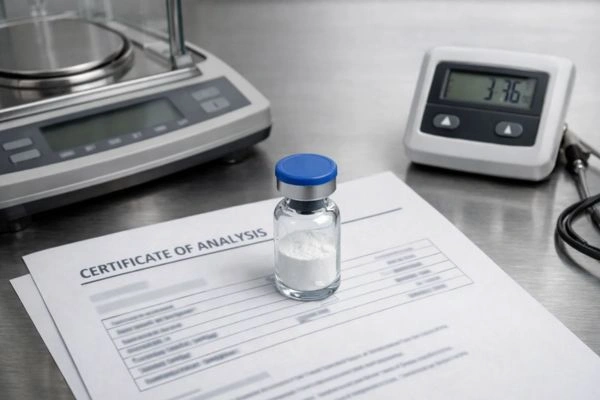
Minimum purity threshold: Research-grade GLP-3R should meet 98% or higher purity as verified by HPLC analysis. Mass spectrometry confirmation is also recommended to verify molecular identity independent of purity assessment. These aren’t aspirational benchmarks; they’re the floor for publishable preclinical work.
Batch-specific Certificates of Analysis (CoAs) should accompany every order. Third-party analytical verification adds a layer of confidence that in-house QC alone can’t match, particularly for laboratories that don’t maintain their own peptide characterization capabilities.
Storage conditions also matter for maintaining compound integrity. Lyophilized GLP-3R should be stored below -20°C, protected from light and moisture. Reconstituted solutions require refrigeration at 2-8°C and should be used within seven days to avoid degradation that could compromise experimental outcomes.

Where Triple Agonism Research Is Heading
The scientific interest in triple receptor agonism extends across multiple research domains. Beyond the metabolic signaling work that dominates current published literature, active preclinical investigation is exploring receptor crosstalk mechanisms, hepatic lipid metabolism pathways, and brown adipose tissue thermogenesis, each representing a distinct line of inquiry that triple-agonist compounds are uniquely suited to address.
For researchers designing new protocols in 2026, GLP-3R offers something that single-receptor tools don’t: the ability to study three interconnected signaling pathways simultaneously, in a single compound, with a pharmacokinetic profile long enough to enable weekly dosing in animal models. That experimental efficiency is driving adoption across academic labs, CROs, and institutional research programs worldwide.
The compound is not a controlled substance in the US, EU, or most jurisdictions, and its use in preclinical settings continues under standard research compound protocols. Researchers should verify applicable local regulations before initiating studies, as regulatory frameworks for research peptides vary by region.
Conclusion
GLP-3R’s value as a research tool isn’t the triple agonism itself, it’s the specific receptor potency ratio. At 8.9-fold greater potency at GIPR versus endogenous GIP, with 0.3x and 0.4x relative activity at GCGR and GLP-1R, this compound produces a GIP/glucagon-dominant metabolic phenotype that no combination of single-receptor agonists can cleanly replicate. Researchers treating it as a “stronger GLP-1 agonist” will design the wrong experiments.
Three protocol decisions should be locked down before any GLP-3R study launches: source exclusively from suppliers providing batch-specific COAs with HPLC purity above 98% plus mass spectrometry confirmation, design dose-response curves that account for differential receptor activation rather than assuming uniform agonism, and use reconstituted solutions within seven days to prevent degradation artifacts. The DIO mouse data already demonstrate that effect sizes are large enough to reduce sample sizes compared to single-agonist studies, but only if compound integrity holds from vial to injection.
DISCLAIMER: GLP-3R is sold strictly for laboratory and preclinical research purposes. It is not approved by the FDA or any regulatory body for human consumption, therapeutic use, or veterinary application. Nothing in this article constitutes medical advice or encourages non-research use of this compound.
Frequently Asked Questions
What receptors does GLP-3R activate and why does the combination matter?
GLP-3R simultaneously engages GLP-1R, GIPR, and GCGR, the glucagon receptor being the critical differentiator from dual-agonist compounds. In preclinical models, GCGR activation drives hepatic fat oxidation and thermogenesis while the GLP-1R and GIPR components counterbalance glucagon’s hyperglycemic effects. This three-way crosstalk produces metabolic phenotypes in DIO mice, particularly larger reductions in liver triglycerides and liver enzymes, that neither single nor dual agonists replicate at comparable doses. Researchers studying MASLD/MASH pathways should find this mechanism especially relevant to their protocol design.
How does GLP-3R’s receptor potency profile affect experimental design?
The compound isn’t equally potent across all three targets. Cryo-EM data published in Nature Communications confirmed approximately 8.9-fold greater potency at GIPR compared to endogenous GIP, but only 0.3x and 0.4x relative potency at GCGR and GLP-1R. This skew means dose-response experiments must account for differential receptor activation at each concentration. Researchers who assume uniform agonism across all three receptors will systematically misinterpret their readouts, particularly in cell-based functional assays.
What purity and quality specifications should researchers require?
Minimum 98% purity by HPLC, plus mass spectrometry confirmation of the full 4,731 g/mol molecular weight, including verification that the C18 fatty diacid conjugation is intact. Incomplete fatty acid attachment doesn’t just reduce potency; it fundamentally alters the pharmacokinetic profile by eliminating albumin binding and the roughly six-day half-life that enables weekly dosing. Require batch-specific Certificates of Analysis on every order, and pursue third-party analytical verification if your lab lacks peptide characterization capabilities.
What are the standard preclinical models and dosing protocols for GLP-3R?
Published studies use DIO mice, db/db diabetic mice, MASLD rodent models on high-fat/high-fructose diets, and non-human primate metabolic studies. Rodent dosing ranges typically fall between 0.1 and 1 mg/kg administered weekly, with the extended half-life from albumin binding making weekly administration feasible. One practical benefit worth noting: the strong effect sizes observed in triple-agonist studies often allow smaller sample sizes than single-pathway agonist protocols, improving both statistical power and ethical standing of study designs.
How should GLP-3R be stored and handled to maintain integrity?
Store lyophilized powder below -20°C, protected from light and moisture. Once reconstituted, refrigerate at 2-8°C and use within seven days, exceeding that window risks degradation that introduces confounding variables into your data. Given the compound’s structural complexity (39 amino acids plus fatty acid conjugation), degradation products are difficult to distinguish from the intact compound without dedicated analytical characterization. Verify storage conditions at every step of your supply chain, including transit, since thermal excursions during shipping can compromise a batch before it reaches your freezer.