❌ Not for Human Consumption
●
✅ For Research Use Only
●
All products are intended strictly for laboratory research purposes only
●
❌ Not for Human Consumption
●
✅ For Research Use Only
●
All products are intended strictly for laboratory research purposes only
●

Ipamorelin’s Selectivity Profile: Why Researchers Study Its Minimal Impact On Cortisol And Prolactin Pathways

Disclaimer: Ipamorelin is sold strictly for research and laboratory use only. It is not intended for human consumption. The following content is provided for educational and informational purposes for qualified researchers and academic professionals. No statements herein have been evaluated by the FDA, and nothing in this article should be interpreted as a medical claim, therapeutic recommendation, or encouragement to use this compound outside of controlled research settings.
At doses 200 times higher than its effective concentration for growth hormone release, ipamorelin still didn’t move the needle on cortisol or ACTH levels in preclinical swine models (Raun et al., 1998). That single finding from the Raun et al. 1998 study, published in the European Journal of Endocrinology, is the reason this pentapeptide continues to attract attention from researchers studying growth hormone axis selectivity nearly three decades later.
Most growth hormone secretagogues don’t behave this way. GHRP-6 and GHRP-2, two of the most widely studied GH-releasing peptides, reliably elevated both ACTH and cortisol in the same swine models where ipamorelin kept those markers flat (Raun et al., 1998). That distinction isn’t a minor pharmacological footnote. For researchers investigating isolated GH signaling pathways, off-target hormonal activity introduces confounding variables that can compromise entire experimental designs. Ipamorelin’s clean separation between GH stimulation and HPA axis activation is precisely what makes it useful as a reference compound in comparative secretagogue studies.
This article breaks down the published preclinical evidence behind ipamorelin’s selectivity profile, explains why that profile matters for experimental methodology, and examines how researchers are using this compound to study GH-specific signaling without the hormonal noise that other secretagogues introduce.
The Structural Origin of Selectivity
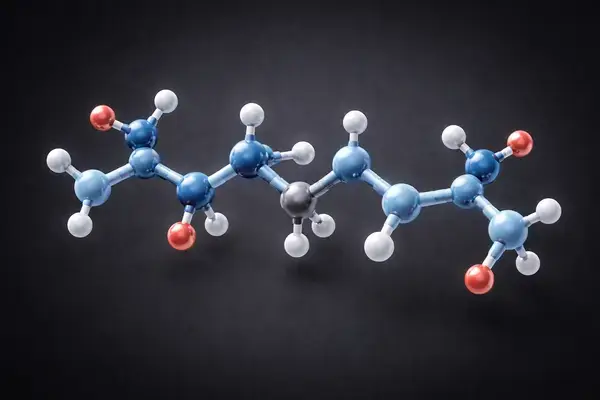
Ipamorelin didn’t arrive at its selectivity by accident. The original research team in Denmark derived it from GHRP-1 by removing the central dipeptide Ala-Trp, producing a stripped-down pentapeptide with the sequence Aib-His-D-2-Nal-D-Phe-Lys-NH2 (Raun et al., 1998). That structural simplification turned out to be the key modification.
The resulting compound retained strong GH-releasing activity while shedding the broader hormonal activation that characterized its predecessors. In primary rat pituitary cell assays, ipamorelin released growth hormone with an EC50 of 1.3 nmol/l and an Emax of 85%, numbers that closely tracked GHRP-6’s performance (EC50 of 2.2 nmol/l, Emax of 100%). Pharmacological profiling with GHRP and GHRH antagonists confirmed that ipamorelin stimulates GH release through the GHRP receptor pathway, not a novel mechanism (Raun et al., 1998).
So the potency stayed. The off-target activity didn’t. That’s the structural story in a nutshell, and it’s why researchers studying receptor-level selectivity keep circling back to ipamorelin’s molecular design as a case study in targeted peptide engineering.
The Cortisol and ACTH Evidence
The cortisol data from the study deserves a closer look because it’s not just about ipamorelin failing to raise cortisol. It’s about the dose range over which that non-response persisted.
In conscious swine, ipamorelin released GH with an ED50 of 2.3 nmol/kg and an Emax of 65 ng GH/ml plasma. Researchers then pushed the dose to more than 200 times that ED50 value. Cortisol and ACTH levels remained statistically indistinguishable from those observed after GHRH stimulation alone (Raun et al., 1998).
Compare that to GHRP-6 and GHRP-2, tested in the same model under the same conditions. Both produced increases in ACTH and cortisol at their effective GH-releasing doses, with levels higher than those seen after ipamorelin or GHRH (Raun et al., 1998).
Why does this matter for research design? Cortisol is a potent catabolic hormone regulated by the hypothalamic-pituitary-adrenal (HPA) axis (Kaur et al., 2025). When a GH secretagogue simultaneously activates HPA signaling, any downstream measurement of GH-mediated effects becomes contaminated by cortisol’s opposing metabolic influence. Researchers studying GH-specific pathways in bone metabolism, IGF-1 axis dynamics, or body composition models can’t isolate GH’s contribution if cortisol is simultaneously shifting the baseline.
Ipamorelin’s flat cortisol response across an enormous dose range gives researchers a cleaner experimental tool. It’s the difference between studying one variable and trying to untangle two.
Prolactin, FSH, LH, and TSH: The Full Pituitary Picture
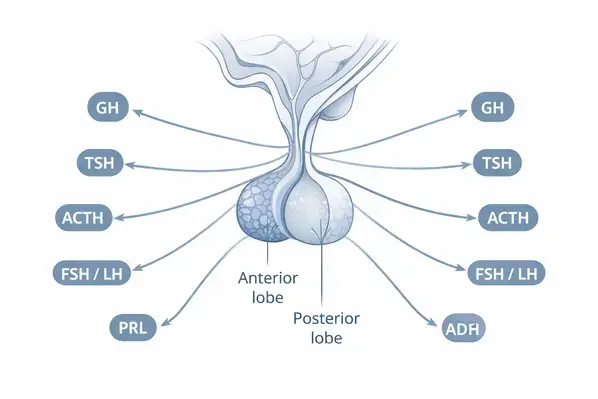
The selectivity story extends beyond cortisol. In the same swine studies, none of the tested GH secretagogues (ipamorelin, GHRP-6, or GHRP-2) significantly affected FSH, LH, PRL, or TSH plasma levels (Raun et al., 1998).
Ipamorelin consistently showed no meaningful prolactin elevation in the preclinical models where it was tested (Raun et al., 1998). This contrasts with certain other GH secretagogues in the published literature that have been documented to elevate prolactin levels alongside their GH-stimulating effects in research settings (Sinha et al., 2020).
For researchers designing long-duration studies involving repeated GH secretagogue administration, prolactin stability matters. Prolactin interacts with reproductive hormone regulation, immune function signaling, and metabolic pathways (MeSH: Prolactin). A secretagogue that introduces prolactin variability adds another uncontrolled variable to experiments that may already involve complex multi-hormone interactions.
Ipamorelin’s demonstrated stability across multiple pituitary hormone outputs is what led the research team to call it “the first GHRP-receptor agonist with a selectivity for GH release similar to that displayed by GHRH” (Raun et al., 1998). That designation wasn’t based on GH potency alone. It was based on what ipamorelin didn’t do to everything else.
Practical Implications for Research Methodology
Ipamorelin’s selectivity profile creates specific methodological advantages for researchers working in several preclinical investigation areas.
GH pulse dynamics research benefits from a secretagogue that activates GHS-R1a without simultaneously triggering HPA axis cascades. When studying GH pulse amplitude, frequency, and duration, researchers need confidence that measured changes reflect GH-specific receptor activity rather than systemic hormonal crosstalk. Ipamorelin’s receptor specificity makes it a reference standard in this context.
IGF-1 axis studies that measure hepatic IGF-1 production as a downstream readout of GH activity require clean GH stimulation at the input level. If the secretagogue used to drive GH release also elevates cortisol, the resulting IGF-1 data reflects a blended hormonal environment rather than isolated GH pathway activity.
Comparative secretagogue pharmacology is arguably where ipamorelin’s profile delivers the most value. Researchers benchmarking newer compounds against established GHRPs need a reference compound with well-characterized, minimal off-target effects. Ipamorelin’s published pharmacological profile, with specific ED50 values, Emax data, and documented non-response across multiple pituitary hormones, provides that baseline (Raun et al., 1998).
Dual-Axis Stimulation Research
Researchers have combined GHS-R1a agonists like ipamorelin with GHRH analogs to study synergistic GH release. The rationale is straightforward: GHS-R1a activation and GHRH receptor activation represent two distinct signaling inputs to pituitary somatotrophs. Stimulating both simultaneously may produce additive or synergistic GH responses (Sigalos & Pastuszak, 2018).
Ipamorelin’s selectivity profile makes it particularly suitable for this type of dual-axis research. When combining two compounds to study synergistic effects, researchers need to attribute observed outcomes to the interaction between the two stimulation pathways. If one compound introduces cortisol elevation, prolactin changes, or other off-target hormonal activity, parsing the contribution of each pathway becomes significantly harder.
A clean GHS-R1a agonist paired with a clean GHRH analog gives researchers the tightest possible experimental design for studying dual-pathway GH stimulation without HPA axis interference.
Conclusion: Selectivity Is the Variable That Changes Experimental Design
Potency gets attention. Selectivity changes what researchers can actually measure. GHRP-2 outperforms ipamorelin on raw GH-releasing potency (ED50 of 0.6 nmol/kg versus 2.3 nmol/kg), but every experiment using GHRP-2 carries cortisol and ACTH elevation as confounding baggage (Raun et al., 1998). Ipamorelin flips that equation. Its flat cortisol response across a 200-fold dose range above its ED50 doesn’t just reduce noise in GH-focused studies. It eliminates an entire category of experimental confound.
For investigators building preclinical protocols around GH pulse dynamics, IGF-1 axis readouts, or dual-pathway stimulation models, that distinction dictates which downstream measurements are trustworthy and which are contaminated. The published study dataset provides the pharmacological baseline. The research opportunity sits in extending those findings across new model organisms, longer study durations, and combination protocols that leverage ipamorelin’s clean GHS-R1a activation as a controlled experimental input.
FAQs
What receptor does ipamorelin target in research models?
Ipamorelin acts as an agonist at the growth hormone secretagogue receptor type 1a (GHS-R1a), the same receptor activated by endogenous ghrelin (Sinha et al., 2020). Pharmacological profiling in the 1998 study confirmed this through antagonist experiments using both GHRP and GHRH receptor blockers. Ipamorelin’s GH release was inhibited by GHRP antagonists but not GHRH antagonists, confirming it works through the GHRP receptor pathway rather than the GHRH receptor (Raun et al., 1998). This receptor-level specificity is what makes the compound useful for researchers who need to isolate GHS-R1a-mediated GH signaling from GHRH-mediated pathways in preclinical models. Ipamorelin is sold strictly for laboratory research and is not for human consumption.
How does ipamorelin’s cortisol response differ from GHRP-6 and GHRP-2 in preclinical studies?
In conscious swine models, both GHRP-6 and GHRP-2 produced increases in ACTH and cortisol at their effective GH-releasing doses. Ipamorelin, tested under identical conditions, did not elevate ACTH or cortisol at levels distinguishable from GHRH stimulation alone. Critically, this non-response held even when researchers pushed ipamorelin to doses exceeding 200 times its ED50 for GH release. No other GHRP tested in that study maintained cortisol neutrality across that dose range (Raun et al., 1998). This data comes from a single preclinical species model, and researchers should consider species-specific variation when designing new protocols. All ipamorelin referenced here is intended for qualified research use only, not human consumption.
Why do researchers use ipamorelin as a reference compound in comparative secretagogue studies?
A reference compound needs two things: well-characterized pharmacology and minimal off-target activity. Ipamorelin delivers both. Its published ED50 (2.3 nmol/kg in swine), EC50 (1.3 nmol/l in rat pituitary cells), and Emax values (85% in vitro, 65 ng/ml in vivo) give researchers precise benchmarks (Raun et al., 1998). Its documented non-response across cortisol, ACTH, prolactin, FSH, LH, and TSH provides confidence that measured differences between ipamorelin and a test compound reflect genuine pharmacological divergence rather than confounding hormonal crosstalk. When evaluating a novel GH secretagogue, comparing it against a compound with this level of published specificity data produces cleaner, more interpretable results. Ipamorelin is available for research purposes only and is not approved for human use.
What is ipamorelin’s molecular structure and how was it developed?
Ipamorelin is a synthetic pentapeptide with the amino acid sequence Aib-His-D-2-Nal-D-Phe-Lys-NH2. It was developed by a research team in Denmark through a chemistry program that systematically modified GHRP-1’s structure. The key modification was removing the central dipeptide Ala-Trp from GHRP-1, which produced a shorter peptide that retained GH-releasing potency while losing the broader pituitary hormone activation seen in earlier GHRPs. The compound was first described in the published literature in 1998 in the European Journal of Endocrinology by Raun, Hansen, Johansen, and colleagues (Raun et al., 1998). That paper remains the foundational pharmacological characterization cited in subsequent reviews and research. Ipamorelin is designated for research and educational purposes only and is not intended for human consumption.
Can ipamorelin be studied alongside GHRH analogs in dual-pathway research protocols?
Yes, and its selectivity profile makes it particularly well-suited for this application. Dual-axis GH stimulation research involves activating both the GHS-R1a pathway and the GHRH receptor pathway simultaneously to study additive or synergistic GH release (Sigalos & Pastuszak, 2018). When one compound in a combination protocol introduces off-target hormonal changes (cortisol elevation, prolactin shifts), attributing observed outcomes to the intended pathway interaction becomes unreliable. Ipamorelin’s documented stability across cortisol, ACTH, and prolactin in preclinical models means researchers can pair it with a GHRH analog and have greater confidence that measured GH responses reflect the dual-pathway interaction rather than confounding HPA axis activation. Ipamorelin is for qualified research use only, not for human consumption, and has not been evaluated or approved by the FDA.
References
- Raun K, Hansen BS, Johansen NL, Thogersen H, Madsen K, Ankersen M, Andersen PH. Ipamorelin, the first selective growth hormone secretagogue. Eur J Endocrinol. 1998;139(5):552-561. PubMed
- Kaur J, Gandhi J, Sharma S. Physiology, Cortisol. In: StatPearls. Treasure Island (FL): StatPearls Publishing; 2025. NCBI Bookshelf
- Sinha DK, Balasubramanian A, Tatem AJ, et al. Beyond the androgen receptor: the role of growth hormone secretagogues in the modern management of body composition in hypogonadal males. Transl Androl Urol. 2020;9(Suppl 2):S149-S159. PMC
- Prolactin. Medical Subject Headings (MeSH), U.S. National Library of Medicine. Descriptor D011388. MeSH
- Sigalos JT, Pastuszak AW. The Safety and Efficacy of Growth Hormone Secretagogues. Sex Med Rev. 2018;6(1):45-53. PMC