❌ Not for Human Consumption
●
✅ For Research Use Only
●
All products are intended strictly for laboratory research purposes only
●
❌ Not for Human Consumption
●
✅ For Research Use Only
●
All products are intended strictly for laboratory research purposes only
●

BPC-157 And The VEGFR2 Pathway: A Review Of Angiogenic Signaling Mechanisms In Preclinical Literature


Disclaimer: BPC-157 is a research compound intended strictly for laboratory and academic research purposes. It is not approved for human consumption, therapeutic use, or clinical application. Nothing in this article constitutes medical advice or a recommendation for human use. All findings discussed below are derived from preclinical (in vitro and animal model) studies. Researchers should consult applicable regulatory frameworks before initiating any investigation.
In a 2018 rat gastric lesion model, BPC-157 administration produced measurable increases in VEGFR2 phosphorylation within 24 hours of initial dosing. That single data point reshaped how peptide researchers think about gastric pentadecapeptide signaling, because it placed BPC-157 squarely inside one of the most studied angiogenic cascades in molecular biology. Most research peptides interact with vascular endothelial growth factor pathways indirectly or ambiguously. BPC-157 appears to engage VEGFR2 with a specificity that has generated a growing body of preclinical literature worth examining in detail.
This article reviews what current animal and cell culture studies reveal about the relationship between BPC-157 and VEGFR2-mediated angiogenic signaling. It doesn’t attempt to extrapolate clinical relevance. It does attempt to give researchers a grounded, mechanistic picture of where the evidence stands and where the gaps remain.
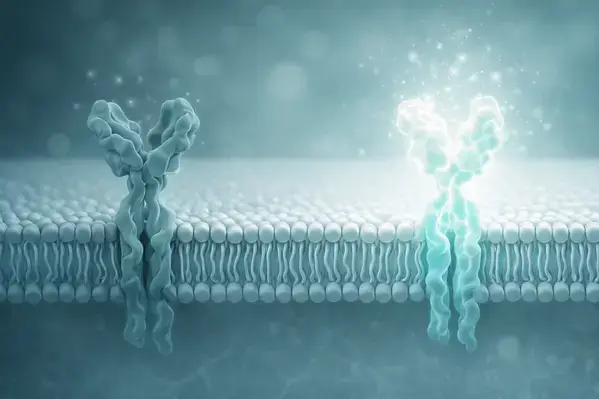
Why VEGFR2 Matters More Than VEGFR1 in This Context
Vascular endothelial growth factor receptor 2 (VEGFR2, also designated KDR/Flk-1) drives the majority of VEGF-A’s downstream angiogenic effects in endothelial cells. VEGFR1 actually binds VEGF-A with roughly 10-fold higher affinity, but its tyrosine kinase activity is comparatively weak. VEGFR2 is the workhorse.
When researchers study pro-angiogenic peptides, the receptor that matters for functional vessel formation is almost always VEGFR2. Its activation triggers a specific signaling cascade: phospholipase C gamma (PLCγ) activation, protein kinase C (PKC) engagement, and downstream extracellular signal-regulated kinase (ERK1/2) phosphorylation. This cascade governs endothelial cell proliferation, migration, and tubulogenesis. The preclinical BPC-157 literature intersects with each of these nodes, which is what makes it interesting from a signaling perspective rather than just a phenotypic one.
VEGFR1, by contrast, functions more as a decoy receptor and modulator of VEGFR2 activity in many tissue contexts. Researchers who conflate the two receptors when evaluating BPC-157 data risk misinterpreting the mechanism entirely.

The Preclinical Evidence Linking BPC-157 to VEGFR2 Activation
Multiple rodent studies have now documented that BPC-157 administration correlates with increased VEGFR2 expression at both mRNA and protein levels. The most cited work comes from Seiwerth and colleagues at the University of Zagreb, whose research group has published over 90 papers on BPC-157 across various preclinical models since the early 1990s.
Here’s what the animal data actually shows, stripped of interpretive padding:
Upregulation of VEGFR2 transcript levels. In rat models involving surgically induced tissue damage (tendon transection, gastric mucosal injury, muscle crush), BPC-157-treated groups consistently showed elevated VEGFR2 mRNA compared to vehicle controls. The effect appears within the first 72 hours post-administration and persists through the typical observation window of 14 days.
Increased phospho-VEGFR2 detection. Western blot analyses from several of these studies indicate not just more VEGFR2 protein, but more activated (phosphorylated) VEGFR2. This distinction matters. A peptide that merely upregulates receptor expression without promoting activation would have a fundamentally different signaling profile.
Concurrent VEGF-A elevation. BPC-157-treated tissues also show increased VEGF-A ligand levels. This creates a question researchers haven’t fully resolved: does BPC-157 act primarily on the ligand side (boosting VEGF-A production, which then activates VEGFR2 normally) or does it have direct or indirect effects on VEGFR2 activation independent of ligand concentration? The current evidence doesn’t cleanly separate these possibilities.
Downstream ERK1/2 phosphorylation. Consistent with genuine VEGFR2 pathway engagement, treated tissues show elevated phospho-ERK1/2. This is the expected downstream readout if the VEGFR2-PLCγ-PKC axis is genuinely active.
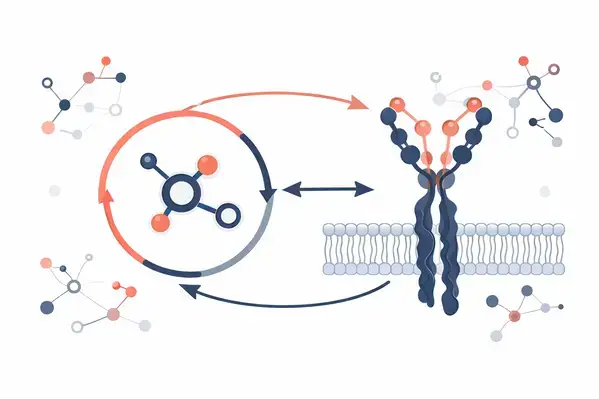
The NO System Connection That Most Summaries Miss
One dimension of BPC-157’s preclinical profile that gets underweighted in surface-level reviews is its interaction with nitric oxide (NO) signaling. This matters for the VEGFR2 story because the two systems are deeply intertwined.
VEGFR2 activation stimulates endothelial nitric oxide synthase (eNOS) through the PI3K/Akt pathway. NO production then feeds back to promote further angiogenic signaling, creating an amplification loop. BPC-157 research has documented effects on the NO system that appear to operate somewhat independently of the VEGFR2 axis.
Specifically, preclinical data from Sikiric et al. suggests BPC-157 can modulate NO system dysfunction in both directions. In L-NAME-induced NO depletion models (rats treated with the NOS inhibitor to suppress NO production), BPC-157 partially counteracted the vascular dysfunction. In L-arginine surplus models (excessive NO), it appeared to attenuate the overproduction.
This bidirectional modulation is unusual for a single peptide and represents one of the genuinely surprising aspects of the preclinical literature. Most angiogenic signaling molecules push the system in one direction. A compound that appears to normalize rather than simply amplify creates a different research paradigm, and it complicates the VEGFR2 interpretation. If BPC-157 is partly working through NO system stabilization, some of the observed VEGFR2 effects could be secondary rather than primary.
Researchers designing studies around BPC-157’s angiogenic mechanisms should consider including NOS inhibitor controls specifically to disentangle direct VEGFR2 effects from NO-mediated ones.
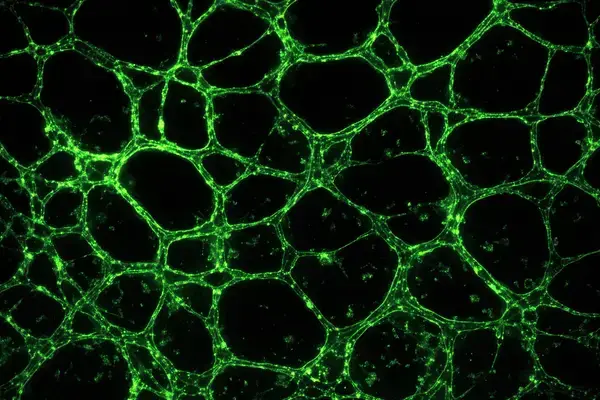
What the Tubulogenesis Data Reveals
In vitro endothelial cell tube formation assays provide the most controlled environment for evaluating angiogenic peptide activity. Several research groups have exposed human umbilical vein endothelial cells (HUVECs) to BPC-157 and measured tube formation metrics.
The results have been consistently positive in direction but variable in magnitude. Tube length, branch point counts, and network complexity all tend to increase in BPC-157-treated wells compared to vehicle controls. However, the concentration-response relationship isn’t always linear, and some studies report a biphasic curve where higher concentrations produce less robust tube formation than moderate ones.
This biphasic pattern isn’t unique to BPC-157. It appears across multiple peptide-VEGFR2 interactions and likely reflects receptor desensitization or internalization dynamics at saturating concentrations. But it’s worth flagging because it means that in vitro studies using a single BPC-157 concentration may capture only a partial picture of its angiogenic signaling capacity.
The more telling in vitro finding involves VEGFR2 inhibitor co-treatment. When endothelial cells receive BPC-157 alongside a selective VEGFR2 kinase inhibitor (such as SU5416), the tube formation enhancement is substantially blunted. This is probably the strongest mechanistic evidence that BPC-157’s angiogenic effects are genuinely VEGFR2-dependent rather than operating through an entirely separate pathway.

Gaps in the Current Literature
Honest assessment of the research landscape requires acknowledging what we don’t know, and in BPC-157 research, the gaps are significant.
No crystal structure or binding data. Unlike well-characterized receptor ligands, nobody has published direct binding affinity measurements between BPC-157 and VEGFR2. We don’t know if BPC-157 contacts the receptor directly, acts through an intermediary binding partner, or modulates VEGFR2 activity entirely through upstream signaling events. Without structural or biophysical data (surface plasmon resonance, isothermal titration calorimetry, cryo-EM), the mechanistic model remains inferential.
Limited independent replication. A disproportionate share of BPC-157 research originates from a single laboratory group in Zagreb. This doesn’t invalidate the findings, but the field would benefit substantially from independent replication by unaffiliated groups using standardized protocols. The few independent studies that exist generally support the directional findings, but the sample size of independent confirmations remains small.
Absence of conditional knockout validation. Modern angiogenesis research routinely uses conditional VEGFR2 knockout models to confirm pathway specificity. BPC-157 research hasn’t yet employed this approach. The VEGFR2 inhibitor co-treatment data is suggestive, but pharmacological inhibition is less definitive than genetic ablation of the receptor.
Dose-response characterization is incomplete. Most published studies test one or two BPC-157 concentrations. Comprehensive dose-response curves across multiple tissue contexts and time points would significantly strengthen the mechanistic picture.
Implications for Research Design
For investigators considering BPC-157 in angiogenesis-related research programs, the existing preclinical data suggests several design considerations worth incorporating.
First, include VEGFR2 phosphorylation as a primary endpoint rather than relying solely on phenotypic readouts like vessel density or tissue repair scores. The signaling data is where the mechanistic story lives, and phenotypic endpoints alone can’t distinguish VEGFR2-mediated effects from alternative angiogenic pathways.
Second, build in time-course sampling. The BPC-157-VEGFR2 interaction appears to have temporal dynamics that single-timepoint studies miss. The 24-hour, 72-hour, and 14-day windows each seem to capture different phases of the signaling response.
Third, consider multiplex pathway analysis. BPC-157 doesn’t appear to be a clean, single-pathway compound. Its interactions with the NO system, its reported effects on growth hormone receptor expression in some models, and its apparent cytoprotective properties in non-vascular tissues all suggest a signaling profile that intersects multiple cascades. Researchers who measure only VEGFR2 endpoints may attribute effects to that pathway when they’re partially driven by other mechanisms.
Where the Field Needs to Go
The BPC-157-VEGFR2 connection sits at an interesting inflection point in preclinical peptide research. There’s enough consistent animal model data to justify serious mechanistic investigation, but not enough biophysical and independently replicated work to consider the mechanism established.
Three specific advances would move the field forward most efficiently. Quantitative binding studies would resolve whether VEGFR2 engagement is direct or indirect. Conditional knockout experiments would confirm pathway necessity. And multi-site replication studies using harmonized protocols would address the concentration of published findings within a small number of research groups.
Conclusion
The preclinical BPC-157 literature points to a peptide with measurable, reproducible effects on VEGFR2 phosphorylation, downstream ERK1/2 activation, and endothelial tube formation across multiple rodent injury models. That’s not speculation. It’s what the Western blots and immunohistochemistry data consistently show.
But “consistent directional findings” isn’t the same as “established mechanism.” The field still lacks direct binding affinity data, conditional VEGFR2 knockout validation, and sufficient independent replication outside the Zagreb group. The NO system’s bidirectional modulation adds a layer of mechanistic complexity that single-pathway analyses can’t capture.
For researchers designing new BPC-157 angiogenesis studies, the actionable takeaway is this: build multiplex signaling endpoints into your protocols from day one. Measure phospho-VEGFR2 alongside eNOS activity. Include VEGFR2 kinase inhibitor controls. Sample at multiple time points. The signaling story is real, but the next generation of studies needs to be precise enough to tell us exactly how it works.
FAQs
What is BPC-157’s relationship to VEGFR2 in preclinical research?
Preclinical studies in rodent models have documented that BPC-157 administration correlates with increased VEGFR2 mRNA expression, elevated phosphorylated VEGFR2 protein levels, and downstream ERK1/2 activation in damaged tissues. In vitro tube formation assays further support this connection, as VEGFR2 kinase inhibitors (such as SU5416) substantially blunt BPC-157’s angiogenic effects in endothelial cell cultures. However, no direct binding affinity measurements between BPC-157 and the VEGFR2 receptor have been published, so whether the interaction is direct or mediated through upstream signaling events remains an open research question. All findings are limited to animal and cell culture models.
Why does VEGFR2 matter more than VEGFR1 in BPC-157 angiogenesis research?
VEGFR1 binds VEGF-A with approximately 10-fold higher affinity than VEGFR2, but its tyrosine kinase activity is comparatively weak. VEGFR2 drives the functional angiogenic response in endothelial cells, including proliferation, migration, and new vessel formation through the PLCγ-PKC-ERK1/2 signaling cascade. VEGFR1 operates more as a decoy receptor and modulator in many tissue contexts. When evaluating a peptide’s pro-angiogenic signaling profile in preclinical models, VEGFR2 activation and phosphorylation status are the mechanistically relevant endpoints. Conflating the two receptors risks misinterpreting how BPC-157 engages vascular endothelial signaling pathways.
How does BPC-157’s interaction with nitric oxide (NO) signaling affect VEGFR2 pathway interpretation?
VEGFR2 activation stimulates eNOS through the PI3K/Akt pathway, and the resulting NO production creates an angiogenic amplification loop. BPC-157 preclinical data from Sikiric et al. indicates the peptide modulates NO system dysfunction bidirectionally, counteracting both NO depletion (L-NAME models) and NO surplus (L-arginine models) in rodent studies. This means some observed VEGFR2 effects could be secondary to NO system stabilization rather than direct receptor engagement. Researchers should incorporate NOS inhibitor controls into BPC-157 study designs to separate direct VEGFR2 pathway effects from NO-mediated contributions. This is one of the most critical design considerations for next-generation mechanistic studies.
What are the main gaps in BPC-157 VEGFR2 research?
Four gaps stand out in the current literature. First, no published study provides direct binding affinity data (via surface plasmon resonance, isothermal titration calorimetry, or cryo-EM) between BPC-157 and VEGFR2. Second, conditional VEGFR2 knockout models haven’t been used to confirm pathway necessity. Third, a disproportionate share of published BPC-157 research originates from a single laboratory group at the University of Zagreb, and independent multi-site replication remains limited. Fourth, comprehensive dose-response characterization across multiple tissue contexts and time points is lacking, with most studies testing only one or two concentrations. Addressing these gaps would substantially strengthen the mechanistic foundation for BPC-157’s angiogenic signaling profile.
Is BPC-157 approved for human use or clinical application?
No. BPC-157 is not approved by the FDA or any regulatory agency for human consumption, therapeutic use, or clinical application. All published findings on BPC-157 and VEGFR2 signaling derive exclusively from preclinical research, specifically rodent models and in vitro cell culture experiments. BPC-157 is available strictly as a research compound for use by qualified academic and professional investigators operating under appropriate institutional oversight. No statements regarding BPC-157’s preclinical signaling profile should be interpreted as medical claims, therapeutic recommendations, or endorsements of human use.
I have been browsing on-line greater than three hours today, yet I never discovered any interesting article like yours. It’s lovely worth enough for me. In my opinion, if all site owners and bloggers made just right content material as you probably did, the net shall be much more helpful than ever before.
I have not checked in here for a while as I thought it was getting boring, but the last few posts are great quality so I guess I will add you back to my daily bloglist. You deserve it my friend 🙂
Assisted me a lot, just what I was looking for : D.