
The Role Of Copper In Peptide Bioactivity: A Research Overview Of GHK-Cu

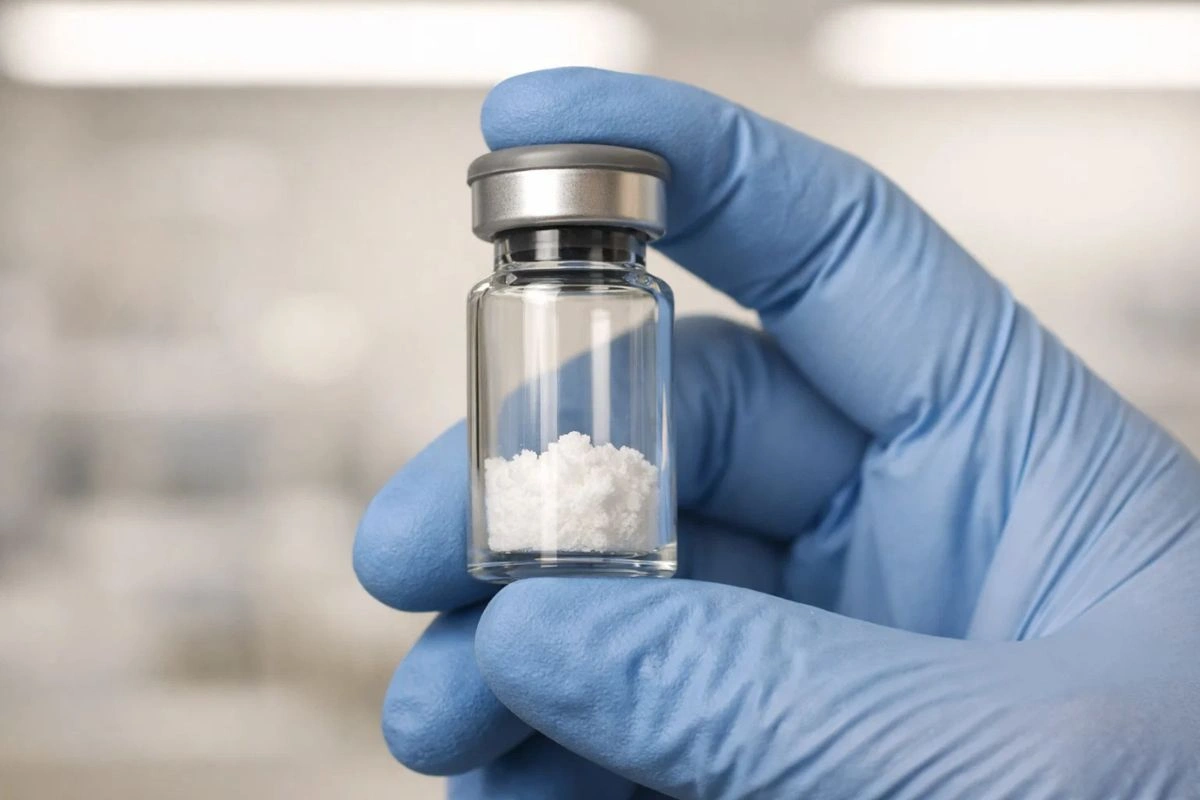
The intersection of trace metals and peptide biochemistry has opened a compelling frontier in laboratory research. Among the compounds drawing significant attention from the scientific community, GHK-Cu (glycyl-L-histidyl-L-lysine copper complex) stands out as a naturally occurring copper tripeptide that has become a frequent subject of in vitro and in vivo investigation.
First isolated from human plasma albumin by Dr. Loren Pickart in 1973, with the glycyl-L-histidyl-L-lysine sequence confirmed in 1977, GHK-Cu has since been referenced in hundreds of peer-reviewed studies. These studies have examined its biochemical properties, its interactions at the molecular level, and its potential relevance across multiple fields of biological inquiry. For researchers seeking to understand how copper ions influence peptide behavior, IT serves as a valuable reference compound.
This article provides an overview of current published research on IT, its biochemical profile, and why it continues to attract interest in academic and laboratory settings. All references point to existing literature and are presented for informational and educational purposes only.
Disclaimer: GHK-Cu is sold strictly for research and educational purposes only. It is not intended for human consumption, therapeutic use, or any clinical application. The information presented in this article is drawn from published peer-reviewed literature and is intended solely for professional researchers, scientists, and academics. Nothing in this article constitutes medical advice, a health claim, or an endorsement for personal use.
What Is GHK-Cu? A Biochemical Profile
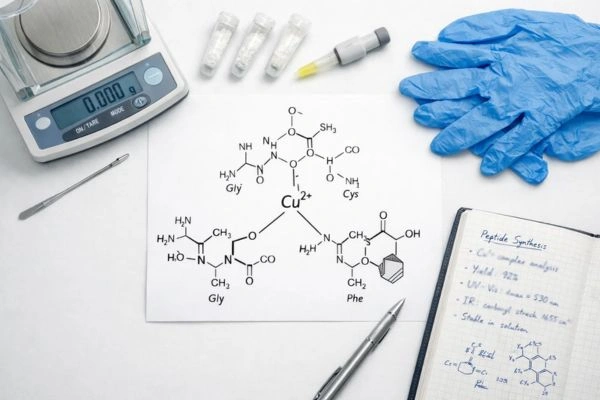
GHK-Cu is a tripeptide with a high binding affinity for copper(II) ions. Its molecular formula is C₁₄H₂₂CuN₆O₄ (CAS 89030-95-5), and its structure consists of three amino acids (glycine, histidine, and lysine) complexed with a single copper(II) ion.
Published research has established several key biochemical characteristics of this peptide:
- Endogenous Origin: GHK-Cu has been detected naturally in human plasma, saliva, and urine. Reported plasma concentrations decline from approximately 200 ng/mL at age 20 to 80 ng/mL by age 60, a roughly 60% reduction that has prompted further investigation into its biological relevance in age-related biochemical research.
- Copper Binding: The peptide demonstrates a strong affinity for Cu(II), with a reported stability constant of log K = 16.44 at physiological pH. This binding strength is notably higher than that of the related GH dipeptide (log K = 8.68), and the resulting complex has been studied extensively for its role in copper ion transport and delivery within biological systems.
- Small Molecular Weight: With a relatively low molecular weight, IT is of particular interest in studies examining peptide permeability and cellular uptake mechanisms.
These properties make IT a well-defined and reproducible compound for controlled laboratory experimentation.
Published Research Areas: Where GHK-Cu Has Been Studied
The body of literature surrounding GHK-Cu spans several distinct research domains. Below is a summary of the key areas where this copper peptide has been examined in published, peer-reviewed studies.
1. Gene Expression Studies
One of the most cited aspects of GHK-Cu research involves its observed effects on gene expression in laboratory models. A 2018 review by Pickart and Margolina (International Journal of Molecular Sciences 19(7):1987, PMID 29986520) analyzed publicly available Connectivity Map datasets and reported associations between GHK exposure and shifts in gene expression profiles across a subset of measured genes. Earlier studies, including Hong et al. (2012) and Campbell et al. (2012), described similar observations in defined gene sets within controlled research models. These findings are presented as dataset-level observations rather than clinical conclusions.
These gene expression studies have been conducted in controlled research environments and represent observational data rather than clinical conclusions. They remain a significant area of interest for researchers studying peptide-gene interactions.
2. Extracellular Matrix (ECM) Research
Multiple in vitro studies have explored GHK-Cu in the context of extracellular matrix (ECM) biology. Published literature describes its inclusion in experimental models examining ECM-associated components, including structural proteins and signaling mediators, within controlled cell culture environments. These findings are reported as part of broader investigations into peptide interactions under laboratory conditions.
3. Copper Ion Transport and Metallobiochemistry
The role of copper as a cofactor in enzymatic reactions is well established in biochemistry.
GHK-Cu has been studied as a model compound for examining copper binding behavior and peptide-associated metal interactions in biological systems. This line of inquiry is relevant to researchers investigating trace metal homeostasis and coordination chemistry under controlled laboratory conditions.
4. Antioxidant Mechanism Research
Several studies have examined GHK-Cu in the context of oxidative stress models. Published research has documented observations of its behavior in systems measuring reactive oxygen species (ROS) and lipid peroxidation. These studies contribute to the broader academic understanding of how copper-peptide complexes interact with oxidative pathways under experimental conditions.
5. Cell Signaling Pathway Investigation
Researchers studying cellular signaling have referenced GHK-Cu in experimental contexts involving a range of signaling pathways, including those commonly evaluated in molecular biology research, such as TGF-beta and VEGF-related systems. These investigations are conducted in controlled laboratory environments and are focused on characterizing peptide-associated interactions at the molecular level.

Why Researchers Choose GHK-Cu as a Study Compound
GHK-Cu has earned a consistent presence in peptide research for several practical and scientific reasons:
- Reproducibility: As a well-characterized tripeptide with a defined molecular structure, IT offers high reproducibility across experiments. Researchers can source reference-grade material and expect consistent behavior in standardized assay conditions.
- Broad Research Applicability: The compound intersects with multiple research disciplines, including biochemistry, molecular biology, metallochemistry, and cell biology. This cross-disciplinary relevance makes it a versatile tool in the laboratory.
- Established Literature Base: With decades of published data available, new researchers entering the field can build on a substantial foundation of prior work. This existing body of knowledge reduces the need for preliminary characterization and allows investigators to focus on novel research questions.
- Defined Copper-Peptide Interaction: For scientists studying metal-peptide coordination chemistry, IT provides a well-documented model system that has been characterized using spectroscopic, crystallographic, and computational methods.
GHK-Cu in the Context of Peptide Research Trends
The broader peptide research landscape has experienced significant growth in recent years. Academic institutions, government-funded laboratories, and private research organizations have expanded their investigation of bioactive peptides across numerous categories. Within this landscape, copper-coordinated peptides occupy a specialized niche.
GHK-Cu benefits from this broader trend as researchers increasingly explore how metal coordination affects peptide folding, stability, and bioactivity. The compound provides a concrete case study that illustrates how a single copper ion can influence the conformational behavior and biological interactions of a small peptide.
For researchers focused on structure-activity relationships (SAR), IT offers a well-controlled system for probing how modifications to the peptide backbone, amino acid sequence, or metal center alter measurable outcomes in laboratory assays.
Sourcing Research-Grade GHK-Cu
For any study to yield meaningful data, the quality of the compounds used is essential. Researchers should prioritize suppliers that provide:
- Certificate of Analysis (COA) with verified purity data
- Third-party analytical testing (HPLC, mass spectrometry)
- Proper storage and handling documentation
- Clear labeling indicating the product is intended for research use only
When selecting GHK-Cu for laboratory experiments, confirming compound identity and purity ensures that experimental results are attributable to the peptide itself rather than impurities or degradation products.

Important Regulatory and Compliance Information
GHK-Cu, as sold for research purposes, is not a drug, supplement, food product, or cosmetic ingredient intended for consumer use. The following regulatory points are critical for all researchers and institutions to observe:
- Not for Human Consumption: GHK-Cu research materials are designated for in vitro and laboratory use only. They are not manufactured, tested, or approved for ingestion, injection, or any form of administration to humans or animals outside of approved research protocols.
- No Medical or Therapeutic Claims: Nothing in this article or in the sale of IT implies any diagnosis, treatment, cure, or prevention of any disease or medical condition. All referenced studies are presented as published findings from controlled research environments.
- Institutional Compliance: Researchers are responsible for ensuring that their use of IT complies with all applicable institutional review board (IRB) guidelines, local regulations, and federal requirements governing research materials.
- FDA Notice: These products have not been evaluated by the U.S. Food and Drug Administration. They are not intended to diagnose, treat, cure, or prevent any disease.
Conclusion
Fifty-plus years after Pickart’s initial isolation, GHK-Cu occupies an unusual position in peptide research: a compound old enough to have a settled body of structural and biochemical data, yet recent genome-wide analyses continue to surface mechanisms that earlier methods couldn’t detect. Its defined structure, reproducible behavior in laboratory assays, and documented relevance across gene expression, ECM biology, and metallobiochemistry make it a valuable compound for ongoing investigation.
As peptide science continues to evolve, IT provides researchers with a robust platform for exploring fundamental questions about metal-peptide interactions, gene expression research and profiling, and cellular signaling mechanisms. The existing body of published work ensures that new studies can build on a solid foundation of characterized data.
For professional researchers and academic scientists, GHK-Cu represents an opportunity to advance our understanding of copper-peptide biochemistry through rigorous, well-controlled experimentation.
Final Disclaimer: This article is published for informational and educational purposes only. IT is intended exclusively for use by qualified researchers in laboratory settings. It is not for human consumption, and no information presented here should be construed as medical advice or a recommendation for personal use. All research should be conducted in accordance with applicable laws, institutional guidelines, and ethical standards.
Frequently Asked Questions
What makes GHK-Cu a preferred reference compound for copper-peptide interaction studies in the laboratory?
GHK-Cu offers a fully characterized tripeptide structure complexed with a single copper(II) ion, giving researchers a reproducible and well-documented model system. Decades of published spectroscopic, crystallographic, and computational data already define its coordination chemistry and behavior under standard assay conditions. Start your experimental design by referencing this existing literature base, it eliminates the need for extensive preliminary characterization and allows you to focus directly on your novel research questions.
Which published research domains have generated the most peer-reviewed data on GHK-Cu to date?
Five primary domains drive the current literature: gene expression profiling, extracellular matrix biology, copper ion transport and metallobiochemistry, antioxidant mechanism research, and cell signaling pathway investigation. Review studies from each domain before designing your protocols, as cross-disciplinary findings often inform experimental controls and variable selection. The Broad Institute’s Connectivity Map study on GHK-Cu and gene expression is a particularly well-cited starting point for researchers entering this field.
How should researchers verify GHK-Cu compound identity and purity before beginning experiments?
Require a batch-specific Certificate of Analysis from your supplier that includes HPLC purity data and mass spectrometry confirmation of molecular weight. Cross-check that the reported molecular formula matches C₁₄H₂₂CuN₆O₄ and that purity meets or exceeds 98% for research-grade work. Request third-party analytical verification whenever possible, independent confirmation ensures your experimental outcomes reflect genuine peptide activity rather than artifacts introduced by impurities or degradation products.
What specific cell signaling pathways have researchers examined using GHK-Cu in laboratory settings?
Published studies document GHK-Cu investigation across TGF-beta, VEGF, and multiple growth factor signaling cascades in controlled cell culture systems. Researchers have also examined its interactions within oxidative stress models measuring reactive oxygen species and lipid peroxidation. When designing your signaling experiments, include pathway-specific inhibitors as controls to isolate GHK-Cu’s contribution from background cellular activity and confirm that observed effects are directly attributable to the copper-peptide complex.
What regulatory and compliance requirements must researchers meet before using GHK-Cu in their studies?
Confirm that your use of GHK-Cu aligns with your institution’s IRB guidelines, local regulations, and all applicable federal requirements governing research materials. Document that the compound is designated strictly for in vitro and laboratory investigation, it is not approved for human consumption, therapeutic application, or animal administration outside of sanctioned research protocols. Maintain a clear paper trail covering sourcing documentation, handling procedures, and storage conditions to satisfy both institutional compliance reviews and publication-level reproducibility standards.