
Analytical Methods For Verifying GHK-Cu Purity And Copper Content In Research Samples

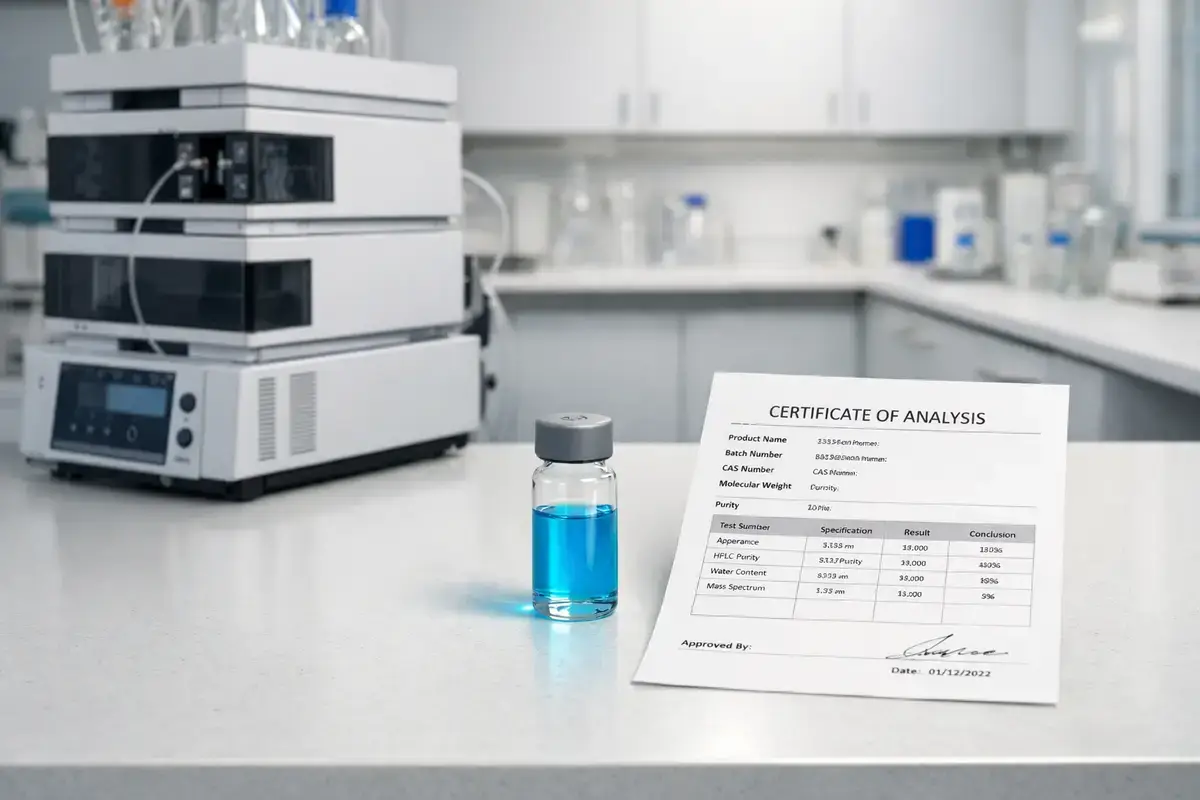
Verifying GHK-Cu purity and copper content requires a combination of chromatographic, spectrometric, and elemental analysis techniques applied in sequence. No single method can fully characterize a copper-peptide complex on its own. Researchers working with GHK-Cu in laboratory settings rely on the following core analytical methods to confirm sample identity, assess peptide purity, and quantify copper loading before use in controlled experiments:
- Reversed-Phase HPLC (RP-HPLC) separates the target tripeptide from synthetic impurities, deletion sequences, and degradation products based on hydrophobicity, serving as the primary purity determination method for research-grade peptides.
- Electrospray Ionization Mass Spectrometry (ESI-MS) confirms molecular identity by detecting the intact GHK-Cu molecular ion and its characteristic copper isotope doublet pattern (Cu-63/Cu-65), verifying that the peptide-metal complex is correctly formed.
- Inductively Coupled Plasma Mass Spectrometry (ICP-MS) quantifies total copper content against the theoretical value of approximately 15.7% by weight, revealing whether the sample has complete copper chelation, free copper contamination, or batch-to-batch variability.
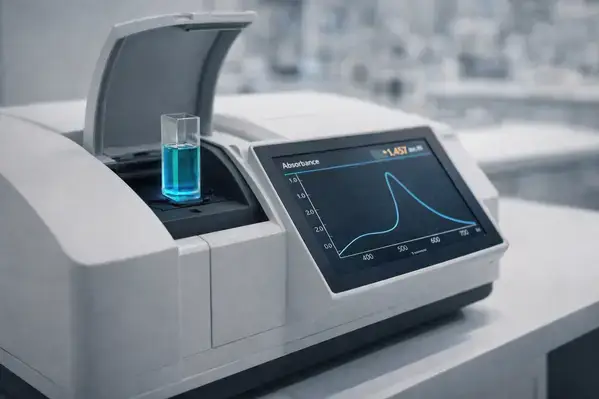
- UV-Visible Spectrophotometry provides rapid, nondestructive screening by detecting the copper(II) d-d transition absorption band between 600 and 700 nm, confirming active copper coordination in solution.
- Fourier Transform Infrared Spectroscopy (FTIR) delivers structural fingerprint data on the peptide backbone and copper coordination environment through characteristic amide and imidazole absorption bands.
Together, these five techniques form the analytical foundation that qualified research professionals use to evaluate GHK-Cu sample quality, interpret certificates of analysis, and build reproducible quality control protocols. Each method addresses a different dimension of sample characterization, and using them in combination minimizes the risk of accepting material with hidden impurities or incorrect copper-to-peptide stoichiometry.
This guide walks through each analytical method in detail, explains how to interpret results for copper-binding peptide complexes, and outlines a practical incoming quality control workflow for laboratories that regularly handle GHK-Cu research materials.
Disclaimer: GHK-Cu (glycyl-L-histidyl-L-lysine copper complex) is sold and intended strictly for in vitro research and laboratory use only. It is not a drug, supplement, food product, or cosmetic. GHK-Cu is not intended for human or animal consumption, and it has not been approved by the U.S. Food and Drug Administration (FDA) for any therapeutic, diagnostic, or preventive use. All information presented in this article is for educational and research reference purposes only. Researchers must comply with all applicable federal, state, and institutional regulations when handling peptide research materials.
Understanding GHK-Cu: A Brief Overview for Researchers
GHK-Cu is a naturally occurring tripeptide-copper complex composed of glycine, histidine, and lysine coordinated with a copper(II) ion. In research contexts, this peptide-metal chelate has drawn significant attention for its role in copper ion transport studies, metallopeptide coordination chemistry, and in vitro cellular signaling investigations.
Because GHK-Cu contains both an organic peptide backbone and a coordinated metal center, quality verification requires a dual approach: organic peptide purity analysis alongside inorganic elemental quantification. A single technique is rarely sufficient. Laboratories that rely on only one method risk accepting samples with hidden impurities, degradation products, or incorrect copper-to-peptide stoichiometry.
Why Purity Verification Matters in Peptide Research
Impurities in research-grade peptides can introduce confounding variables that compromise experimental reproducibility. Common contaminants in synthetic copper peptide preparations include:
- Truncated peptide sequences from incomplete solid-phase synthesis
- Deletion peptides missing one or more amino acid residues
- Free copper ions not properly chelated to the peptide ligand
- Residual trifluoroacetic acid (TFA) or acetate counterions from purification buffers
- Oxidation byproducts formed during storage or handling
Each of these impurities can alter the observed behavior of GHK-Cu in cell culture assays, binding affinity measurements, and spectroscopic studies. Verifying that a research sample meets defined purity thresholds before use is a fundamental step in responsible laboratory practice.
High-Performance Liquid Chromatography (HPLC)
Reversed-Phase HPLC (RP-HPLC)
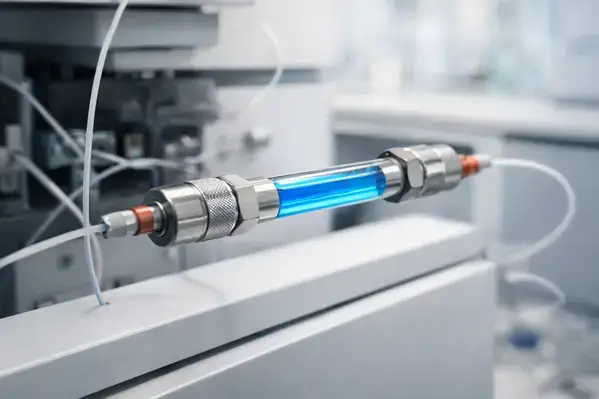
Reversed-phase HPLC remains the gold standard for assessing peptide purity. In RP-HPLC analysis, GHK-Cu samples are dissolved in an aqueous mobile phase and passed through a C18 or C8 stationary phase column. Separation occurs based on hydrophobicity differences between the target peptide and any co-eluting impurities.
Key parameters for GHK-Cu purity analysis by RP-HPLC include:
- Column selection: C18 columns (4.6 x 250 mm, 5 micrometer particle size) are widely used for tripeptide separations
- Mobile phase: Gradient elution using water/acetonitrile with 0.1% TFA as an ion-pairing agent
- Detection wavelength: UV absorbance at 220 nm (peptide bond absorption) and 254 nm (histidine side chain)
- Flow rate: Typically 1.0 mL/min for standard analytical runs
- Injection volume: 10 to 20 microliters of a 1 mg/mL sample solution
A purity determination above 95% by area normalization is generally considered acceptable for most in vitro research applications. Samples designated as “high purity” typically exceed 98% by this method.
Size-Exclusion Chromatography (SEC)
Size-exclusion chromatography provides complementary information by separating molecules based on hydrodynamic radius rather than hydrophobicity. SEC is particularly useful for detecting aggregated species or higher-molecular-weight contaminants in GHK-Cu preparations. While less commonly used as a primary purity method for small peptides, SEC can reveal aggregation behavior that RP-HPLC may overlook.
Mass Spectrometry for Molecular Identity Confirmation
Electrospray Ionization Mass Spectrometry (ESI-MS)
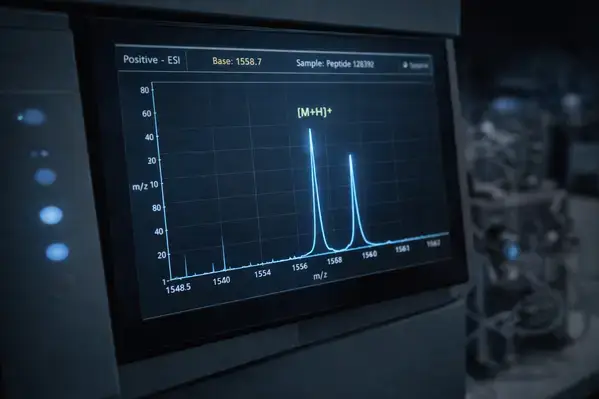
ESI-MS is the preferred technique for confirming the molecular identity of GHK-Cu. By generating multiply charged ions from a liquid sample, ESI-MS produces a mass spectrum that reveals the molecular weight of the intact peptide-copper complex.
The expected molecular ion for GHK-Cu (C14H23N6O4Cu) corresponds to a monoisotopic mass of approximately 403.11 Da. Researchers should look for characteristic copper isotope patterns in the mass spectrum, as the natural abundance of Cu-63 (69.17%) and Cu-65 (30.83%) produces a distinctive doublet pattern that confirms copper incorporation.
Key observations during ESI-MS analysis of GHK-Cu:
- Presence of [M+H]+ and [M+2H]2+ ions at expected m/z values
- Copper isotope splitting pattern consistent with a single Cu(II) center
- Absence of signals corresponding to free GHK peptide (indicating incomplete copper loading)
- Absence of signals from truncated or modified sequences
MALDI-TOF Mass Spectrometry
Matrix-assisted laser desorption/ionization time-of-flight (MALDI-TOF) mass spectrometry offers an alternative for rapid molecular weight confirmation. While ESI-MS provides higher resolution for small peptides, MALDI-TOF is useful for quick screening of multiple samples and can handle preparations with higher salt content.
Inductively Coupled Plasma Mass Spectrometry (ICP-MS) for Copper Quantification
Why ICP-MS Is Essential for Metallopeptide Research
For any copper-coordinated peptide, knowing the total copper content is as important as knowing the peptide purity. ICP-MS is the most sensitive and widely accepted method for trace metal quantification in research samples.
In ICP-MS analysis, the GHK-Cu sample is digested in dilute nitric acid to release all copper ions from the peptide complex. The resulting solution is nebulized into an argon plasma operating at approximately 6,000 to 10,000 K, which atomizes and ionizes the copper. The ions are then separated by mass-to-charge ratio and detected with extraordinarily low limits of detection.
Interpreting ICP-MS Results for GHK-Cu
The theoretical copper content of pure GHK-Cu (as the free base) is approximately 15.7% by weight. Researchers should compare the experimentally determined copper concentration against this theoretical value to assess:
- Copper loading efficiency: Values significantly below the theoretical percentage may indicate incomplete chelation or the presence of copper-free peptide
- Excess copper: Values above the theoretical percentage could suggest free copper salt contamination or co-precipitated copper species
- Batch consistency: Comparing copper content across multiple lots helps evaluate supplier manufacturing reproducibility
ICP-OES as an Alternative
Inductively coupled plasma optical emission spectroscopy (ICP-OES) provides a less sensitive but still highly capable alternative for copper determination. For GHK-Cu samples where copper content is expected in the percent range rather than trace levels, ICP-OES often provides sufficient accuracy at lower instrument operating complexity.
Atomic Absorption Spectroscopy (AAS)
Flame atomic absorption spectroscopy offers a straightforward, accessible method for copper quantification that many research laboratories already have available. Using the copper-specific absorption line at 324.8 nm, AAS can determine copper concentrations in digested GHK-Cu samples with good precision.
While AAS lacks the multi-element capability and sensitivity of ICP-MS, it remains a practical choice for routine quality control checks and for laboratories that process a moderate number of samples. Graphite furnace AAS (GFAAS) extends the detection limits further for applications requiring greater sensitivity.
Spectroscopic Characterization Methods
UV-Visible Spectrophotometry
GHK-Cu exhibits a characteristic absorption profile in the UV-visible region that provides a rapid, nondestructive screening tool. The copper(II) d-d transition produces a broad absorption band in the visible region (around 600 to 700 nm), while the peptide backbone and histidine imidazole ring contribute to UV absorption below 300 nm.
Monitoring the visible absorption band is particularly useful for:
- Confirming copper coordination in freshly prepared solutions
- Tracking copper release or exchange in kinetic studies
- Screening for sample degradation during storage stability assessments
Fourier Transform Infrared Spectroscopy (FTIR)
FTIR spectroscopy provides structural fingerprint information about the peptide backbone and the coordination environment of the copper center. Key absorption bands to monitor include:
- Amide I band (approximately 1,630 to 1,680 cm-1) for peptide bond confirmation
- Amide II band (approximately 1,510 to 1,580 cm-1) for N-H bending and C-N stretching
- Shifts in imidazole ring vibrations that indicate histidine-copper coordination
- Changes in carboxylate stretching frequencies upon metal binding
Comparing the FTIR spectrum of a received sample against a validated reference spectrum provides rapid identity confirmation without sample destruction.
Circular Dichroism (CD) Spectroscopy
Circular dichroism spectroscopy is uniquely suited to studying the coordination geometry and conformational properties of metallopeptide complexes. GHK-Cu exhibits characteristic CD signals in both the UV region (from peptide backbone chirality) and the visible region (from the chiral copper coordination environment).
CD measurements can distinguish between different copper coordination modes and detect conformational changes that other techniques may miss, making it a valuable supplementary tool for thorough GHK-Cu characterization.
Nuclear Magnetic Resonance (NMR) Spectroscopy
While the paramagnetic Cu(II) center in GHK-Cu broadens NMR signals and complicates direct structural analysis, NMR spectroscopy still plays a role in characterizing the free GHK peptide ligand before copper complexation. Proton (1H) and carbon-13 (13C) NMR can confirm amino acid sequence, detect isomeric impurities, and verify the absence of synthetic byproducts.
For copper-loaded samples, electron paramagnetic resonance (EPR) spectroscopy is the more appropriate magnetic resonance technique, as it directly probes the Cu(II) electronic environment and provides information about coordination geometry and ligand field strength.
Thermogravimetric Analysis (TGA) and Differential Scanning Calorimetry (DSC)
Thermal analysis methods offer additional characterization data for solid-state GHK-Cu samples:
- TGA measures mass loss as a function of temperature, revealing hydration levels, counterion content, and thermal decomposition profiles
- DSC detects thermal transitions such as melting, dehydration, and decomposition, which serve as identity and purity indicators
These techniques are especially useful for evaluating the physical form and stability of lyophilized GHK-Cu powder, which is the most common format for research-grade material.
Reading and Evaluating a Certificate of Analysis (COA)
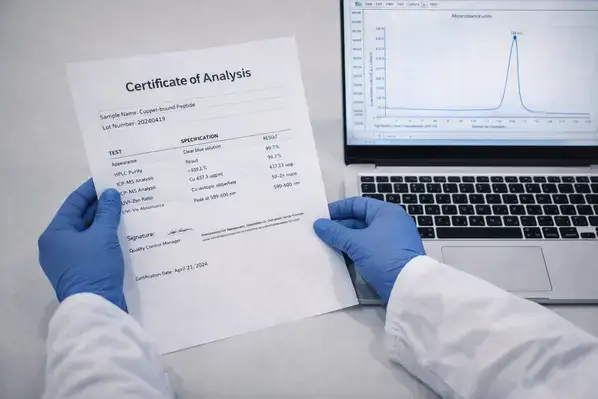
Every research-grade GHK-Cu sample should arrive with a certificate of analysis from the supplier. A thorough COA for a copper peptide complex should include, at minimum:
- Peptide purity by HPLC with method details (column, mobile phase, gradient)
- Molecular weight confirmation by ESI-MS or MALDI-TOF
- Copper content by ICP-MS, ICP-OES, or AAS
- Amino acid analysis confirming the correct Gly:His:Lys ratio
- Appearance and solubility data for the lot
- Counterion identification (acetate, TFA, chloride)
- Water content by Karl Fischer titration or TGA
- Lot number and expiration or retest date
Researchers should critically evaluate COA data rather than accepting it at face value. Cross-referencing the reported molecular weight against the theoretical value, checking that the copper content falls within acceptable range of the stoichiometric target, and confirming that the HPLC method is appropriate for small peptide analysis are all essential verification steps.
Building a Quality Control Protocol for Your Laboratory
For research groups that regularly work with GHK-Cu, establishing a standardized incoming quality control (IQC) protocol helps maintain data integrity across experiments. A practical IQC workflow might include:
- Visual inspection of lyophilized powder for color (should be blue to blue-green), crystal form, and signs of moisture exposure
- Gravimetric verification of received quantity against the labeled amount
- RP-HPLC analysis using a validated in-house method to confirm purity independently
- UV-Vis spectral scan to verify the copper d-d transition band and compare against a reference spectrum
- ICP-MS or AAS spot check of copper content on at least one sample per lot
- Documentation of all results in a laboratory notebook or electronic quality management system
This layered approach combines rapid screening techniques with definitive analytical methods, balancing thoroughness against practical laboratory time constraints.
Sample Handling and Storage Considerations
Analytical results are only as reliable as the sample preparation that precedes them. GHK-Cu research materials require careful handling to preserve their integrity:
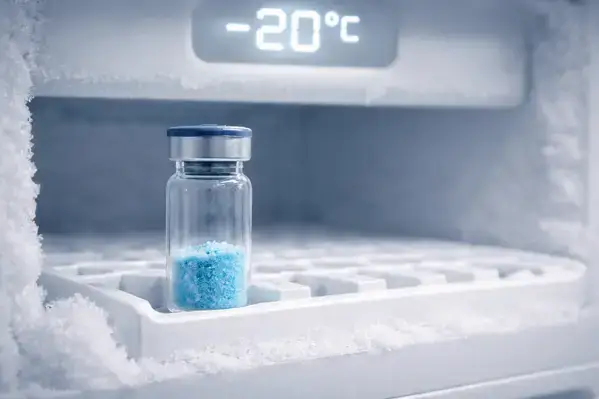
- Storage temperature: Lyophilized GHK-Cu should be stored at -20 degrees Celsius in a desiccated environment to minimize hydrolysis and oxidation
- Solution preparation: Dissolve in degassed, metal-free water or appropriate buffer immediately before analysis to prevent copper oxidation state changes
- Container selection: Use metal-free plasticware or acid-washed glassware to avoid copper contamination from labware
- Light protection: Copper peptide solutions should be protected from prolonged UV exposure, which can promote photodegradation
Failure to follow proper handling protocols can lead to artifactual impurities or altered copper speciation that compromises analytical accuracy.
Emerging Analytical Approaches
The field of metallopeptide analysis continues to advance, and several newer techniques hold promise for GHK-Cu characterization:
- Capillary electrophoresis (CE) offers high-resolution separation of peptide species with minimal sample consumption
- X-ray absorption spectroscopy (XAS) provides direct information about copper oxidation state and coordination environment without requiring crystallization
- Hyphenated techniques such as LC-ICP-MS enable simultaneous peptide separation and element-specific detection, linking organic purity data to metal content in a single analytical run
- Ion mobility spectrometry coupled with mass spectrometry (IMS-MS) adds a conformational dimension to molecular weight analysis
As these technologies become more accessible, they will likely play an increasing role in routine metallopeptide quality assessment.
Conclusion
Accepting a GHK-Cu research sample without independent analytical verification introduces unnecessary risk into every downstream experiment. Start with RP-HPLC to quantify peptide purity, confirm molecular identity through ESI-MS copper isotope pattern analysis, and validate copper loading with ICP-MS or AAS against the 15.7% theoretical benchmark. Layer in UV-Vis screening and FTIR fingerprinting to catch coordination failures and degradation artifacts that single-method workflows routinely miss. Build these steps into a standardized incoming quality control protocol, document every result, and hold each new lot to the same acceptance criteria before it enters your experimental pipeline. Reproducible research depends on verified materials. Qualified investigators who commit to multi-technique GHK-Cu characterization protect their data integrity, strengthen their published findings, and set a higher standard for peptide research quality across the field.
FAQs
What is the best analytical method for testing GHK-Cu purity in a research laboratory?
Reversed-phase HPLC (RP-HPLC) is the most widely accepted primary method for determining GHK-Cu peptide purity in research settings, separating the target tripeptide from synthetic impurities, deletion sequences, and degradation products based on hydrophobicity differences. Run your analysis on a C18 column with a water/acetonitrile gradient containing 0.1% TFA, and monitor UV absorbance at 220 nm for peptide bond detection and 254 nm for histidine side chain confirmation. Pair RP-HPLC with ESI-MS for molecular identity verification and ICP-MS for copper quantification, because no single technique can fully characterize both the organic and inorganic components of a copper-peptide complex.
How do researchers verify the copper content in GHK-Cu samples?
ICP-MS (inductively coupled plasma mass spectrometry) is the gold standard for quantifying copper content in GHK-Cu research materials, offering the lowest detection limits and highest accuracy for trace metal determination in peptide samples. Digest your sample in dilute nitric acid to release all chelated copper ions, then compare the measured copper concentration against the theoretical value of approximately 15.7% by weight for pure GHK-Cu free base. ICP-OES and flame atomic absorption spectroscopy (AAS at 324.8 nm) serve as accessible alternatives for laboratories that process moderate sample volumes or lack ICP-MS instrumentation.
What should a GHK-Cu certificate of analysis (COA) include?
A complete COA for research-grade GHK-Cu should report peptide purity by HPLC with full method details, molecular weight confirmation by ESI-MS or MALDI-TOF, copper content by ICP-MS or AAS, amino acid ratio analysis, counterion identification, and water content by Karl Fischer titration. Cross-reference every reported value against theoretical targets before accepting the lot into your laboratory inventory, paying particular attention to whether the copper percentage falls within the stoichiometric range and whether the HPLC method is validated for small tripeptide separations. Treat the COA as a starting point for verification rather than a final quality determination, and run at least one independent confirmatory analysis per incoming lot.
How should GHK-Cu research samples be stored to maintain analytical integrity?
Store lyophilized GHK-Cu powder at -20 degrees Celsius in a sealed, desiccated container to prevent hydrolysis, oxidation, and moisture-driven degradation that can generate artifactual impurities in subsequent analyses. Prepare solutions in degassed, metal-free water or validated buffer immediately before each experiment or analytical run, and use only acid-washed glassware or certified metal-free plasticware to eliminate copper contamination from labware surfaces. Protect all copper peptide solutions from prolonged UV light exposure, as photodegradation can alter the copper coordination state and compromise both spectroscopic measurements and downstream experimental results.
Why is a single analytical method insufficient for GHK-Cu quality control?
GHK-Cu contains both an organic tripeptide backbone and a coordinated copper(II) metal center, which means chromatographic purity data alone cannot reveal problems with copper loading, free metal contamination, or incorrect peptide-to-copper stoichiometry. RP-HPLC confirms peptide-level purity but is blind to elemental composition, while ICP-MS quantifies total copper but cannot distinguish between properly chelated copper and free copper salt impurities without complementary molecular data from ESI-MS. Implementing a multi-technique protocol that combines chromatographic separation, mass spectrometric identification, elemental quantification, and spectroscopic fingerprinting gives researchers the layered verification needed to catch the full range of quality failures in synthetic metallopeptide preparations.