❌ Not for Human Consumption
●
✅ For Research Use Only
●
All products are intended strictly for laboratory research purposes only
●
❌ Not for Human Consumption
●
✅ For Research Use Only
●
All products are intended strictly for laboratory research purposes only
●

Proper Storage And Handling Protocols For Lyophilized GLP1-T Peptides In The Lab

DISCLAIMER: GLP1-T peptides referenced in this article are sold and intended strictly for in research and laboratory use only. GLP1-T is not a drug, supplement, food product, or therapeutic agent. It is not intended for human or animal consumption, injection, ingestion, or any form of self-administration. This content does not constitute medical advice or make any therapeutic claims. All researchers must comply with applicable federal, state, and institutional regulations governing peptide research materials.
Lyophilized (freeze-dried) GLP1-T peptides represent a valuable class of research compounds used in laboratory settings to study receptor binding, metabolic pathway signaling, and cellular response mechanisms. Like all lyophilized peptides, GLP1-T demands strict adherence to storage and handling protocols to preserve its structural integrity, biological activity, and overall reliability as a research tool.
Poor storage conditions can lead to peptide degradation, aggregation, or loss of bioactivity. These outcomes compromise experimental reproducibility and waste limited research budgets. This guide provides actionable, evidence-based protocols for receiving, storing, reconstituting, and disposing of lyophilized GLP1-T peptides in compliance with institutional and regulatory standards.
1. Receiving and Inspecting Your GLP1-T Shipment
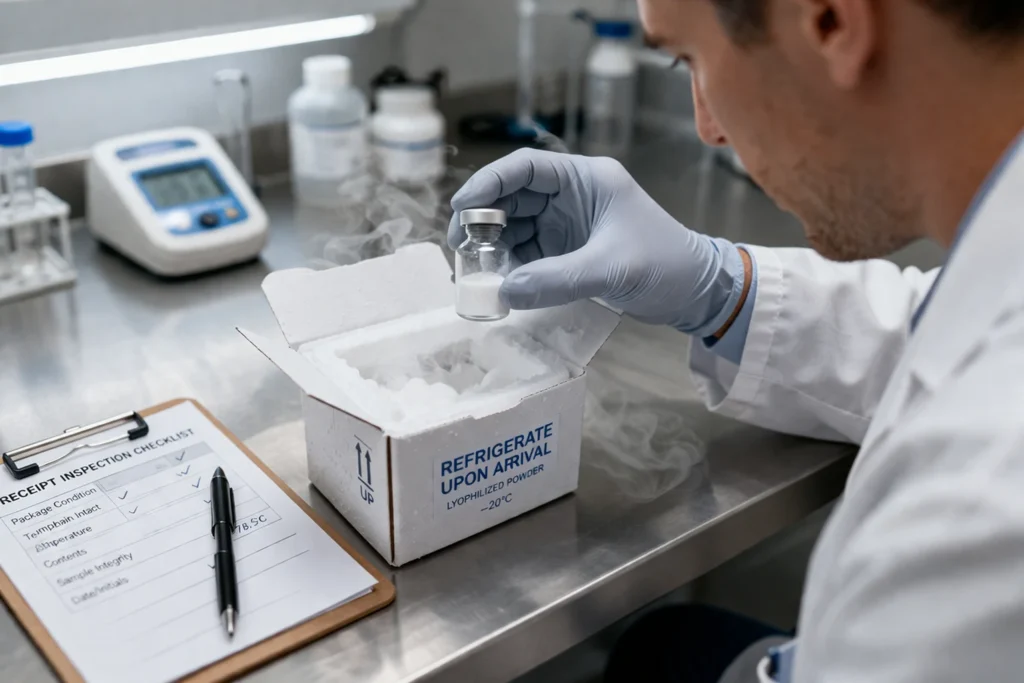
Proper handling begins the moment your GLP1-T peptide shipment arrives at the laboratory. Follow these protocols to confirm product integrity before placing materials into long-term storage.
- Inspect the outer packaging for visible damage, moisture exposure, or signs of temperature excursion.
- Verify the product label matches your purchase order. Confirm the Certificate of Analysis (CoA) is included and lists the correct lot number, purity percentage, molecular weight, and sequence identity.
- Check that the cold chain packaging (insulated container, dry ice, or gel packs) remains intact. Record the internal temperature if a temperature indicator is included.
- Document any anomalies in your lab notebook and contact the supplier immediately if the product appears compromised.
- Transfer the sealed vial to appropriate cold storage within 30 minutes of receipt.
Maintaining a clear chain-of-custody record from receipt to storage protects both your research outcomes and your institution’s compliance posture.
2. Optimal Storage Conditions for Lyophilized GLP1-T
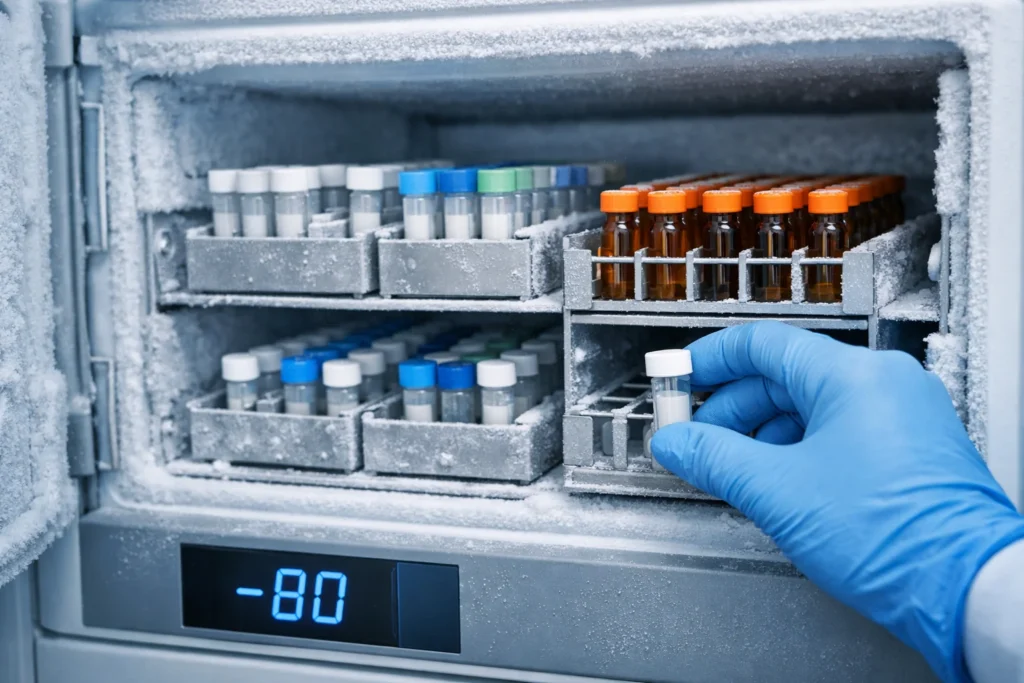
Lyophilized peptides are inherently more stable than their reconstituted counterparts. However, improper storage can still degrade peptide bonds and reduce research utility. Apply the following temperature and environmental guidelines.
Long-Term Storage (Recommended)
| Parameter | Recommended Condition |
| Temperature | -20°C to -80°C (freezer, non-frost-free preferred) |
| Light Exposure | Store in opaque or amber vials; avoid direct light |
| Humidity | Keep desiccant packets in storage container; maintain low-humidity environment |
| Container Seal | Original sealed vial with inert gas headspace (nitrogen or argon) when possible |
| Stability Window | Lyophilized form: typically stable 12-24+ months under recommended conditions (refer to CoA) |
| Freeze-Thaw Cycles | Minimize to zero; aliquot upon first reconstitution |
Short-Term Storage
If GLP1-T will be used within 1-4 weeks of receipt, storage at 2-8°C (standard laboratory refrigerator) is acceptable. Keep the vial sealed and protected from light. Do not store reconstituted peptide solutions at refrigerator temperature for more than 7 days unless validated by stability testing specific to your experimental conditions.
Critical Storage Warnings
- Never store lyophilized peptides at room temperature for extended periods.
- Frost-free freezers cycle temperatures and can cause micro-thaw events. Use a dedicated laboratory freezer.
- Avoid storing peptides in the freezer door. Temperature fluctuations are greatest in this location.
3. Reconstitution Best Practices
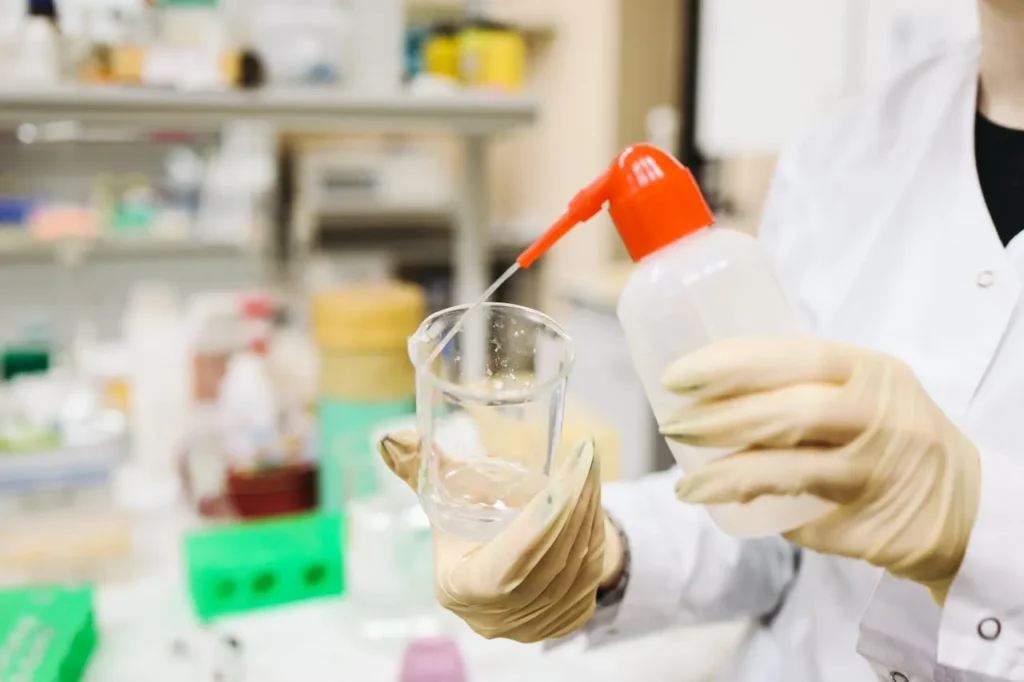
When you are ready to use GLP1-T in your research assays, proper reconstitution ensures the peptide retains its functional properties. Follow these steps carefully.
- Allow the sealed vial to equilibrate to room temperature for 15-20 minutes before opening. This prevents condensation from introducing moisture into the lyophilized powder.
- Select an appropriate solvent. Sterile bacteriostatic water, phosphate-buffered saline (PBS), or dilute acetic acid (0.1%) are commonly used for peptide reconstitution. Refer to the product datasheet for solvent compatibility.
- Add solvent slowly along the inside wall of the vial. Do not inject directly onto the lyophilized pellet, as this can cause foaming and protein denaturation.
- Gently swirl or rotate the vial to dissolve the contents. Never vortex aggressively. Mechanical shearing forces can damage peptide structure.
- Allow the solution to sit for 5-10 minutes. Visually confirm full dissolution before use.
- Record the reconstitution date, solvent used, final concentration, and the researcher’s name in the lab notebook.
Aliquoting Protocol
Once reconstituted, GLP1-T should be divided into single-use aliquots to prevent repeated freeze-thaw cycles. Use sterile, low-binding microcentrifuge tubes. Label each aliquot with the compound name, concentration, date, lot number, and researcher initials. Store aliquots at -20°C or colder.
IMPORTANT: Reconstituted GLP1-T is intended for use in controlled laboratory experiments only. It must not be administered to humans or animals outside of an approved, IRB/IACUC-supervised research protocol where applicable.

4. Handling, Safety, and PPE Requirements
All personnel handling GLP1-T peptides must follow standard laboratory safety protocols. Research peptides should be treated as potentially bioactive substances requiring appropriate precautions.
Required Personal Protective Equipment (PPE)
- Nitrile gloves (powder-free, changed frequently)
- Safety goggles or face shield
- Lab coat (closed-front, long-sleeved)
- N95 mask or fume hood use when handling dry powder to avoid inhalation of fine particulates
Handling Best Practices
- Work in a clean, organized BSL-1 or BSL-2 laboratory environment.
- Use calibrated micropipettes with sterile, filtered tips for all transfers.
- Minimize the time vials are open and exposed to ambient conditions.
- Clean all work surfaces with 70% isopropanol before and after handling peptide materials.
- Dispose of contaminated gloves, tips, and tubes according to your institution’s chemical/biological waste protocols.

5. Documentation and Chain-of-Custody Tracking
Maintaining meticulous documentation supports reproducibility, regulatory compliance, and institutional accountability. Every interaction with GLP1-T stock should be recorded.
Recommended Documentation Practices
- Log each vial’s receipt date, lot number, and storage location in a centralized inventory system.
- Record every withdrawal including the date, amount taken, researcher name, and intended assay or experiment.
- Retain Certificates of Analysis (CoA) on file for audit and quality assurance purposes.
- Track storage equipment temperature logs daily. Use continuous-monitoring thermometers with alarm functions.
- Flag and quarantine any vials that have experienced temperature excursions, visible precipitation, or discoloration.
6. Signs of Degradation and When to Discard
Even under ideal storage conditions, peptides have a finite shelf life. Recognize these indicators of degradation to protect your experimental results.
- Visible discoloration (yellowing, browning) of the lyophilized powder
- Clumping, caking, or visible moisture within the sealed vial
- Failure to fully dissolve during reconstitution
- Precipitate formation after reconstitution that does not resolve with gentle agitation
- Unexpected results in validated bioassays (loss of receptor binding activity, for example)
When in doubt, discard the material and use a fresh lot. The cost of replacing a vial is far less than the cost of repeating a compromised experiment.
7. Disposal Protocols
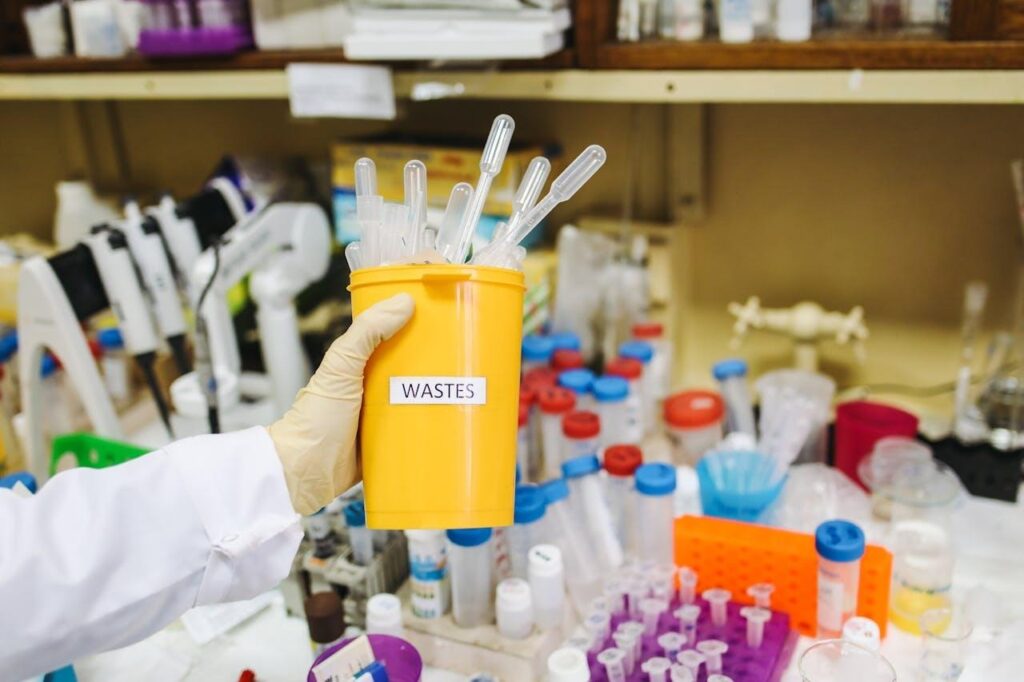
Dispose of unused, expired, or degraded GLP1-T in accordance with your institution’s Environmental Health and Safety (EH&S) guidelines. Peptide research materials typically fall under chemical waste disposal streams. Follow these general principles.
- Do not pour reconstituted peptide solutions down laboratory drains.
- Collect liquid waste in approved chemical waste containers. Label with contents and concentration.
- Place solid waste (used vials, gloves, tips) in appropriate biohazard or chemical waste bins per institutional policy.
- Complete a waste disposal form for your EH&S office. Maintain records for regulatory audit purposes.
8. Regulatory Compliance Reminders for Research Laboratories
Research institutions and independent laboratories purchasing GLP1-T bear full responsibility for compliant use. Keep the following regulatory considerations in mind.
- GLP1-T is classified as a research reagent. It has not been evaluated or approved by the U.S. Food and Drug Administration (FDA) for any diagnostic or therapeutic purpose.
- Researchers must not represent GLP1-T as a drug, supplement, food additive, or cosmetic ingredient.
- All use must comply with federal and state regulations governing research chemicals, including OSHA laboratory standards (29 CFR 1910.1450) and institutional biosafety committee (IBC) requirements where applicable.
- Institutions conducting animal studies must obtain IACUC approval prior to incorporating GLP1-T into any in-vivo research protocol.
- Principal investigators are responsible for ensuring all lab personnel receive appropriate training on the safe handling of peptide research materials.
Conclusion: Protect Your Research Investment
Lyophilized GLP1-T peptides are precision research tools. Their value to your experimental outcomes depends directly on how well you store, handle, reconstitute, and track them. By implementing the protocols outlined in this guide, your laboratory can maximize compound stability, ensure data reproducibility, and maintain full regulatory compliance.
Invest the time upfront to train your team, organize your storage systems, and build consistent documentation habits. These practices pay dividends across every experiment that relies on GLP1-T as a research reagent.
FAQs
1. What is the recommended storage temperature for lyophilized GLP1-T peptides?
Store lyophilized GLP1-T peptides at -20°C to -80°C in a dedicated, non-frost-free laboratory freezer. Avoid storing vials in the freezer door where temperature fluctuations are greatest. For short-term use within 1 to 4 weeks, storage at 2-8°C in a sealed, light-protected vial is acceptable. Always refer to the Certificate of Analysis (CoA) for lot-specific stability data. GLP1-T is sold strictly as a research reagent and is not intended for human or animal consumption.
2. How should I reconstitute lyophilized GLP1-T for laboratory research?
Allow the sealed vial to reach room temperature for 15 to 20 minutes before opening. Add a compatible solvent such as sterile bacteriostatic water, PBS, or 0.1% acetic acid slowly along the vial wall. Gently swirl to dissolve. Never vortex aggressively, as mechanical shearing can damage peptide structure. Divide the reconstituted solution into single-use aliquots immediately and store at -20°C or colder.
3. What PPE is required when handling GLP1-T peptides in the lab?
Researchers handling GLP1-T should wear powder-free nitrile gloves, safety goggles or a face shield, and a closed-front lab coat. When working with dry lyophilized powder, use an N95 mask or work inside a fume hood to prevent inhalation of fine particulates. Clean all work surfaces with 70% isopropanol before and after handling. These precautions align with standard laboratory safety protocols for bioactive research compounds.
4. How can I tell if my lyophilized GLP1-T peptide has degraded?
Watch for visible discoloration such as yellowing or browning of the powder, clumping, caking, or moisture inside the sealed vial. During reconstitution, failure to dissolve fully or persistent precipitate formation after gentle agitation signals degradation. Unexpected results in validated bioassays, such as loss of receptor binding activity, also indicate compromised material. Discard any suspect vials and use a fresh lot to protect your experimental data.
5. How should I dispose of unused or expired GLP1-T peptides?
Follow your institution’s Environmental Health and Safety (EH&S) guidelines for chemical waste disposal. Never pour reconstituted peptide solutions down laboratory drains. Collect liquid waste in approved, labeled chemical waste containers. Place solid waste including used vials, gloves, and pipette tips in designated biohazard or chemical waste bins. Complete all required disposal documentation and retain records for regulatory audit purposes.